The Massive R&D Gap
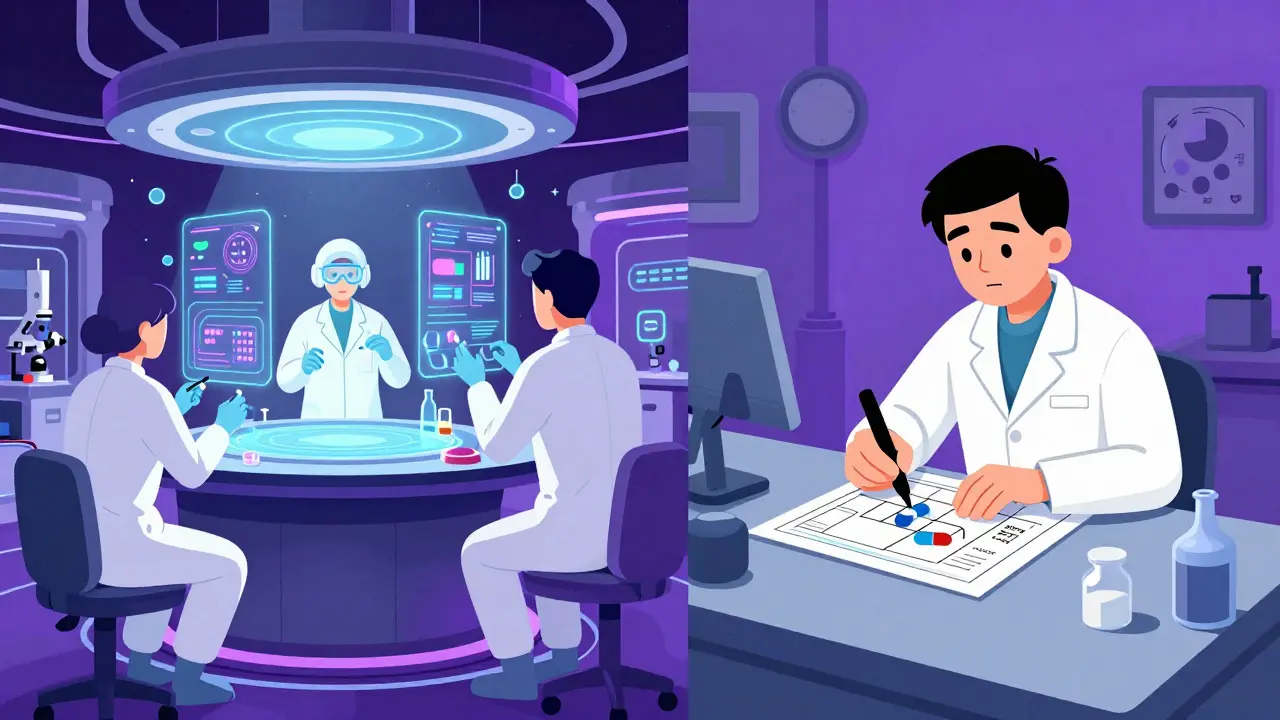
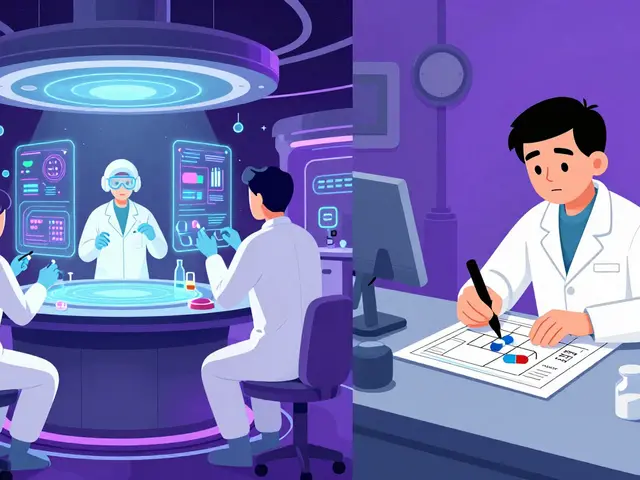
The biggest reason generic production is cheaper is the absence of research and development (R&D) costs. When a company creates a brand-name drug, they aren't just mixing chemicals; they are gambling billions on a scientific hypothesis. According to the Tufts Center for the Study of Drug Development, bringing a novel drug to market takes about 10 to 15 years and costs an average of $2.6 billion. That money covers failed experiments, thousands of candidate molecules that didn't work, and the massive risk of a project being scrapped halfway through.
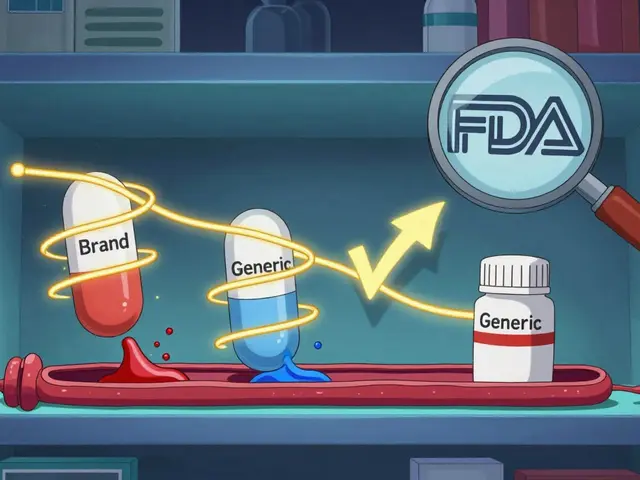
Generic makers don't play that game. They wait for the patent to expire and then use a known blueprint. Instead of running massive, multi-year clinical trials on thousands of people, they use the Abbreviated New Drug Application (ANDA) process. All they have to do is prove bioequivalence-showing that the generic version delivers the same amount of active ingredient to the bloodstream at the same rate as the brand name. This shifts the development cost from billions down to a mere $2 million to $5 million per drug. When you remove a $2.5 billion debt from the price tag, the savings pass directly to the consumer.
How the Factory Floor Actually Works
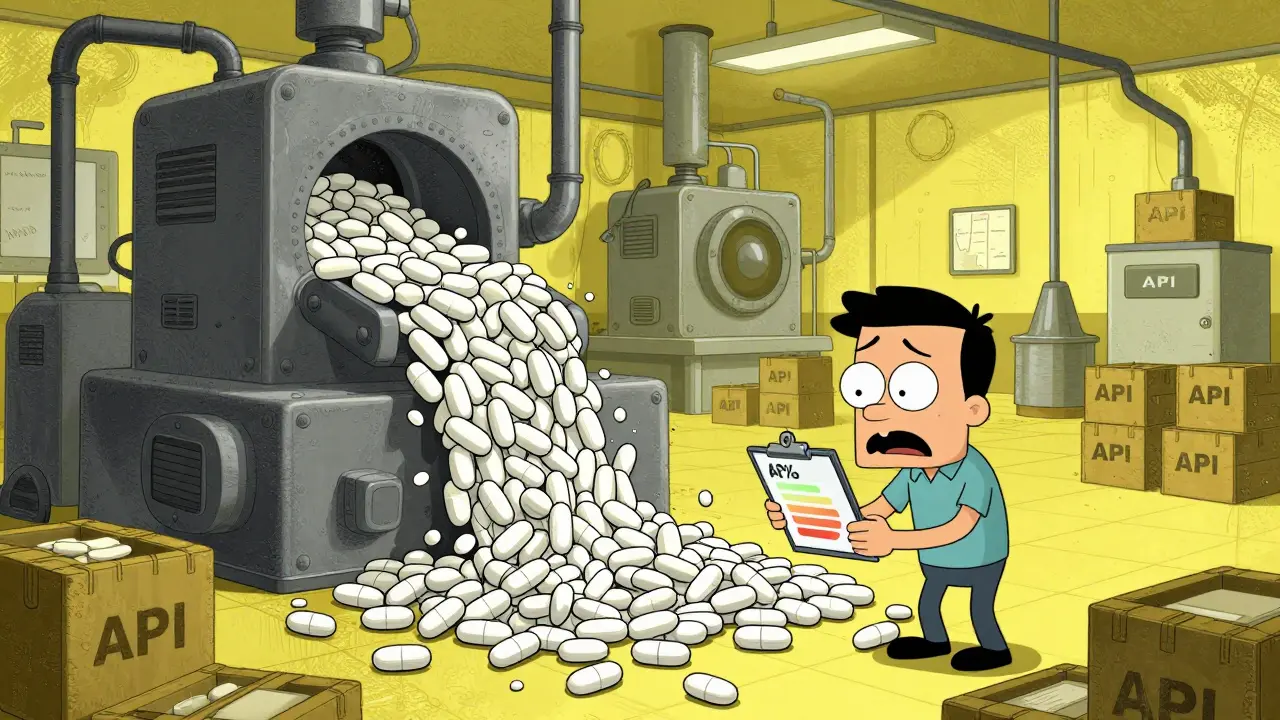
Once the R&D hurdle is cleared, generic companies win through operational efficiency. They operate on what experts call a "hyper-competitive" model. In this environment, a tiny 1% increase in production efficiency can be the difference between staying in business or going bankrupt. They rely heavily on the "learning curve" effect: the more they make, the cheaper it gets. Data shows that for every doubling of production volume, the per-unit cost of a generic drug drops by about 18%.
To understand where the money goes, we have to look at the Cost of Goods Sold (COGS). A typical generic manufacturer spends about 30% of their COGS on internal manufacturing, while only 4% goes to supply chain operations. The largest single expense is the Active Pharmaceutical Ingredient (API). The API is the actual chemical that treats the disease, and its price can swing by 20-30% in a single year depending on where the raw materials are sourced, often from hubs in India or China.
| Cost Driver | Branded Innovation | Generic Production | Impact on Price |
|---|---|---|---|
| R&D Investment | High (~$2.6 Billion) | Low ($2-5 Million) | Extreme Reduction |
| Clinical Trials | Full Phase I, II, III | Bioequivalence only | Significant Reduction |
| Marketing Budget | Heavy (Direct-to-Consumer) | Minimal (B2B/Pharmacy) | Moderate Reduction |
| Production Scale | Controlled Release | High Volume / Commodity | Unit Cost Decline |
The Power of Competition and Volume
Competition is the ultimate price-slasher in the generic world. When only two generic companies enter the market, the price typically drops to about 54% of the brand name. But when the market matures and six or more competitors start fighting for the same customers, prices can plummet by more than 95%. This is why common medications like statins (for cholesterol) or ACE inhibitors (for blood pressure) are so cheap; they are the "commodities" of the medical world.
This works because generic firms chase massive volume. They don't need high margins per pill; they need billions of pills. For example, in the US, generics account for over 90% of all prescriptions filled. Even though they dominate the volume, they only capture about 23% of the total pharmaceutical spending. They are essentially the high-volume, low-margin warehouse clubs of the drug world.
Hidden Risks in the Low-Cost Model
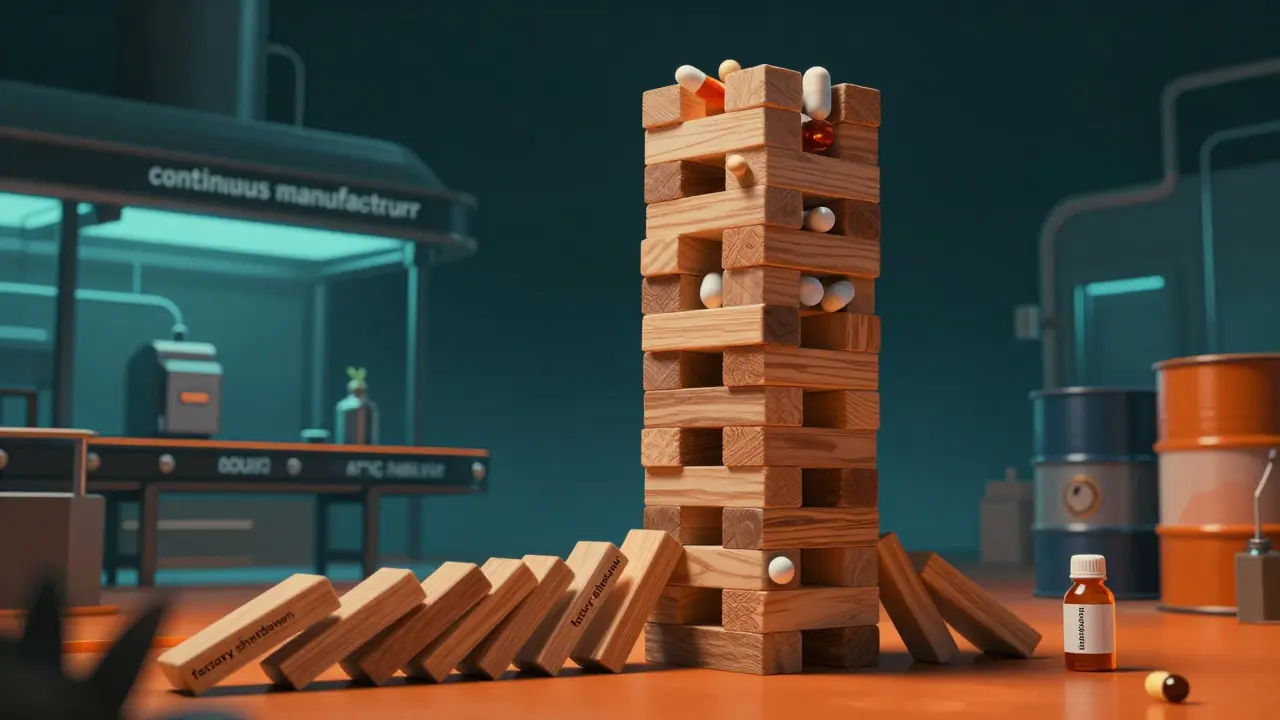
While cheap drugs are great for the wallet, this "razor-thin" margin strategy has a dark side. When companies push efficiency to the absolute limit, the supply chain becomes fragile. If one major API factory in Asia shuts down due to a regulatory issue or a natural disaster, there is no "buffer" in the system. This has led to hundreds of active drug shortages because companies aren't keeping expensive stockpiles of ingredients-they are running "just-in-time" operations to keep costs low.
There is also a divide between "simple" and "complex" generics. Making a standard tablet (Oral Solid Dosage) is straightforward. However, creating complex generics like inhalers or injectable biologics-known as Biosimilars-is much harder. These require more sophisticated manufacturing, which creates a barrier to entry and keeps prices higher than your average generic pill.
Looking Ahead: Automation and New Laws
The cost of generics is likely to drop even further. We are seeing a shift toward continuous manufacturing-where the drug is made in one nonstop flow rather than in separate batches. This technology could shave another 20-25% off production costs by 2027. At the same time, new laws like the Inflation Reduction Act are introducing price negotiations that will further squeeze margins.
We are also seeing a geopolitical shift. Many companies are trying to diversify their API sources away from a single country to avoid the supply chain crashes mentioned earlier. This might temporarily raise costs by 5-8%, but it will make the medicine supply more reliable in the long run.
Are generic drugs lower quality because they are cheaper?
No. Generic drugs must contain the same active ingredients and meet the same strict quality and performance standards as brand-name drugs. The cost difference comes from the lack of R&D and marketing expenses, not from using "cheaper" or lower-quality ingredients.
What is bioequivalence and why does it matter for cost?
Bioequivalence is the demonstration that a generic drug releases the active ingredient into the bloodstream at the same rate and extent as the branded version. Because generics only need to prove this instead of repeating the original's full-scale clinical trials, they save billions in development costs.
Why do some generics still cost more than others?
This usually depends on the number of competitors. When many companies produce the same drug, prices drop significantly. If only one or two companies have the license or the ability to make a complex version (like an injectable), the price remains higher.
What is an API in pharmaceutical manufacturing?
API stands for Active Pharmaceutical Ingredient. It is the specific chemical component of a drug that produces the intended health effect. It is the most expensive and volatile part of the manufacturing cost for generic drugs.
How does production volume affect the price of generics?
Generics benefit from massive economies of scale. Research indicates that for every doubling of production volume, the per-unit cost drops by about 18%, allowing manufacturers to lower prices while remaining profitable.

Ally Warren
April 24, 2026 AT 05:43It's fascinating how we've reduced health to a commodity of volume and margins. We treat the human body like a factory line where the only metric for success is a 18% drop in unit cost. I wonder if we lose something of our humanity when the medicine that saves our lives is viewed through the lens of a "warehouse club" model.
RAJESH MARAVI
April 24, 2026 AT 09:20SURE the R&D is high but most big phrama just buy small labs and then hije the price anyway!! Absolute lye that the cost is the only factor here. Totaly ignoring how they manipulate the market to delay genrics for years with pay-for-delay schemes. Absolutey ridiculuous analysis
Emma Cozad
April 25, 2026 AT 12:03Y'all love talking about India and China for APIs but then cry when there is a shortage. We need to bring all that manufacturin back to the US now. Stop relyin on foreign labs that probably cut corners anyway. American jobs and American quality are the only way to fix this mess.
Olayinka Ibukunoluwa Mercy
April 27, 2026 AT 00:41This is such an eye-opening look at the industry!!! 🌟 It is so important that we understand how these systems work so we can advocate for better access for everyone everywhere!!! Thank you for sharing this knowledge with us!!! ❤️🙏✨
Caroline Duvoe
April 28, 2026 AT 15:08obviously generic is the only way to go 🙄 basic economics 101
Dave Edwards
April 29, 2026 AT 06:09The sheer audacity of suggesting that "just-in-time" manufacturing is an acceptable risk for life-saving medicine is appalling! We are playing Russian Roulette with people's lives just to save a few cents on a pill! Disgraceful! 😱😡
Dan Wizard
April 29, 2026 AT 10:30I find myself pondering the ethical implications of the API volatility mentioned here, especially considering how a shift in raw material costs in a distant country can effectively determine whether a patient in a developing region has access to their blood pressure medication or is forced to go without because the margin became too thin for the distributor to care.
Anastasios Kyriacou
April 30, 2026 AT 21:08who cares about the cost if the stuff laways feels diffrent anyway lol
Amy Fredericks
May 2, 2026 AT 02:54It's actually really encouraging to see that automation and continuous manufacturing might bring costs down even more in the next few years. I think we can find a middle ground where we encourage innovation while ensuring that the eventual generic versions are affordable for the people who need them most.
vimal purwal
May 3, 2026 AT 09:45While I must strongly disagree with the notion that the current system is flawless, I concur that the scale of production is the primary driver of affordability, and any attempt to destabilize the API supply chain without a viable alternative would be an act of gross negligence toward the global patient population that relies on these low-cost medications to survive daily.
Odicha ude Somtochukwu
May 3, 2026 AT 10:11The distinction between simple and complex generics is a point of great importance... It highlights that not all medical needs are created equal in the eyes of the market... We must strive for a system that supports the development of biosimilars with the same urgency as simple tablets...!