Walk into any pharmacy in the UK or the US today, and you’ll likely walk out with a generic medication. It’s the standard of care for most conditions, from high blood pressure to depression. But as a healthcare provider, you know it’s not that simple. You’ve probably had a patient call you in a panic because their seizure medication "doesn’t work anymore" after a switch to a cheaper alternative. Or perhaps you’ve hesitated to write a prescription for a new oncology treatment because the insurance formulary only covers the brand name.
This tension sits at the heart of current medical society guidelines regarding generic drug use. These aren't just bureaucratic documents; they are the official positions of professional organizations that shape how we prescribe, how pharmacists dispense, and ultimately, how safe our patients are. While the Food and Drug Administration (FDA) sets the baseline for approval, medical societies interpret what that means for specific patient populations. Understanding these nuances is critical for navigating the gap between cost-saving mandates and clinical efficacy.
The Regulatory Baseline: What the FDA Says vs. Reality
To understand why medical societies issue specific guidelines, we first need to look at the foundation laid by the Hatch-Waxman Act of 1984. This legislation created the modern framework for generic drugs in the United States, allowing manufacturers to bypass expensive clinical trials if they could prove their product was bioequivalent to the brand-name original. The FDA maintains that all approved generics have the same quality, strength, purity, and stability as their brand-name counterparts. In fact, generic substitution rates hover around 90% when an equivalent is available.
However, "bioequivalence" has a specific statistical definition that doesn't always translate to identical clinical outcomes for every individual. The FDA requires that the 90% confidence interval for the ratio of population geometric means (test vs. reference product) falls within an 80-125% range. For most drugs, this margin of error is negligible. A patient taking a generic statin will see the same cholesterol reduction as one on the brand. But for certain drug classes, that 20% variance window can be the difference between stability and toxicity.
This is where the general rule meets the exception. Medical societies step in to highlight these exceptions, ensuring that providers aren't forced into a one-size-fits-all approach that might compromise patient safety.
The Neurology Exception: Why Anticonvulsants Are Different
If there is one area where medical society guidelines sharply diverge from broad generic substitution policies, it is neurology. The American Academy of Neurology (AAN) holds an explicit position opposing the automatic generic substitution of anticonvulsant drugs. This isn't a minor footnote; it's a hard stance based on the physiology of epilepsy.
Consider the reality for the 3.4 million Americans living with active epilepsy. Seizure control relies on maintaining blood concentrations of antiepileptic drugs (AEDs) within a very tight window. Even minor pharmacokinetic differences caused by variations in inactive ingredients or manufacturing processes can alter absorption rates. For a patient on levetiracetam or phenytoin, a slight dip in blood levels can trigger breakthrough seizures, while a spike can cause severe toxicity.
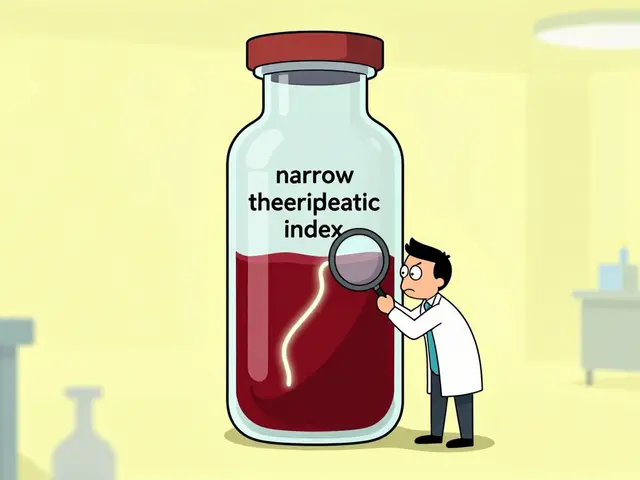
Clinical feedback supports the AAN’s caution. Surveys indicate that nearly 70% of neurologists believe generic substitutions have led to treatment complications in their practices. Patients often report increased side effects or loss of seizure control after switching manufacturers. Consequently, many states have implemented restrictions requiring prescriber consent before substituting Narrow Therapeutic Index (NTI) drugs. As a provider, ignoring these guidelines can lead to preventable hospitalizations and eroded trust with your patients.
| Organization | General Stance | Key Exceptions/Caveats | Primary Concern |
|---|---|---|---|
| American Academy of Neurology (AAN) | Opposes automatic substitution for AEDs | Anticonvulsants/Epilepsy medications | Breakthrough seizures due to bioequivalence variance |
| American College of Physicians (ACP) | Supports substitution | Most medication classes | Cost-effectiveness without compromising general safety |
| National Comprehensive Cancer Network (NCCN) | Accepts interchangeable products | Oncology treatments, including off-label uses | Ensuring access to effective therapies regardless of brand |
| American Medical Association (AMA) | Focuses on nomenclature safety | Drug naming conventions to prevent errors | Reducing medication errors through clear naming |
Oncology and the NCCN Compendia: Flexibility in Treatment
In contrast to the rigid caution in neurology, oncology operates with a different set of priorities. The National Comprehensive Cancer Network (NCCN) Guidelines are the gold standard for cancer care in the US. Interestingly, the NCCN Compendia-the only accepted compendium for Medicare coverage determinations-includes numerous off-label uses of generic drugs.
According to recent reports, approximately 42% of NCCN-listed cancer drug uses are considered off-label. This creates a unique ecosystem where generic equivalents are often seamlessly substituted for brand-name agents, even in complex regimens. The rationale here is twofold: first, the sheer cost of cancer care makes generic utilization essential for sustainability; second, the NCCN evaluates evidence rigorously, meaning that if a generic is listed, it has been vetted for efficacy in that specific context.
For providers, this means you can generally rely on generic substitutions in oncology without fearing a loss of therapeutic equivalence, provided the product is rated therapeutically equivalent (TE Rating 'A') in the FDA’s Orange Book. However, vigilance is still required when dealing with targeted therapies where molecular precision is paramount.
The Role of Naming: How the AMA Prevents Errors
While some societies focus on substitution, others focus on identification. The American Medical Association (AMA), through its United States Adopted Names (USAN) Council, plays a critical role in patient safety by standardizing drug names. Established in 1964, the USAN Council ensures that generic names don’t look or sound like other drugs, which is a major source of medication errors.
Dr. Karet, representing the USAN Council, emphasizes that the primary criterion for a nonproprietary name is suitability for routine prescribing and dispensing. They avoid prefixes that create confusion between drug classes. For example, you won’t find two life-saving cardiac drugs named similarly enough to confuse a tired nurse during a night shift. This guideline indirectly supports generic use by ensuring that when a pharmacist picks up a generic box, the name clearly signals its class and purpose, reducing the risk of accidental substitution errors.
Navigating State Laws and Pharmacy Protocols
As a provider, you don’t operate in a vacuum. Your prescriptions are subject to state laws and pharmacy benefit manager (PBM) protocols. This is where friction often occurs. Some states mandate that NTI drugs cannot be substituted without explicit prescriber consent, while others follow more permissive approaches aligned with federal standards.
Pharmacists report significant difficulties when state laws conflict with medical society guidelines. For instance, a neurologist may mark a prescription "Dispense as Written" (DAW) to adhere to AAN guidelines, but a PBM algorithm might automatically override this unless specific codes are used. To mitigate this:
- Know your state’s NTI list: Most states publish a list of drugs that require prescriber authorization for substitution. Keep this accessible in your EMR.
- Communicate with patients: Educate patients on why consistency matters for certain drugs. If they travel and fill prescriptions elsewhere, advise them to carry a letter explaining the need for brand consistency.
- Document clinical justification: If you insist on a brand name for a non-NTI drug due to prior adverse reactions to generics, document this clearly to avoid prior authorization delays.

Economic Pressures vs. Patient Safety
We cannot discuss generic guidelines without addressing the elephant in the room: cost. Generic drugs account for 90% of prescriptions filled in the US but represent only 23% of total drug expenditures. This economic benefit is undeniable and drives much of the policy landscape. Organizations like the Generic Pharmaceutical Industry Association (GPIA) advocate for broader substitution rights to lower healthcare costs.
However, medical societies must balance these economic incentives against clinical realities. The ASPE report notes that while assignment of new naming stems is rare, unfavorable decisions can affect patient access. Similarly, overly restrictive substitution policies can drive up costs unnecessarily. The goal of these guidelines is not to block generics, but to ensure they are used appropriately. For the vast majority of medications-antibiotics, antihypertensives, antidepressants-generics are safe, effective, and essential. The guidelines exist to protect the vulnerable subsets of patients who fall outside the norm.
Future Trends: Alignment and Specialization
Looking ahead, we are seeing a trend toward greater alignment between medical society guidelines and FDA therapeutic equivalence ratings. The FDA continues to refine its Orange Book, providing clearer data on which products are truly interchangeable. Medical societies are increasingly incorporating these ratings into their recommendations.
Yet, specialization will remain key. As treatments become more personalized, especially in fields like immunology and neurology, the "average" patient model becomes less relevant. We expect to see more specialty-specific position statements emerging, particularly for biologics and complex generics. Providers should stay engaged with their respective professional societies to receive updates on these evolving standards.
Do all medical societies support generic drug substitution?
No. While organizations like the American College of Physicians generally support substitution for cost-effectiveness, the American Academy of Neurology explicitly opposes automatic substitution for anticonvulsants due to safety concerns related to narrow therapeutic indices.
What is a Narrow Therapeutic Index (NTI) drug?
An NTI drug is a medication where small changes in blood concentration can lead to treatment failure or toxicity. Examples include warfarin, lithium, and several antiepileptic drugs. These require stricter controls on generic substitution.
How does the FDA define bioequivalence?
The FDA defines bioequivalence using an 80-125% confidence interval for the ratio of population geometric means between the generic and brand-name drug. This allows for slight variations that are statistically insignificant for most patients but may matter for sensitive individuals.
Can I refuse to accept a generic substitution for my patient?
Yes, you can mark a prescription "Dispense as Written" (DAW). However, for non-NTI drugs, insurers may require prior authorization or charge the patient higher copays. For NTI drugs, many states legally protect the prescriber’s choice to avoid substitution.
Why does the AMA USAN Council matter for generic drugs?
The USAN Council standardizes generic drug names to prevent confusion and medication errors. By ensuring names are distinct and indicative of drug class, they enhance the safety of generic prescribing and dispensing.