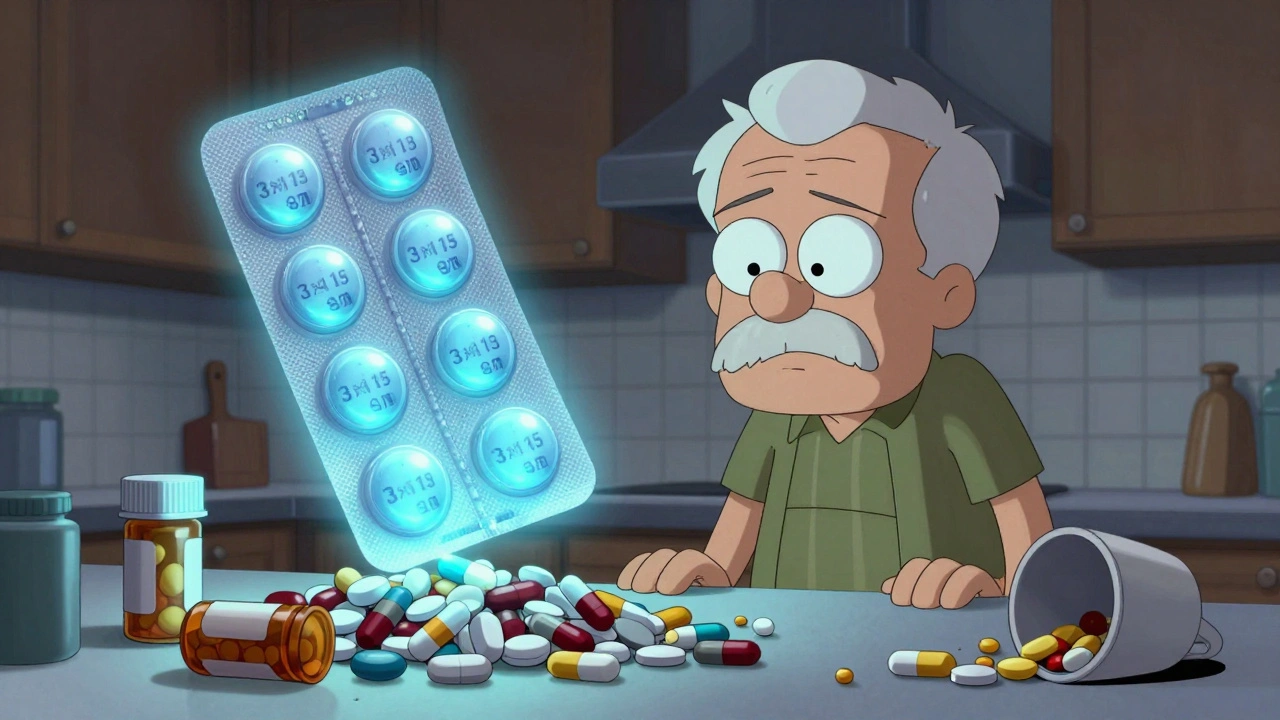
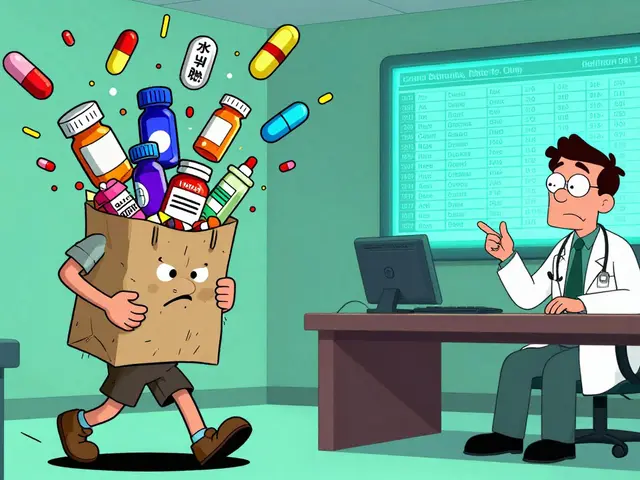
Every year, hundreds of thousands of people in the U.S. end up in the emergency room because they took the wrong pill, too much of a medicine, or missed a dose entirely. For older adults managing five, six, or even ten different medications, it’s not a matter of being forgetful-it’s a system failure. That’s where blister packs and pill organizers come in. They’re not just handy tools. When used right, they can stop overdoses before they happen.
What’s the real difference between blister packs and pill organizers?
Blister packs and pill organizers both help you keep track of your meds, but they work in completely different ways. Think of a blister pack like a pre-filled, sealed calendar for your pills. Each little bubble holds one exact dose-morning, noon, night-and is labeled with the day and time. You don’t count pills. You don’t sort them. You just peel back the foil and take what’s there. These are made by pharmacies, usually for people on complex regimens. They’re sealed, tamper-proof, and designed to last a week or two. Pill organizers, on the other hand, are containers you fill yourself. They usually have 7 compartments-one for each day-and often 2 to 4 slots per day for different times. You open your prescription bottles, count out pills, and put them in. Simple? Maybe. But it’s also where mistakes creep in. One wrong count. One missed pill. One confused time of day. That’s all it takes. A 2022 study tracked 180 people with high blood pressure. Those using blister packs took their meds correctly 87% of the time. Those using regular bottles or basic pill organizers? Only 64%. The gap isn’t small. It’s life-changing.Why blister packs reduce overdose risk more than organizers
The biggest danger with pill organizers? You’re handling the pills. You’re counting them. You’re moving them from one bottle to another. That’s where human error happens. Imagine someone with arthritis, tired eyes, or early dementia trying to sort out 20 pills at 7 a.m. They grab a blue capsule, think it’s the morning blood pressure pill, but it’s actually the nighttime sleep aid. One mistake. One overdose. Blister packs remove that step entirely. Each dose is pre-measured and locked in place. You can’t accidentally double-dose because the next pill isn’t there until tomorrow. If you miss a dose, you see the empty bubble. No guessing. No counting. No mixing up. Home Instead Senior Care’s 2023 data shows blister packs cut medication errors by 67% compared to traditional vials. That’s not a guess. That’s a number from real-world use in homes and care facilities. And it’s not just about accuracy-it’s about confidence. Caregivers on SeniorResourceConnectMI.org reported that 82% of families felt safer knowing their loved one couldn’t accidentally take the wrong pill.When pill organizers still make sense
Blister packs aren’t perfect. They can’t handle medications that need refrigeration. If your doctor changes your dose next week, you have to get a whole new pack. And if you have stiff fingers, opening the foil can be a struggle. That’s where pill organizers shine. If you’re on a stable regimen-say, one pill a day for blood pressure and one for cholesterol-a simple 7-day organizer works great. They’re cheap. You can buy them at any pharmacy or online for under $10. Some even have alarms or locking lids. And if your meds change often, you don’t have to wait for a pharmacy to repackage everything. But here’s the catch: you have to refill them right. A 2021 study found that 37% of people using pill organizers made mistakes when filling them. The fix? Use a checklist. Write down each pill, its dose, and time. Check it off as you fill. Do it once a week, same day, same time. Make it a habit.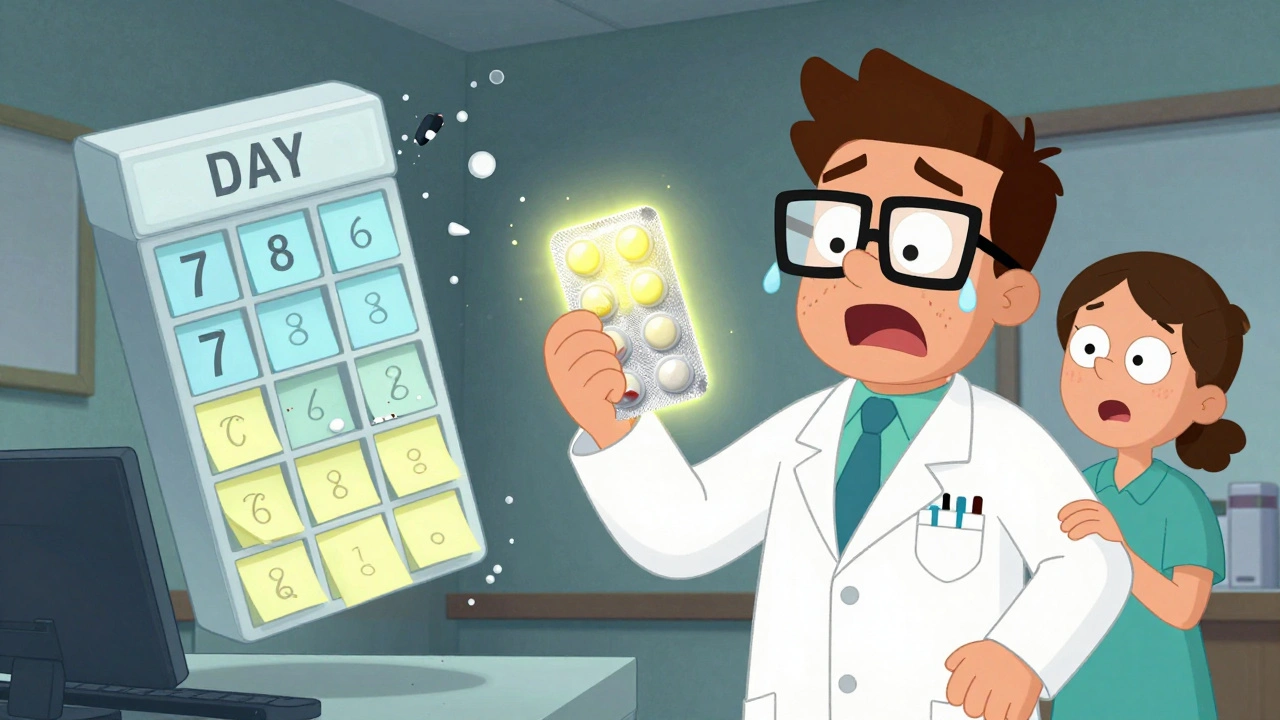
How to get a blister pack-step by step
Getting a blister pack isn’t like ordering a pill organizer. You need help from a pharmacy that offers this service. Here’s how it works:- Ask your doctor if you qualify. Most programs require you to take four or more medications daily, or have a history of missed doses or errors.
- Call your pharmacy. Not all do it-only about 38% of U.S. pharmacies have the equipment. Ask if they offer “multi-dose blister packaging” or “unit-dose packaging.”
- They’ll review your meds. This takes 1-2 days. They’ll check for interactions, duplicates, and dosing schedules.
- They’ll create your pack. Each bubble gets labeled with the day and time. Some even include QR codes you can scan for video instructions.
- They’ll deliver it. Usually within 3-5 days. Some even mail it to your door.
- They’ll walk you through it. A pharmacist or nurse will show you how to open the pack and what to do if you miss a dose.
Smart upgrades: QR codes, sensors, and AI
The old foil blister pack is getting smarter. In 2023, the FDA approved the first blister packs with QR codes. Scan the bubble with your phone, and you’ll see: what the pill is, why you take it, and even a video of someone opening the pack. No more squinting at tiny print. Even better? AdhereTech’s smart blister packs have tiny sensors inside. Every time you open a bubble, it sends a notification to your phone-and your caregiver’s phone-if you haven’t taken it by noon. In a pilot study, adherence jumped 37%. That’s not just convenience. That’s safety. Pharmcare USA is now testing AI that automatically updates blister packs when your doctor changes your meds. No more waiting for a new pack. The system adjusts itself. This is the future-and it’s already here.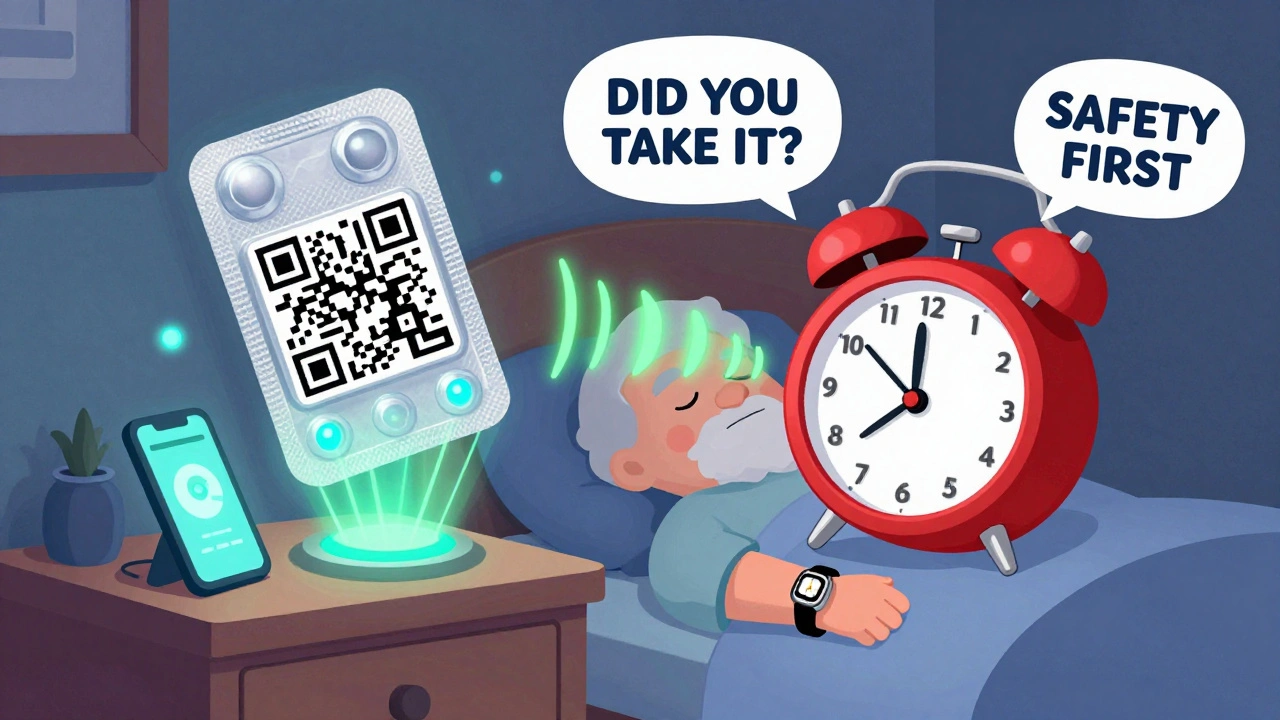
Common problems and how to fix them
Not everyone has an easy time with these tools. Here’s what people run into-and how to solve it:- Hard to open blister packs? Get easy-open versions. They have perforated edges or come with a little plastic tool. Some pharmacies give them free.
- Can’t read the labels? Ask for large-print labels. Or use a magnifying glass. Some packs now have color-coded days: blue for morning, green for evening.
- Forget to take the pill? Pair it with a habit. Take it after brushing your teeth. Or set a phone alarm labeled “AM BP” or “Nightly Pain.”
- Feel overwhelmed? Talk to a pharmacist. They’re trained to simplify regimens. Sometimes, they can reduce your pills or combine them.
What to do if you’re already making mistakes
If you’ve ever taken two pills by accident, skipped a dose for days, or panicked because you couldn’t remember what you took-that’s your sign. Don’t wait for a hospital visit. Start now. - If you take 4+ meds daily → ask for a blister pack. It’s the most reliable system. - If you take 1-3 meds and they don’t change → a simple pill organizer works fine. - If you have memory issues or dementia → blister packs are the only safe option. - If you’re a caregiver → use a checklist when refilling organizers. Take a photo of the filled tray before closing it. And if you’re unsure? Talk to your pharmacist. They’ve seen it all. They know which tools work for which people. They’re not just dispensing pills-they’re preventing emergencies.Final thought: It’s not about being perfect. It’s about being safe.
You don’t need to be a medication expert. You don’t need to remember every pill name or time. You just need a system that doesn’t rely on memory. Blister packs don’t ask you to be perfect. They just show you what’s right-and what’s missing. In a world where medication errors cost the U.S. over $200 billion a year, the simplest solutions are often the most powerful. A little foil pack. A plastic box with compartments. A QR code you scan. These aren’t gadgets. They’re lifelines. Don’t wait for a mistake to happen. Set up your system today. Your body-and your family-will thank you.Can I use a pill organizer instead of a blister pack?
Yes-but only if your medication routine is simple and stable. If you take four or more pills a day, or if doses change often, a blister pack is safer. Pill organizers require you to count and sort pills yourself, which increases the risk of mistakes. Blister packs eliminate that step entirely.
Are blister packs covered by Medicare?
Original Medicare (Parts A and B) doesn’t cover blister packs. But many Medicare Advantage plans (Part C) do, especially for patients taking multiple medications or with a history of medication errors. Call your plan and ask: “Do you cover multi-dose blister packaging?”
What if I can’t open the foil on blister packs?
Many pharmacies offer easy-open blister packs with perforated edges or special tools. You can also buy a small pill opener for under $5 online. Some caregivers use a butter knife or coin to gently lift the foil. Never force it-this can cause pills to spill or break.
Can blister packs handle refrigerated medications?
No. Medications that need to be kept cold-like insulin or some antibiotics-cannot go in standard blister packs. These must be stored separately and taken out of the fridge right before use. Your pharmacist will advise you on how to manage these safely alongside your blister pack.
How long does it take to get a blister pack?
It usually takes 3 to 5 business days from the time your pharmacy receives your prescription list. They need time to review your meds, create the pack, and label each dose. Some pharmacies offer rush service for an extra fee.
Do pill organizers really help with adherence?
They help a little-but not as much as blister packs. A 2021 study found that 7-day pill organizers with multiple time compartments improved adherence by 18%. Blister packs improved it by 28%. The difference? Blister packs remove the chance of human error during filling. Organizers rely on you doing it right every time.
Can I use both a blister pack and a pill organizer?
It’s not recommended. Using both increases confusion. Stick with one system. If your regimen is too complex for a blister pack, talk to your pharmacist about simplifying your meds instead of adding another tool. Simplicity reduces risk.

Regan Mears
December 10, 2025 AT 04:36Pharmacy did the whole thing: reviewed his meds, labeled everything, even gave him a little tool to open the foil. Worth every penny.
Nikki Smellie
December 10, 2025 AT 20:29David Palmer
December 11, 2025 AT 15:26Michaux Hyatt
December 13, 2025 AT 14:45Raj Rsvpraj
December 15, 2025 AT 13:45Jack Appleby
December 16, 2025 AT 05:32Rebecca Dong
December 17, 2025 AT 05:05Michelle Edwards
December 18, 2025 AT 05:41Sarah Clifford
December 18, 2025 AT 08:20Ben Greening
December 20, 2025 AT 00:39Doris Lee
December 21, 2025 AT 21:30Kaitlynn nail
December 23, 2025 AT 20:27Neelam Kumari
December 25, 2025 AT 01:59