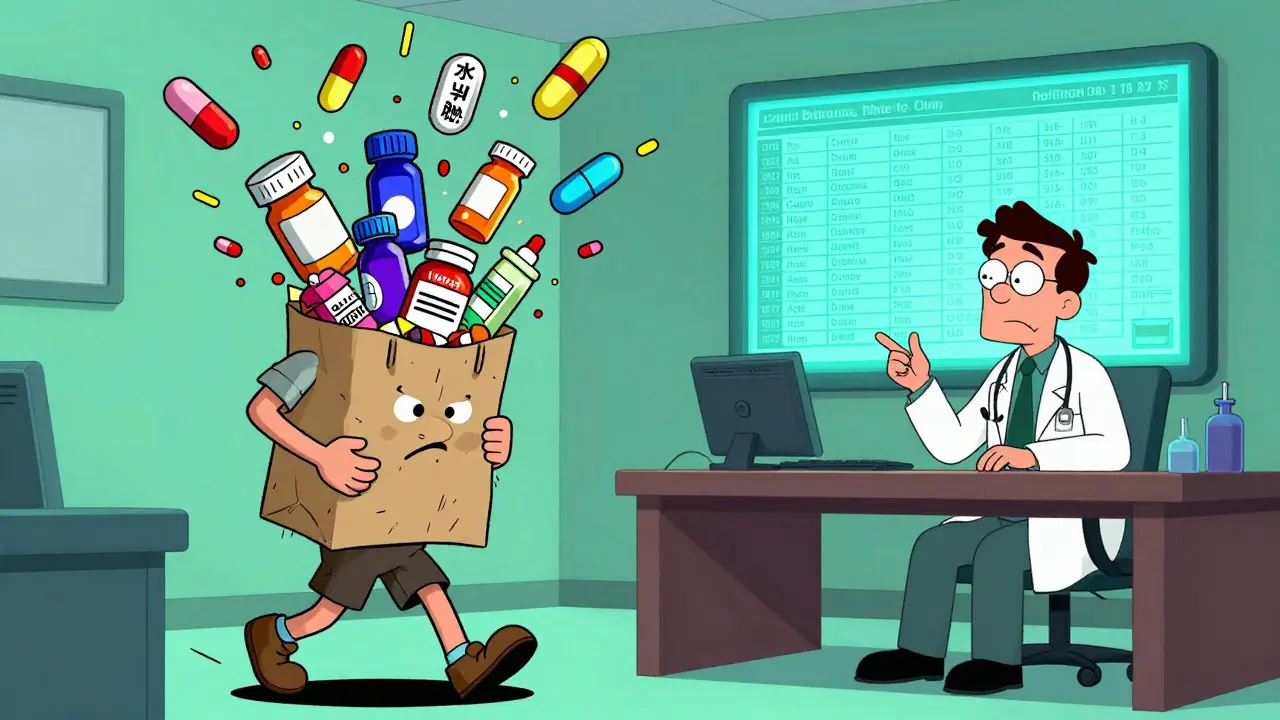
When you walk into a doctor’s office, your pill bottles might seem like just clutter in your bag. But those little plastic containers hold the real story of what you’re actually taking-far more accurately than your memory ever could. In fact, medication reconciliation is one of the most important steps you can take to avoid dangerous mistakes. The Joint Commission made it a national patient safety goal back in 2006, and today, it’s still the single most effective way to catch errors before they hurt you.
Here’s the hard truth: 60 to 70% of medication errors happen during transitions in care-like when you switch doctors, get discharged from the hospital, or just forget to mention a pill you stopped taking. And guess what? Most of those errors come from patients trying to remember what they’re on. Not from doctors making typos. Not from pharmacy mix-ups. From people forgetting, misremembering, or assuming a pill doesn’t matter anymore because they haven’t used it in weeks.
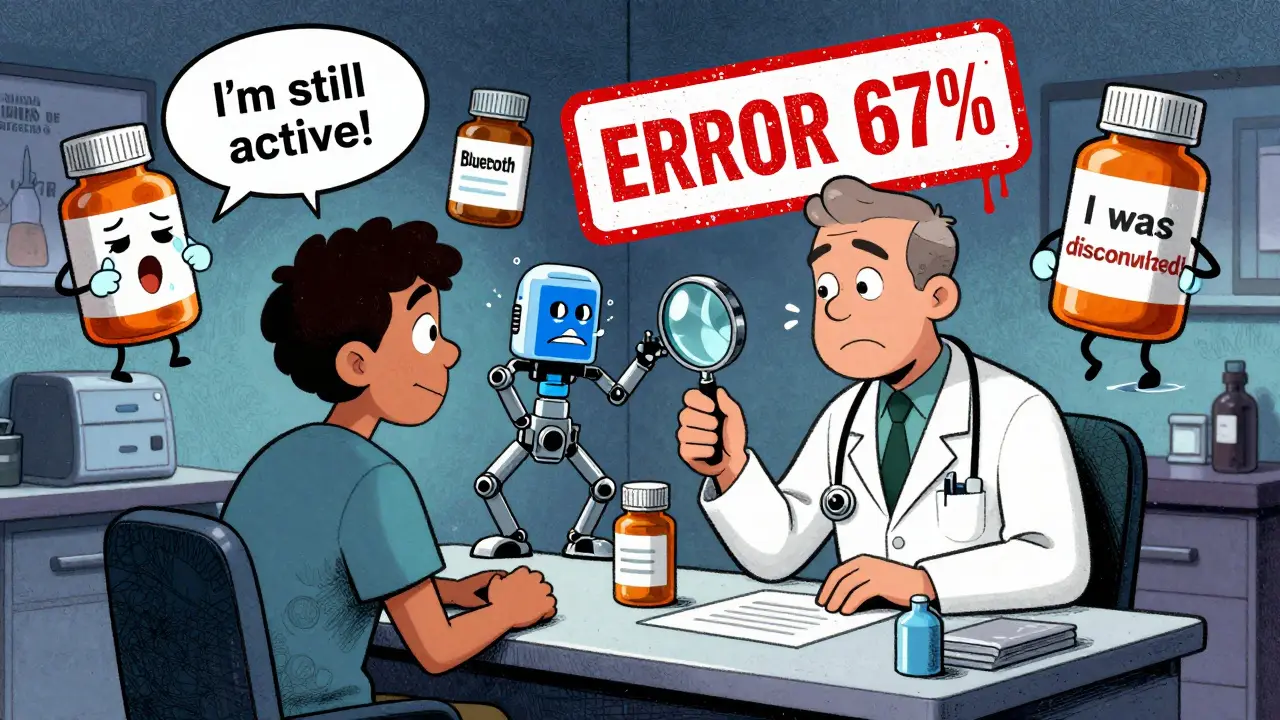
That’s why bringing your actual pill bottles to every appointment isn’t just a good idea-it’s the gold standard. A 2024 study from the American Academy of Family Physicians found that when patients bring their bottles, medication discrepancies drop by 67%. That means fewer wrong doses, fewer bad reactions, and fewer trips to the ER.
What Exactly Should You Bring?
You don’t just need your prescription meds. You need everything. That includes:
- All prescription medications in their original bottles
- Over-the-counter drugs like ibuprofen, antacids, or sleep aids
- Vitamins and supplements-even the ones you take "just because"
- Herbal remedies and teas that claim to help with blood pressure, sleep, or digestion
- Even expired or discontinued pills
Why include the ones you stopped? Because if you still have them in your cabinet, your doctor needs to know you were taking them. Maybe the old dose was too high. Maybe you switched to something better. Maybe you stopped because it made you dizzy-and no one knows that unless you show the bottle.
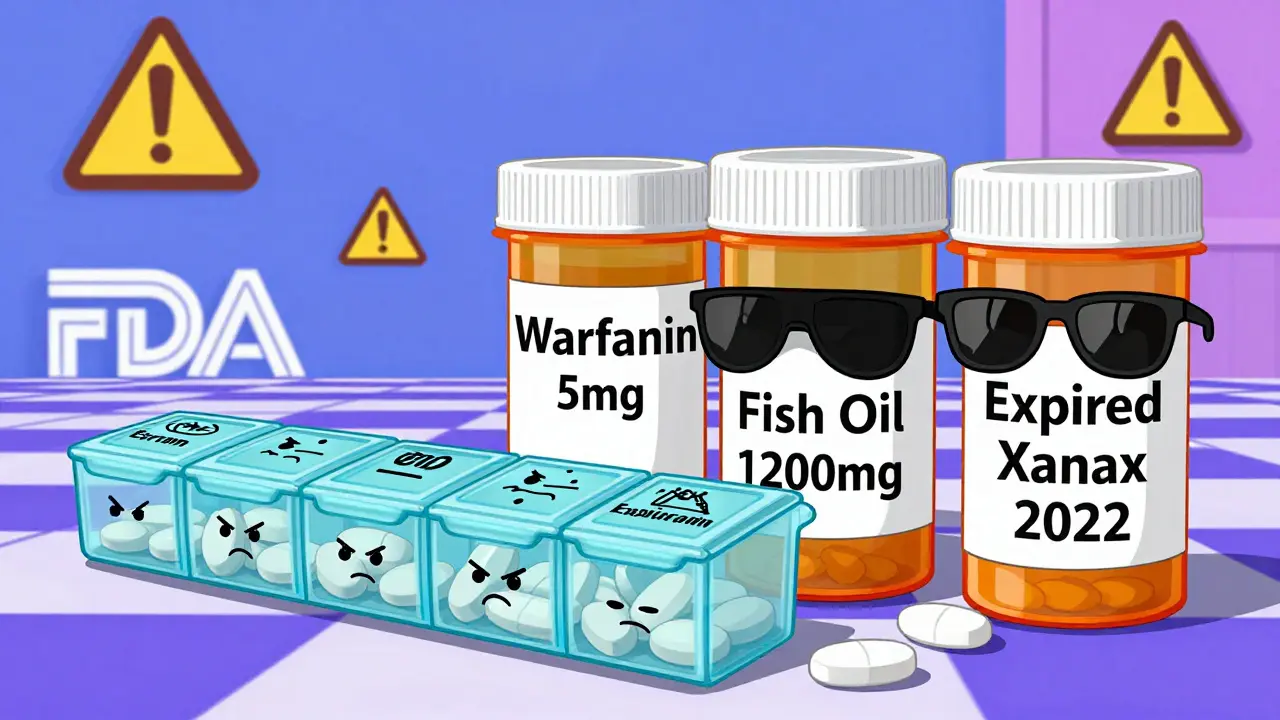
A 2023 study in PMC found that 38% of patients mix all their pills into one container-like a weekly pill organizer. Sounds neat, right? But here’s the problem: those organizers don’t have labels. They don’t show the drug name, strength, or expiration date. When your doctor sees a handful of white pills in a plastic box, they can’t tell if it’s aspirin, metoprolol, or a placebo. That’s why original bottles matter. The FDA requires every prescription bottle to include the drug name, dosage, prescribing doctor, pharmacy info, and expiration date. That’s not decoration-it’s your safety net.
Why Your Memory Isn’t Enough
Think you remember what you’re on? You probably don’t. A 2023 study of 22 older adults found that only 23% kept their medications in original bottles. The rest used pill organizers, ziplock bags, or even old candy jars. And here’s the kicker: 45% of patients unintentionally leave out at least one medication when they try to list them from memory.
And it’s not just forgetfulness. People often assume a medication doesn’t count if they haven’t taken it in a while. "I only take that when I have a headache," they say. But what if that headache medicine interacts with your blood pressure pill? What if you’ve been taking it daily without realizing it? "As needed" meds like painkillers, anti-nausea drugs, or anxiety pills are involved in 29% of adverse events because they’re left off lists.
One patient in Manchester told me last month that she stopped taking her cholesterol pill after a bad reaction-but kept the bottle. Her new doctor spotted it during a routine visit, asked about it, and discovered she’d been switching to a cheaper generic without telling anyone. That switch had raised her liver enzymes. If she hadn’t brought the bottle, she might have stayed on the wrong dose for months.
What About Pill Organizers?
Pill organizers are popular-especially among older adults. But they’re a double-edged sword. They help with adherence, yes. But they hide the truth from your doctor.
Here’s what you do: bring your organizer to the appointment-but also bring the original bottles. Your doctor will compare the pills in the organizer to the labels on the bottles. That way, they can confirm:
- What’s actually inside each compartment
- Whether the doses match what was prescribed
- If any pills are missing or substituted
Some patients use two weekly organizers-one for morning, one for evening. Others use 14-day or even two-week boxes to cut down on refills. That’s fine. Just make sure you bring the originals too. Otherwise, your doctor might think you’re on five pills when you’re really on eight.
How to Prepare Before Your Appointment
You don’t need to stress the night before. But you do need to be intentional.
- Set a reminder: 24 hours before your appointment, gather everything. Put it all in one bag-preferably a brown paper bag. This is called a "brown bag review," and clinics that use it save 38% of reconciliation time.
- Don’t throw away empty bottles. Even if you finished a prescription, keep the bottle. Pharmacists recommend taking a photo of the label before you toss it. Apps like Medisafe can scan and store those photos digitally.
- If you use a pill organizer, lay out the pills next to their original bottles. This helps you spot duplicates or missing meds.
- Write down any questions: "Why am I taking this?" "Is this still needed?" "Can I stop this one?"
Some practices call patients the day before to remind them. That increases compliance by 47%. If your clinic doesn’t do that, ask them to start. It’s a simple change that saves lives.
What If You Can’t Bring the Bottles?
Some people can’t physically carry 15 bottles. Others live far away. Others are in care homes where meds are locked up. That’s okay. You still have options.
Take clear photos of every label-front and back. Make sure the drug name, strength, and pharmacy name are visible. Send them to your doctor’s portal before your visit. Or bring a printed list from your pharmacy’s website. Many pharmacies now offer digital medication lists you can download.
But here’s the catch: phone photos miss things. They can’t show you if a bottle is half-empty. They can’t tell if you’ve been crushing pills. They can’t reveal that you’ve been taking half a tablet because you ran out. In-person verification catches 22% more errors than virtual checks, according to AMA data.
Smart pill bottles with Bluetooth tracking (like Hero Health’s $79.99 model) are rising in popularity, especially among Medicare users. But they’re not the norm yet. And they don’t replace the need to show your doctor the physical label with the FDA-mandated info.
What Your Doctor Will Do With the Bottles
When you hand over your bag of bottles, your doctor won’t just glance at them. They’ll compare each one to your electronic health record. They’ll check:
- Does the name match what’s in the system?
- Is the dose correct?
- Is the frequency right?
- Are there duplicates? (Like taking two different blood pressure pills that do the same thing)
- Are there interactions? (Like mixing statins with grapefruit juice, or NSAIDs with blood thinners)
- Are any meds expired or discontinued?
That’s when the magic happens. A 2023 study showed that 56% of inappropriate medications in older adults are only found by looking at the actual bottle-not the chart. One patient brought a bottle of warfarin he hadn’t taken in a year. His doctor realized his INR had been off because he’d switched to a new pharmacy that didn’t update his dose. That discovery prevented a stroke.
Common Mistakes (And How to Avoid Them)
Here’s what goes wrong-and how to fix it:
- Mistake: Bringing loose pills without labels. Solution: Always use original containers. If you’ve moved pills, take a photo of the label first.
- Mistake: Leaving out vitamins and supplements. Solution: Include everything-even the fish oil and turmeric. They interact with blood thinners and chemo drugs.
- Mistake: Throwing away empty bottles. Solution: Keep them until your next appointment. Take a photo if you must discard them.
- Mistake: Assuming your pharmacy knows everything. Solution: Pharmacies don’t always know what you get from another doctor or buy over the counter. Only you know the full picture.
- Mistake: Feeling embarrassed about unused meds. Solution: Doctors have seen it all. They’re not judging you. They’re trying to keep you safe.
A 2024 survey by Advanced Psychiatry Associates found that 19% of patients don’t even know what most of their pills are for. That’s not your fault. It’s a system problem. But you can fix it-by bringing the bottles and asking.
Why This Matters More Than Ever
Medication reconciliation isn’t just a nice-to-have. It’s a requirement. The Joint Commission demands it. Medicare requires it. And it’s saving lives.
Adverse drug events cause 5% of all hospital admissions and 18% of primary care visits. That’s tens of thousands of people each year-people who could’ve stayed home if their meds had been checked properly.
And it’s getting more important. Nearly half of adults over 65 take five or more medications. That’s called polypharmacy. And it’s rising fast. In 2024, 76% of geriatric specialists require pill bottles at every visit. General internists? Only 53%. But that’s changing. More clinics are adopting the brown bag method. More doctors are asking for it.
It’s not about being perfect. It’s about being honest. It’s about giving your doctor the real picture-not the version you think they want to hear.
So next time you have an appointment, don’t just grab your keys and your wallet. Grab your pills. All of them. In their bottles. You’re not just bringing medicine. You’re bringing your safety.
Do I need to bring every single pill bottle, even if I haven’t taken it in months?
Yes. Even if you stopped taking a medication weeks or months ago, keep the bottle. Your doctor needs to know you were on it-because it might still be affecting your body, or it could interact with something new. Discarded pills can also indicate you had side effects or couldn’t afford the refill, which are important clues for your care plan.
Can I just show photos of my pill bottles on my phone instead?
Photos help, but they’re not enough. Phone images miss details like how full the bottle is, whether pills are crushed or split, or if there are unused medications mixed in. In-person checks catch 22% more errors. If you can’t bring the bottles, send photos ahead of time-but still bring the real bottles if possible.
What if I use a pill organizer? Do I still need the original bottles?
Yes. Pill organizers are great for remembering to take your meds, but they don’t have labels. Your doctor needs to see the original bottle to confirm the drug name, dosage, and expiration date. Bring both: the organizer for daily use, and the bottles for accuracy.
Should I bring over-the-counter meds and supplements?
Absolutely. Many people forget that things like ibuprofen, melatonin, or fish oil can interact with prescriptions. A 2023 study found that 40% of medication errors involved OTC drugs or supplements not listed on the patient’s chart. Include everything.
How do I know if my doctor is doing proper medication reconciliation?
A good doctor will compare your bottles to your electronic record, ask about why you’re taking each med, and check for duplicates or interactions. They should also ask if you’ve stopped any meds, if you’ve had side effects, or if you’re having trouble paying for them. If they just glance at your list and move on, ask them to go through each bottle with you. You have the right to a full review.



Dorine Anthony
December 20, 2025 AT 23:54I used to think bringing pill bottles was overkill-until my grandma ended up in the ER because she forgot she was still taking that old blood thinner. Now I bring everything. Even the expired gummy vitamins. No shame.
Carolyn Benson
December 21, 2025 AT 22:20Medication reconciliation is just another symptom of a healthcare system that treats patients like data points instead of people. We’re expected to be pharmacists, archivists, and detectives-all while our doctors scroll through charts like they’re doomscrolling TikTok. The real problem isn’t the bottles-it’s that we’ve outsourced our own bodily autonomy to a broken machine.
Aadil Munshi
December 22, 2025 AT 14:49Bro, I’m from India and we don’t even have pill bottles half the time-just loose pills in ziplock bags with scribbled names. And guess what? We still don’t die. Your whole ‘gold standard’ thing is very American. Also, your 67% stat? Probably cherry-picked from a study funded by a pharmacy chain. 🤷♂️
Danielle Stewart
December 24, 2025 AT 02:26Bring the bottles. Bring the photos. Bring the list. Bring the questions. You’re not being difficult-you’re being smart. And if your doctor rolls their eyes? That’s not your problem. That’s theirs. You’re not here to make their job easy. You’re here to stay alive.
Erica Vest
December 24, 2025 AT 12:10According to the 2024 AAFP study cited, medication discrepancies decreased by 67% when patients brought physical pill bottles. The FDA-mandated labeling on prescription containers includes drug name, strength, dosage instructions, prescriber, pharmacy, and expiration date-all critical for accurate reconciliation. Pill organizers, while convenient, lack this metadata, creating a high-risk information gap. Digital photos are insufficient due to inability to capture pill integrity, bottle fill level, or physical annotations. The brown bag review remains the most reliable, low-tech intervention in clinical practice today.
Kinnaird Lynsey
December 24, 2025 AT 13:44I get why people skip the bottles-it’s annoying, it’s messy, it feels like being judged. But honestly? Doctors have seen worse. I once brought a bag with 23 bottles, half expired, and my doc just smiled and said, ‘Wow, you’re a champ.’ No shame. Just safety. Also, I started using Medisafe to scan labels. Life’s easier now.
shivam seo
December 25, 2025 AT 08:19Why are we even doing this? This is just another way for Big Pharma to control the narrative. Pills are overprescribed anyway. If you’re taking five meds, you’re probably being overmedicated. Just stop everything and eat kale. Also, the US healthcare system is a scam. I’m Australian. We don’t do this nonsense here.
Andrew Kelly
December 27, 2025 AT 01:40They say bring the bottles. But what if your doctor is part of the system that got you addicted to opioids in the first place? What if they’re just trying to cover their ass? I’ve seen people get flagged for having too many meds-then get denied care. This isn’t safety. It’s surveillance. And now they want you to take photos? That’s how they track you. Don’t be fooled.
Anna Sedervay
December 27, 2025 AT 10:05Frankly, the entire premise is infantilizing. Why must we be treated like children who can’t remember what’s in our own cabinets? This isn’t medicine-it’s performative compliance. And the ‘brown bag review’? A quaint, archaic ritual from the pre-digital era. Why not just integrate EHRs properly? Or use blockchain-based medication ledgers? No? Because the system is too lazy to innovate. And now we’re all supposed to carry plastic bottles like we’re preparing for a 1998 pharmacy audit?
Ashley Bliss
December 28, 2025 AT 14:29I brought my bottles to my last appointment and my doctor cried. Not because she was moved-because she realized she’d been prescribing me a drug that interacted with my thyroid med for two years. I didn’t say anything. I just handed her the bottle. And then she apologized. I didn’t want to be the hero. I just wanted to live. So yeah. Bring the bottles. Bring the pain. Bring the truth. Even if it breaks your heart.
Meenakshi Jaiswal
December 30, 2025 AT 06:50As a nurse in Delhi, I’ve seen patients take 10+ pills daily without labels. We use photos, yes-but we also ask them to point to each pill and say what it’s for. If they can’t, we write it down. It’s not perfect. But it’s better than guessing. Bring bottles if you can. If not, at least know what’s in your hand. Your life depends on it.
Mahammad Muradov
December 31, 2025 AT 02:15Everyone’s acting like this is revolutionary. In my country, we’ve been doing this for decades. The pharmacy gives you a printed list with every refill. You keep it. You show it. No drama. No brown bags. No selfies with your meds. Just common sense. Why does America need a 3000-word essay to tell people to bring their pills?