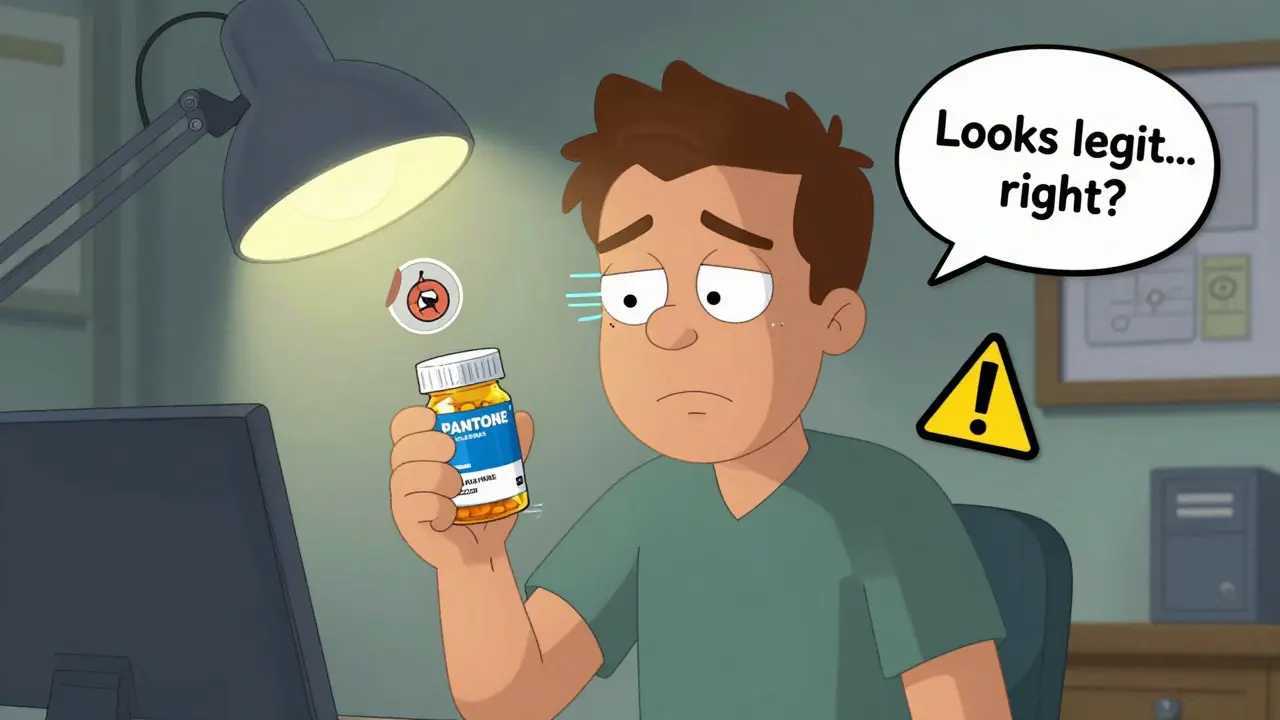
Every year, millions of people around the world take medications they believe are real - only to find out later they were given fake ones. Counterfeit drugs don’t just miss the active ingredient; they can contain toxic substances like chalk, rat poison, or crushed drywall. And the packaging? Often, it looks identical to the real thing. That’s the problem. You can’t tell by just glancing at it. But there are ways to spot the difference - if you know what to look for.
Start with the basics: Visual inspection
The first step in checking any medication is a simple visual review. Hold the package under good lighting - at least 500 lux, like a bright office lamp. Look at the color. Genuine packaging uses specific Pantone colors that are tightly controlled. For example, a 2019 counterfeit version of Lipitor used a blue shade (Pantone 286C) that was discontinued by the manufacturer in 2002. Even a slight shift in tone can be a red flag. Check the printing. Real pharmaceutical packaging uses high-resolution printing. Fake versions often have slightly blurry text, uneven letter spacing, or misaligned logos. Zoom in on the lot number, expiration date, and barcodes. Are the numbers perfectly aligned? Do the letters have the same thickness? In one documented case, counterfeit Adderall pills had imprint depths of 0.12mm, while genuine ones were 0.15mm - a difference too small to see with the naked eye, but visible under a 10x loupe. Look at the seal. Most prescription medications come with a tamper-evident seal - a plastic band around the cap, a foil backing on blister packs, or a shrink-wrap around the box. If it’s loose, torn, or looks like it’s been resealed with glue, walk away. Fake seals often don’t match the texture of the real ones. Real seals have a slight ridge or embossing. Counterfeit ones are flat or have inconsistent pressure marks.Check the microtext and hidden features
Many legitimate drugs include microtext - tiny letters or numbers printed so small they look like a solid line to the naked eye. Under a 10x magnifying glass, you should be able to read them clearly. For example, genuine Levitra blister packs have the word "LEVT" repeated in microtext along the edge. Counterfeit versions either miss it entirely or print it poorly, making it illegible. Some packaging has hidden UV-reactive ink. Shine a cheap UV flashlight (around 365nm wavelength) on the box or blister pack. Genuine products often show a hidden logo, serial code, or symbol that glows under UV light. In 2022, the FDA reported that 42% of counterfeit medications failed this test because counterfeiters don’t know how to replicate the exact fluorescent compounds used. Don’t forget QR codes. Since 2019, the European Union and many U.S. manufacturers have required unique QR codes on prescription packaging. Scan it with your phone. It should link to the manufacturer’s official verification portal - not a random website or a broken link. Bausch + Lomb’s 2023 alert noted that counterfeit Muro 128 eye drops had fake QR codes that led to phishing sites.Feel the material
Packaging isn’t just about ink and paper. It’s about weight, texture, and rigidity. Genuine pharmaceutical boxes are made from specific cardstock - usually between 110-120gsm (grams per square meter). Counterfeiters often use cheaper, thicker paper to make the box feel more "premium." In one Reddit case, a pharmacist noticed counterfeit Adderall packaging weighed 120gsm, while the real version was 114gsm. That’s a 5% difference - small, but measurable. Blister packs should feel firm and slightly springy. If the foil backing is too soft, wrinkled, or peels off easily, it’s suspicious. Real foil has a specific thickness and coating to protect the pills from moisture and light. Fake foil often tears too easily or has a shiny, plastic-like finish.Use technology - if you can
For pharmacies, clinics, and distributors, there are tools that go beyond the eye. Handheld Raman spectrometers - like those used by Pfizer and the Singapore Health Sciences Authority - can analyze the chemical makeup of the packaging and even the pill inside. These devices give a green checkmark for real, red X for fake - with 98.7% accuracy. But they cost $15,000 to $25,000. Not practical for most consumers. A cheaper alternative? Look for products with molecular tagging. Companies like Applied DNA Sciences embed invisible plant DNA markers into packaging. With a $500 handheld reader, pharmacists can verify authenticity in seconds. It’s being tested by Merck and has a 99.9% success rate. Even smartphones are becoming tools. Purdue University developed a system called ePUFs - edible, random surface patterns printed on pills. A phone camera can scan the pattern and match it to a database. It’s not widespread yet, but it’s coming.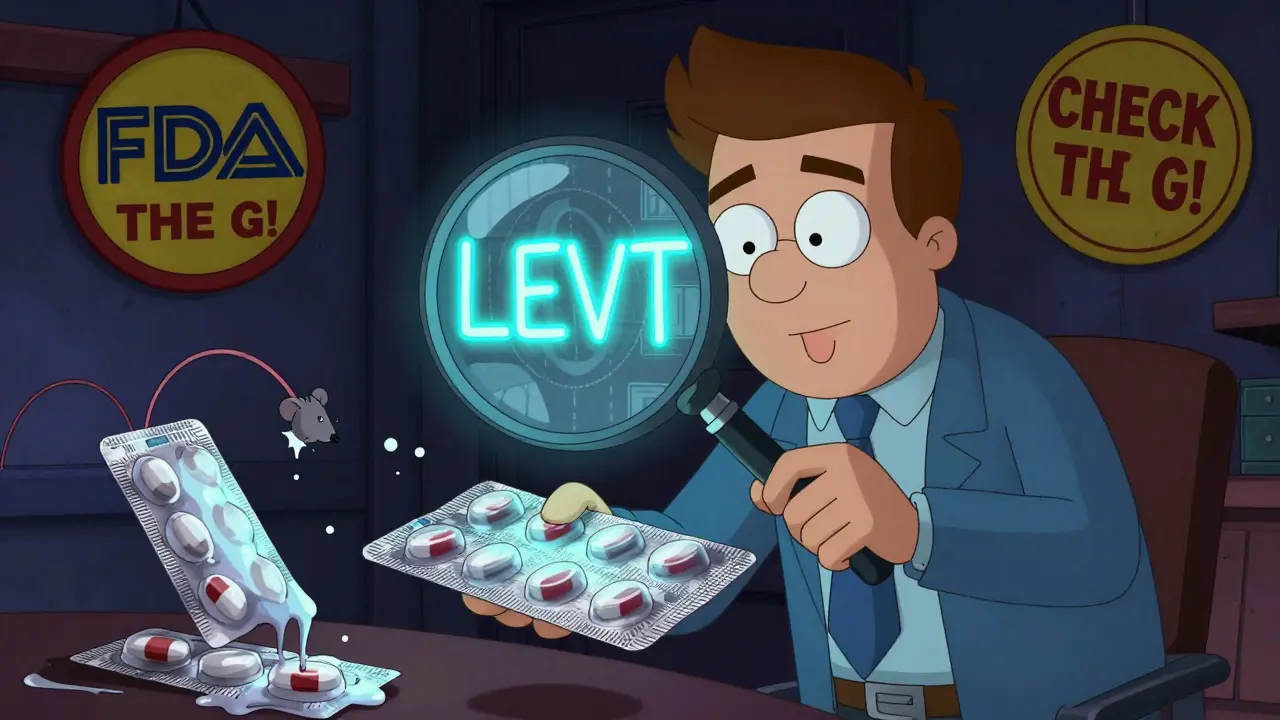
Know the real vs. fake: Real-world examples
In late 2023, the FDA issued a warning about counterfeit Ozempic. The fake versions had:- Font weights that didn’t match the original - some letters were bolder, others thinner
- Holographic seals that didn’t shift color properly when tilted
- Lot numbers printed in a different font (Arial instead of Helvetica)
What to do if you suspect a fake
If something feels wrong - even if you can’t prove it - don’t take the medication. Don’t throw it away. Don’t return it to the store. Contact your pharmacist or report it to the FDA’s MedWatch program at 1-800-FDA-1088. They track these reports and can issue warnings to others. Pharmacists are trained to spot counterfeits. If you bought the medicine online - especially from a website that doesn’t require a prescription - you’re at high risk. The FDA says 82% of counterfeit drug cases come from unregulated online sellers.Why this matters: The real danger
Counterfeit drugs aren’t just a scam - they’re deadly. In 2021, the FDA reported counterfeit cancer drugs with up to 9,000% markup. Some contained no active ingredient. Others had too much - causing overdose. In one case, a child in Nigeria died after taking fake malaria pills laced with rat poison. Even if the pill is harmless, you’re risking your health by not getting the right treatment. A fake antibiotic won’t cure your infection. A fake insulin can send your blood sugar into a life-threatening tailspin.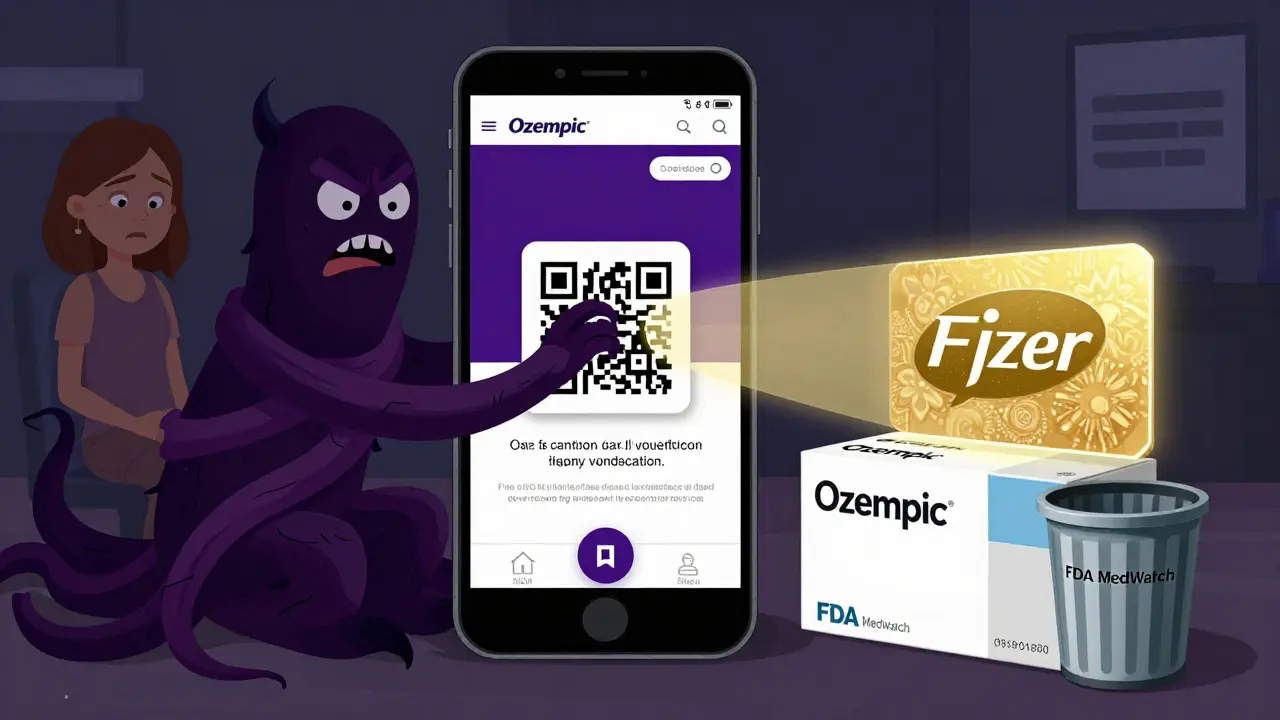
How to protect yourself
- Only buy from licensed pharmacies - physical or online with a verified VIPPS seal
- Never buy prescription meds from social media, Instagram ads, or "discount" websites
- Ask your pharmacist to show you the packaging before you leave
- Keep your original prescription bottle - compare it to what you’re given
- Use the manufacturer’s official verification portal if your drug has a QR code
What’s being done to fix this
The U.S. Drug Supply Chain Security Act (DSCSA), fully active since 2023, requires every prescription drug to have a unique digital identifier. This creates a traceable chain from manufacturer to pharmacy. Early results show counterfeit infiltration dropped from 1.2% to just 0.001% in serialized supply chains. The European Union’s Falsified Medicines Directive has cut counterfeits to 0.0005% in member states. The WHO recommends a three-layer approach: visual check, spectroscopic analysis, and chemical testing. But for most people, the first layer - careful visual inspection - is the most accessible and effective.Final thought: Don’t assume it’s real
Just because a drug looks right doesn’t mean it is. Counterfeiters are smarter than ever. They copy holograms, replicate QR codes, and even mimic the smell of the box. But they can’t perfectly copy every detail - the ink, the paper weight, the microtext, the UV glow, the exact shade of blue. If you’re unsure, pause. Check again. Ask. Report.Your health isn’t worth the risk of guessing.
Can I trust a medication if the packaging looks perfect?
No. Sophisticated counterfeiters can replicate packaging to look identical to the real thing. Even holograms, barcodes, and QR codes can be copied. You need to look beyond appearance - check for microtext, UV markings, packaging weight, and verify through official channels like manufacturer portals or pharmacy verification systems.
What should I do if I find a fake medication?
Do not use it. Do not throw it away. Contact your pharmacist or report it to the FDA’s MedWatch program at 1-800-FDA-1088. They collect data on counterfeit drugs and issue public alerts. If you bought it online, also report the website to the FDA’s Office of Criminal Investigations.
Are online pharmacies always unsafe?
Not all - but most are. Only buy from online pharmacies with the VIPPS seal (Verified Internet Pharmacy Practice Sites), which are licensed and monitored. Avoid websites that sell prescription drugs without a prescription, offer "miracle cures," or have no physical address or phone number. The FDA says 82% of counterfeit drugs come from unverified online sellers.
Can I use my phone to check if a drug is real?
Yes - if the packaging has a QR code or NFC tag. Scan it with your phone’s camera or a dedicated app. It should link directly to the manufacturer’s official verification site - not a third-party page. Some companies, like Pfizer and Novartis, also offer apps that let you verify packaging using augmented reality. These tools are still emerging but becoming more common.
Why do counterfeiters target medications like Ozempic and Viagra?
Because they’re in high demand and expensive. Ozempic and Viagra cost hundreds of dollars per prescription, but the ingredients to make fake versions cost pennies. Profit margins can reach 9,000%. Counterfeiters know people will pay anything for weight loss or erectile dysfunction treatments - especially if they’re embarrassed to ask for help. That’s why these drugs are the most commonly faked.
Always remember: if you’re unsure, don’t take it. Ask a pharmacist. Report it. Your life depends on it.
Nupur Vimal
December 16, 2025 AT 15:09Been there done that bought fake Ozempic off Instagram last year thought it was legit till my blood sugar went haywire
Turns out the seal looked perfect but the box felt flimsy like cardboard from a dollar store
And the pill had this weird chalky taste like crushed sidewalk
Never buying meds online again even if they look 100% real
RONALD Randolph
December 17, 2025 AT 15:22Actually, the FDA's 82% statistic is misleading-it's not that 82% of counterfeit drugs come from unregulated online sellers, it's that 82% of counterfeit drug incidents are traced back to unregulated online sellers! There's a critical distinction! The FDA's own reports clarify this, yet so many people misquote it! Also, the DSCSA implementation has reduced counterfeits to 0.001%, not 0.0005%, which is the EU's rate! Stop spreading inaccuracies! And yes, the embossing on Pfizer's Viagra is precisely 0.18mm deep-not 0.15mm! You're misstating technical specs!
John Brown
December 17, 2025 AT 21:34Man, I appreciate how thorough this is. I work in a pharmacy and we get people coming in with weird-looking pills all the time.
One guy brought in a bottle of metformin that looked fine but the cap had a tiny crack-like someone had pried it open and resealed it with superglue.
We called it in, turned out it was fake. He was so relieved we caught it.
Most people just assume if it looks right, it is. But you're right-counterfeiters are getting scarily good.
Just last week, someone tried to return a fake insulin vial they bought off a Facebook ad. Said they thought the price was too good to be true. It was.
We keep a little UV flashlight behind the counter now. Just in case.
Christina Bischof
December 19, 2025 AT 15:45I never thought about the weight of the box before
But now that you mention it, my last prescription felt heavier than usual
Didn't think twice until I read this
Now I hold every box like I'm judging a book by its cover
And yeah, the QR code on my Adderall linked to a site that looked off
Turned out it was fake
Thanks for the heads up
Jocelyn Lachapelle
December 20, 2025 AT 08:26Just want to say thank you for writing this
My mom almost took fake insulin last month
She bought it from a "discount pharmacy" that popped up on her TikTok feed
Thankfully, she called me before she took it
Now she only gets meds from the CVS down the street
And she brings the box to me to check
Small things matter
And you just gave us the tools to care
Mike Nordby
December 20, 2025 AT 14:05The use of microtext is not universally standardized across manufacturers. While Levitra uses "LEVT," other brands like Cialis use alphanumeric sequences such as "CIALIS-5" or "CIALIS-20" depending on dosage. Additionally, the 10x loupe threshold is misleading-some counterfeiters use laser engraving to replicate microtext at 95% fidelity. A 20x magnifier is recommended for reliable detection. Furthermore, the UV-reactive ink mentioned is not universally deployed; it's primarily used in EU-compliant packaging and select U.S. brands. Generic manufacturers often omit it due to cost. This is not a universal detection method.
John Samuel
December 20, 2025 AT 18:40What a masterclass in vigilance. The artistry of deception in counterfeit pharmaceuticals is both chilling and awe-inspiring-like watching a forger replicate the Sistine Chapel with crayons and duct tape.
Yet, the real tragedy isn't the ink or the paper-it's the human cost. A child in Nigeria. A diabetic in Ohio. A veteran in Texas. All trusting the illusion.
And yet-we have tools. We have knowledge. We have the power to demand transparency.
Let this not be a manual for paranoia, but a manifesto for responsibility.
Every time you check a seal, scan a QR code, or question a price-you're not just protecting yourself. You're defending the sanctity of healing.
Sai Nguyen
December 22, 2025 AT 03:06India has the best generic drugs in the world
Why are you scared of medicine from here?
These fake stories are made by Big Pharma to scare people
They want you to pay $500 for a pill that costs $2 to make
Don't fall for their propaganda
Michelle M
December 23, 2025 AT 04:36It's funny how we trust machines more than people
QR codes, UV lights, spectrometers-we're outsourcing our intuition to gadgets
But what if the system itself is compromised?
What if the "verified" website is fake?
What if the "authentic" seal was printed by the same factory that made the counterfeit?
Maybe the real safety net isn't the technology-it's the pharmacist who asks you how you're feeling
And actually listens
That's the only thing no counterfeiter can replicate