
When you’re sick and taking antibiotics, the last thing you want is for your medicine to stop working - and yet, something as simple as a glass of milk or a bowl of yogurt could be silently sabotaging your treatment. This isn’t a myth. It’s chemistry. And it’s happening right now to people who think they’re doing everything right.
Why Dairy Interferes with Antibiotics
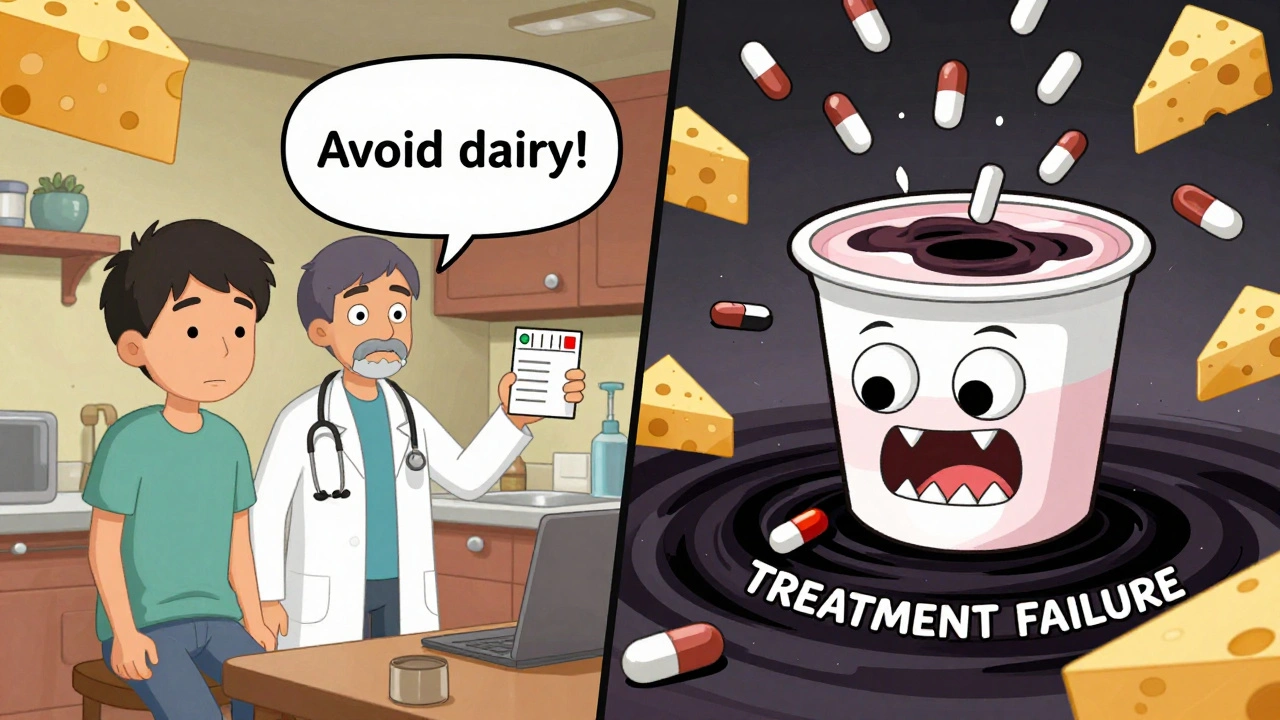
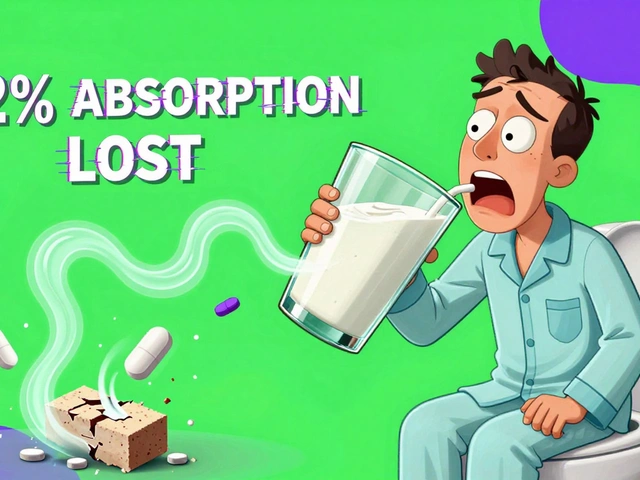
The problem starts in your stomach. Dairy products like milk, cheese, yogurt, and even calcium-fortified plant-based milks contain high levels of calcium, magnesium, and other metal ions. These ions bind tightly to certain antibiotics, forming what’s called a chelate - a stable, insoluble compound your body can’t absorb. Instead of entering your bloodstream to fight infection, the antibiotic gets trapped and passes out of your system unused. This isn’t new. Scientists first noticed this in the 1960s with tetracycline antibiotics. Since then, dozens of studies have confirmed it. For example, one study showed that drinking milk with ciprofloxacin reduced its absorption by up to 92%. That’s not a small drop - it’s the difference between your infection clearing up and turning into something worse.Which Antibiotics Are Affected?
Not all antibiotics react this way. Only specific classes are vulnerable. The two biggest offenders are:- Tetracyclines - including tetracycline, doxycycline, and minocycline
- Fluoroquinolones - including ciprofloxacin, levofloxacin, and moxifloxacin
Penicillins like amoxicillin, macrolides like azithromycin, and cephalosporins like cephalexin? They’re mostly safe with dairy. No timing issues. But if your prescription is doxycycline or ciprofloxacin, you’re in the high-risk group.
How Much Does Dairy Really Reduce Absorption?
The numbers are startling. A single glass of milk can cut antibiotic levels in your blood by half - sometimes more.- Tetracycline: 50-90% reduction in absorption when taken with dairy
- Doxycycline: 20-50% reduction - less than older tetracyclines, but still significant
- Ciprofloxacin: 70% reduction with milk, 92% with yogurt
- Levofloxacin: Up to 60% drop when taken with calcium-fortified orange juice
One patient in a 2023 study kept getting recurring UTIs. She took her ciprofloxacin with breakfast - cereal with fortified milk and a yogurt cup. Her doctor didn’t warn her. After switching to taking the antibiotic two hours before breakfast, her infection cleared in days.
What’s the Right Timing?
Timing isn’t just advice - it’s the only way to make sure your antibiotic works. The rules vary slightly by drug:- Tetracyclines (including doxycycline): Take at least 1 hour before or 2 hours after eating dairy or calcium-rich foods.
- Fluoroquinolones (like ciprofloxacin): Take 2 hours before or 4 to 6 hours after dairy or calcium products.
Why the difference? Fluoroquinolones bind even more tightly to calcium than tetracyclines. They need more time to be absorbed before dairy hits your gut.
Practical tip: If you take your antibiotic twice a day - say, 8 a.m. and 8 p.m. - plan your meals around it. Have your dairy at noon and 6 p.m. That way, you’re safely spaced out. Don’t rely on feeling “full” or “empty.” Your stomach doesn’t care. Only timing matters.
What Happens If You Ignore This?
Skipping the timing rule doesn’t just mean your medicine won’t work as well. It can lead to real consequences:- Treatment failure - your infection doesn’t go away, or it comes back worse
- Longer illness - you’re sick longer, miss more work, risk spreading it
- Antibiotic resistance - if the drug doesn’t kill all the bacteria, the survivors become stronger. This contributes to the global crisis of superbugs
A 2023 study in the Journal of Antimicrobial Chemotherapy found that 22% of UTI treatment failures were linked to dairy timing errors. That’s not rare. That’s common.
And here’s the kicker: 43% of patients given these antibiotics got no clear instructions from their doctor. They just assumed “avoid dairy” meant “don’t drink milk all week.” It doesn’t. It means don’t have it within a few hours of your pill.
Real Stories, Real Mistakes
On Reddit, a nurse shared a case: a patient on doxycycline for Lyme disease kept having fevers and joint pain. She was taking her pill with breakfast - toast and milk. Once she switched to taking it an hour before breakfast, her symptoms vanished in 48 hours. Another user on HealthUnlocked took ciprofloxacin for a kidney infection. She drank yogurt every night. Her infection lingered for six weeks. Her pharmacist asked about her diet - she hadn’t thought to mention the yogurt. After switching to yogurt after dinner, not before, the infection cleared in three days.These aren’t outliers. They’re the rule.

What About Calcium Supplements?
If you’re taking calcium for bone health, you’re at higher risk. Many older adults take both antibiotics and calcium pills. That’s a dangerous combo.- Take calcium supplements at least 4 hours after your antibiotic
- Or take your antibiotic 2 hours before your calcium pill
Same goes for antacids (like Tums or Maalox) and iron supplements. All contain calcium, magnesium, or iron - all of which bind to these antibiotics. Read the labels. If it says “calcium carbonate” or “ferrous sulfate,” treat it like dairy.
What’s Being Done to Fix This?
The problem isn’t going away - but awareness is growing. In January 2023, the FDA required clearer warnings on tetracycline and fluoroquinolone packaging. Pharmacies now use digital tools like Medisafe and MyMeds to send alerts when you log one of these antibiotics.Pharmaceutical companies are also working on new versions - like extended-release ciprofloxacin (Cipro XR) - that are less affected by calcium. But they cost 10 times more than the generic. For most people, timing is still the cheapest and most effective fix.
The Infectious Diseases Society of America now tells doctors to give specific timing instructions - not vague warnings. “Take two hours before or four hours after dairy” is better than “avoid dairy.” Clarity saves lives.
Quick Reference: What to Do
- Check your antibiotic - Is it a tetracycline or fluoroquinolone? If yes, read on.
- Don’t take it with milk, yogurt, cheese, fortified plant milks, calcium supplements, or antacids
- Tetracyclines: Take 1 hour before or 2 hours after dairy
- Fluoroquinolones: Take 2 hours before or 4-6 hours after dairy
- Plan meals: Take your pill on an empty stomach. Eat dairy later.
- Ask your pharmacist: They know the details. Don’t assume your doctor told you everything.
It’s not about being perfect. It’s about being smart. One small change - waiting a couple hours - can mean the difference between healing fast and fighting the same infection again.
Can I have dairy if I take my antibiotic at night?
It depends on the antibiotic. If you take a tetracycline like doxycycline at night, avoid dairy for 2 hours before and after. If you take ciprofloxacin at night, don’t have yogurt or milk until the next morning. The key is spacing - not timing of day. Always follow the 1-2 hour (for tetracyclines) or 4-6 hour (for fluoroquinolones) rule, no matter when you take the pill.
Is almond milk or oat milk safe with antibiotics?
Only if it’s not fortified with calcium. Most store-bought almond, soy, and oat milks are enriched with calcium to mimic dairy. Check the label. If it says “calcium carbonate” or “tricalcium phosphate,” it’s just as risky as cow’s milk. Stick to plain, unfortified versions - or avoid them entirely during your antibiotic course.
What if I accidentally take dairy with my antibiotic?
Don’t panic. One mistake won’t ruin your treatment - but don’t do it again. Don’t double up on your next dose. That’s dangerous. Just go back to the correct timing. If you’re worried your infection isn’t improving, contact your doctor. They may need to adjust your treatment or run tests to check if the antibiotic is working.
Do I need to avoid all calcium-rich foods?
Only the ones with high calcium levels that interfere with absorption - dairy, fortified drinks, supplements, and antacids. Leafy greens like kale or broccoli have calcium too, but in much lower amounts and bound differently. They won’t cause the same problem. Focus on the big offenders: milk, yogurt, cheese, and calcium pills.
Can I take my antibiotic with water?
Yes - water is the best choice. Avoid coffee, juice, or tea if they’re fortified with calcium or iron. Stick to plain water. It won’t interfere, and it helps your body absorb the medicine properly. Some antibiotics need to be taken on an empty stomach anyway - water keeps you hydrated without risking interaction.




Chris Jahmil Ignacio
December 3, 2025 AT 03:18Let me tell you something nobody else will admit - the pharmaceutical industry doesn't care if you get better, they care if you keep buying pills. They know about this calcium-antibiotic interaction since the 70s but never made a big deal because if you fail treatment, you come back for another round. That's business. And now they slap a tiny warning on the bottle like it's an afterthought. Meanwhile, your doctor is too busy scrolling through their phone to explain it to you. You think this is science? It's profit disguised as medicine. And don't even get me started on those 'fortified' plant milks - that's corporate manipulation right there. They know people are switching to almond milk to be 'healthy' so they pump it full of calcium to mimic dairy and then trap you in the same trap. It's a trap. I've seen it. I've lived it. Don't trust anyone who says 'it's fine'.
Paul Corcoran
December 4, 2025 AT 23:56This is such an important post - thank you for laying it out so clearly. I used to take my doxycycline with my morning oatmeal and almond milk because I thought 'plant-based = safe'. Turns out my oat milk had calcium carbonate listed as the second ingredient. My UTI came back twice. Once I switched to water and waited two hours after my pill to eat anything, it cleared up in 48 hours. I wish I'd known this before. Seriously, if you're on antibiotics, check your labels. Even 'natural' stuff can mess you up. You're not overthinking it - you're being smart.
Colin Mitchell
December 6, 2025 AT 01:13Hey, just wanted to say this saved me. I was on cipro for a bad sinus infection and kept getting dizzy and tired. My pharmacist asked if I was drinking soy milk with it - I said yes, every morning. He laughed and said 'that's your problem'. I switched to taking it at 7am with water, then had my coffee and oat yogurt at 10am. By day 3 I felt like a new person. Don't overcomplicate it - water, wait, then eat. Simple. But so many people don't know. Share this with someone who needs it.
Stacy Natanielle
December 7, 2025 AT 02:35OMG I CAN’T BELIEVE I DID THIS FOR YEARS 😭 I took my cipro with my Greek yogurt every night for my kidney infection… and wondered why it took 6 weeks to clear. I’m literally crying right now. Also, I just checked my almond milk - calcium carbonate, tricalcium phosphate, AND vitamin D3. That’s a triple threat. I’m so mad at my doctor for not telling me. And now I’m going to go check my supplements - I bet they’re full of calcium too. I’m going to be a walking antibiotic compliance checklist from now on. 🙃
kelly mckeown
December 7, 2025 AT 11:55i never knew this… i took my doxy with my smoothie every morning and wondered why i still felt awful. i just read this and i feel dumb but also so relieved? like… maybe it wasn’t me being weak. i switched to water and waiting an hour and already my throat feels better. thank you for writing this. i’ll share it with my mom shes on antibiotics too. sorry for the typos… im tired but this matters.
Tom Costello
December 9, 2025 AT 01:51Great breakdown. I work in public health and this is one of those silent public health failures - people are getting sicker because of basic pharmacokinetics they never learned. The fact that 43% of patients get zero clear instructions is alarming. It’s not just about individual responsibility - the system needs to do better. Pharmacies should have pop-up alerts when dispensing these meds. Doctors should be required to give printed timing charts. This isn’t niche knowledge. It’s essential. And it’s free. No pill reformulation needed. Just communication.
dylan dowsett
December 9, 2025 AT 07:58Wait. Wait. Wait. So you’re telling me… I’ve been taking my calcium supplements with my doxycycline… for my osteoporosis… for the past 3 years? And now you’re saying that’s why my Lyme symptoms keep coming back? I’ve been doing everything right - vitamins, diet, rest - but I’ve been poisoning my own treatment? I’m going to call my doctor right now. And I’m going to throw out my Tums. And my fortified orange juice. And my almond milk. And my… oh god. I’m a walking medical disaster. I’m so sorry I ever doubted this. I’m so sorry.
Susan Haboustak
December 9, 2025 AT 15:38