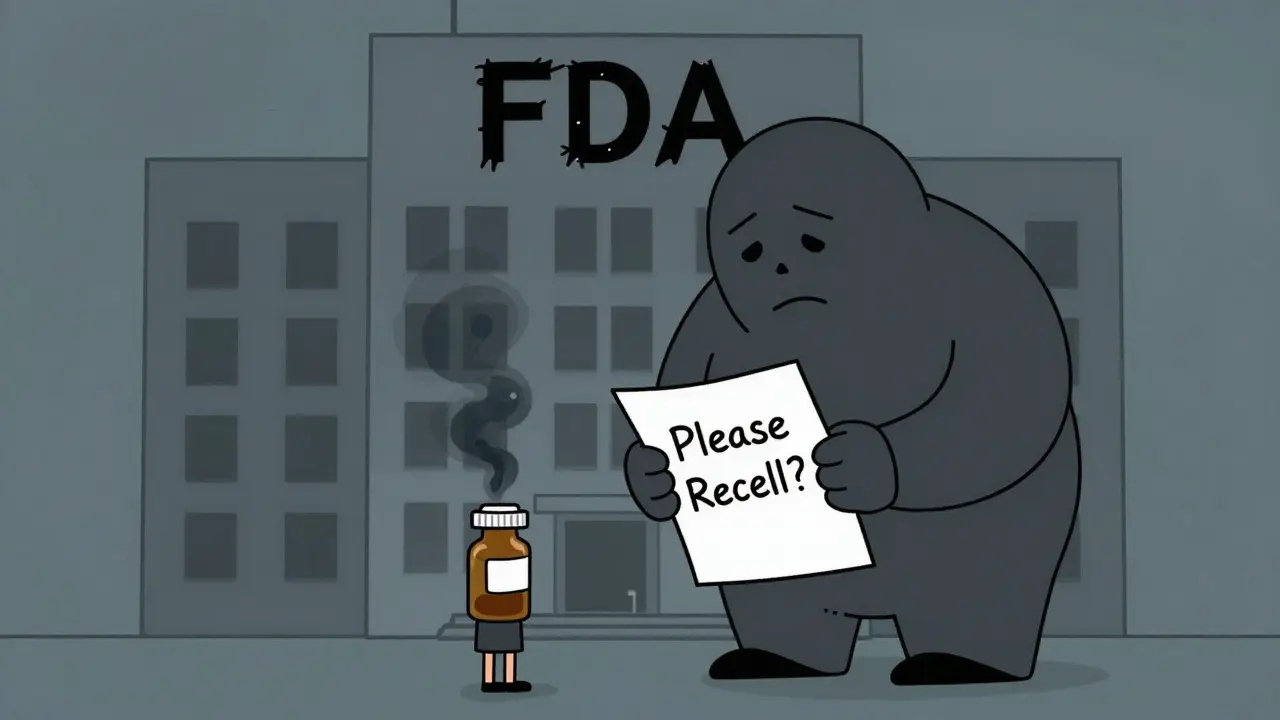
Imagine finding out that the life-saving medication you’ve been taking for years contains a hidden carcinogen. You want it gone from the shelves immediately. But here is the shocking reality: in the United States, the agency responsible for protecting your health-the Food and Drug Administration (FDA)-often cannot legally force a company to pull that drug off the market.
This isn’t a conspiracy theory; it’s the law. For decades, a massive gap in federal regulations has meant that while the FDA can ban dangerous medical devices with a signature, removing unsafe drugs requires a complex legal battle or, more commonly, a polite request. Understanding this drug recall authority framework is crucial for patients, healthcare providers, and anyone who relies on pharmaceutical safety. It explains why some dangerous meds linger longer than they should and how the system actually works when things go wrong.
The Myth of Federal Power: Who Really Pulls the Plug?
Most people assume the FDA holds the ultimate power to ban any product deemed unsafe. If a toaster causes fires, the Consumer Product Safety Commission acts. If a car has faulty brakes, the National Highway Traffic Safety Administration intervenes. So, why not drugs? The answer lies in the specific wording of the Federal Food, Drug, and Cosmetic Act (FD&C Act), the foundational law governing drug regulation since 1938.
Under current statutes, the FDA lacks direct statutory authority to mandate the withdrawal of most prescription and over-the-counter drugs. According to the National Center for Biotechnology Information (NCBI) StatPearls, "Contrary to public perception, the FDA does not have the authority to mandate a drug's withdrawal from the market directly." Instead, the agency must request that manufacturers voluntarily recall their products.
This creates a dynamic where the manufacturer, not the government, makes the final decision to remove a drug. Caleb Alexander, M.D., an internist at Johns Hopkins University, explains it plainly: "People often talk colloquially about the FDA 'pulling the drug from the market,' and in almost all instances, the answer is no... The manufacturer pulled the drug from the market, and the FDA simply made it untenable for the manufacturer to behave otherwise."
There is one narrow exception: controlled substances. The FDA has limited mandatory recall powers here due to separate laws governing narcotics. However, for the vast majority of medications-from antibiotics to blood pressure pills-the system relies on cooperation, not coercion.
When Requests Fail: The Legal Hammer of Section 304
What happens if a pharmaceutical giant ignores the FDA’s request? What if they decide that the cost of a recall outweighs the risk of liability? This is where the legal process gets teeth, though those teeth are blunt instruments compared to other regulatory bodies.
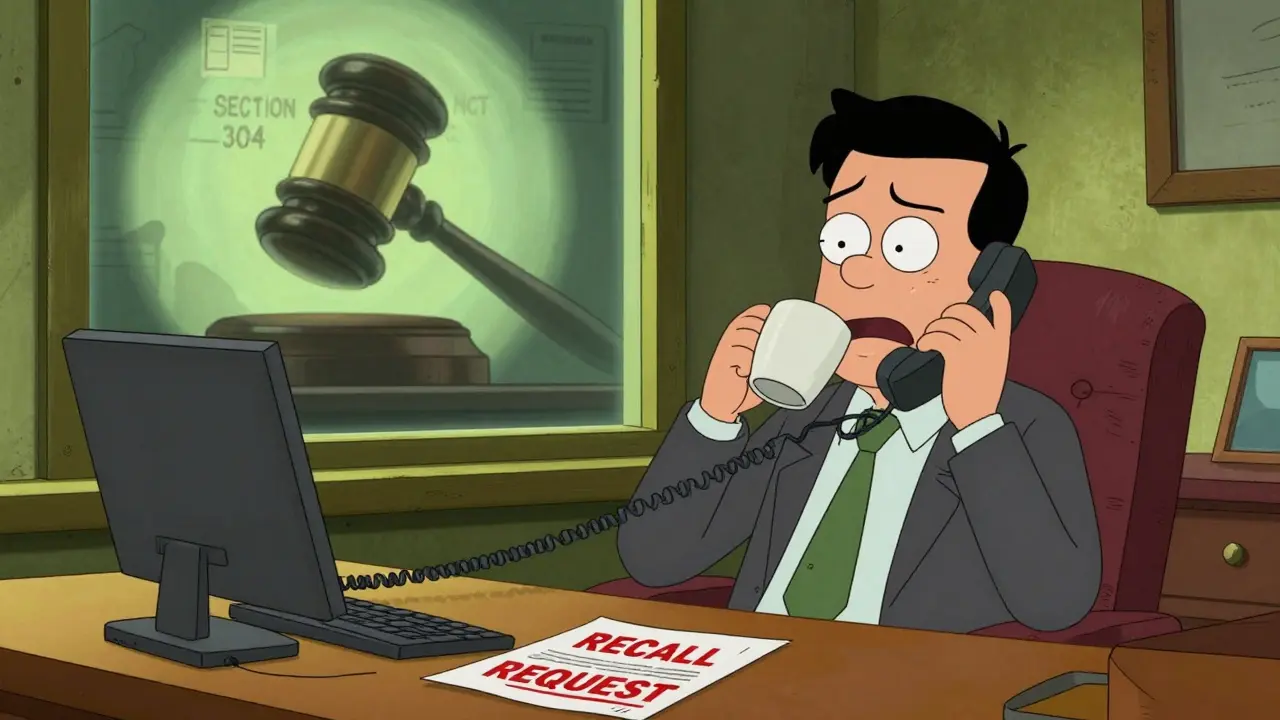
If a manufacturer refuses a voluntary recall, the FDA must turn to Section 304 of the FD&C Act. This section allows the agency to seek a court injunction. Essentially, the FDA goes to federal court to ask a judge to order the company to stop manufacturing or distributing the unsafe drug.
This process is slow, expensive, and public. It involves filing lawsuits, gathering evidence, and waiting for judicial review. During this time, the unsafe medication may remain on pharmacy shelves. Dr. Sidney Wolfe of Public Citizen’s Health Research Group highlighted this danger in 2019 testimony before Congress, noting that the inability to order immediate mandatory recalls "creates dangerous delays in removing hazardous products." He pointed to the 2018 valsartan contamination case, where it took six months for full market withdrawal despite known risks.
The threat of an injunction, combined with the reputational damage and potential criminal charges under other sections of the FD&C Act, usually forces companies to comply. But the delay itself is the critical flaw in the system.
Classifying Danger: How Recalls Are Categorized
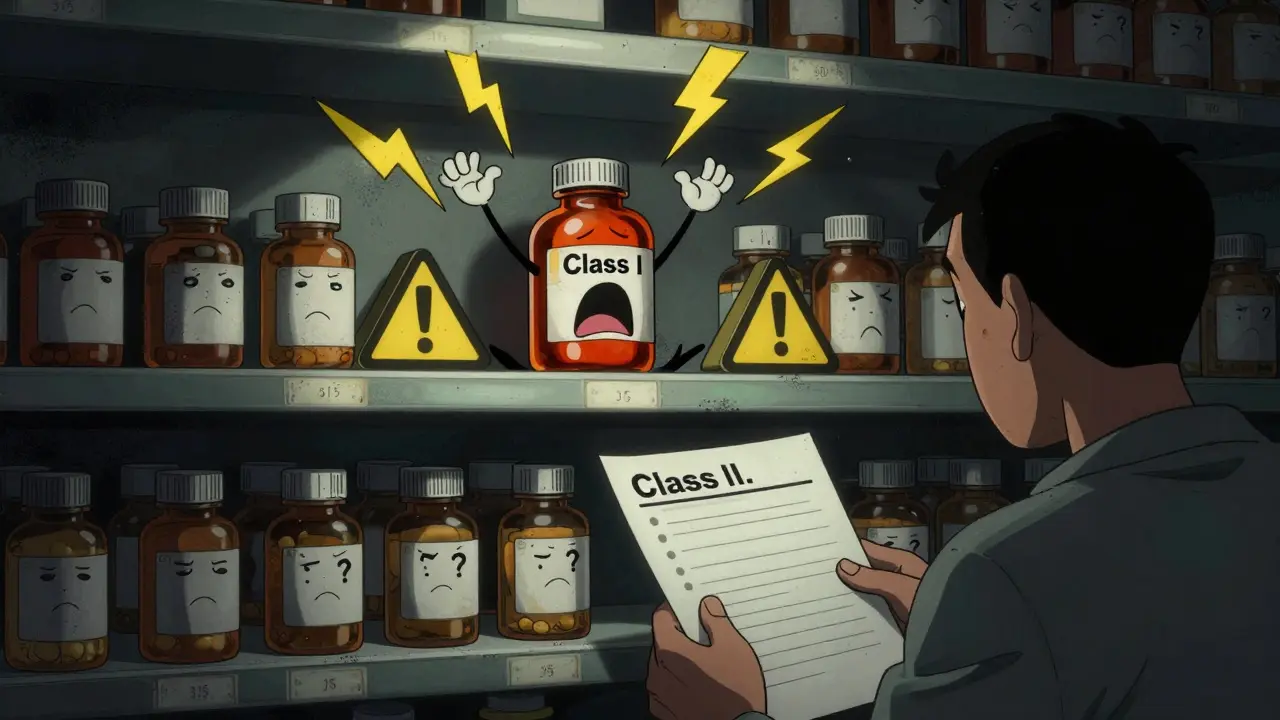
Not all recalls are created equal. To manage the flow of information and prioritize actions, the FDA uses a three-tier classification system established in 21 CFR Part 7. These classes determine how urgently the issue must be addressed and how far down the supply chain the notification must travel.
| Recall Class | Risk Level | Typical Cause | Action Required |
|---|---|---|---|
| Class I | Highest | Contamination, lethal dosage errors | Patient-level notification; immediate removal |
| Class II | Moderate | Labeling errors, minor defects | Distributor-level notification; temporary/reversible harm |
| Class III | Lowest | Packaging issues, cosmetic flaws | No adverse health consequences likely |
Class I recalls represent the most serious situations. There is a "reasonable probability" that using the product will cause serious adverse health consequences or death. These account for only about 2% of all recalls but require the fastest response. Manufacturers must notify the FDA within 24 hours of deciding to initiate the recall, a tightening of rules from the previous 72-hour standard.
Class II recalls make up the bulk of activity, roughly 70% of cases. Here, the product might cause temporary or medically reversible adverse health consequences, or the probability of serious harm is remote. Think of a pill bottle with the wrong expiration date printed on it, or a tablet that is slightly misshapen but chemically correct.
Class III recalls involve violations that are unlikely to cause adverse health reactions. These are often administrative or packaging issues, such as missing lot numbers or incorrect color coding on boxes.
The Device Exception: Why Medical Devices Get Tougher Treatment
If you think the drug recall process is weak, look at medical devices. The FDA possesses significantly stronger authority here. Under 21 CFR 810, the agency can issue mandatory recall orders for devices if there is a reasonable probability they would cause serious adverse health consequences or death.
This asymmetry stems from the Medical Device Amendments of 1976, which granted the FDA robust enforcement powers for devices, unlike the drug provisions established in the 1938 FD&C Act. If a hip implant fails or a pacemaker malfunctions, the FDA can legally compel the manufacturer to act without going to court first. For drugs, that same level of direct intervention remains largely out of reach.
This distinction highlights a regulatory evolution that left drug oversight behind. As biologics and complex injectables become more common-products that blur the line between drugs and devices-the lack of mandatory authority for traditional drugs becomes increasingly problematic.
Real-World Friction: The Valsartan Case Study
To understand how this plays out in reality, consider the 2018 valsartan recall. Valsartan is a widely used blood pressure medication. During routine testing, regulators discovered NDMA, a probable human carcinogen, in the active pharmaceutical ingredient (API).
The FDA issued public alerts on June 8, 2018. By June 29, major manufacturers had voluntarily recalled affected lots. On the surface, this looks like success. However, the underlying process revealed deep cracks. The contamination originated in Chinese API manufacturers who delayed cooperation for 17 days. Because the FDA could not mandate an immediate global halt, it relied on negotiations and pressure.
Dr. Peter Lurie, former FDA associate commissioner, noted in a 2023 Health Affairs blog that the failure to grant explicit mandatory recall authority remains a "critical vulnerability," especially for complex biologics where contamination risks are rising. In the valsartan case, the voluntary nature of the recall meant that smaller distributors and independent pharmacies were sometimes left in the dark until the last minute, delaying patient protection.
The Future of Recall Authority: Legislation and Lobbying
Is change coming? Lawmakers have tried. The FD&C Modernization Act of 2022 included Section 604, which would have granted the FDA mandatory drug recall authority. However, this provision was removed during committee markup, largely due to industry opposition.
The pharmaceutical industry argues that the current system works. PhRMA (Pharmaceutical Research and Manufacturers of America) stated in a 2022 position paper that voluntary mechanisms have been "99.98% effective," citing data that only 3 of 15,241 drug recalls between 2012 and 2022 required formal FDA enforcement action. They argue that mandatory authority is unnecessary bureaucracy.
However, newer proposals like the PREVENT Pandemics Act (S.2871) include Section 3103, which aims to grant the FDA explicit authority to order mandatory recalls when necessary to protect public health. Despite this, lobbying against such measures remains intense, with industry groups spending millions to maintain the status quo.
Practical Steps for Healthcare Providers and Patients
Given the limitations of federal authority, the burden of safety often falls on the end-users: hospitals, pharmacies, and patients. The American Society of Health-System Pharmacists (ASHP) recommends a rigorous 12-point framework for managing recalls effectively.
- Centralized Monitoring: Use specialized tracking services like Recall Masters or Recall Index, which 73% of U.S. hospitals now employ.
- Lot Number Verification: Ensure every product received has clear lot numbering. Inconsistent labeling is a major cause of delayed recalls, with 68% of hospital directors reporting difficulties in identifying affected products.
- Rapid Communication Protocols: Establish clear chains of command. When a Class I recall hits, communication breakdowns can delay patient notification by an average of 3.7 days.
- Staff Training: Regular education on federal and state regulations ensures that pharmacists recognize the urgency of different recall classes.
For patients, the best defense is vigilance. Check the FDA’s official recall website regularly if you take high-risk medications. Keep a list of your prescriptions and lot numbers if possible. If you receive a recall notice, do not wait for a phone call from your doctor; contact your pharmacist immediately to verify if your specific bottle is affected.
Can the FDA force a pharmaceutical company to recall a drug?
Generally, no. The FDA lacks direct statutory authority to mandate the withdrawal of most drugs under the Federal Food, Drug, and Cosmetic Act. It can only request voluntary recalls. If a company refuses, the FDA must seek a court injunction under Section 304 of the FD&C Act, which is a slower legal process.
Why does the FDA have more power over medical devices than drugs?
This difference stems from the Medical Device Amendments of 1976, which granted the FDA stronger enforcement powers for devices, including the ability to issue mandatory recalls under 21 CFR 810. Drug regulations, rooted in the 1938 FD&C Act, did not include similar mandatory recall provisions for most medications.
What is a Class I drug recall?
A Class I recall is the most serious type, involving a situation where there is a reasonable probability that using or being exposed to the violative product will cause serious adverse health consequences or death. These require immediate action and patient-level notification.
How long does it take for a drug to be removed after a recall is announced?
For Class I recalls, manufacturers are now required to notify the FDA within 24 hours of initiating the recall. However, the actual removal from shelves depends on the distribution depth. While many recalls are resolved quickly, complex supply chains can lead to delays of several weeks, as seen in the 2018 valsartan case.
Are there any exceptions where the FDA can mandate a drug recall?
Yes, but they are very limited. The FDA has some mandatory recall authority for controlled substances (narcotics) due to separate regulatory frameworks. For all other prescription and over-the-counter drugs, the process remains primarily voluntary unless a court order is obtained.