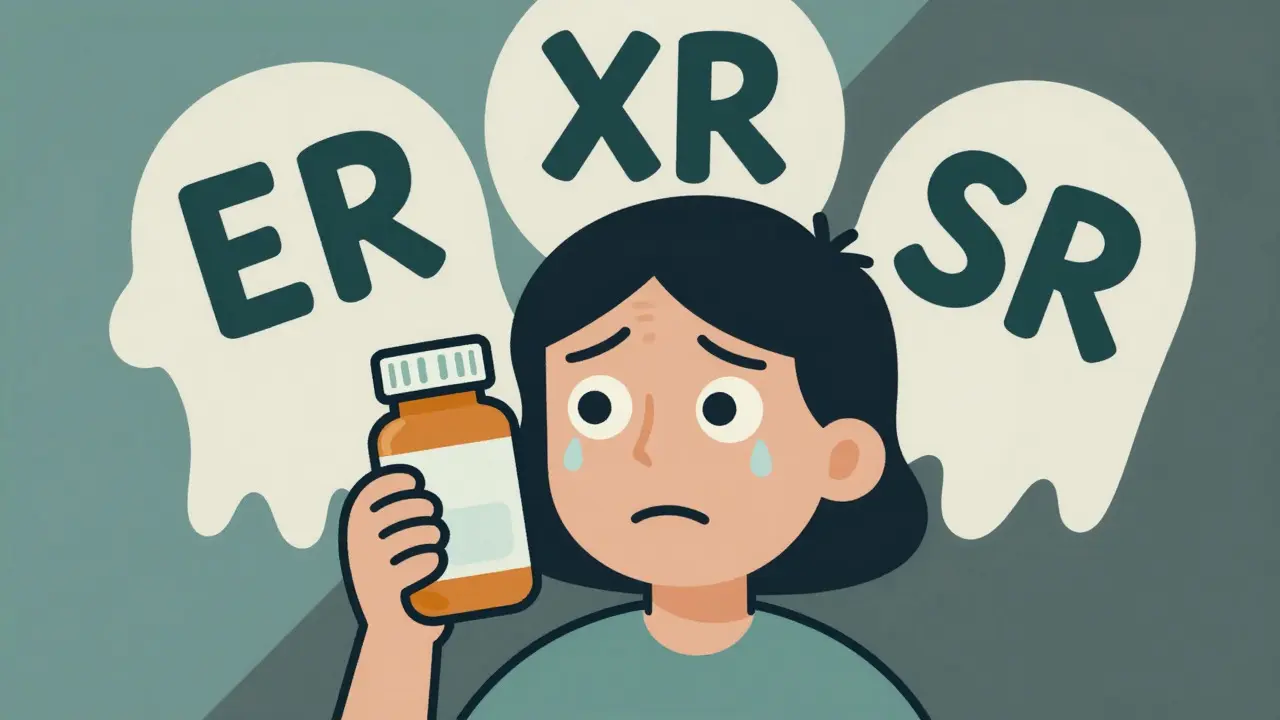
Imagine taking a pill that is supposed to last all day, but because you crushed it in half, your body gets the entire dose at once. It sounds like a nightmare scenario, and unfortunately, it happens more often than you might think. The difference between an immediate-release pill and an extended-release medication isn't just about how long it lasts; it's about how safely it works. If you have ever stared at a pharmacy label confused by letters like ER, XR, or SR, you are not alone. These codes dictate exactly how your body processes the drug, and misreading them can lead to everything from wasted money to serious health risks.
This guide cuts through the medical jargon. We will break down exactly what those abbreviations mean, why you should never crush certain pills, and how to spot the critical warnings on your label. By the end of this, you will know precisely how to handle your prescriptions to get the best results without the side effects.
Decoding the Abbreviations on Your Label
When you pick up a new prescription, the name of the drug is usually followed by a set of capital letters. These aren't random; they tell you the specific technology used to release the medicine into your system. Understanding these codes is the first step in safe usage.
| Abbreviation | Meaning | How It Works |
|---|---|---|
| ER / XR | Extended Release | Releases the drug slowly over time (usually 12-24 hours) to maintain steady blood levels. |
| SR | Sustained Release | Prolongs the release duration, often similar to ER but may use different mechanisms. |
| CR | Controlled Release | Delivers the drug at a precise, predetermined rate regardless of stomach contents. |
| CD | Continuous Delivery | Provides a constant stream of medication, often using osmotic pumps. |
| LA | Long Acting | A broader term indicating the drug stays effective for a longer period than standard versions. |
While these terms sound interchangeable, they represent distinct engineering choices. For example, Concerta uses an OROS (Osmotic Release Oral System) technology, which is fundamentally different from the matrix-based approach used in many generic extended-release products. Even if both say "extended release," their internal mechanics differ. This is why you cannot simply swap one brand for another without checking with your pharmacist. The Institute for Safe Medication Practices (ISMP) notes that proprietary designations like CD or XT must be clearly identified to prevent dangerous confusion.
The Golden Rule: Do Not Crush, Chew, or Split
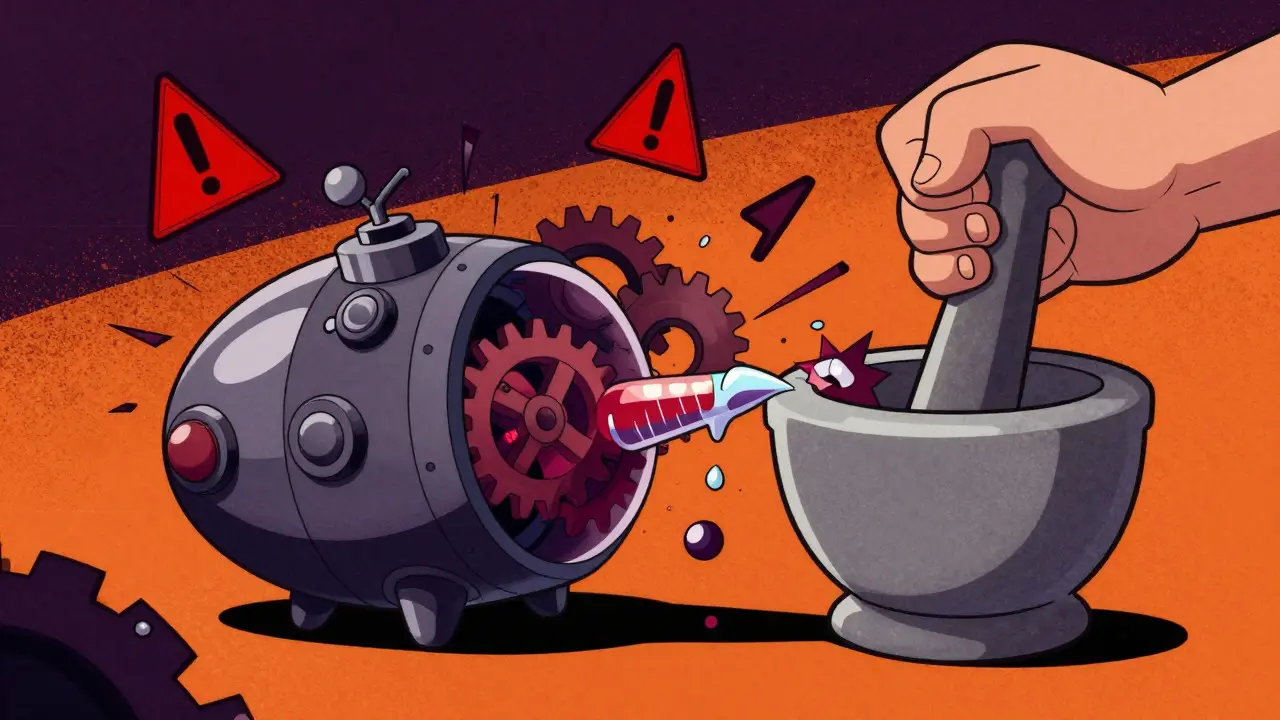
If there is only one thing you remember from this article, let it be this: unless your doctor or pharmacist explicitly tells you otherwise, treat extended-release pills as fragile packages. Most modified-release dosage forms rely on a special coating or a polymer matrix to slow down the drug's release. When you crush, chew, or split these tablets, you destroy that mechanism.
Think of an extended-release capsule like a time-released bomb. It is designed to drip-feed the active ingredient into your bloodstream over 12 or 24 hours. If you crush it, you trigger the explosion immediately. Your body receives the full day's dose in seconds. This can lead to toxic levels of the drug in your system. According to data from the FDA's MedWatch database, there were over 1,200 adverse event reports between 2018 and 2022 specifically linked to improper handling of these formulations. In severe cases, such as with opioid painkillers like OxyContin, crushing the pill has led to near-fatal overdoses because the patient absorbed too much medication too quickly.
However, there is a nuance here. Some capsules contain tiny beads inside. If your pharmacist says you can open the capsule and sprinkle the beads on applesauce, do so-but swallow the beads whole. Do not chew them. Always check the label for the phrase "swallow whole." If it’s missing, ask your pharmacist before altering the pill in any way.
Navigating the Drug Facts Panel
For over-the-counter (OTC) medications, the FDA mandates a standardized "Drug Facts" panel. This box is your roadmap. For prescription drugs, the information is often on the white sticker attached to the bottle, but the principles remain the same. You need to look for four specific sections to ensure you are taking the medication correctly.
- Uses: This confirms the condition the drug treats. Make sure this matches what your doctor prescribed it for.
- Warnings: This is where you will find the critical "Do not crush" directive. It also lists interactions with other drugs or alcohol.
- Directions: Pay close attention to timing. Does it say "take once daily in the morning" or "at bedtime"? Timing matters significantly for some extended-release medications. For instance, Niaspan (niacin extended-release) is often taken at night to minimize flushing side effects while you sleep.
- Inactive Ingredients: This list includes the excipients-the polymers and coatings that make the extended release possible. If you have allergies to certain dyes or fillers, this section is vital.
Look closely at the timing instructions. A common mistake patients make is assuming "once daily" means they can take it whenever they want. But for a 24-hour extended-release product, consistency is key. Taking it at wildly different times each day can cause your blood levels of the drug to spike and drop, reducing effectiveness and increasing side effects.
Timing Is Everything: Morning vs. Night Dosing
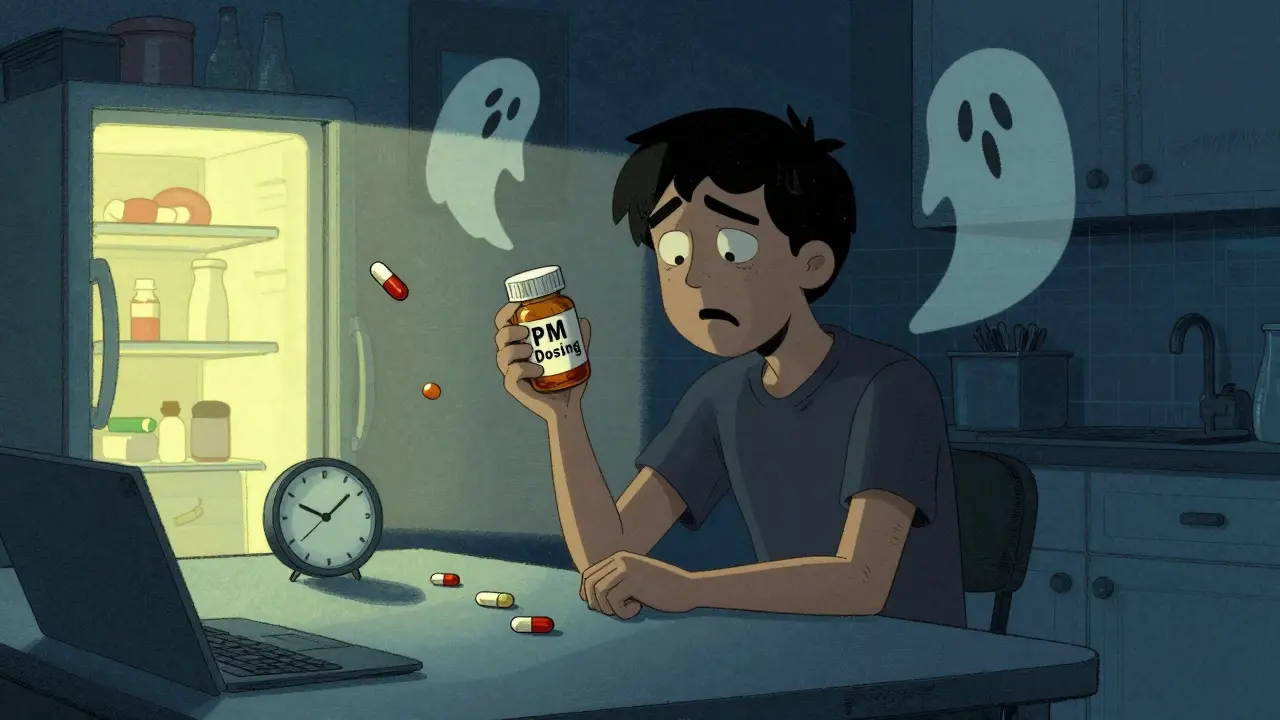
You might wonder why the time of day matters for a pill that lasts 24 hours. The answer lies in your body's natural rhythms and the specific side effect profile of the drug. Some extended-release medications are stimulating, while others are sedating.
Take ADHD medications like Adderall XR as an example. Users frequently report confusion about timing. One user on Drugs.com noted, "I took Adderall XR at night thinking it would last all day and kept me awake for 36 hours." Because the medication releases gradually, taking it too late in the day can disrupt your sleep cycle entirely. Conversely, some blood pressure medications or muscle relaxants are designed to be taken at night to help with nighttime symptoms or to allow you to sleep through drowsiness.
The label will often specify "AM" or "PM" dosing. If it doesn't, stick to a consistent routine. Set a phone alarm if you have to. The goal is to keep the concentration of the drug in your blood as stable as possible. Fluctuations can lead to breakthrough symptoms-where the condition returns temporarily-or heightened side effects when the next dose kicks in.
Identifying High-Risk Formulations
Not all extended-release drugs carry the same risk, but some require extra vigilance. The FDA requires Medication Guides (MGs) to be dispensed with high-risk products, particularly opioid analgesics and certain antidepressants. These guides provide detailed safety information that goes beyond the brief label.
Be especially cautious with medications that have narrow therapeutic windows-meaning the difference between a helpful dose and a harmful dose is small. Examples include certain heart medications like diltiazem. There are three distinct 24-hour extended-release formulations of diltiazem on the market, and they are not interchangeable. They have different absorption profiles despite identical labeling. Switching between brands without medical supervision can alter how much drug enters your system.
Another red flag is cost. Extended-release formulations typically cost 20-35% more than their immediate-release counterparts. While the convenience of fewer doses is valuable, ensure the price aligns with your insurance coverage. Sometimes, doctors prescribe extended-release versions for adherence reasons, but if you struggle with costs, ask if an immediate-release version taken multiple times a day is a viable alternative for your specific condition.
Practical Tips for Safe Management
To master reading your medication labels, adopt a few simple habits. First, always read the label when you pick up a new prescription, even if you've taken the drug before. Formulations change, and manufacturers update packaging. Second, use the "teach-back" method with your pharmacist. Repeat the instructions back to them: "So I take this once in the morning, swallow it whole, and avoid grapefruit juice?" This confirms understanding and catches errors early.
Third, keep a medication log. Write down the name, dose, frequency, and any side effects. This helps you track patterns and provides crucial information if you see a new doctor. Finally, don't ignore the QR codes on newer labels. Many pharmacies now include links to video instructions or digital Medication Guides. Scanning these can provide visual aids on how to properly take complex formulations.
Remember, the label is not just legal text; it is an instruction manual for your health. By taking the time to decode the abbreviations, respect the physical integrity of the pill, and adhere strictly to timing guidelines, you ensure that your medication works as intended. When in doubt, call your pharmacist. They are there to help you navigate these complexities safely.
Can I cut an extended-release pill in half?
Generally, no. Cutting an extended-release (ER/XR/SR) pill destroys the mechanism that controls the drug's release, causing the entire dose to enter your system at once. This can lead to overdose or severe side effects. Only split the pill if it has a score line AND your pharmacist confirms it is safe to do so.
What is the difference between ER and XR?
Both stand for Extended Release, but they may indicate different manufacturing technologies. ER is a general term, while XR (eXtended Release) is often used by specific manufacturers. Functionally, they both aim to release the drug slowly, but you should not switch between them without consulting your doctor, as bioavailability can vary.
Why does my label say "Swallow Whole"?
This warning indicates that the pill contains a special coating or matrix that regulates how fast the drug dissolves. Chewing or crushing breaks this barrier, leading to rapid absorption. Swallowing it whole ensures the medication is released gradually over the intended timeframe.
Can I take extended-release medication with food?
It depends on the specific drug. Some extended-release formulations are designed to be taken with food to reduce stomach upset or improve absorption, while others work best on an empty stomach. Check the "Directions" section of the Drug Facts panel or ask your pharmacist for specific instructions.
What should I do if I miss a dose of an extended-release medication?
If you miss a dose, take it as soon as you remember unless it is almost time for your next dose. Never double up to make up for a missed dose, as this can cause toxicity. Consult your Medication Guide or pharmacist for specific advice tailored to your drug.
Are generic extended-release drugs the same as brand-name ones?
They contain the same active ingredient, but the inactive ingredients (the release mechanism) may differ. While most generics are bioequivalent, some complex extended-release formulations (like certain heart or ADHD meds) may behave differently in the body. Always inform your doctor if you switch from brand to generic to monitor for any changes in effectiveness.