Medication & Alcohol Interaction Checker
Enter medications you're taking. Our tool checks for dangerous interactions with alcohol based on FDA guidelines and medical research.
Drinking alcohol while taking medication might seem harmless - maybe you had a glass of wine with dinner and took your pill afterward. But the truth is, alcohol and medications don’t mix safely in most cases. The risks aren’t just theoretical. Every year, thousands of people end up in emergency rooms because of these combinations. Some don’t even realize they’re in danger until it’s too late.
How Alcohol Changes How Medications Work
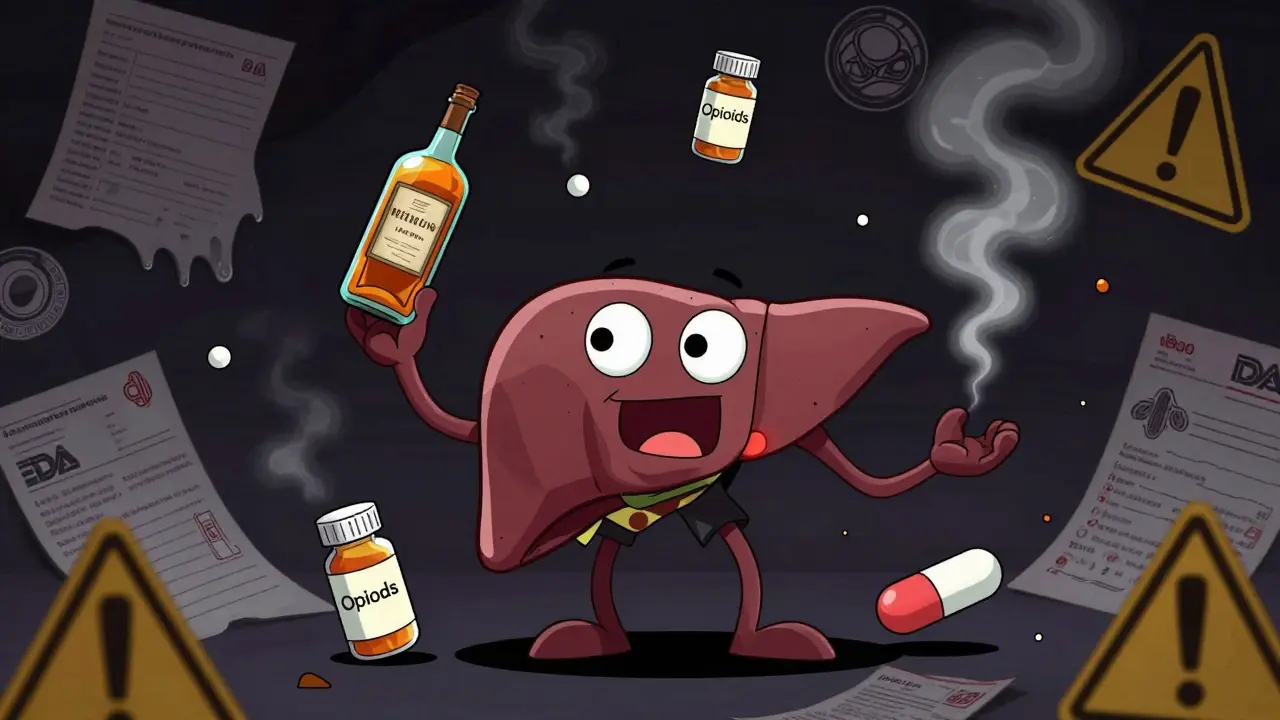
Your liver doesn’t treat alcohol and medications as separate things. It tries to process both at the same time. When that happens, one can slow down or speed up the other. This is called a pharmacokinetic interaction. For example, alcohol can block the liver from breaking down certain drugs, causing them to build up in your system. That means a normal dose could become toxic.
Then there’s pharmacodynamic interaction - where alcohol and medication amplify each other’s effects. Think of it like two brakes being pressed at once. If you take a sleeping pill and drink alcohol, both depress your central nervous system. Together, they can slow your breathing so much that your body stops responding. This isn’t rare. In fact, the FDA has pulled drugs off the market because of this exact problem.
Top Dangerous Combinations
Not all interactions are equal. Some are life-threatening. Here are the worst offenders:
- Opioids (oxycodone, hydrocodone, fentanyl): Mixing alcohol with opioids increases overdose risk by up to 20%. The FDA found that alcohol can cause extended-release opioids to release all their dose at once - a phenomenon called "dose-dumping." That spike can stop your breathing.
- Benzodiazepines (Xanax, Valium, Ativan): These are prescribed for anxiety and insomnia. Alcohol doubles their sedative effect. A 2019 study showed that combining them increases overdose risk by 24 times.
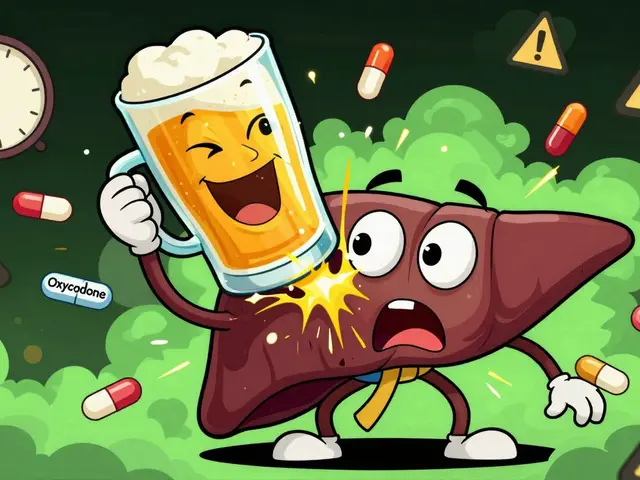
- Acetaminophen (Tylenol): This common painkiller becomes a silent killer when mixed with alcohol. The liver turns acetaminophen into a toxic chemical called NAPQI. Alcohol blocks the body’s ability to neutralize it. The FDA says over 56,000 ER visits each year in the U.S. are tied to this combo.
- Metronidazole (Flagyl): This antibiotic causes a violent reaction when paired with alcohol - nausea, vomiting, flushing, rapid heartbeat. It’s not just uncomfortable. It can send you to the hospital.
- NSAIDs (ibuprofen, naproxen): These pain relievers already irritate the stomach lining. Alcohol makes bleeding in the gut 3 to 5 times more likely.
Who’s Most at Risk?
It’s not just about what you take - it’s who you are.
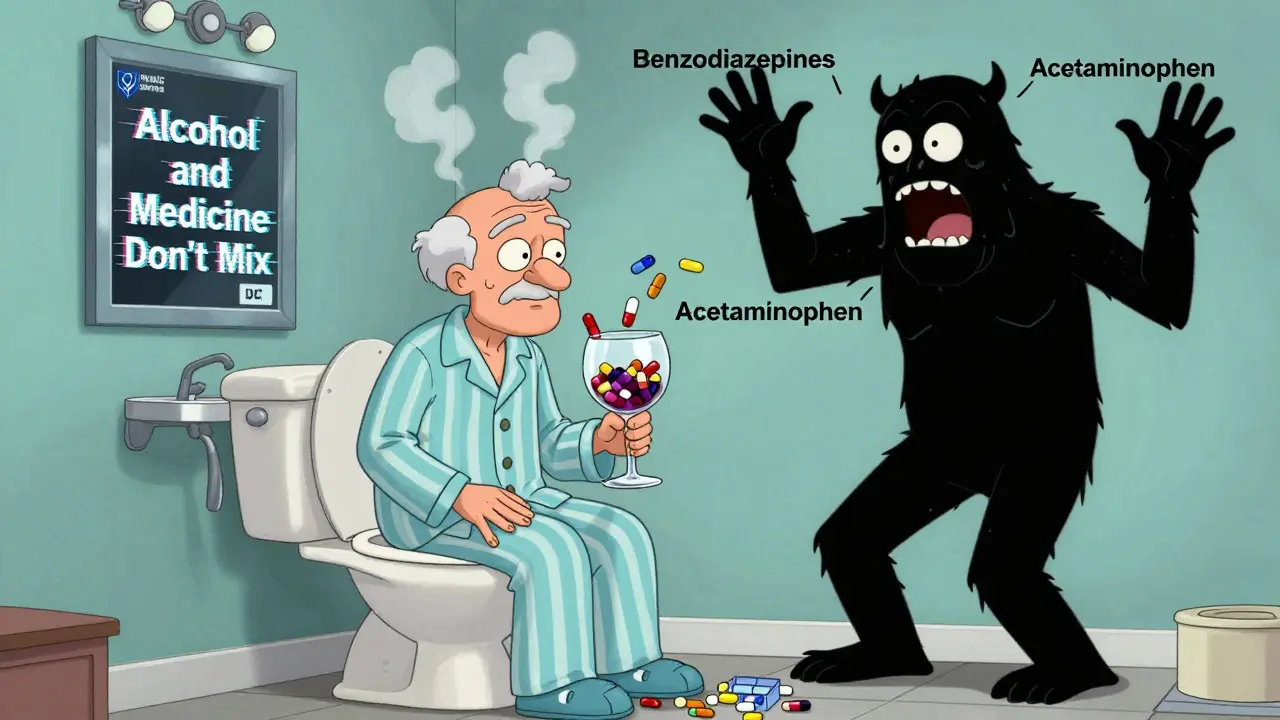
People over 65 are especially vulnerable. Their bodies process alcohol slower. Their livers don’t clean drugs as efficiently. On average, older adults take 14 prescriptions a year. About 82% of them are on at least one medication that reacts badly with alcohol. The Beers Criteria - the gold standard for safe prescribing in seniors - lists 30 drugs that should be avoided if you drink, including sleeping pills, muscle relaxers, and old-school antihistamines like diphenhydramine.
Women face higher risks too. Because of body composition, women reach higher blood alcohol levels than men after drinking the same amount. That means even one drink can tip the balance when combined with medication.
People with mental health conditions are another high-risk group. Those with depression, anxiety, or PTSD often take SSRIs or benzodiazepines. Alcohol may seem like it helps, but it actually makes symptoms worse. Studies show people with co-occurring substance use and mental health disorders have alcohol-medication interactions 3.5 times more often than others.
What About Common Medications?
You might think your everyday pills are safe. They’re not.
- Antihistamines (Benadryl, Claritin): These cause drowsiness. Alcohol makes it worse - you could fall asleep while driving or stumble and break a bone.
- ADHD meds (Adderall, Ritalin): These speed up your heart. Alcohol slows it down. The clash can cause irregular heart rhythms or sudden spikes in blood pressure.
- Antibiotics (azithromycin, linezolid): Some don’t directly interact, but they irritate your stomach. Alcohol adds fuel to the fire, leading to nausea and vomiting.
- Diabetes drugs (glyburide, glipizide): Alcohol can drop your blood sugar dangerously low. The risk of severe hypoglycemia jumps 300% with sulfonylureas. Even metformin, a common drug, can cause lactic acidosis if you drink more than one drink a day.
- Blood pressure meds (beta-blockers, ACE inhibitors): Alcohol can make your blood pressure crash. Standing up too fast after drinking could mean a fall - and for older adults, that often means a hip fracture or brain injury.
What Should You Do?
The advice isn’t complicated: Don’t drink if you’re on medication unless your doctor says it’s okay.
Read the label. The FDA requires warning labels on about 100 prescription drugs and 700 over-the-counter products. Look for phrases like "avoid alcohol" or "may cause drowsiness." If you’re unsure, ask your pharmacist. They see these interactions every day - and 70% of them report patients who didn’t know they were at risk.
Wait. If you’ve taken metronidazole, wait at least 72 hours after your last dose before drinking. With opioids or benzodiazepines, don’t drink at all. There’s no safe amount.
Use the AUDIT-C screening tool if you’re a patient. It’s a simple three-question quiz doctors can use to find out if someone drinks too much. Yet only 35% of primary care doctors routinely ask. Don’t wait for them to bring it up - speak up yourself.
What’s Being Done?
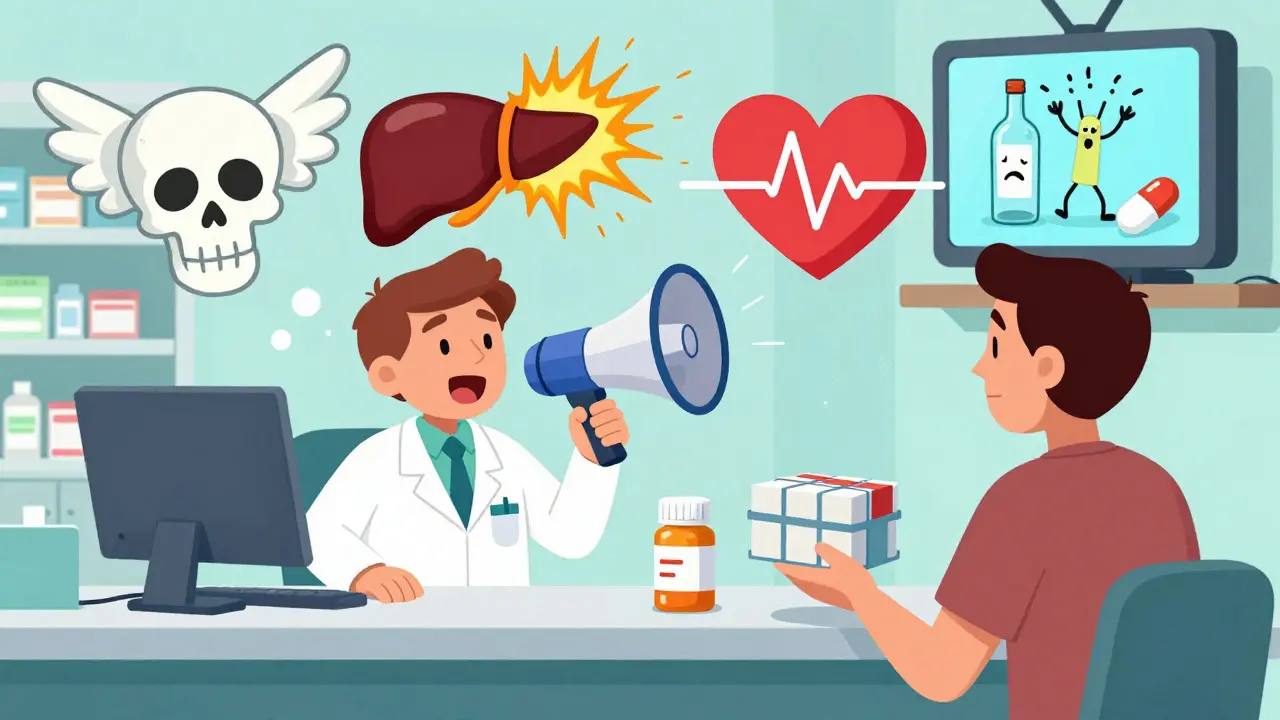
Health systems are starting to catch up. Electronic health records like Epic now block prescriptions if a patient has a history of drinking while on high-risk meds. The FDA now requires new extended-release opioids to be tested with alcohol before approval. In January 2023, the CDC launched a $2.5 million public campaign - "Alcohol and Medicine Don’t Mix" - with posters in pharmacies and ads on social media.
And there’s hope on the horizon. Researchers are testing genetic tests that can tell if someone’s liver is especially vulnerable to alcohol-drug damage. One enzyme, CYP2E1, can make some people 4.7 times more likely to suffer liver failure from acetaminophen and alcohol. That kind of precision could save lives.
But until then, the rule stays simple: if you’re on medication, leave the alcohol off the table. Your liver can’t handle the double load. Your brain can’t afford the risk. And your life? It’s not worth gambling.
Can I have one drink if I’m on medication?
It depends on the medication. For some, like certain antibiotics or blood pressure pills, one drink might be okay. For others - opioids, benzodiazepines, metronidazole, or acetaminophen - even one drink can be dangerous. The safest answer is no, unless your doctor or pharmacist specifically says yes. Don’t guess.
Do herbal supplements interact with alcohol too?
Yes. Supplements like kava, valerian, and melatonin act like sedatives. Mixing them with alcohol can cause extreme drowsiness or breathing problems. Even St. John’s Wort, often used for mood, can interfere with liver enzymes and change how your body processes alcohol and other drugs.
What if I only drink on weekends?
It doesn’t matter if it’s daily or weekend drinking. If you’re on a long-term medication - like for blood pressure, anxiety, or pain - alcohol on weekends still builds up risk. The liver doesn’t reset quickly. A single drink on Saturday night can still interfere with your Monday morning pill.
Why don’t doctors always warn patients?
Many don’t ask about alcohol use at all. A 2022 study found only 35% of primary care doctors routinely screen for drinking when prescribing medications. Patients often don’t mention alcohol because they think it’s harmless. It’s a communication gap - and it’s deadly.
Can alcohol make my medication less effective?
Absolutely. Alcohol can reduce how well antidepressants, antihistamines, and diabetes drugs work. It can also make you feel worse - more tired, more depressed, or more confused - even if the drug is technically still in your system. The result? You might think the medicine isn’t working, so you take more. That’s how overdoses start.
Is it safe to drink after I finish a course of antibiotics?
For most antibiotics, yes - but not all. Metronidazole and tinidazole require a 72-hour wait. Linezolid and some others can still cause dangerous reactions even after stopping. Always check with your pharmacist before drinking after any antibiotic course.
Final Thought
Medications are meant to help. Alcohol, in moderation, might seem harmless. But together, they can turn a simple choice into a life-or-death situation. You don’t need to be an expert to stay safe. Just ask. Read the label. Listen to your pharmacist. And when in doubt - skip the drink. Your body will thank you.
Erica Santos
March 10, 2026 AT 23:26Scott Easterling
March 11, 2026 AT 08:12Melba Miller
March 13, 2026 AT 01:33George Vou
March 13, 2026 AT 13:55Stephen Rudd
March 14, 2026 AT 02:44Mantooth Lehto
March 14, 2026 AT 11:01Samantha Fierro
March 16, 2026 AT 10:09Peter Kovac
March 17, 2026 AT 00:18Katy Shamitz
March 18, 2026 AT 05:26Janelle Pearl
March 18, 2026 AT 14:39Ray Foret Jr.
March 18, 2026 AT 22:37Robert Bliss
March 19, 2026 AT 10:05Dan Mayer
March 20, 2026 AT 18:30APRIL HARRINGTON
March 22, 2026 AT 02:45