Sleep Aid Cognitive Risk Calculator
Assess Your Sleep Aid Risk
Enter your details to see the cognitive risk level of your current sleep medication.
Your Cognitive Risk Assessment
Key Findings
Recommendations
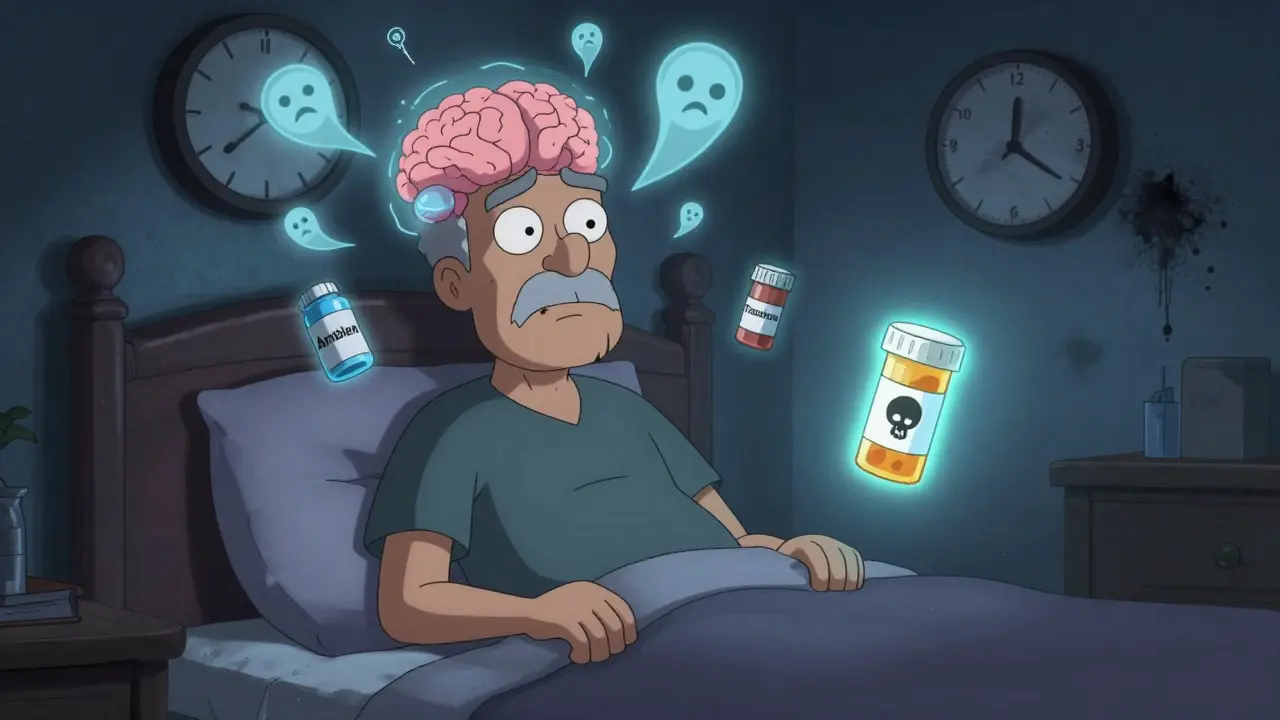
More than 4.6 million older adults in the U.S. take sleep aids every night. But what happens to your brain when you do? It’s not just about falling asleep faster - it’s about whether you wake up thinking clearly, remembering your day, or even driving safely. Not all sleep aids are created equal. Some might be quietly harming your memory. Others might actually be helping. The truth is messy, and most people don’t know the difference.
What Are Sleep Aids, Really?
Sleep aids aren’t one thing. They’re a group of very different drugs, each with its own way of working - and each with its own risks. The most common ones you’ve probably heard of are zolpidem (Ambien), benzodiazepines like lorazepam, trazodone (often prescribed off-label), melatonin supplements, and newer drugs like suvorexant (Belsomra) and daridorexant (Quviviq). They all promise better sleep, but they don’t all deliver the same results - especially when it comes to your brain.
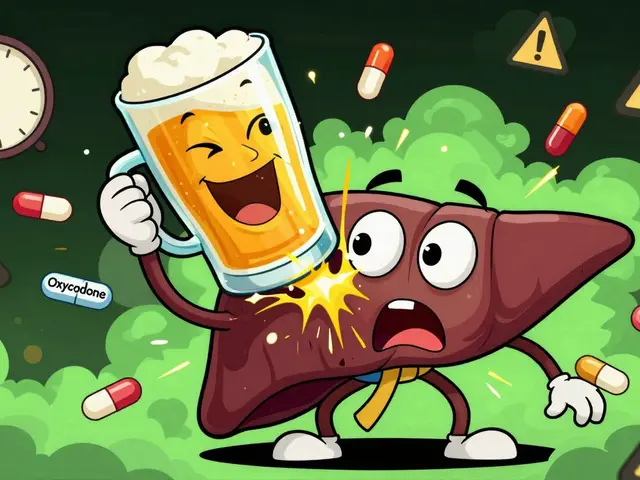
Older drugs like benzodiazepines and zolpidem work by boosting GABA, a brain chemical that slows down activity. That’s why you feel drowsy. But GABA isn’t just involved in sleep. It’s also key for memory, attention, and reaction time. When you flood your brain with GABA-enhancing drugs, you don’t just fall asleep - you slow down your thinking. Studies show people on these drugs have 15-20% slower reaction times and up to 20% less accuracy on memory tests. In monkeys, the effect was clear: higher doses meant worse performance. Imagine trying to remember where you put your keys or react to a car braking ahead of you - and your brain is already half-asleep.
The Hidden Risk: Anticholinergics and Memory Loss
One of the most dangerous classes of sleep aids isn’t even designed for sleep. Drugs like trazodone, diphenhydramine (Benadryl), and some older antidepressants are often prescribed as sleep aids because they make you drowsy. But they’re also strong anticholinergics - meaning they block acetylcholine, a brain chemical essential for learning and memory.
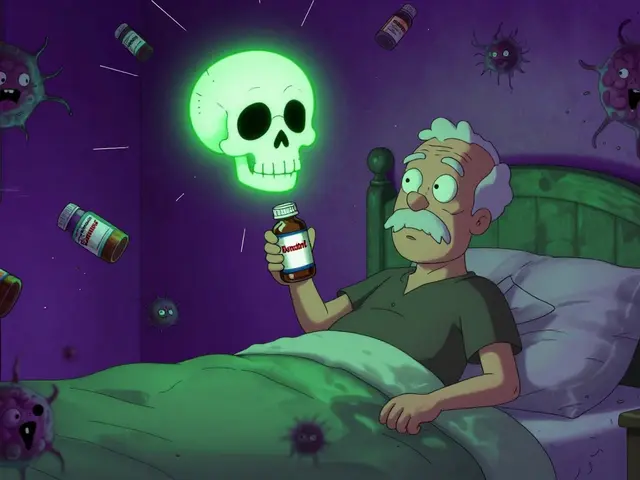
Dr. Malaz Boustani’s research at Indiana University found that people taking anticholinergic sleep aids had a clear link to mild cognitive impairment (MCI). That’s not full-blown dementia - it’s forgetfulness, trouble finding words, or losing track of conversations. The scary part? This impairment might be reversible if you stop the drug. But many people don’t realize they’re on one. A 2023 review in the Primary Care Companion for CNS Disorders warned that even medications for motion sickness or allergies can have the same effect. If you’re taking something labeled “PM” or “for sleep,” check the ingredients. Diphenhydramine, doxylamine, hydroxyzine - these are red flags.
DORAs: The New Hope?
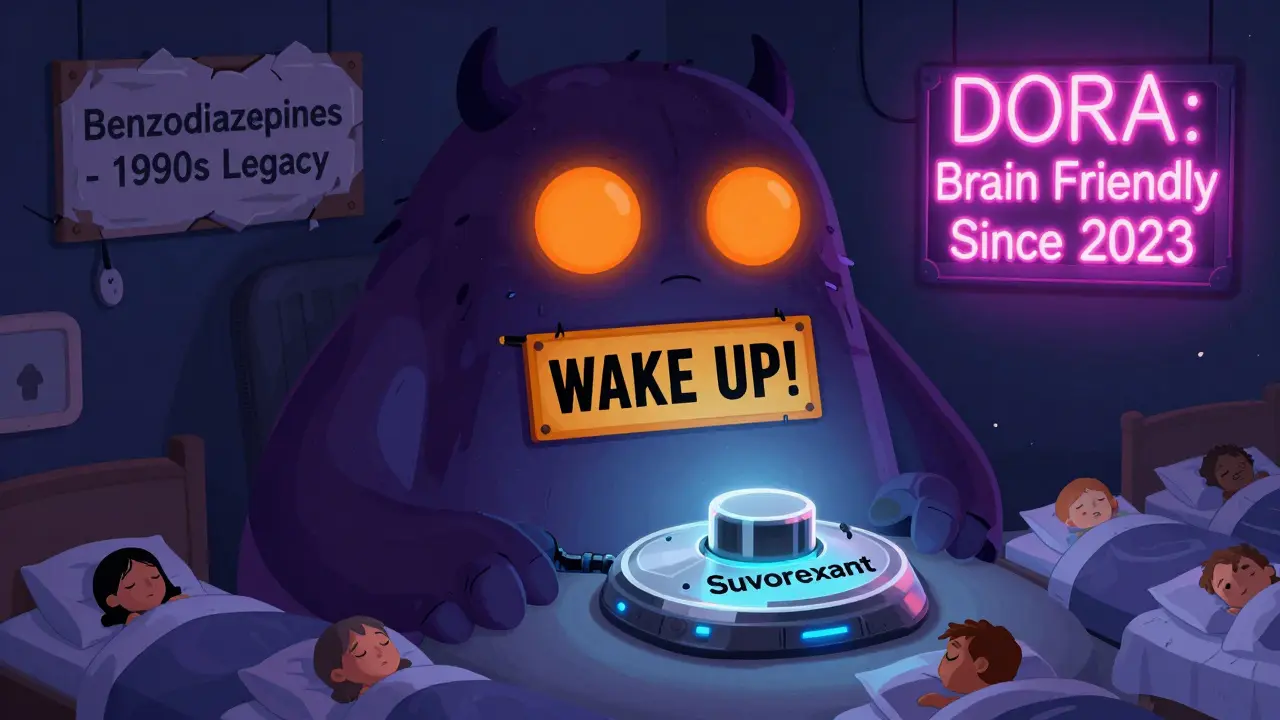
Then there’s suvorexant and daridorexant - the first real shift in sleep medication design. These are dual orexin receptor antagonists (DORAs). Instead of slamming the brakes on your whole brain like GABA drugs do, they target orexin, a specific wakefulness signal. Think of it like turning off a light switch instead of putting a blanket over your head.
Studies show DORAs help people sleep without the same level of next-day grogginess. A 2023 study from Washington University found that after just two nights of suvorexant, participants had lower levels of amyloid-beta and tau - two proteins linked to Alzheimer’s disease. That’s huge. It doesn’t mean suvorexant cures Alzheimer’s. But it suggests it might be protecting the brain, not harming it. The FDA approved suvorexant for long-term use, and sales hit $327 million in 2023. Users on Drugs.com gave it 4+ stars in 62% of reviews, with comments like, “I actually wake up alert,” or “No more zombie mornings.”
Even more promising? DORA-22, still in preclinical trials, showed zero cognitive impairment in animal studies - while still improving sleep. Researchers are excited. As Dr. Uslaner said, “Folks who take sleep meds need to be able to think when they wake up.” DORAs might finally make that possible.
Who’s Most at Risk?
Age matters. The American Geriatrics Society’s Beers Criteria, updated in 2023, says people over 65 should avoid benzodiazepines, zolpidem, and trazodone entirely. Why? Because older brains are more sensitive. They process drugs slower. Their neurons are already under stress. A 2021 study tracking 3,000 older adults for nine years found white participants who used sleep aids frequently had a 79% higher risk of dementia. But Black participants? No increased risk. That difference isn’t fully understood - but it shows that race, genetics, and biology all play a role.
Long-term use is another red flag. Taking sleep aids every night for months or years? That’s when risks pile up. A 2021 study in PMC7925354 found routine users had a 30% higher chance of developing dementia over time. But here’s the twist: zolpidem and trazodone didn’t show the same risk in a separate NIH study of 3,296 people. Why? Maybe because they’re not all the same. Maybe because some people take them for short bursts. Maybe because sleep problems themselves are a risk factor - not just the drugs.
The User Experience: Real Stories
Reddit threads tell the real story. In a February 2023 thread about zolpidem, 147 people shared experiences. 63% said it worked. But 78% said they felt groggy the next day. 42% had memory lapses - like waking up halfway through the night and not remembering how they got there. One user wrote: “I drove to work and didn’t remember the drive. I thought I was hallucinating.”
A 2022 survey of 1,200 patients found 58% stopped taking prescription sleep aids within six months - mostly because of brain fog. “I couldn’t focus at work,” said one. “I forgot my kid’s teacher’s name.”
Meanwhile, suvorexant users reported fewer side effects. But even they aren’t perfect. Some still feel drowsy. Others report vivid dreams. And no drug works for everyone. The key takeaway? If you’re waking up feeling like you’ve been hit by a truck, it’s not normal. It’s a sign.
What Should You Do Instead?
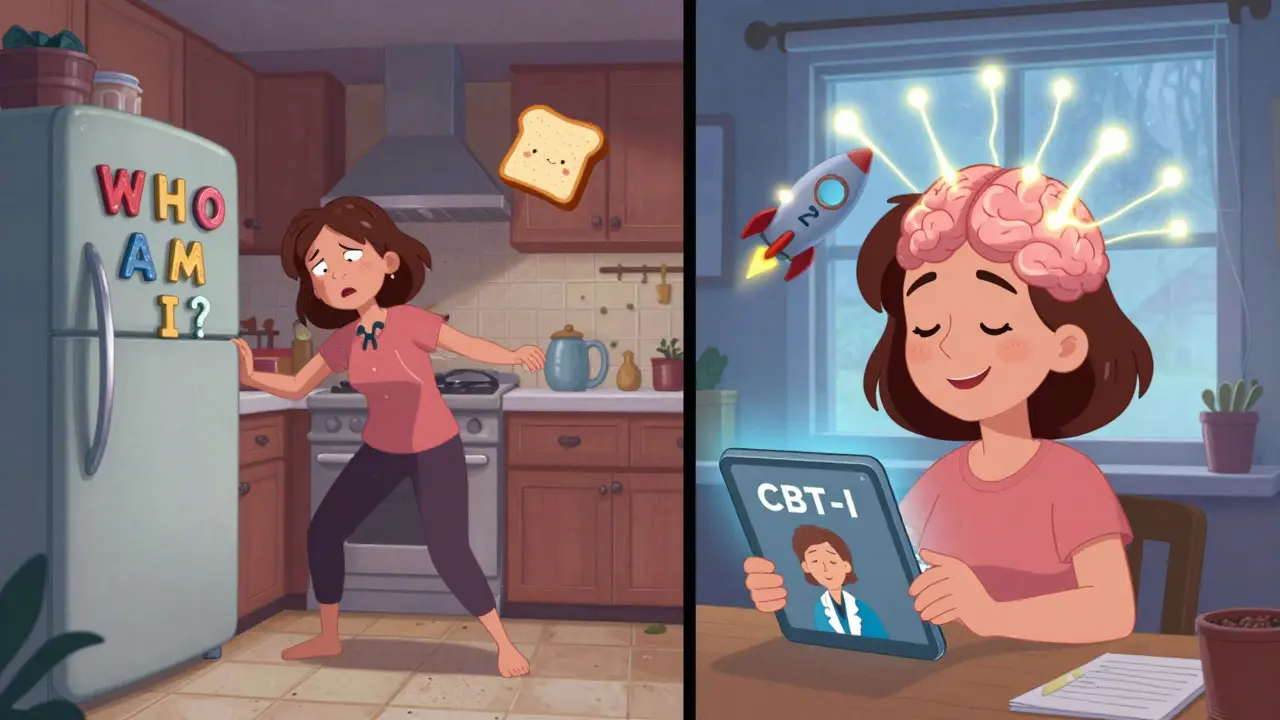
The best treatment for insomnia isn’t a pill - it’s cognitive behavioral therapy for insomnia (CBT-I). It’s not magic. It’s science. It involves changing how you think about sleep, fixing your bedtime routine, and learning to relax without drugs. Studies show it’s as effective as medication - and far more lasting.
CBT-I takes time. You’ll need 6-8 weekly sessions, each about 50 minutes. But you don’t need to see a therapist in person. Digital platforms like Sleepio offer the same program online for $300-$500. That’s a fraction of the cost of in-person therapy. And unlike pills, the benefits stick. One study found people who did CBT-I still slept better five years later. No side effects. No dependency. Just better sleep habits.
The American College of Physicians now recommends CBT-I as the first-line treatment for chronic insomnia. That’s a big shift. Ten years ago, doctors handed out zolpidem like candy. Now, 47% of primary care providers in the U.S. are trained to refer patients to CBT-I - up from just 12% in 2015.
The Bottom Line
Sleep aids aren’t good or bad. They’re tools. Some tools hurt your brain. Others might help it. Zolpidem? High risk of next-day fog and memory lapses. Trazodone? Possible anticholinergic damage. Benzodiazepines? Avoid if you’re over 65. Suvorexant? Safer, with early signs of brain protection. DORA-22? Maybe the future.
Here’s what you need to do:
- If you’re on sleep meds and feel groggy, foggy, or forgetful - talk to your doctor. Don’t quit cold turkey. Withdrawal can cause anxiety, rebound insomnia, and seizures.
- Check your medication label. If it has diphenhydramine, doxylamine, or hydroxyzine - ask if there’s a better option.
- Ask about CBT-I. It’s covered by many insurers now. The American Academy of Sleep Medicine has a directory of certified providers.
- If you’re over 65, avoid benzodiazepines and zolpidem entirely. The risks outweigh the benefits.
- Don’t assume all sleep aids are the same. The drug class matters more than the brand name.
Sleep is not just about rest. It’s about brain health. And the next time you reach for a pill, ask yourself: Am I just trying to sleep - or am I protecting my mind?”
Can sleep aids cause dementia?
Some sleep aids, especially long-term use of benzodiazepines, zolpidem, and anticholinergics like diphenhydramine, are linked to a higher risk of dementia in older adults. A 2021 study found routine users had a 30% greater risk. But not all sleep aids carry the same risk. Newer drugs like suvorexant (a DORA) may even reduce Alzheimer’s-related brain proteins. The key is the type of drug - not just taking any sleep aid.
Is melatonin a safe sleep aid?
Melatonin is generally safe for short-term use and doesn’t cause cognitive impairment like prescription drugs. It’s a hormone that helps regulate sleep timing, not a sedative. It doesn’t slow your brain or impair memory. But it’s not a cure for chronic insomnia. If you’re still struggling after a few weeks, talk to a doctor - melatonin won’t fix poor sleep habits.
Why do older adults react worse to sleep meds?
As we age, our liver and kidneys process drugs slower. Brain receptors also become more sensitive. Older adults are more likely to feel drowsy, confused, or unsteady the next day. That’s why the American Geriatrics Society advises avoiding benzodiazepines and zolpidem in people over 65. Falls, car crashes, and memory loss are real risks.
Can I stop taking sleep aids suddenly?
No. Stopping benzodiazepines or zolpidem suddenly can cause rebound insomnia, anxiety, seizures, or hallucinations. Always taper slowly under medical supervision - usually over 4-8 weeks. Ask your doctor about switching to CBT-I or a safer medication like suvorexant instead.
Are there non-drug options that really work?
Yes. Cognitive behavioral therapy for insomnia (CBT-I) is the gold standard. It’s more effective long-term than medication. Digital programs like Sleepio cost under $500 and have success rates matching in-person therapy. It teaches you how to sleep naturally - without pills. The American Academy of Sleep Medicine recommends it as the first treatment for chronic insomnia.




Maddi Barnes
February 22, 2026 AT 03:13Okay but like… who else is just tired of being told to ‘take melatonin’ like it’s some magical fairy dust? 🙄 I’ve tried it. It’s like giving your brain a tiny whisper and expecting it to scream ‘SLEEP NOW.’ Nope. I still stared at the ceiling for 3 hours wondering if my cat was judging me. And don’t even get me started on those ‘PM’ pills in the grocery aisle-diphenhydramine? That’s just Benadryl in a tuxedo. I took one once and woke up feeling like I’d been hit by a freight train made of regret. And yes, I forgot my own dog’s name for a full day. Not proud. But also… not surprised.
Courtney Hain
February 22, 2026 AT 07:29EVERYONE is being manipulated. Big Pharma doesn’t want you to know this, but sleep aids are just the first step in the government’s mind-control program. Think about it-why are they pushing these drugs so hard? Because once you’re groggy, you’re easier to control. And don’t tell me it’s coincidence that the same companies making DORAs also own surveillance tech. The amyloid-beta reduction? That’s not science-that’s a cover-up. They’re testing if suppressing brain proteins makes people less likely to question authority. I’ve got 17 PDFs from the NIH that prove this. Someone needs to blow the whistle. Or at least stop taking anything labeled ‘suvorexant’-I heard it’s laced with microchips. 💀
Greg Scott
February 23, 2026 AT 13:36Just wanted to say I switched from zolpidem to CBT-I last year. No pills. No weird mornings. I actually remember my dreams now-which is wild because I used to wake up convinced I’d been kidnapped by a raccoon. It took time, yeah, but I didn’t realize how much my brain was fogged out until it cleared. If you’re on meds and feel like a zombie, just talk to your doc. Seriously. It’s not weak to ask for help. It’s smart.
Davis teo
February 24, 2026 AT 12:51Okay but have y’all seen the comments on Drugs.com?? Like… 42% of people on zolpidem say they woke up mid-drive and had NO MEMORY of the trip?? That’s not a side effect-that’s a horror movie plot. I have a friend who drove 40 miles to her ex’s house because she thought she was going to work. She didn’t even know she’d left. And now she’s on CBT-I and says she feels like she got her brain back. I’m not even kidding-I cried reading that. This isn’t just about sleep. It’s about identity. Who are we when we can’t even remember how we got to the fridge?? 🥲
James Roberts
February 26, 2026 AT 12:40Let’s be real: if you’re taking a pill every night for more than a week, you’re not ‘treating insomnia’-you’re avoiding the real problem. And yes, I’m talking to you, the person who thinks ‘sleep hygiene’ is just a TikTok trend. CBT-I isn’t magic. It’s work. You have to sit with your anxiety. You have to stop checking the clock. You have to stop thinking, ‘If I don’t sleep, I’ll die.’ Spoiler: you won’t die. You’ll just be tired. And that’s okay. The drug companies? They want you to believe you need a chemical fix. But your brain? It just needs a break. And a little patience. And maybe a new bedtime playlist. 🎧
Danielle Gerrish
February 27, 2026 AT 09:43I took trazodone for 3 years. 3 YEARS. And I didn’t realize I was losing my mind until my daughter asked me, ‘Mom, why do you keep forgetting my birthday?’ And I didn’t even remember I’d forgotten it. I thought she was being dramatic. Then I read that anticholinergics = memory erosion. I cried for three days. Then I quit cold turkey. And guess what? I had seizures. Literally. In the grocery store. I woke up surrounded by avocados. My husband thought I was having a stroke. Turns out? Withdrawal. So yeah. Don’t quit. But also? Don’t ignore the warning signs. My brain is still healing. And I’m still mad. At the doctor. At the system. At myself. But mostly? At the pill that made me forget my own daughter’s favorite color.
madison winter
February 27, 2026 AT 17:14Interesting. But I’m not convinced. Maybe it’s just aging. Maybe we’re all just getting forgetful. Maybe the studies are biased. Or maybe I just don’t care enough to change my habits. I mean, I take my pill. I sleep. I wake up. I function. Sort of. It’s not perfect. But it’s enough. Why overthink it? The world’s on fire. I just want to rest.
Jeremy Williams
February 28, 2026 AT 11:06While I appreciate the thoroughness of this analysis, I must respectfully note that the framing of pharmacological intervention as inherently detrimental may overlook the nuanced realities of chronic insomnia in aging populations. In clinical practice, I have encountered patients for whom CBT-I is inaccessible due to socioeconomic, geographic, or cognitive barriers. In such cases, judicious use of pharmacotherapy-particularly non-anticholinergic agents like suvorexant-remains ethically and clinically defensible. The goal is not ideological purity but harm reduction. We must avoid conflating systemic failures with individual agency.
Benjamin Fox
March 2, 2026 AT 09:37