Vitamin K Intake Tracker for Warfarin Patients
Why This Matters
Your vitamin K intake affects your blood clotting. Consistent intake (within 20% of your normal) keeps your INR stable. A single cup of cooked kale has 800 mcg of vitamin K - enough to significantly affect your INR. Track your intake to avoid dangerous swings.
Add Today's Foods
Daily Vitamin K Intake
Tracking History
When you're on warfarin, your life isn't just about taking a pill every day. It's about what you eat - and how consistent you are with it. One small change in your diet, like swapping spinach for lettuce or adding a daily multivitamin, can throw your blood clotting levels out of balance. That’s where a food diary comes in. Not just any journal. A vitamin K food diary - a simple, powerful tool that can keep you out of the hospital and your INR numbers steady.
Why Vitamin K Matters More Than You Think
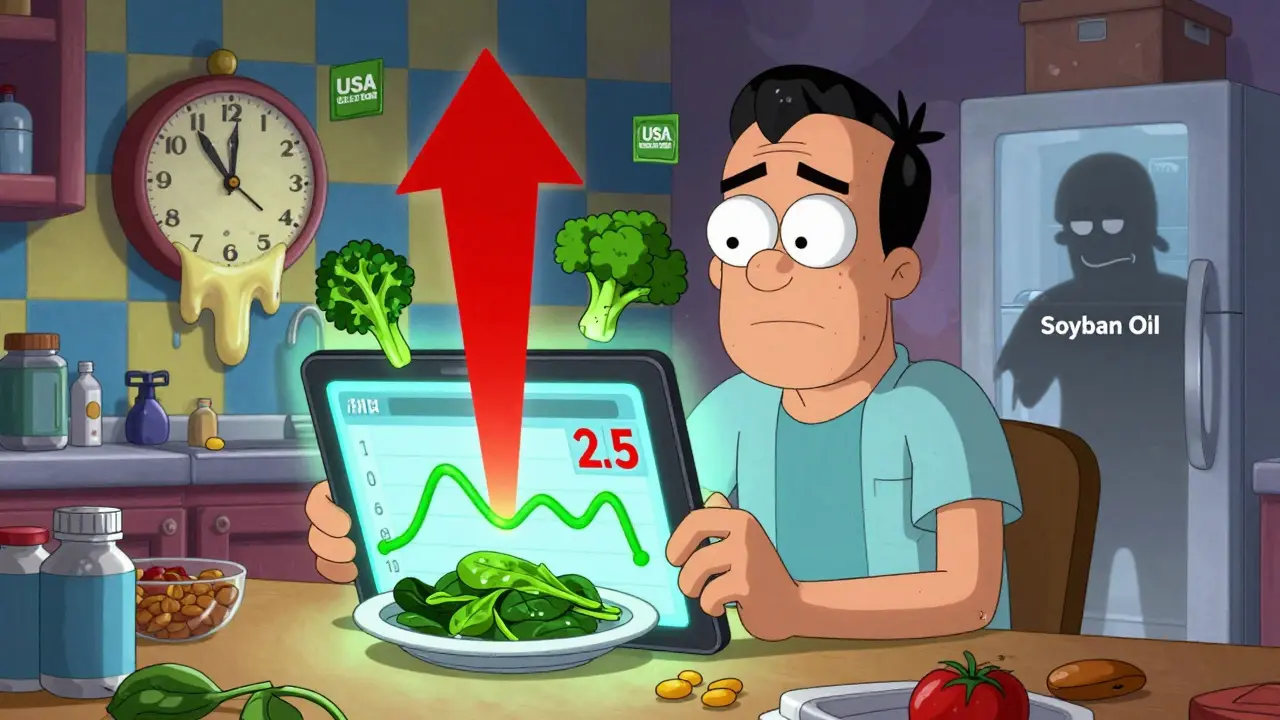
Warfarin works by blocking vitamin K from helping your body make clotting factors. Too much vitamin K? Your blood clots too easily. Too little? You risk bleeding. The sweet spot? Keeping your daily vitamin K intake steady. The American Heart Association says adults need 90-120 micrograms a day, but if you're on warfarin, you don’t need to hit that number exactly. You need to hit the same number every day.That’s why eating a big bowl of kale one day and a salad with romaine the next is dangerous. One cup of cooked kale has over 800 mcg of vitamin K. One cup of cooked broccoli? Around 220 mcg. Even a single serving of soybean oil in your cooking can add 25-30 mcg. These aren’t small differences. They’re dose changers.
According to the FDA, inconsistent vitamin K intake causes 32% of warfarin-related ER visits. That’s not rare. That’s common. And it’s preventable.
How a Food Diary Stops INR Swings
Your INR is the number your doctor checks to see if your blood is thinning enough. Target range? Usually 2.0 to 3.0. If it dips below 2.0, you’re at risk for clots. Above 3.5? You’re at risk for bleeding. Fluctuations of just 0.5 units in 30 days are considered unstable.A food diary helps you see patterns. Did your INR jump after you started eating more spinach? Did it drop after you took a new multivitamin? Writing it down makes the connection clear. A 2022 study in Blood Advances tracked 327 patients. Those using a digital vitamin K tracker stayed in their target range 72% of the time. Those using paper logs? Only 62%.
It’s not magic. It’s awareness. When you know what you ate, you can explain to your doctor why your dose might need adjusting - or why it doesn’t.
Paper vs. Digital: Which One Works Better?
You’ve got two main options: paper or app.Paper diaries are simple. You write down what you ate, the portion, and your INR number. The Anticoagulation Forum’s standard form has columns for date, food, portion size, estimated vitamin K, and INR. Many Veterans Health Administration clinics still use them. And for older patients? They work. A 2022 study found 82% of patients over 75 stuck with paper logs. Why? They don’t need to learn how to use a phone.
But paper has flaws. It gets lost. It gets wet. You forget to write it down. And estimating portions? Most people guess wrong. One study found that 33% of INR swings came from misjudging how much broccoli or spinach they ate.
Digital apps fix that. The Vitamin K Counter & Tracker app (iOS, $2.99 one-time fee) has over 1,200 foods with vitamin K values pulled straight from the USDA database. You scan a barcode, pick a portion size, and it auto-calculates the mcg. It shows you a daily graph - red if you’re over your usual intake, green if you’re steady. Users report fewer dose changes. One Reddit user said it cut his INR swings from monthly to quarterly.
But not all apps are equal. A 2023 review found 68% of vitamin K apps aren’t clinically validated. Only 3 out of 27 had real accuracy data. The Vitamin K-iNutrient app scored 94.7% accurate in a University of Toronto study. Most free apps? Error rates over 30%.
So if you go digital, pick one with published validation. Don’t trust a random app with 4 stars and no research backing it.
What to Track - The Non-Negotiables
You don’t need to log every bite. Focus on these:- Leafy greens: kale, spinach, collards, Swiss chard
- Cruciferous veggies: broccoli, Brussels sprouts, cabbage
- Oils: soybean, canola, olive (some have hidden vitamin K)
- Fortified drinks: Ensure, Boost, or similar nutrition shakes (25 mcg per 8 oz)
- Multivitamins: many contain 25-100 mcg of vitamin K
- Herbal supplements: green tea extract, ginseng, garlic - some interfere with warfarin
Don’t panic if you eat these. Just be consistent. If you normally have a spinach salad twice a week, keep doing that. Don’t suddenly eat it five times a week. And if you want to change your diet? Talk to your anticoagulation clinic first. Don’t guess.
The Hidden Problem: Underreporting
Here’s the ugly truth: most people underreport what they eat. A 2020 NIH study found patients missed 22-37% of their vitamin K intake - especially from processed foods. Soybean oil is in salad dressings, baked goods, and even some frozen meals. You don’t think about it. But it’s there.That’s why clinics do “spot checks.” A dietitian asks you to recall everything you ate in the last 24 hours. When they compare your diary to your actual intake, accuracy jumps by 28%. If you’re serious about stability, ask for this during your next appointment.
Pro Tips for Success
- Plan meals ahead. The University of Michigan found that patients who pre-planned 5 days of meals with consistent vitamin K improved their INR stability by 15%.
- Use visual portion guides. A handful of spinach = about 1 cup raw. A deck of cards = 3 oz cooked broccoli. These help avoid estimation errors.
- Take multivitamins at the same time as warfarin. This reduces daily INR swings.
- Don’t avoid vitamin K - just keep it steady. One study showed patients who ate 150 mcg every day had 18% fewer INR fluctuations than those who varied between 50 and 250 mcg.
- Update your diary before every INR test. Your doctor needs to see your pattern, not just one day.
What’s Next? AI and EHR Integration
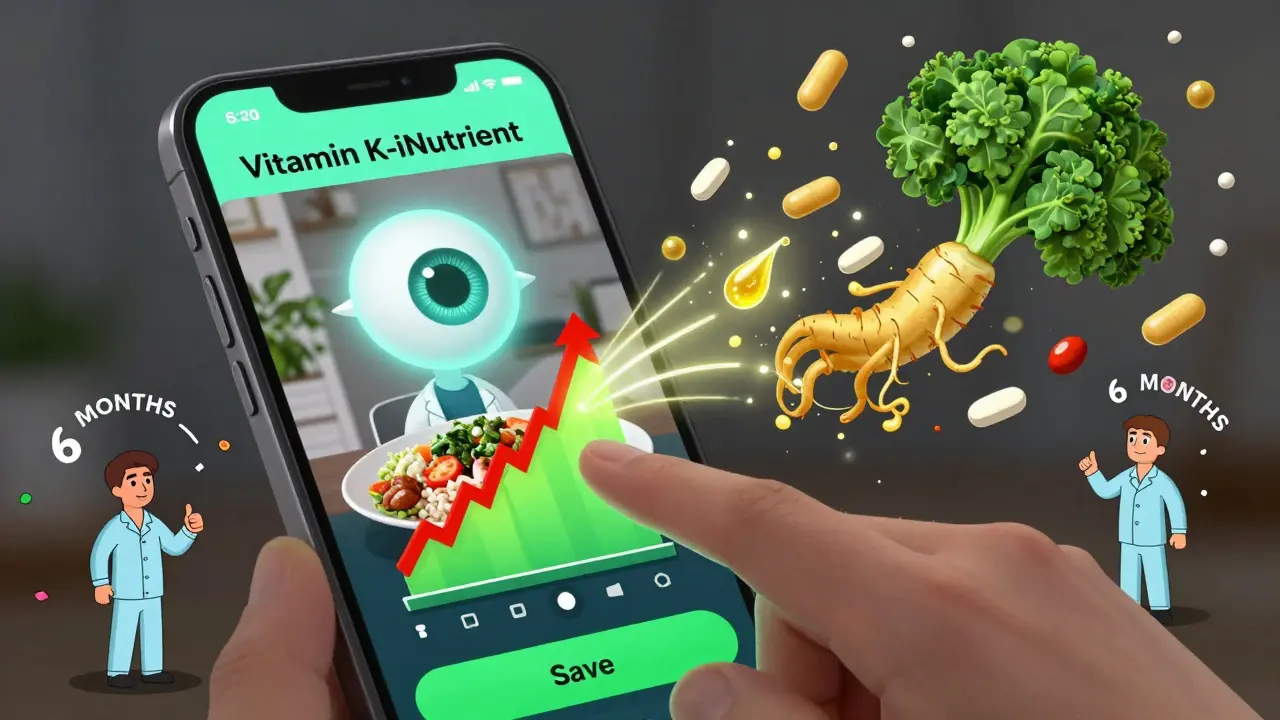
The field is moving fast. In January 2024, the FDA approved the first AI-powered tool called NutriKare. You take a photo of your meal, and the app estimates vitamin K content with 89% accuracy. Epic Systems, used by 63% of U.S. hospitals, added vitamin K tracking to MyChart in 2023. By late 2024, their system will predict your INR based on your food diary entries.It’s not sci-fi. It’s happening. And it’s built on the same idea: consistency saves lives.
Real Talk: What Patients Say
On Reddit’s r/Anticoagulants, users share real stories:- “I used to change my warfarin dose every two weeks. After using the app, I haven’t had a dose change in 6 months.” - ClotFreeSince2018
- “My paper diary got soaked in my pocket. Lost two weeks of data. Switched to the app - hated typing everything in, but worth it.” - WarfarinWarrior
Most users rate the top apps 4.7/5. The most praised feature? Real-time feedback. You see the graph go up when you eat kale. You see it stay flat when you’re consistent. That visual cue changes behavior.
Final Thought: It’s Not About Perfection
You don’t need to log every meal forever. You don’t need to become a nutritionist. You just need to be aware. If your vitamin K intake stays within 20% of your normal level, your INR will stay stable. That’s it.Start simple. Pick one method - paper or app. Track your greens, your oils, your vitamins. Do it for 30 days. Then show it to your doctor. You might be surprised how much control you actually have.
Can I eat spinach if I’m on warfarin?
Yes - but only if you eat it consistently. If you normally have spinach twice a week, keep doing that. If you suddenly eat it every day, your INR will drop. The goal isn’t to avoid vitamin K. It’s to keep your intake steady.
Do I need to track every food I eat?
No. Focus on high-vitamin K foods: leafy greens, broccoli, soybean oil, multivitamins, and fortified drinks. You don’t need to log your cereal or your chicken breast. But if you start eating a new salad dressing with soybean oil every day, track that.
What’s the best app for tracking vitamin K on warfarin?
The Vitamin K Counter & Tracker app (iOS, $2.99) is the most widely used and validated. The Vitamin K-iNutrient app is more accurate but pricier and harder to use. Avoid free apps unless they’re backed by published clinical data. Most free apps have error rates over 30%.
Can I use MyFitnessPal or Lose It! to track vitamin K?
Not reliably. A 2023 JAMA study found general nutrition apps are 3.2 times less accurate than specialized vitamin K trackers. They often miss vitamin K in oils, supplements, and fortified foods. Use a tool built for warfarin patients.
How long should I use a food diary?
For life. Even after your INR stabilizes, your diet can change. A new recipe, a different multivitamin, or even a change in your grocery store’s salad bar can throw things off. Keep tracking - it’s your safety net.
What if I forget to log one day?
Don’t panic. One missed day won’t ruin your progress. But if you miss multiple days, your doctor won’t see your pattern. Try to log at least 5 days a week. Consistency over perfection.
Do I still need blood tests if I track my diet?
Yes. Food diaries help prevent problems, but they don’t replace INR testing. You still need regular blood tests - usually every 2-6 weeks - to confirm your dose is right. The diary tells you why your INR changed. The test tells you if your dose needs adjusting.


Mario Bros
January 11, 2026 AT 14:47Jake Nunez
January 13, 2026 AT 09:41Christine Milne
January 14, 2026 AT 23:09Bradford Beardall
January 15, 2026 AT 22:32McCarthy Halverson
January 17, 2026 AT 22:23Michael Marchio
January 18, 2026 AT 10:08Jake Kelly
January 19, 2026 AT 08:19Ashlee Montgomery
January 19, 2026 AT 10:40neeraj maor
January 21, 2026 AT 00:38Kunal Majumder
January 21, 2026 AT 07:48Aurora Memo
January 22, 2026 AT 00:25chandra tan
January 22, 2026 AT 17:32Dwayne Dickson
January 23, 2026 AT 06:16