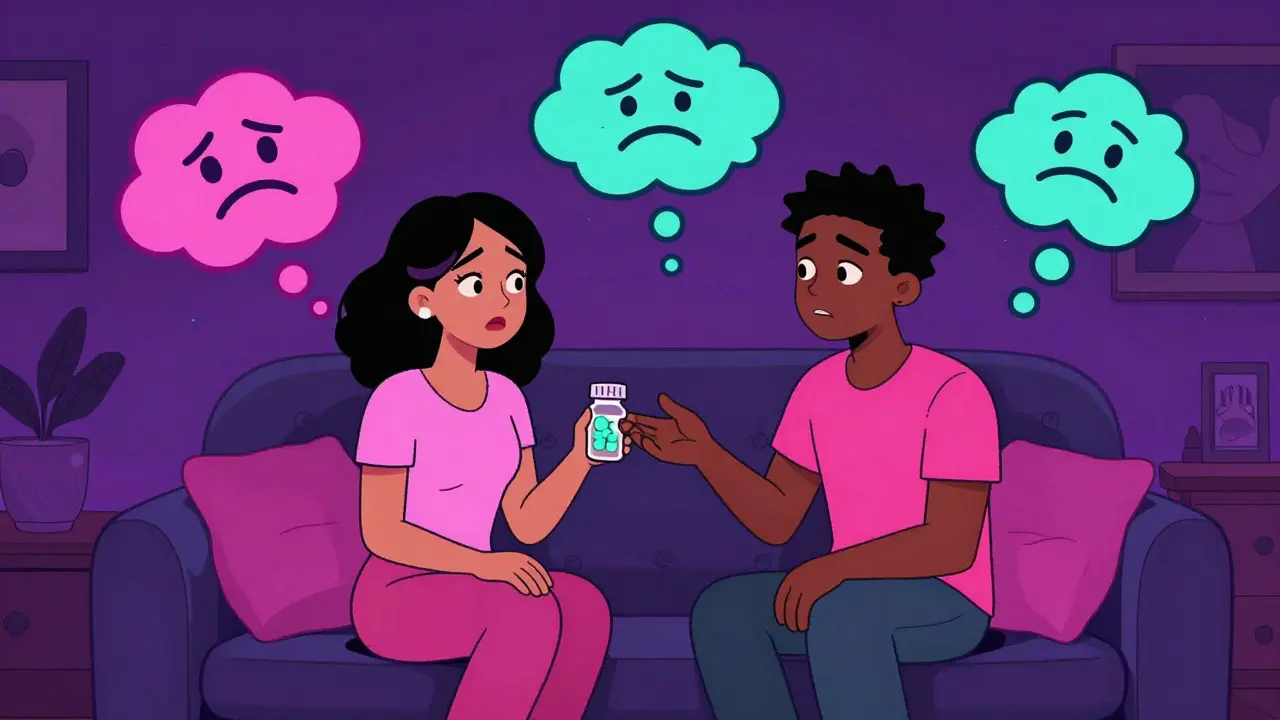
Sexual Side Effect Risk Calculator
Many mental health medications can affect sexual function. This tool estimates your risk of sexual side effects and provides personalized management suggestions based on the medication you're taking.
When you start a new medication for depression, anxiety, or another mental health condition, you expect to feel better. But for many people, something unexpected happens: their sex life changes. Loss of desire, trouble getting or staying aroused, delayed or absent orgasm-these aren’t rare side effects. They’re common. And yet, most patients aren’t warned about them before they start treatment.
One in two people taking antidepressants like fluoxetine or sertraline will experience some form of sexual dysfunction. That’s not a small number. That’s half of all users. And yet, 73% of those who experience these side effects never tell their doctor. Why? Embarrassment. Fear they’ll be dismissed. Or worse-thinking nothing can be done. But here’s the truth: sexual side effects from medications are manageable. And counseling-real, structured, honest conversation-is the most effective first step.
Why This Happens-and Who It Affects
It’s not your fault. It’s not weakness. It’s chemistry. Many psychiatric medications, especially SSRIs (selective serotonin reuptake inhibitors), raise serotonin levels to help with mood. But serotonin also shuts down sexual response pathways in the brain. The result? Lower libido, delayed orgasm, or even no orgasm at all. For men, erectile difficulties are common. For women, painful sex and lack of arousal are frequent complaints.
Here’s what the data shows:
- SSRIs like Lexapro, Zoloft, and Prozac: 50-70% risk of sexual side effects
- Bupropion (Wellbutrin) and mirtazapine (Remeron): only 5-10% risk
- Up to 50% of people with untreated depression already have sexual problems-so it’s not always the drug
Men report more physical symptoms: trouble maintaining an erection, delayed ejaculation. Women report more emotional and sensory changes: lack of interest, reduced sensation, pain during sex. Both genders feel shame. Both deserve better.
The Counseling Gap
Most doctors don’t bring it up. A Reddit survey of over 1,200 people found that 68% were never warned about sexual side effects before starting medication. That’s not negligence-it’s a system failure. Providers are rushed. They’re uncomfortable. They assume patients will speak up. But patients don’t. They think it’s normal. Or they think their doctor won’t care.
One patient told me: "I waited nine months before I mentioned it. I thought, ‘Maybe it’s just me.’" When she finally did, her doctor said, "That’s common. Let’s try switching you." Within two weeks, her sex life improved. She stayed on treatment for over a year.
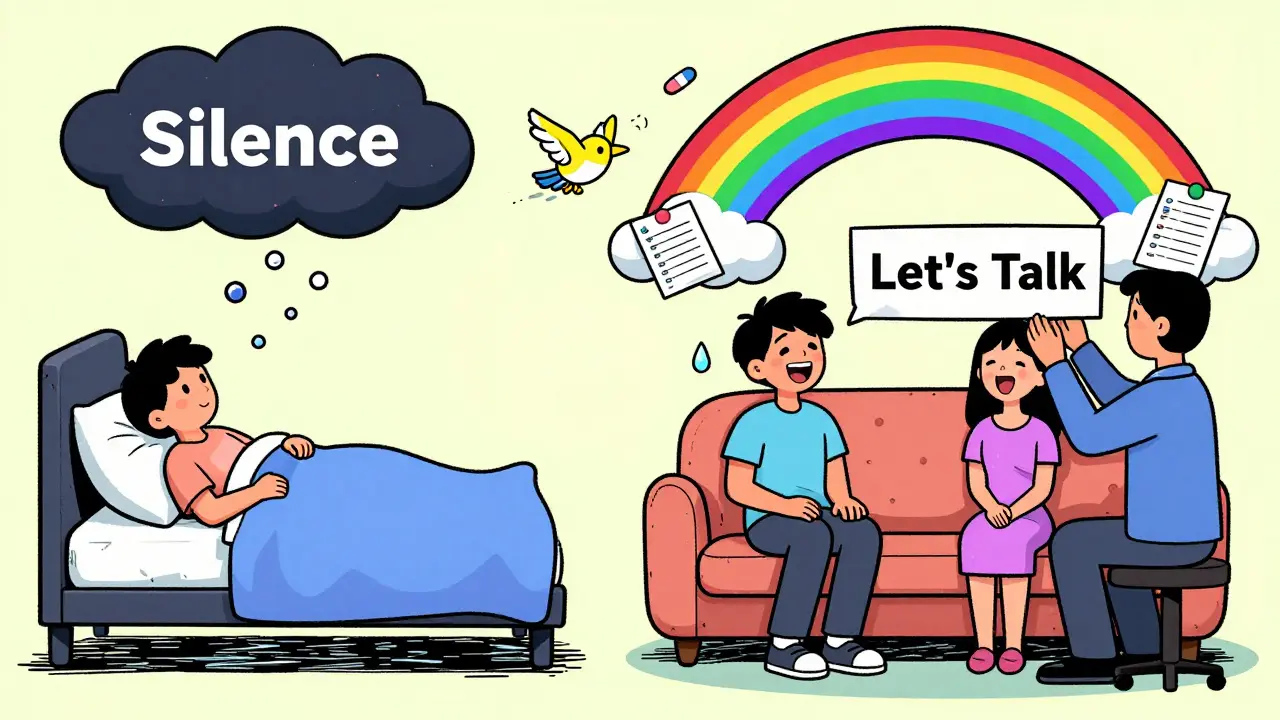
That’s the difference counseling makes. Not magic. Not pills. Just a conversation.
What Effective Counseling Looks Like
Good counseling isn’t just saying, "Some people have side effects." It’s specific, proactive, and practical. Here’s what works:
- Ask before prescribing. Before starting any medication with known sexual side effects, say: "Some people notice changes in their sex drive or response. It doesn’t happen to everyone, but it’s common enough that we plan for it. If it happens, we have options."
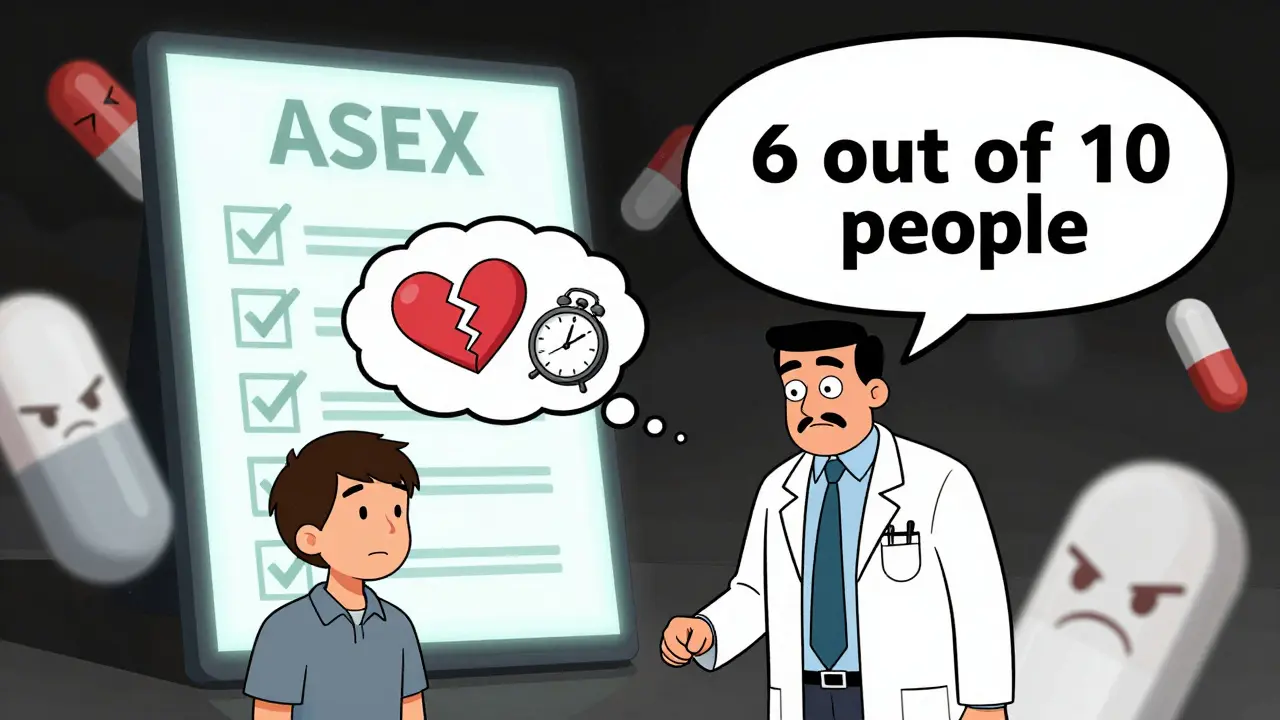
- Use a simple tool. The Arizona Sexual Experience Scale (ASEX) takes under five minutes. It asks five questions about desire, arousal, orgasm, satisfaction, and difficulty. It’s not a test-it’s a checkpoint.
- Follow up at 2, 4, and 6 weeks. Don’t wait for the patient to bring it up. Ask: "How’s your sex life been since starting this?" Make it routine, like checking sleep or appetite.
- Offer solutions-not just apologies. Don’t say, "It’s just part of getting better." Say: "We can lower your dose. Switch to a different med. Add a short-term help like sildenafil. Or try scheduling sex for when the drug effect is lowest."
One study found that when providers used this approach, patient satisfaction jumped from 47% to 82%. Discontinuation rates dropped by over a third.
What Can You Actually Do?
There are five proven paths forward-and none require suffering in silence.
1. Switch Medications
Not all antidepressants affect sex the same way. Bupropion and mirtazapine are far less likely to cause sexual side effects. Switching from an SSRI to one of these can help 65-70% of people. It’s not a cure-all, but it’s often enough to make treatment sustainable.
2. Dose Adjustment
Lowering the dose helps in 25-30% of cases. You don’t need to stop the medication-just reduce it. For some, even a 20% drop restores function without losing mood benefits.
3. Drug Holidays
Some people take a two- to three-day break from their medication right before planned sexual activity. This works for about 40% of users. But it’s risky if you’re on a short-acting drug like paroxetine-it can trigger withdrawal or mood crashes. Only do this under professional guidance.
4. Add-On Medications
For men with erectile issues, sildenafil (Viagra) or tadalafil (Cialis) helps 55-60% of the time. But for women or those with orgasm problems? It’s much less effective-only about 25%. There’s no approved drug for female sexual dysfunction caused by antidepressants yet. But research is underway.
5. Couples Therapy
Sexual side effects don’t just affect you-they affect your partner. If intimacy has suffered, relationship counseling helps. Studies show 50% improvement in satisfaction when couples work through it together. It’s not about fixing the body. It’s about rebuilding connection.
What Doesn’t Work
Ignoring it. Dismissing it. Assuming it’s "just part of depression." Telling patients to "just wait it out." These approaches lead to abandonment of treatment-and relapse into depression, which is far worse than any sexual side effect.
Also avoid unguided use of PDE5 inhibitors. Many patients buy them online, take them without context, and then blame the doctor when they don’t work. That’s not because the drugs fail. It’s because they’re used without understanding timing, dosage, or psychological barriers.
The Bigger Picture
This isn’t just about sex. It’s about dignity. Autonomy. Trust in care. When a patient feels heard, they stay on treatment. When they feel invisible, they quit. And quitting antidepressants increases suicide risk.
Health systems are starting to catch up. Over 60% of major hospitals now screen for sexual side effects as part of routine care. Telehealth platforms like Hims and Ro now offer specialized consultations for this exact issue. The FDA now requires clearer warnings on medication labels. But change moves slowly.
And women? Research still lags. Only 12% of clinical trials on sexual dysfunction focus on female experiences. That’s not just a gap-it’s a failure.
What to Do Next
If you’re on medication and noticing changes:
- Don’t wait. Don’t assume it’s normal.
- Write down what’s changed: desire? arousal? orgasm? pain?
- Bring it up at your next appointment. Say: "I’ve noticed changes in my sex life since starting this. I’d like to talk about options."
- Ask: "Is there a different medication with fewer sexual side effects?"
- Ask: "Can we try lowering my dose?"
- Ask: "Can we schedule a follow-up in three weeks to check on this?"
If you’re a provider:
- Use ASEX. It’s simple. It’s validated.
- Normalize the conversation: "This happens to 6 out of 10 people on this drug."
- Have a plan ready: switch, adjust, add, or refer.
- Don’t wait for the patient to ask. Ask first.
Sexual side effects aren’t a footnote. They’re a central part of treatment. And counseling-real, honest, practical counseling-is the bridge between losing hope and staying well.
Can sexual side effects from antidepressants be permanent?
In most cases, no. Sexual side effects from medications like SSRIs usually reverse once the drug is stopped or changed. A small number of people report persistent symptoms after discontinuation-sometimes called Post-SSRI Sexual Dysfunction (PSSD)-but this is rare and still being studied. If symptoms last more than a few months after stopping the medication, consult a specialist in sexual medicine. Most cases improve with time and targeted care.
Why don’t doctors talk about this?
Many providers are uncomfortable discussing sex. Time constraints in appointments make it easy to skip. Some assume patients will bring it up. Others fear causing anxiety or a nocebo effect-where simply mentioning the side effect makes it more likely to occur. But research shows that when done right-calmly, factually, and proactively-counseling reduces fear and increases adherence.
Is it safe to take Viagra with antidepressants?
Yes, for most people. Sildenafil (Viagra) and tadalafil (Cialis) are generally safe to use with antidepressants. They don’t interfere with mood-stabilizing effects. However, they can lower blood pressure, so caution is needed if you’re also on blood pressure meds or have heart conditions. Always talk to your doctor before combining them. They’re not a magic fix for low desire or anorgasmia-they mainly help with erectile function.
Can therapy help with sexual side effects?
Yes. Sex therapy or couples counseling can help rebuild intimacy, reduce anxiety around sex, and improve communication. Medication changes may fix the physical issue, but if the emotional or relational damage is there, therapy helps heal it. Studies show that when couples work together, satisfaction improves by 50% even if the physical side effect doesn’t fully disappear.
Are there medications that don’t cause sexual side effects?
Yes. Bupropion (Wellbutrin) and mirtazapine (Remeron) are antidepressants with significantly lower rates of sexual side effects-around 5-10%. They’re often recommended as first-line alternatives for people who’ve had problems with SSRIs. Other options include vortioxetine and agomelatine, which also show favorable profiles. Your provider can help weigh mood benefits against sexual impact.
What if I’m on antipsychotics and having sexual issues?
Some antipsychotics raise prolactin levels, which can cause low libido, erectile dysfunction, or even breast milk production. Switching to aripiprazole (Abilify) or brexpiprazole can resolve this in up to 75% of cases. These drugs don’t spike prolactin. If you’re on an older antipsychotic like risperidone and notice these changes, ask about switching. It’s one of the most effective fixes in psychiatric care.
Sexual side effects aren’t something you have to live with. They’re not a sign of failure. They’re a signal. A signal that your treatment plan can be improved. And with the right conversation, the right choices, and the right support-you don’t have to choose between mental health and intimacy. You can have both.
Random Guy
February 7, 2026 AT 12:38Brett Pouser
February 9, 2026 AT 01:59Andy Cortez
February 10, 2026 AT 05:51Joseph Charles Colin
February 11, 2026 AT 07:38Tori Thenazi
February 12, 2026 AT 19:06Marie Fontaine
February 14, 2026 AT 13:48Ken Cooper
February 14, 2026 AT 19:03Susan Kwan
February 15, 2026 AT 04:38Randy Harkins
February 15, 2026 AT 18:22Chima Ifeanyi
February 17, 2026 AT 07:19