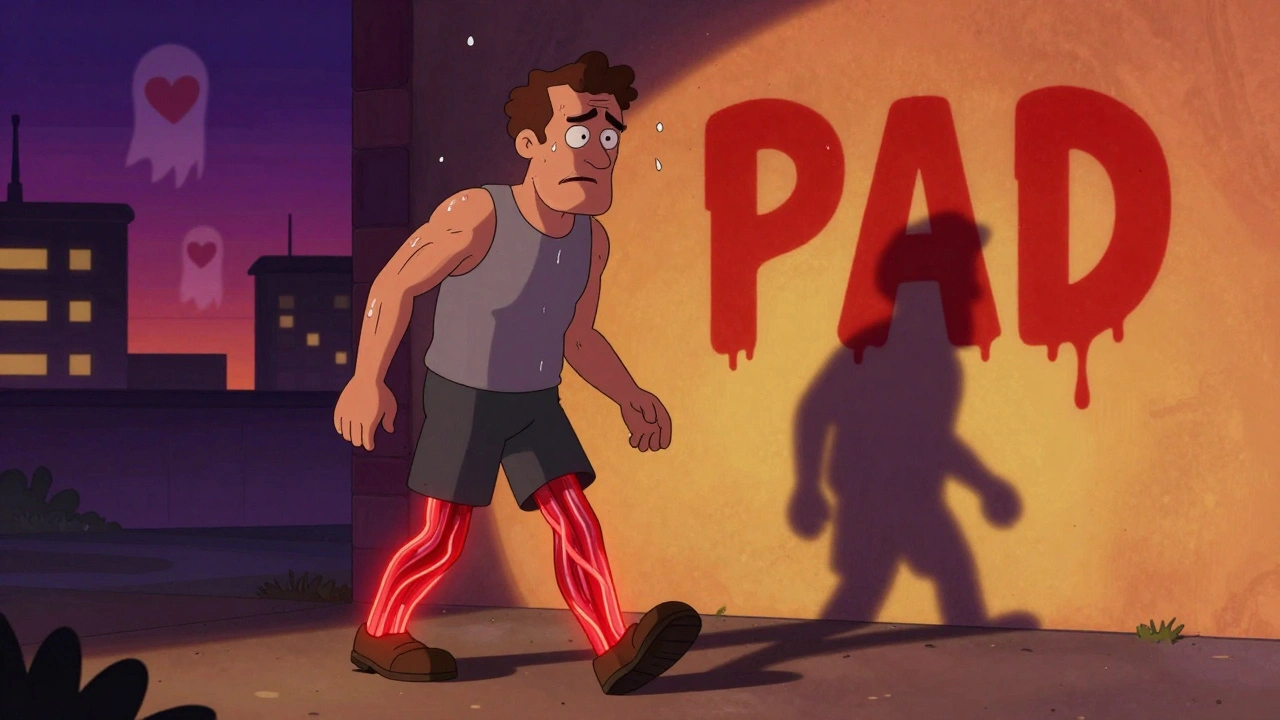
Many people think heart disease only means chest pain or a heart attack. But if you have peripheral artery disease (PAD), your heart is already sending warning signs - just not where you expect. PAD isn’t just about blocked arteries in your legs; it’s a red flag that your entire circulatory system is under siege. About 1 in 5 Americans over 65 have it, and most don’t even know. Left untreated, PAD can lead to amputation, heart attack, or stroke. The good news? If caught early, you can reverse the damage and live without pain or fear.
What Does Peripheral Artery Disease Actually Feel Like?
The most common symptom isn’t a sharp pain - it’s a dull, cramping ache in your calves, thighs, or hips that shows up when you walk and disappears when you stop. This is called claudication, and it’s the body’s way of saying, “I’m not getting enough blood.” You might think it’s just aging or being out of shape. But if you’ve had to stop walking every few blocks because your legs burn or feel heavy, and this has been happening for weeks or months, it’s not normal. Some people don’t feel any pain at all. That’s the scary part. PAD can sneak up silently. But other signs are harder to ignore: your feet feel colder than the rest of your body, your toenails grow slower or thicken, your leg hair disappears, or your skin looks shiny and pale. Men with PAD often develop erectile dysfunction - not because of stress, but because the same arteries that supply the legs also feed the genitals. If you’re over 50 and smoke or have diabetes, and you’re experiencing any of these, don’t brush it off. In advanced cases, pain happens even at rest - especially at night when you’re lying down. Sores on your toes or feet won’t heal. Your skin turns blue or black. This is critical limb ischemia. It’s an emergency. Without treatment, amputation becomes likely within months.How Do Doctors Confirm You Have PAD?
There’s no single test that tells you everything, but the ankle-brachial index (ABI) is the starting point for nearly every diagnosis. It’s simple: a technician measures your blood pressure in your arms and ankles using a regular cuff and a Doppler probe. If the pressure in your ankle is less than 90% of the pressure in your arm, you have PAD. An ABI below 0.90 means blockage. Below 0.40? That’s severe. For people with diabetes or kidney disease, the arteries can become stiff and hard to compress. In those cases, doctors use the toe-brachial index (TBI), which checks pressure in the big toe instead. It’s more accurate when the ankle arteries are calcified. Ultrasound is the next step. It shows exactly where the blockage is, how narrow the artery is, and how fast blood is flowing. It’s painless, safe, and gives results in minutes. If the blockage looks serious or if surgery is being considered, doctors may order a CT angiogram or an MRI. These create 3D images of your arteries - like a detailed map of the roadblocks in your legs. Catheter angiography, where dye is injected directly into the artery, is the most precise but is usually saved for when treatment is planned. The American Heart Association says anyone over 65 should get screened. So should anyone over 50 who smokes or has diabetes. And if you’re over 40 with high blood pressure, high cholesterol, or a family history of heart disease - you should ask for an ABI test. Yet only 1 in 5 eligible people actually get tested. That’s why so many cases are missed until it’s too late.Stopping the Progression: Lifestyle Changes That Work
The most powerful treatment for PAD isn’t a pill or a procedure - it’s walking. Not just any walking. A supervised program of 30 to 45 minutes, three to five times a week, where you walk until you feel the cramp, stop and rest, then walk again. After 12 weeks, most people can walk twice as far without pain. It sounds simple, but it’s backed by decades of research. Exercise forces your body to grow new tiny blood vessels - natural bypasses - around the blocked ones. Quitting smoking is non-negotiable. If you keep smoking, your risk of needing an amputation goes up eightfold. Your chance of dying from a heart attack or stroke triples. It’s not a suggestion. It’s survival. Diet matters too. You don’t need to go vegan, but you do need to cut back on sugar, refined carbs, and trans fats. Focus on vegetables, lean protein, whole grains, and healthy fats like olive oil and nuts. This isn’t about losing weight - it’s about lowering inflammation and stabilizing your blood vessels. Controlling blood pressure and cholesterol is equally important. Many people with PAD have normal blood pressure, but still need medication to keep it under 130/80. Cholesterol targets are stricter too: LDL (the bad kind) should be below 70 mg/dL, even if it was normal before.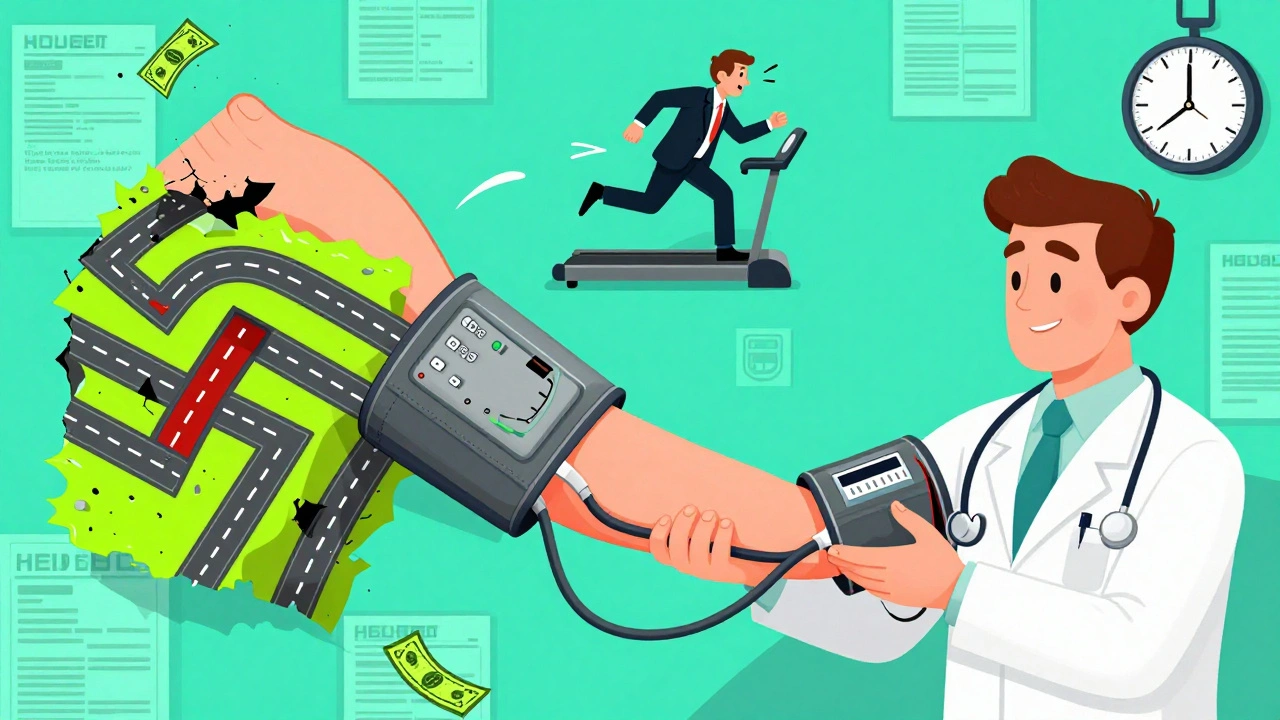
Medications: What Actually Helps
There are three main classes of drugs used for PAD, and they’re not optional if you want to live longer. First, antiplatelet meds. Aspirin (81 mg daily) or clopidogrel (75 mg daily) thin the blood just enough to prevent clots from forming in narrowed arteries. Clopidogrel is slightly more effective - it cuts your risk of heart attack, stroke, or death by 20% compared to aspirin. Second, statins. Everyone with PAD should be on one, no matter what their cholesterol level is. Statins don’t just lower cholesterol - they stabilize plaque, reduce inflammation, and improve blood vessel function. Studies show they cut cardiovascular events by 25-30% in PAD patients. Third, cilostazol. This is the only drug specifically approved to relieve leg pain from PAD. It helps you walk farther without stopping. But it’s not for everyone - if you have heart failure, it can make things worse. Your doctor will decide if it’s right for you. Some newer drugs, like rivaroxaban (a blood thinner), are now being used in combination with aspirin after a procedure. Early data shows it reduces the chance of losing a limb by 15% in the first year.When Procedures Are Needed
If lifestyle and meds aren’t enough, and your pain is stopping you from walking, working, or sleeping, it’s time to consider a procedure. Angioplasty is the most common. A tiny balloon is threaded up to the blocked artery and inflated to open it. A stent - a small metal mesh tube - is often placed to keep it open. Success rates are high for short blockages: 90% of patients see immediate improvement. For longer or more calcified blockages, an atherectomy may be used. This is like sanding down the inside of the artery with a tiny rotating blade or laser. It’s especially useful for people with diabetes, whose arteries tend to be harder and more brittle. Bypass surgery is the oldest and most durable option. A vein from your leg or a synthetic tube is grafted to reroute blood around the blockage. If you get a vein graft, there’s an 80% chance it’ll still be open five years later. But it’s major surgery - recovery takes weeks. The choice depends on your age, overall health, where the blockage is, and how badly you’re affected. The key is not to wait until you’re in constant pain or have open sores. Early intervention saves limbs.
The Hidden Crisis: Why PAD Is Underdiagnosed
Despite being as deadly as many cancers - with a 30-40% five-year death rate - PAD is ignored. Why? Because it doesn’t hurt enough at first. Doctors don’t always screen. Patients don’t connect leg cramps to heart disease. The problem is worse for Black and Hispanic patients. Studies show they’re 30-40% less likely to get a procedure, even when their disease is just as bad. Access, bias, and lack of awareness all play a role. The PAD Awareness Act of 2022 is trying to fix this by funding free screening programs in high-risk communities. But until more people know the signs, and until doctors make ABI testing routine, thousands will keep losing limbs - and lives - unnecessarily.What Happens If You Do Nothing?
PAD doesn’t get better on its own. It gets worse. Slowly at first - you walk less, sit more, gain weight, feel tired. Then the pain comes even at rest. Then your toes turn black. Then infection sets in. Then amputation. And even after that, your risk of a heart attack or stroke remains high. The 5-year survival rate for someone with untreated PAD is worse than for many types of cancer. But here’s the truth: if you act now - walk, quit smoking, take your meds, get screened - your odds improve dramatically. Many people with PAD live full, active lives for decades. It’s not about fear. It’s about control. You can’t undo the damage overnight. But you can stop it from getting worse. And that’s more than enough to change your future.Can peripheral artery disease be reversed?
Yes, in many cases. While damaged arteries don’t fully heal, lifestyle changes - especially daily walking and quitting smoking - can stop the disease from progressing and even improve blood flow. New tiny blood vessels form around blockages, helping you walk farther without pain. Medications like statins and antiplatelets reduce inflammation and stabilize plaque. Early intervention can prevent amputation and heart attack.
Is PAD the same as varicose veins?
No. Varicose veins are swollen, twisted surface veins caused by faulty valves. They’re mostly a cosmetic issue or cause mild discomfort. PAD is a blockage in the deeper arteries that supply oxygen to your muscles. It causes muscle pain during activity and can lead to tissue death. One is a vein problem; the other is an artery problem - completely different.
Can I still exercise if I have PAD?
Yes - and you should. Walking is the most effective treatment. Start slow: walk until you feel pain, rest until it goes away, then walk again. Do this 3-5 times a week. Over time, your pain-free walking distance will increase. Avoid sitting for long periods. Don’t stop moving just because it hurts - that makes it worse.
Does PAD cause numbness or tingling?
Not usually. PAD causes cramping, heaviness, or fatigue in the muscles during activity - not numbness or pins and needles. Those symptoms are more typical of nerve problems, like diabetic neuropathy. If you have both PAD and diabetes, you might feel both. But if your only symptom is tingling, it’s probably not PAD.
How often should I get checked for PAD?
If you’re over 65, get an ABI test once. If you’re over 50 and smoke or have diabetes, get screened now. If you’ve been diagnosed with PAD, your doctor will monitor you every 6-12 months with physical exams and possibly repeat ABI tests. If you’ve had a procedure, follow-up imaging may be needed at 6 months and 1 year to check if the artery stays open.




Saket Modi
December 3, 2025 AT 12:33Shubham Pandey
December 4, 2025 AT 06:11Chris Wallace
December 6, 2025 AT 03:20Girish Padia
December 8, 2025 AT 00:35Elizabeth Farrell
December 8, 2025 AT 15:13Sheryl Lynn
December 8, 2025 AT 15:32Chelsea Moore
December 10, 2025 AT 04:19John Biesecker
December 11, 2025 AT 23:09Genesis Rubi
December 13, 2025 AT 17:15Doug Hawk
December 14, 2025 AT 09:58John Morrow
December 14, 2025 AT 20:22Kristen Yates
December 16, 2025 AT 18:02John Webber
December 17, 2025 AT 13:58Doug Hawk
December 18, 2025 AT 18:40