Steroid Side Effect Risk Calculator
This calculator helps you understand your risk of short-term and long-term side effects from prednisone or prednisolone based on your daily dose and treatment duration. Remember: the most critical threshold is 3 weeks of daily use.
What You Need to Know About Prednisone and Prednisolone Side Effects
These two drugs - prednisone and prednisolone - are among the most commonly prescribed steroids in the UK and the US. They’re powerful, fast-acting, and often life-saving. But they’re not harmless. Whether you’ve been on them for a week or a year, you need to know what’s really happening inside your body. Side effects aren’t just listed in the leaflet - they’re real, measurable, and sometimes permanent. And the difference between short-term and long-term use isn’t just about duration - it’s about risk levels that climb sharply after three weeks.
How Prednisone and Prednisolone Work (And Why They’re Not the Same)
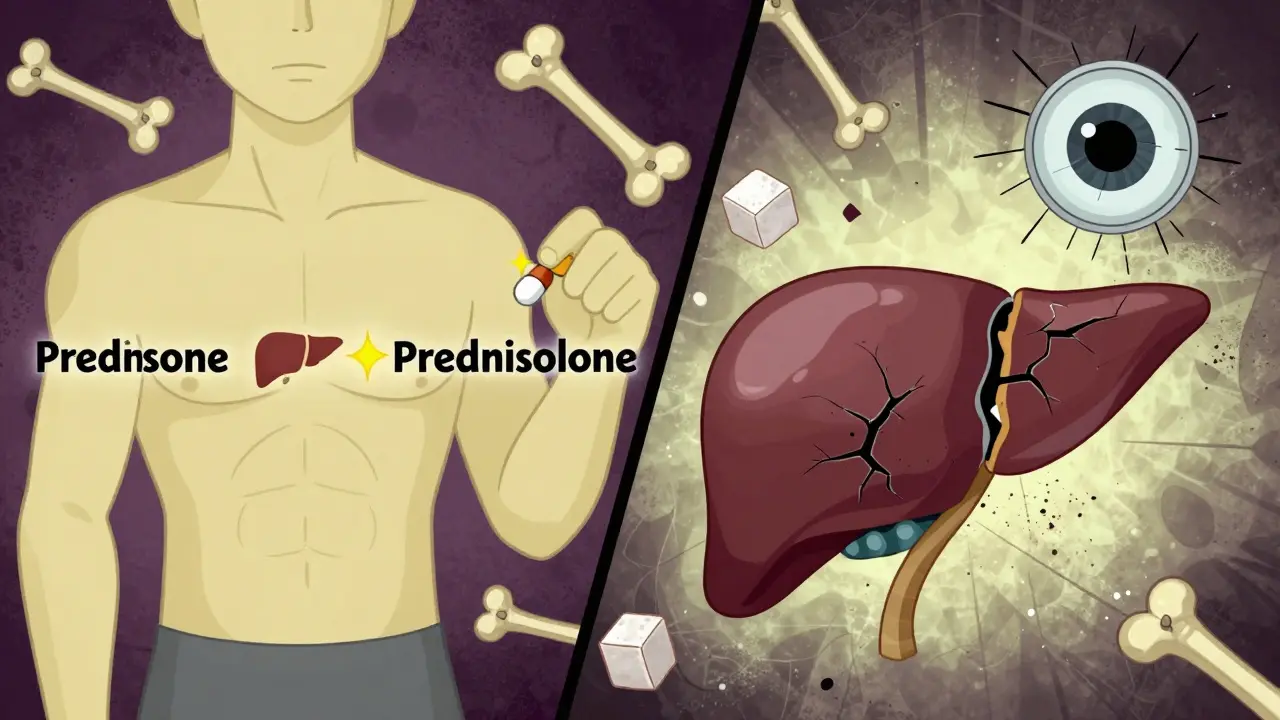
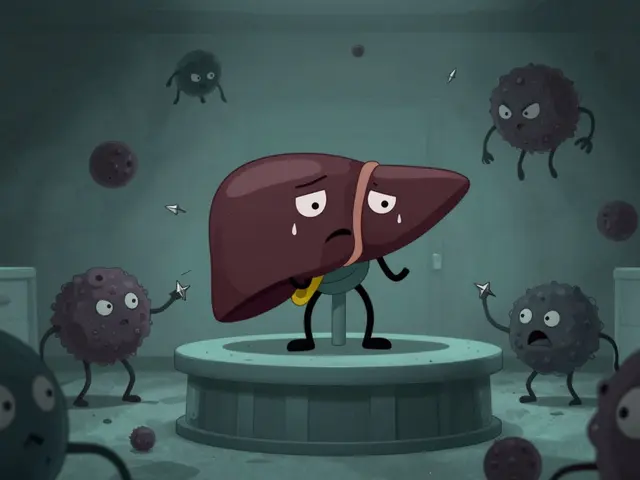
Prednisone and prednisolone are nearly identical in effect, but not in how they get there. Prednisone is a prodrug. That means your liver has to convert it into prednisolone before it can work. If your liver is healthy, this happens quickly. If it’s damaged - from alcohol, hepatitis, or cirrhosis - that conversion drops by up to 67%. In those cases, prednisolone is the only safe choice. You’re not getting the same drug. You’re getting a drug that depends on your liver to turn into the right one.
That’s why doctors sometimes switch patients from prednisone to prednisolone. It’s not about preference. It’s about biology. In children with inflammatory bowel disease, prednisolone is preferred because it’s more predictable. In lupus, prednisone is still the go-to for many rheumatologists. But the dose? That’s the real key.
Short-Term Side Effects: The First Few Weeks
If you’ve been on these drugs for less than three weeks, you’re likely dealing with the short-term side effects. These are uncomfortable, sometimes scary, but usually temporary. They don’t mean you’re broken. They mean the drug is working - and your body is reacting.
- Insomnia: Over 68% of users report trouble sleeping. This isn’t just being wired. Steroids spike cortisol levels, which your body normally drops at night. Taking your dose after 2 PM makes this worse. Most doctors now recommend taking it before noon.
- Increased appetite and weight gain: You’re not lazy. You’re not weak. Steroids trigger hunger signals in your brain. Fluid retention adds another 5-10 pounds quickly. It’s not fat - it’s water. But it looks like it.
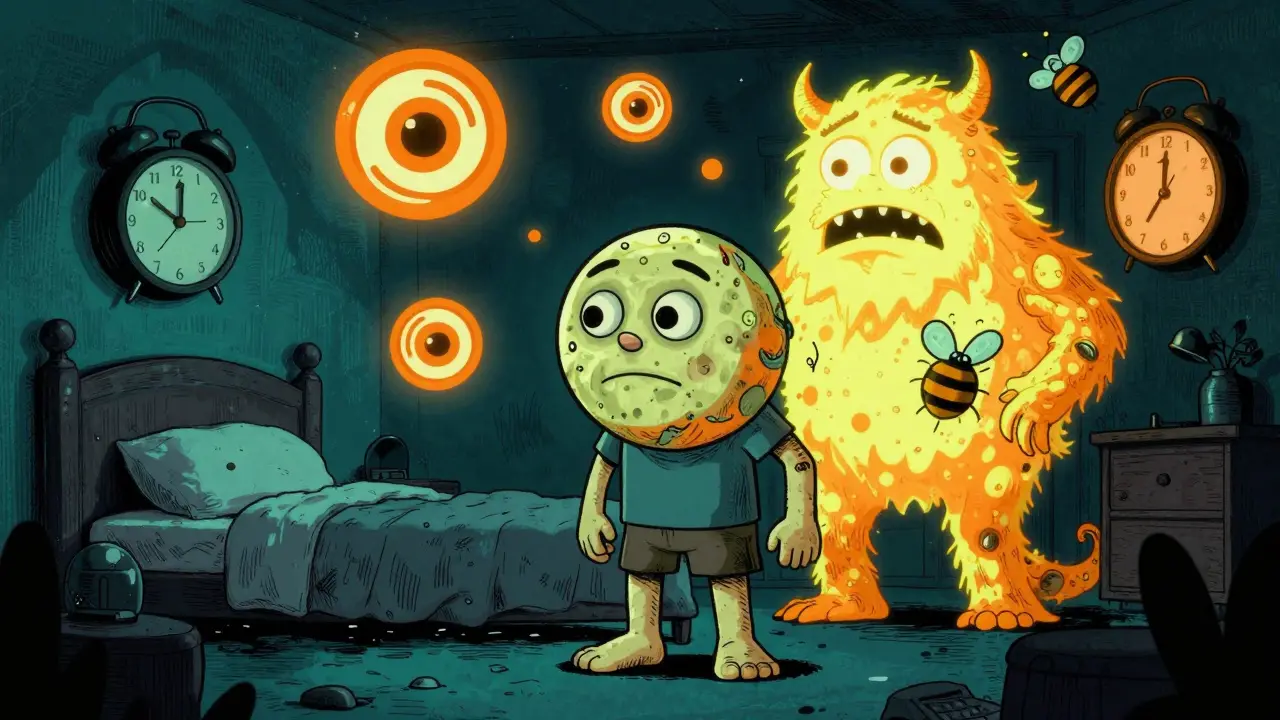
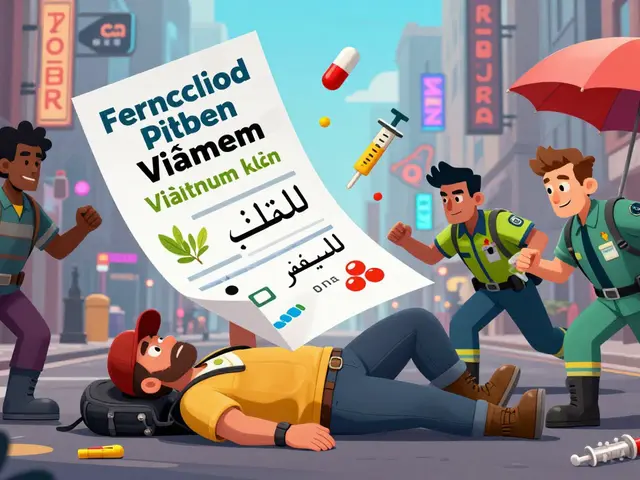
- Mood swings and anxiety: One in five people on doses above 20mg a day report irritability, panic, or even paranoia. Reddit threads are full of stories about people calling 911 because they thought their apartment was full of spiders - none were there. This isn’t exaggeration. It’s documented.
- Fluid retention and high blood pressure: Your body holds onto sodium. That means swollen ankles, puffy face (aka ‘moon face’), and rising blood pressure. It’s why your doctor tells you to cut salt. You need less than 2,000mg a day.
- Headaches and dizziness: These are common. Not because you’re stressed. Because your blood pressure is up and your fluid balance is off.
Here’s the good news: 78% of these side effects fade within two weeks of stopping. Your body resets. But only if you stop correctly - not suddenly.
Long-Term Side Effects: What Happens After 3+ Weeks
After three weeks of daily use, the risks change. The side effects stop being temporary. They become structural. This is where the real damage happens - and it’s often silent until it’s too late.
- Osteoporosis and fractures: After two years of use, 63% of long-term users develop bone loss. Steroids stop new bone formation and speed up bone breakdown. A simple fall can break your hip. That’s why doctors check your bone density every 6-12 months if you’re on more than 5mg daily for over 3 months.
- Diabetes and high blood sugar: Even if you’ve never had diabetes, 54% of people on 20mg or more a day develop steroid-induced high blood sugar. Your pancreas can’t keep up. Monitoring your glucose isn’t optional - it’s necessary.
- Cataracts and glaucoma: After a year, your risk of cataracts doubles. Glaucoma risk rises too. These don’t hurt until they’ve damaged your vision. Annual eye checks are mandatory if you’re on long-term steroids.
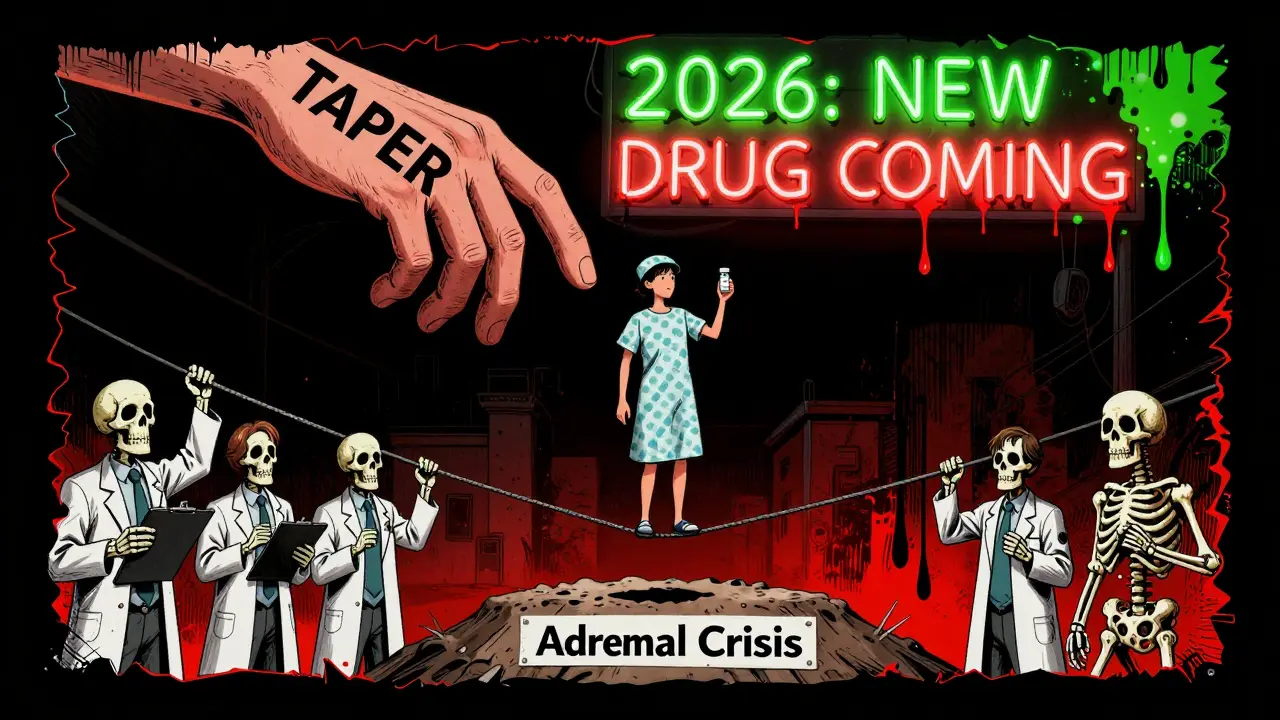
- Adrenal suppression: This is the most dangerous. Your body stops making its own cortisol because the drug is doing it for you. If you stop suddenly, your body can’t react. You can go into adrenal crisis - low blood pressure, vomiting, collapse, even death. That’s why you never quit cold turkey. Tapering takes weeks, sometimes months.
- Muscle weakness and wasting: Your muscles start breaking down. You feel tired, weak, unable to climb stairs. This isn’t laziness. It’s the steroid eating your muscle protein.
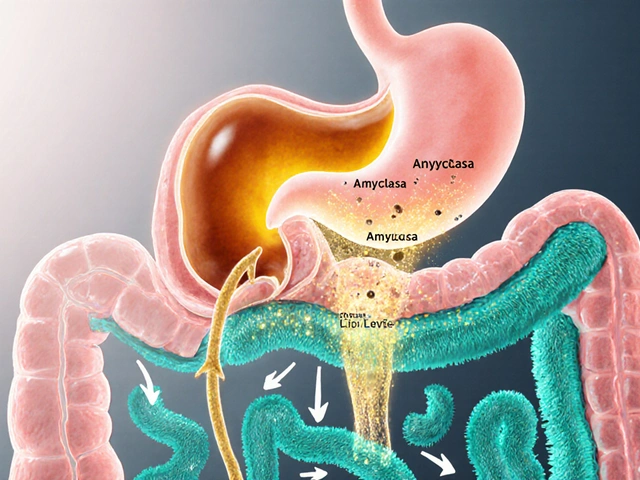
- Peptic ulcers and pancreatitis: Steroids weaken your stomach lining. Combine that with NSAIDs like ibuprofen, and ulcers become common. Proton pump inhibitors (like omeprazole) are routinely prescribed alongside steroids for anyone on more than 5mg daily for over 4 weeks.
- Permanent adrenal insufficiency: In 37% of long-term users, the adrenal glands never fully recover. They need lifelong replacement therapy with hydrocortisone. This isn’t rare. It’s predictable.
Who’s at Highest Risk?
Not everyone gets the same side effects. Some people sail through. Others get crushed. Here’s who needs extra care:
- Children: Every 0.2mg/kg/day of prednisolone slows growth by 1.2 cm per year. That’s not a small difference. It’s measurable. Height checks every 3 months are required by the FDA for kids on long-term therapy.
- Older adults: Bone loss hits faster. Muscle wasting hits harder. Falls become more dangerous.
- People with liver disease: Prednisone may not work at all. Prednisolone is the only option.
- People with diabetes or high blood pressure: These conditions get worse. Fast.
- Those on high doses: Above 7.5mg daily for more than 3 weeks? Risk of serious side effects jumps to 40%. Above 20mg daily for 8 weeks? Nearly everyone develops at least one major issue.
How to Reduce the Damage
You don’t have to accept these side effects as inevitable. There are proven ways to fight back.
- Take your dose early: Before 2 PM. This cuts insomnia by over 50%.
- Watch your salt: Under 2,000mg daily. Add potassium-rich foods - bananas, spinach, sweet potatoes - to balance fluids.
- Move your body: Weight-bearing exercise (walking, lifting) preserves bone density. Studies show a 22% improvement in bone strength with regular activity.
- Take calcium and vitamin D: 1,200mg calcium and 800-1,000 IU vitamin D daily. This is standard for anyone on steroids longer than 3 months.
- Use a PPI: Omeprazole or pantoprazole reduces ulcer risk from 8% to 1%.
- Get your eyes checked: Every year. Cataracts don’t warn you.
- Never miss a dose - and never double up: Missing a dose can trigger adrenal crisis. Doubling up can cause toxicity. Use a pill app. Set alarms. This isn’t optional.
When to Call Your Doctor
Don’t wait for a crisis. Call your doctor if you notice:
- Sudden swelling in your face, hands, or feet
- Severe mood changes - panic, hallucinations, suicidal thoughts
- Blurred vision or eye pain
- Unexplained bone pain or fractures
- Extreme fatigue, dizziness, or nausea - especially if you’ve missed a dose
- Uncontrollable thirst or frequent urination (signs of high blood sugar)
These aren’t side effects you can ignore. They’re warning signs.
The Bigger Picture: Why These Drugs Still Matter
Yes, the side effects are serious. But so are the diseases they treat - lupus, rheumatoid arthritis, severe asthma, allergic reactions, inflammatory bowel disease. In giant cell arteritis, steroids improve symptoms in 92% of patients. Placebo? 58%. That’s a massive difference.
Over 58 million prednisone prescriptions were filled in the US last year. That’s not because doctors are careless. It’s because there’s still no better option for acute inflammation. Biologics help, but they’re expensive and don’t work fast. Steroids work in hours.
The goal isn’t to avoid them. It’s to use them wisely. The lowest dose. The shortest time. The right monitoring. That’s what separates survival from damage.
What’s Changing in 2026
There’s new hope. A delayed-release prednisone called Deltacorten was approved in May 2023. It releases the drug slowly, reducing morning cortisol spikes - and cutting mood side effects by 32%. In Europe, new guidelines are pushing for better bone protection - current treatments only prevent 55% of fractures.
At the NIH, a new drug is in phase 2 trials. It blocks the bad effects of steroids while keeping the anti-inflammatory power. Early results show a 60% drop in weight gain, blood sugar spikes, and muscle loss. This isn’t science fiction. It’s coming.
But until then, the rules are simple: know your dose. Know your timeline. Know your risks. And never stop without a plan.
Can prednisone and prednisolone be used interchangeably?
In most people with healthy livers, yes - 5mg of prednisone equals 5mg of prednisolone in effect. But if you have liver disease, prednisone won’t convert properly. In those cases, prednisolone is the only safe choice. Never switch without talking to your doctor.
How long do short-term side effects last after stopping?
Most short-term side effects - like insomnia, increased appetite, mood swings, and fluid retention - fade within 1-2 weeks after stopping. But this only happens if you taper properly. Stopping suddenly can trigger withdrawal symptoms that feel like the side effects are getting worse.
Is weight gain from prednisone permanent?
The water weight - the puffiness, bloating, swollen face - goes away quickly. But if you gained fat because of increased appetite and reduced activity, that may stick. The key is diet and movement. Once you stop, your appetite normalizes. Focus on protein and fiber, not carbs and salt. You can lose it - but it takes effort.
Can prednisone cause mental health issues?
Yes. At doses above 40mg daily, the risk of steroid-induced psychosis, anxiety, and depression rises sharply. Some people experience paranoia, hallucinations, or extreme irritability. This isn’t weakness - it’s a chemical reaction. If you feel out of control, tell your doctor immediately. Lowering the dose or switching to prednisolone can help.
Do I need to take calcium and vitamin D if I’m on prednisone for just a few weeks?
If you’re on it for less than 3 weeks, bone protection isn’t usually needed. But if you’re on more than 5mg daily for over 4 weeks, yes - start calcium and vitamin D. Prevention is easier than repair. Bone loss starts early.
What’s the safest way to stop prednisone?
Never stop cold turkey. Your body stops making cortisol when you’re on steroids. Stopping suddenly can cause adrenal crisis - low blood pressure, vomiting, fainting, even death. Tapering must be done slowly, over weeks or months, depending on how long you’ve been on it. Your doctor will give you a schedule. Follow it exactly.
Are there alternatives to prednisone and prednisolone?
For long-term management, yes - biologics like tocilizumab or methotrexate can reduce steroid dependence by up to 28% in conditions like rheumatoid arthritis. But for acute flare-ups - severe asthma, allergic reactions, or sudden inflammation - nothing works as fast or as reliably. Steroids are still the first-line tool. The goal is to use them briefly and then switch to safer options.
Final Thought: This Isn’t About Fear - It’s About Control
You didn’t ask for this. You didn’t choose it. But you’re not powerless. Knowing the risks isn’t scary - it’s empowering. You can control your dose, your timing, your diet, your movement, your monitoring. You can ask the right questions. You can push back when the side effects feel worse than the disease.
Prednisone and prednisolone aren’t villains. They’re tools. And like any tool, they’re dangerous in the wrong hands - but lifesaving in the right ones. Use them with awareness. Protect yourself. And never stop without a plan.
Lu Gao
January 31, 2026 AT 21:58Nicki Aries
February 1, 2026 AT 10:56June Richards
February 2, 2026 AT 09:18vivian papadatu
February 4, 2026 AT 02:26Bryan Coleman
February 5, 2026 AT 02:33Angel Fitzpatrick
February 6, 2026 AT 08:15Naresh L
February 7, 2026 AT 16:34Sami Sahil
February 8, 2026 AT 15:12Chris & Kara Cutler
February 8, 2026 AT 22:43Bob Cohen
February 10, 2026 AT 18:47Jaden Green
February 11, 2026 AT 19:03Lilliana Lowe
February 12, 2026 AT 02:38Nidhi Rajpara
February 13, 2026 AT 09:09Donna Macaranas
February 14, 2026 AT 00:12Nancy Nino
February 14, 2026 AT 10:34