Poor communication isn't just a social faux pas in medicine; it is a lethal hazard. According to The Joint Commission's analysis of sentinel events, roughly 80% of medical errors stem from communication breakdowns. That means when things go wrong in a hospital, it is rarely because the doctor didn't know the drug dosage-it’s because the nurse didn’t get the message, or the patient misunderstood the discharge instructions.
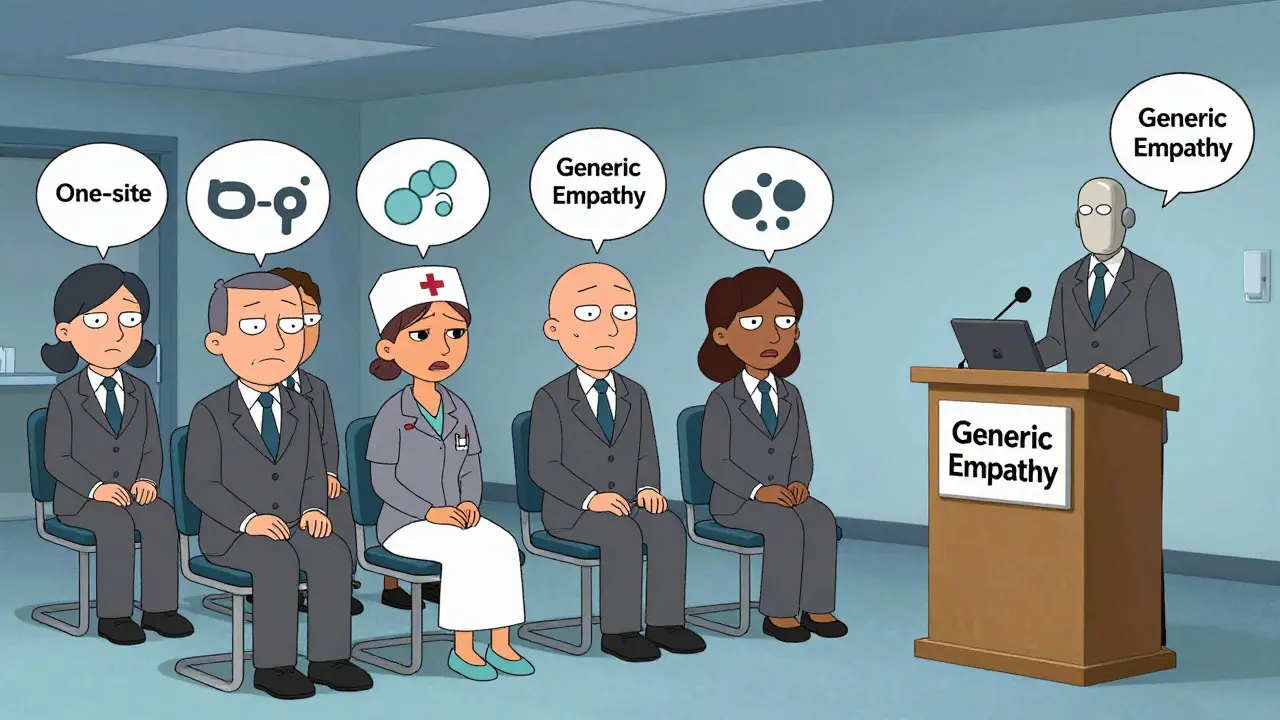
For decades, healthcare institutions have tried to fix this with institutional generic education programs, which are broad, one-size-fits-all training initiatives designed to improve communication across all staff levels without specific role customization. The logic seemed sound: train everyone in empathy and active listening, and problems will vanish. But the data tells a different story. While these programs are widespread, they often fail to stick because they ignore the chaotic reality of clinical workflows. If you are looking to implement or choose a communication strategy for your organization, understanding why generic models fall short-and what evidence-based alternatives actually work-is critical.
The Flaw in the 'One-Size-Fits-All' Approach
Generic communication programs typically rely on lecture-based formats where clinicians sit through hours of theory about "active listening" or "empathy." These courses assume that if you explain a concept, people will adopt it. In practice, this ignores the cognitive load of a busy ER shift or the high-stakes pressure of an ICU handoff.
The Agency for Healthcare Research and Quality (AHRQ) found that 15-20% of adverse patient outcomes are linked to these failures. Yet, many hospitals still use outdated curricula that don't address the specific mechanics of how information moves between departments. A radiologist needs different communication tools than a primary care physician. A social worker needs different strategies than a billing coordinator. Treating them as a monolithic group dilutes the effectiveness of the training.
Consider the feedback from frontline staff. In surveys conducted by the Association of American Medical Colleges (AAMC), 58% of healthcare professionals admitted they knew the right communication techniques but lacked the time to implement them during 15-minute appointments. Generic programs rarely offer practical shortcuts or workflow integrations; they just add another layer of abstract knowledge that gets forgotten the moment the next patient walks in.
Evidence-Based Alternatives: Specialized and Simulated
To move beyond generic fluff, leading institutions have shifted toward specialized, competency-based models. These approaches focus on specific behaviors rather than vague ideals. Let’s look at three distinct models that are reshaping the field.
| Program Model | Key Feature | Target Audience | Evidence of Impact |
|---|---|---|---|
| Mastery Learning | Requires passing proficiency thresholds (e.g., 85%) before advancing | Medical students, residents | 37% higher skill retention at 6 months; 28% fewer patient complaints |
| Patient-Centered Workshops | Focuses on eliciting patient stories and empathy responses | Primary care physicians, nurses | 23% greater improvement in patient satisfaction scores |
| Public Health Emergency Training | Crisis communication, media relations, policy advocacy | Infection preventionists, public health officials | Reduces 40% communication-related delays in outbreak response |
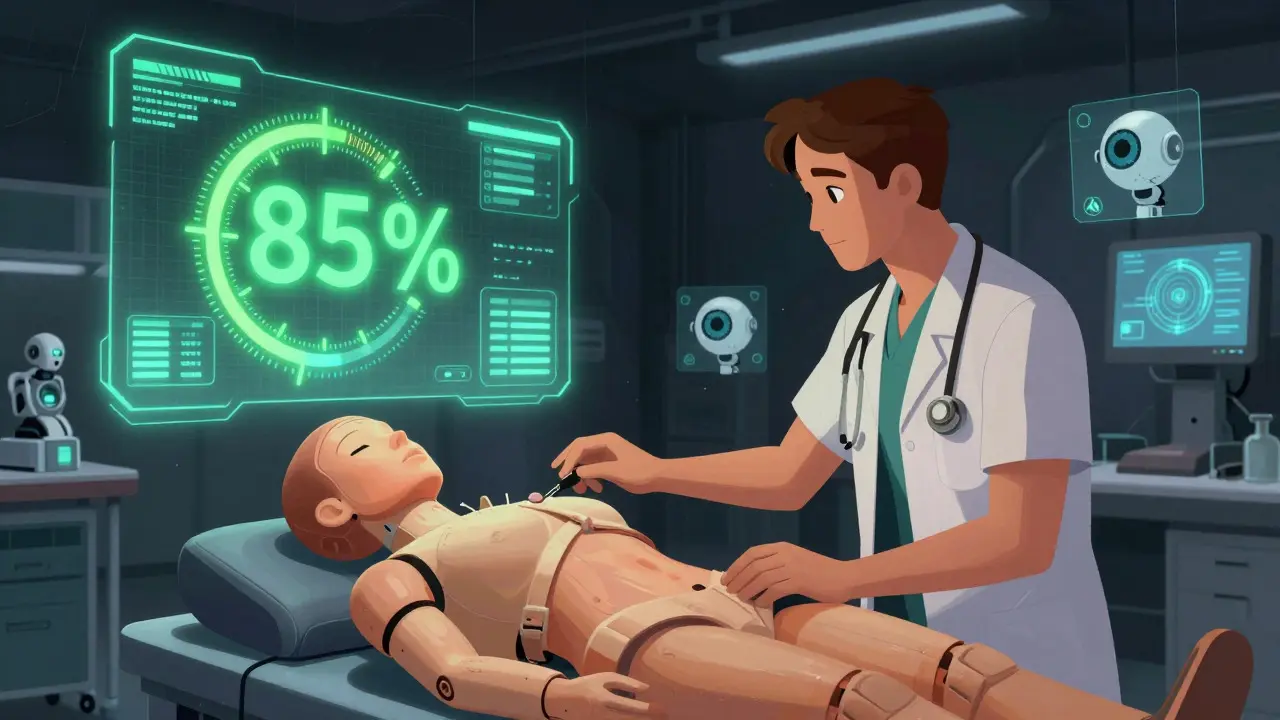
Mastery Learning, championed by institutions like Northwestern University, flips the script. Instead of giving everyone a grade based on a curve, learners must demonstrate a specific level of proficiency-often 85% or higher-in communication skills assessments before moving on. This model uses simulation labs where students interact with standardized patients. It feels intense, even anxiety-inducing for some, but the results are undeniable. In a 2022 randomized controlled trial, this approach showed significantly better long-term retention than traditional lectures.
Another powerful alternative is the Program for Excellence in Patient-Centered Communication (PEP) at the University of Maryland. Launched in 2016, PEP doesn’t just talk about empathy; it drills down into micro-behaviors. Trainees learn exactly how to elicit a patient’s full story and how to respond with genuine empathy. The outcome? A 23% boost in patient satisfaction scores compared to generic training. This works because it gives clinicians a concrete script and set of actions, not just a philosophy.
For public health roles, the Health Communication Training Series (HCTS) from UT Austin offers free, self-paced modules focused on crisis scenarios. During the pandemic, communication delays contributed to significant setbacks. HCTS addresses this by teaching organizational planning for infectious disease outbreaks, ensuring that when the next crisis hits, the messaging is clear and coordinated from day one.
Overcoming Implementation Barriers
Even the best program fails if it isn't integrated into daily life. The biggest hurdle isn't lack of interest; it's systemic friction. Dr. Robert Wachter of UCSF noted in NEJM Catalyst that communication training alone cannot overcome time pressures. Physicians average only 13.3 seconds before interrupting patients, regardless of their training status.
To bridge this gap, successful implementations follow a four-phase model established by the Academy of Communication in Healthcare (ACH):
- Needs Assessment: Don't guess. Analyze patient surveys to find specific gaps. Are patients complaining about unclear discharge instructions? Focus there.
- Skills Prioritization: Pick 3-5 high-impact behaviors. Trying to teach everything leads to teaching nothing.
- Contextualized Training: Use real clinical scenarios from your own institution. Abstract examples don't resonate as deeply.
- Workflow Integration: Embed prompts in Electronic Health Record (EHR) systems. If the computer reminds the doctor to ask about home support, they are more likely to do it.
Faculty development is also crucial. You can't expect new hires to adopt better communication if senior leaders model poor habits. Mayo Clinic addresses this by having senior physicians lead 60% of their communication sessions. This peer modeling validates the importance of the skills and reduces resistance from those who view communication as "soft" or unteachable.
The Future: Technology and Equity
The landscape of healthcare communication is evolving rapidly. Two major trends are emerging: the integration of AI and a sharper focus on health equity.
AI-powered feedback tools are beginning to appear in training programs. Pilot data suggests these tools can accelerate skill acquisition by 22%, offering immediate, objective feedback on tone and clarity during simulated interactions. As telehealth becomes standard, virtual communication modules are now included in 35% of new programs, addressing the unique challenges of building rapport through a screen.
Equity is no longer an afterthought. There is a documented 28% gap in communication satisfaction between white and minority patients. Newer programs, such as the recent updates to HCTS, specifically target cultural humility and bias reduction. The goal is to ensure that communication improvements benefit all patients equally, not just those who share the same background as the provider.
However, sustainability remains a challenge. Only 42% of hospital-based programs have dedicated funding streams. This forces many organizations to rely on academic-commercial partnerships, like the recent collaboration between Mayo Clinic and SHEA, to keep training fresh and accessible.
Practical Steps for Your Organization
If you are tasked with improving communication in your healthcare setting, start small. Don't buy into a massive, generic overhaul. Instead, identify one high-friction area-perhaps medication reconciliation errors due to poor handoffs. Design a targeted workshop using mastery learning principles. Measure the impact over six months. If it works, scale it.
Remember, communication is a skill, not a trait. It requires practice, feedback, and reinforcement. By moving away from generic lectures and toward specialized, simulated, and integrated training, you can turn communication from a liability into your strongest asset.
What is the most effective type of healthcare communication training?
Mastery learning models, which require learners to achieve a specific proficiency threshold (e.g., 85%) through simulation, are the most effective. Studies show they result in 37% higher skill retention at six months compared to traditional lecture-based approaches.
Why do generic communication programs often fail?
Generic programs often fail because they are too abstract and not integrated into clinical workflows. They assume clinicians have time to apply theoretical concepts during busy shifts, ignoring systemic barriers like time pressure and cognitive load.
How much does communication training reduce medical errors?
While exact figures vary, The Joint Commission estimates that 80% of medical errors are related to communication failures. Targeted training has been shown to reduce malpractice claims by up to 30% among physicians who undergo rigorous communication skill development.
What role does technology play in modern communication training?
Technology enhances training through AI-powered feedback tools that provide immediate analysis of communication styles, and EHR integration that embeds communication prompts directly into clinical workflows, helping clinicians remember key questions during patient encounters.
Are there free resources for healthcare communication training?
Yes. The Health Communication Training Series (HCTS) from UT Austin offers free, self-paced video courses covering topics like pandemic preparedness and public health emergency communication, developed in partnership with Texas Health and Human Services.