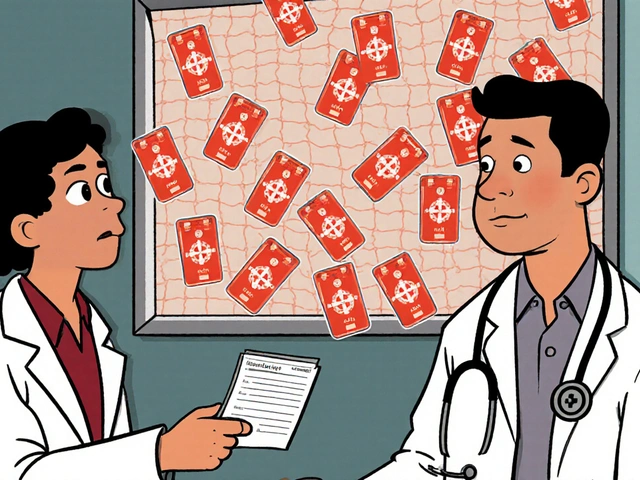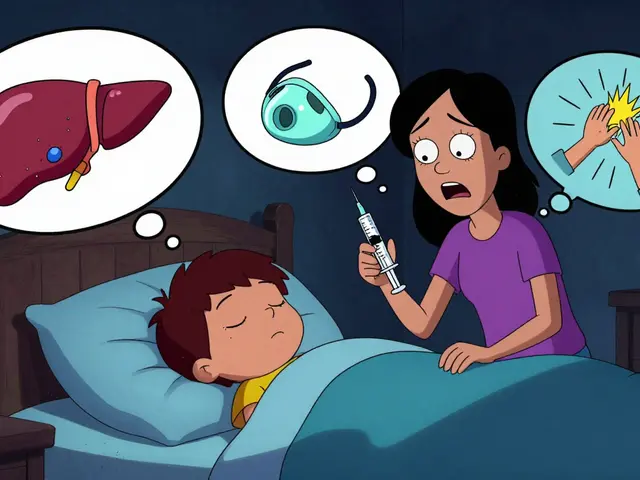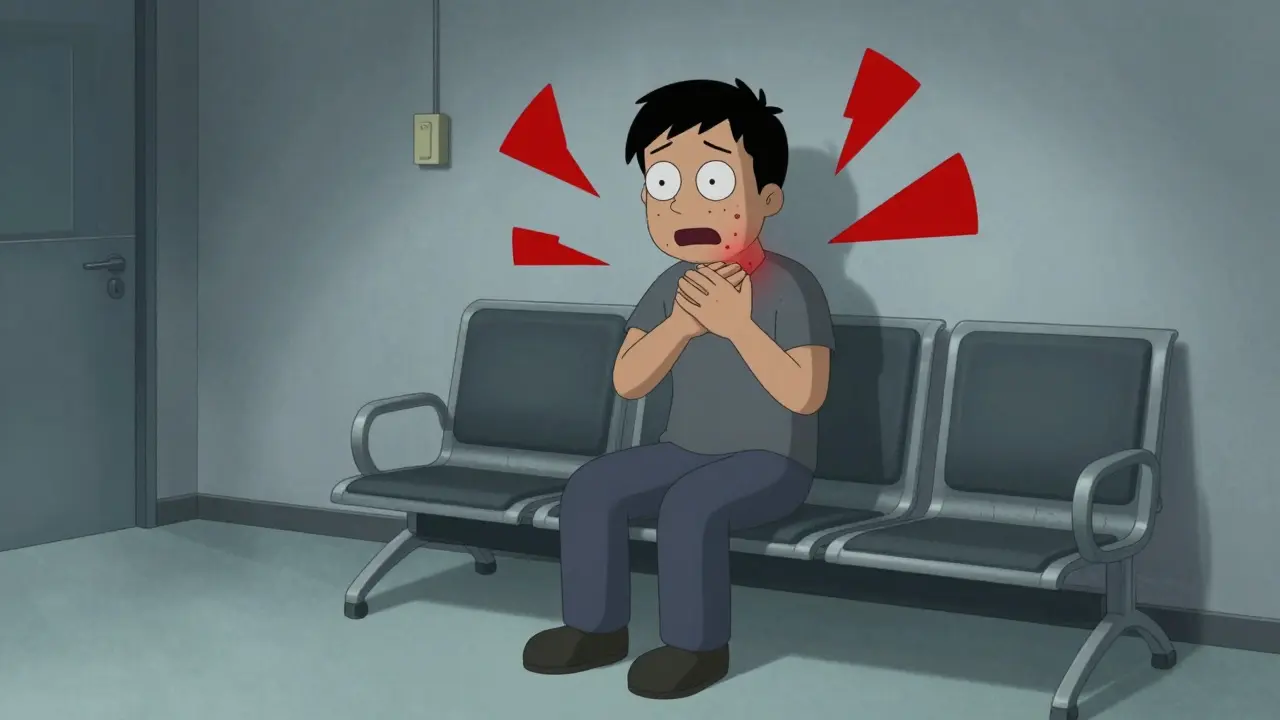
Imagine you are in a hospital waiting room or just finished taking a prescribed antibiotic at home. Suddenly, your throat feels like it’s closing up. Your skin breaks out in hives, and you feel dizzy. This isn’t just a mild allergy; this is anaphylaxis, defined by the Resuscitation Council UK as a severe, life-threatening systemic allergic reaction characterized by sudden onset and rapid progression of airway, breathing, and circulation problems. When triggered by medication, every second counts. The difference between walking away and facing cardiac arrest often comes down to how quickly someone recognizes the signs and acts.
Medication-induced anaphylaxis accounts for approximately 20-30% of all anaphylaxis cases in hospital settings. Common triggers include antibiotics (especially penicillins), NSAIDs, chemotherapy agents, radiocontrast media, and muscle relaxants. According to data from the American Academy of Allergy, Asthma & Immunology (AAAAI), the incidence ranges from 1 to 5 cases per 10,000 medication administrations. This means it is rare enough that many people never encounter it, but common enough that knowing what to do can save a life.
Recognizing the Warning Signs Immediately
You cannot treat what you do not recognize. The challenge with medication anaphylaxis is that symptoms escalate rapidly. You might mistake early signs for anxiety or a mild stomach upset. However, specific indicators point directly to a systemic allergic reaction. According to ASCIA’s 2025 First Aid Plan, difficult or noisy breathing occurs in 89% of cases. Swelling of the tongue affects 76% of patients, while swelling or tightness in the throat impacts 82%. Other critical signs include wheezing or persistent cough (68%), difficulty talking or a hoarse voice (57%), and persistent dizziness or collapse (49%). In children, look for a pale appearance, which appears in 33% of cases.
A crucial detail often missed is that skin symptoms are not always present. Up to 20% of anaphylaxis cases lack visible hives or itching. If someone has trouble breathing and feels faint after taking a new drug, assume it is anaphylaxis until proven otherwise. Do not wait for a rash to appear. The absence of skin changes does not rule out a life-threatening reaction.
The Critical First Step: Positioning the Patient
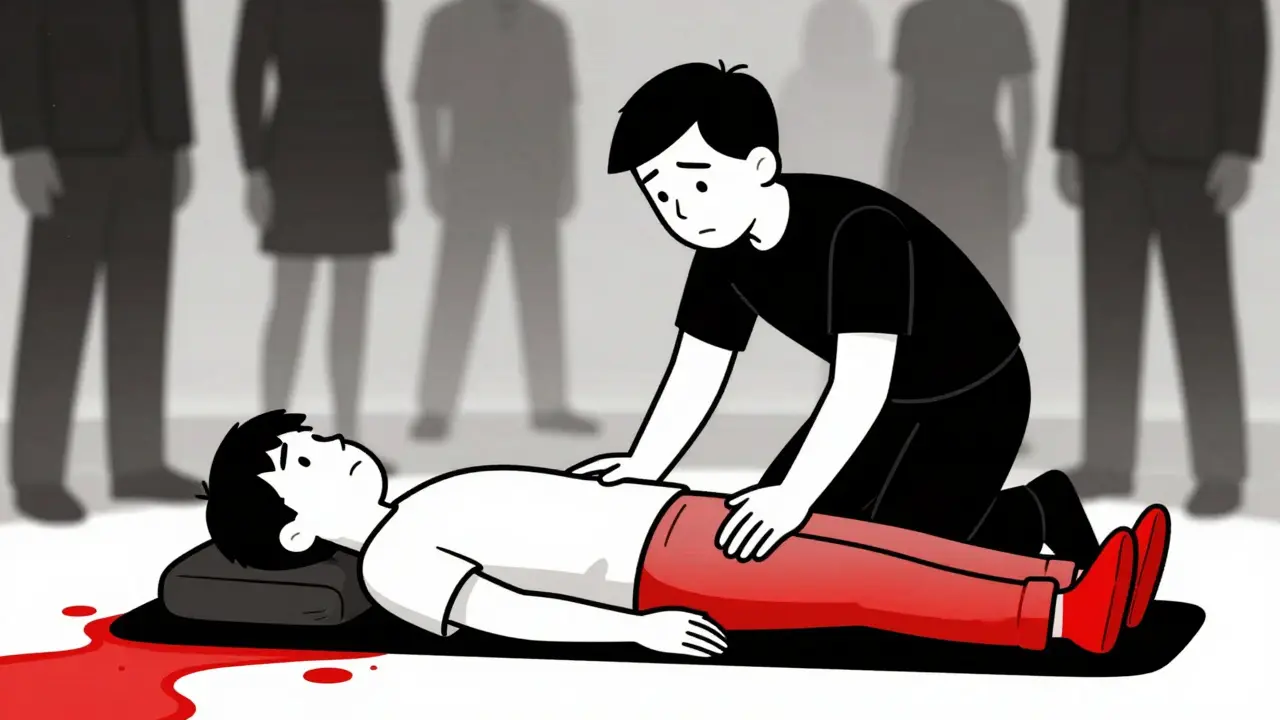
Once you suspect anaphylaxis, your first physical action must be positioning. This step is frequently overlooked but is vital for survival. The Resuscitation Council UK guidelines mandate that the patient must be laid flat immediately. Why? Because standing or walking can cause blood to pool in the legs, leading to cardiovascular collapse. Data shows that posture changes from supine to standing are associated with death in 15-20% of cases.
Here is how to position different individuals:
- Conscious adults and children: Lay them flat on their back. If they have breathing difficulties, allow them to sit up slightly with legs outstretched to help expand the chest, but keep them low.
- Unconscious patients: Place them in the recovery position (on their side) to keep the airway open and prevent choking on vomit.
- Pregnant women: Always place them on their left side. This prevents the uterus from compressing major blood vessels, ensuring blood flow to both the mother and baby.
- Young children: Hold them flat rather than upright. Never let a child stand during a reaction.
A 2023 simulation study by ASCIA involving 500 participants found that 55% of lay rescuers incorrectly allowed patients to stand. This error can trigger immediate shock. Keep the person down.
Administering Epinephrine: The Lifesaving Drug
Epinephrine (also known as adrenaline) is the only first-line treatment for anaphylaxis. It works within 1-5 minutes to reverse airway swelling, raise blood pressure, and stabilize heart rhythm. The cornerstone of treatment is intramuscular (IM) injection into the anterolateral thigh. Devices like the EpiPen, Adrenaclick, or Auvi-Q make this accessible to non-medical personnel.
Dosing depends on weight:
- Children weighing 15-30 kg: 0.15 mg dose.
- Adults and children over 30 kg: 0.3 mg dose.
The Cleveland Clinic’s 2023 guidance emphasizes that epinephrine has a short duration of action, lasting only about 10-20 minutes. This is why timing is everything. You must administer it within 5 minutes of recognizing symptoms for optimal outcomes. If ABC (Airway, Breathing, Circulation) problems persist after 5 minutes, give a second dose. Some protocols suggest doses every 10 minutes if symptoms continue. Do not hesitate. Dr. Robert Wood of Johns Hopkins University notes that 70% of fatal anaphylaxis cases involve delayed or absent epinephrine administration.
What Not to Do: Common Mistakes That Kill
In the panic of an emergency, well-meaning helpers often make mistakes that worsen the situation. Understanding these pitfalls is as important as knowing the correct steps.
Mistake 1: Relying on Antihistamines Alone
Antihistamines like diphenhydramine (Benadryl) treat skin symptoms such as itching and hives. They do nothing for airway closure or low blood pressure. A 2022 article in the Journal of Emergency Medicine highlights that antihistamines are completely ineffective for life-threatening airway, breathing, or circulation problems. Using them instead of epinephrine delays critical care.
Mistake 2: Delaying Epinephrine Due to Fear
Many healthcare providers and bystanders fear the side effects of epinephrine, such as tachycardia (fast heart rate) or hypertension. However, out of 35,000 documented epinephrine administrations for anaphylaxis between 2015-2020, only 0.03% resulted in significant adverse cardiac events. The risk of untreated anaphylaxis far outweighs the risk of the drug. As Professor Connie Katelaris states in the ASCIA First Aid Plan: "IF IN DOUBT GIVE ADRENALINE DEVICE."
Mistake 3: Improper Injection Technique
Technical errors reduce effectiveness. A Red Cross 2022 evaluation found that 23% of users inject improperly, 37% fail to hold the auto-injector in place for the full 10 seconds, and 18% inject into subcutaneous fat rather than muscle. To ensure success: remove the safety cap, press firmly against the outer thigh, hold for 10 seconds, and massage the area afterward.
Hospital Care and Biphasic Reactions
Even after epinephrine stabilizes the patient, the emergency is not over. Hospital transfer is mandatory. The standard of care requires a minimum observation period of 4 hours, though high-risk patients may need 6-8 hours. Why? Because of biphasic reactions. Approximately 20% of patients experience a return of symptoms 1 to 72 hours after the initial episode. Medication-induced anaphylaxis carries a 25% higher risk of biphasic reactions compared to food-induced cases, according to preliminary data from 2024 draft guidelines.
In the hospital, doctors will monitor vital signs closely. If the patient remains in shock despite two doses of IM epinephrine, they may require IV epinephrine infusions. This is considered refractory anaphylaxis and occurs in 5-10% of cases. Only experienced specialists should administer IV epinephrine due to the risk of arrhythmias. Additionally, rapid IV fluid resuscitation (1-2 liters of normal saline) is now considered an essential adjunct to epinephrine in cases of shock, based on evidence from the 2020 PARAMEDIC2 trial showing a 22% reduction in mortality when combined with timely epinephrine.
| Treatment | Role in Emergency | Effectiveness for Life-Threatening Symptoms | Key Limitation |
|---|---|---|---|
| Epinephrine (Adrenaline) | First-line rescue drug | High: Reverses airway swelling and shock | Short duration (10-20 mins); requires repeat dosing |
| Antihistamines (e.g., Benadryl) | Adjunct for skin symptoms | Low: Does not affect airway or blood pressure | Slow onset; sedation can mask worsening condition |
| Corticosteroids (e.g., Hydrocortisone) | Prevention of late-phase reaction | Negligible in acute phase | Takes hours to work; no role in immediate rescue |
| IV Fluids | Supportive care for shock | Medium: Helps restore blood volume | Ineffective without epinephrine |

Special Considerations for High-Risk Groups
Not all bodies react the same way. Certain medications and health conditions complicate anaphylaxis management. For instance, beta-blockers, used by 25-30% of adults over 40 for heart conditions, can render standard epinephrine doses less effective. A 2021 study by Dr. Elina Jerschow involving 187 patients showed that these patients may require 2-3 times higher doses of epinephrine to achieve therapeutic levels. If you take beta-blockers, inform any medical responder immediately.
Obesity also presents challenges. Current research from the NIH’s 2023-2025 Anaphylaxis Registry suggests that dosing based on body mass index (BMI) rather than weight alone results in 18% more consistent therapeutic blood levels in obese patients (BMI >30). While standard adult doses are generally recommended for anyone over 30 kg, clinicians are increasingly aware of the need for adjusted strategies in complex cases.
New technology is helping bridge the gap. The FDA approved the Auvi-Q 4.0 in May 2023, the first epinephrine auto-injector with voice guidance. Clinical trials showed this feature improved correct administration rates from 63% to 89% among untrained users. If you or a family member is at risk, consider devices with these assistive features.
Creating a Personal Emergency Action Plan
Knowledge fades under stress. Having a written plan reduces hesitation. The AAAIA recommends creating an Emergency Action Plan that includes:
- List of known medication allergies.
- Clear instructions on when to use the auto-injector.
- Emergency contact numbers, including local emergency services (911 in the US, 999 in the UK).
- Location of the auto-injector at home, work, and school.
Share this plan with family, friends, and coworkers. Practice using a trainer device so the mechanical action becomes muscle memory. Remember, confidence saves lives. FAACT’s 2023 survey revealed that while 68% of patients carried epinephrine auto-injectors, only 41% felt confident using them. Training closes that gap.
How long does it take for medication anaphylaxis to start?
Symptoms typically begin within minutes to an hour after exposure to the triggering medication. However, in some cases, especially with slow-release drugs or repeated exposures, symptoms can appear several hours later. Immediate recognition is key because the reaction progresses rapidly.
Can antihistamines stop anaphylaxis?
No. Antihistamines like Benadryl only treat skin symptoms such as itching and hives. They do not reverse airway swelling, breathing difficulties, or low blood pressure. Epinephrine is the only effective first-line treatment for life-threatening anaphylaxis.
Why is laying flat important during anaphylaxis?
Laying flat helps maintain blood flow to the brain and heart. Standing or walking can cause blood to pool in the legs, leading to cardiovascular collapse and death in 15-20% of cases. Keeping the patient horizontal is a critical first step before administering epinephrine.
What is a biphasic reaction?
A biphasic reaction is a recurrence of anaphylaxis symptoms after the initial episode has resolved. It occurs in about 20% of cases and can happen 1 to 72 hours later. This is why hospital observation for at least 4 hours is mandatory after any anaphylactic event.
Is it safe to use an epinephrine auto-injector if I'm not sure it's anaphylaxis?
Yes. The consensus among medical organizations is "if in doubt, give adrenaline." The risks of delaying treatment for true anaphylaxis far outweigh the minor side effects of epinephrine, such as increased heart rate or anxiety. Medical professionals support erring on the side of caution.