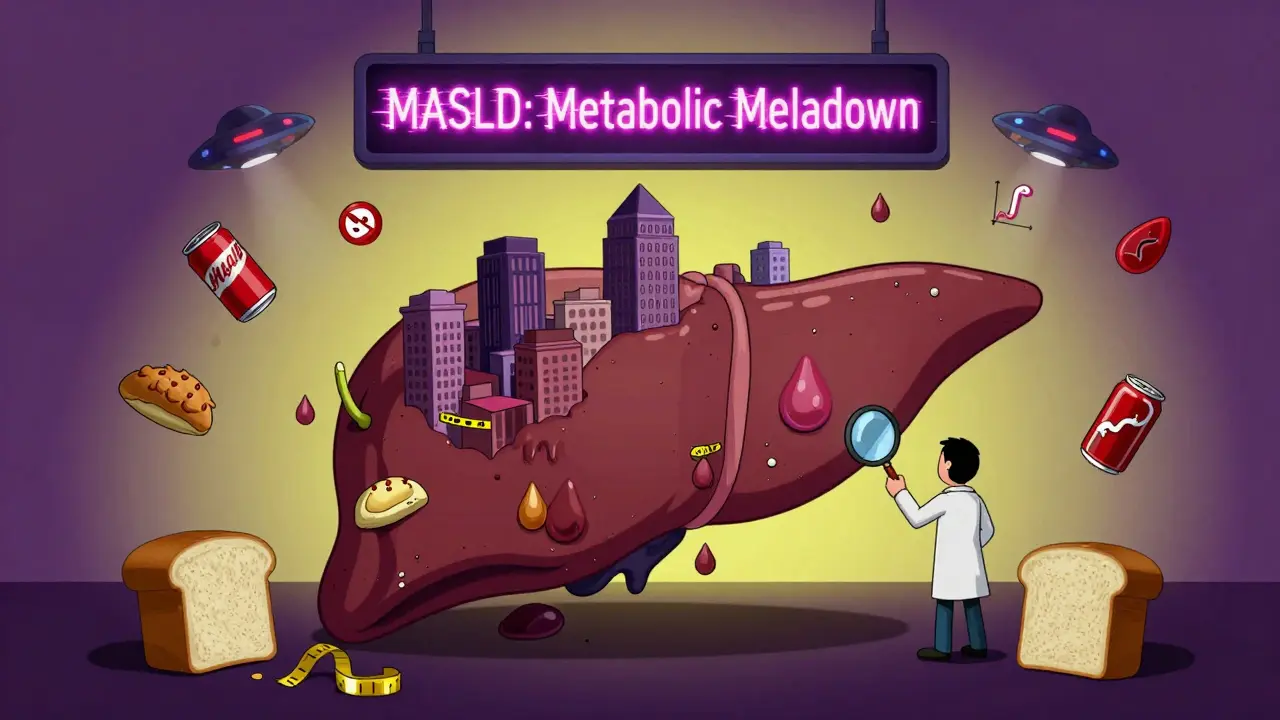
More than 1 in 4 adults worldwide have fat building up in their liver - not because they drink alcohol, but because of how they live. This condition, once called nonalcoholic fatty liver disease (NAFLD), is now known as metabolic dysfunction-associated steatotic liver disease (MASLD) after a major update in 2023. It’s not rare. It’s not just a side effect of being overweight. It’s a warning sign that your body’s metabolism is out of balance - and if left unchecked, it can lead to serious liver damage, even cancer.
You might not feel anything at first. No pain. No jaundice. Just a slightly elevated liver enzyme on a routine blood test. But behind the scenes, fat is slowly replacing healthy liver cells. And over time, that fat triggers inflammation, scarring, and cell death. The good news? If caught early, this condition can be reversed. The bad news? Most people don’t know they have it until it’s too late.
What Exactly Is MASLD?
MASLD is defined by fat making up at least 5% of your liver tissue, without heavy alcohol use. It’s not one disease - it’s a spectrum. At the mild end, you have simple steatosis: fat in the liver, but no damage. At the severe end, you get metabolic dysfunction-associated steatohepatitis (MASH), where fat causes inflammation and liver cell injury. This can lead to fibrosis, cirrhosis, and even liver cancer.
The name change from NAFLD to MASLD wasn’t just for show. It reflects a deeper understanding: this isn’t about what you don’t drink - it’s about what you do have going on in your body. Insulin resistance. High blood sugar. Excess belly fat. High triglycerides. These aren’t just risk factors - they’re the root causes.
Who’s at Risk?
You don’t have to be obese to have MASLD, but it’s far more common if you are. About 70% of people with type 2 diabetes have it. Up to 90% of those with severe obesity do. In the U.S., 100 million people are estimated to have it - more than diabetes or high blood pressure combined.
It’s not just adults. Kids are getting it too. Among obese children, prevalence jumps to 70%. Hispanic populations have the highest rates - nearly 45% - while non-Hispanic Black populations have lower rates, around 20%. But it doesn’t care about race, gender, or income. It cares about metabolic health.
Here’s the scary part: 20% of people with MASLD have no classic signs of metabolic syndrome. No high blood pressure. No high cholesterol. Just fatty liver. That’s why doctors are now recommending routine liver enzyme checks (ALT levels) for anyone with even one risk factor - like waist size over 40 inches for men or 35 inches for women, or a fasting blood sugar above 100 mg/dL.
How It Progresses - And Why It’s Silent
MASLD doesn’t scream. It whispers. Most people have no symptoms until the liver is badly damaged. Early on, you might feel tired. Maybe a dull ache under your right ribs. But those signs are often brushed off as stress, aging, or poor sleep.
By the time jaundice (yellow skin), swelling in the belly, or confusion sets in, the damage is advanced. About 15% of people with MASH eventually develop cirrhosis. And once cirrhosis hits, the liver can’t heal itself. Transplant becomes the only option. In fact, MASLD is now responsible for 24% of all liver transplants in the U.S. - up from just 5% in 2000.
And here’s the catch: we still don’t have a simple, non-invasive test for early-stage disease. Blood tests can hint at it. Ultrasounds can show fat. But the only way to confirm inflammation and scarring is a liver biopsy - and that’s risky and expensive. New blood tests are coming, like the Enhanced Liver Fibrosis panel, expected to be widely available by 2025. But for now, early detection relies on knowing your numbers and asking your doctor to check.
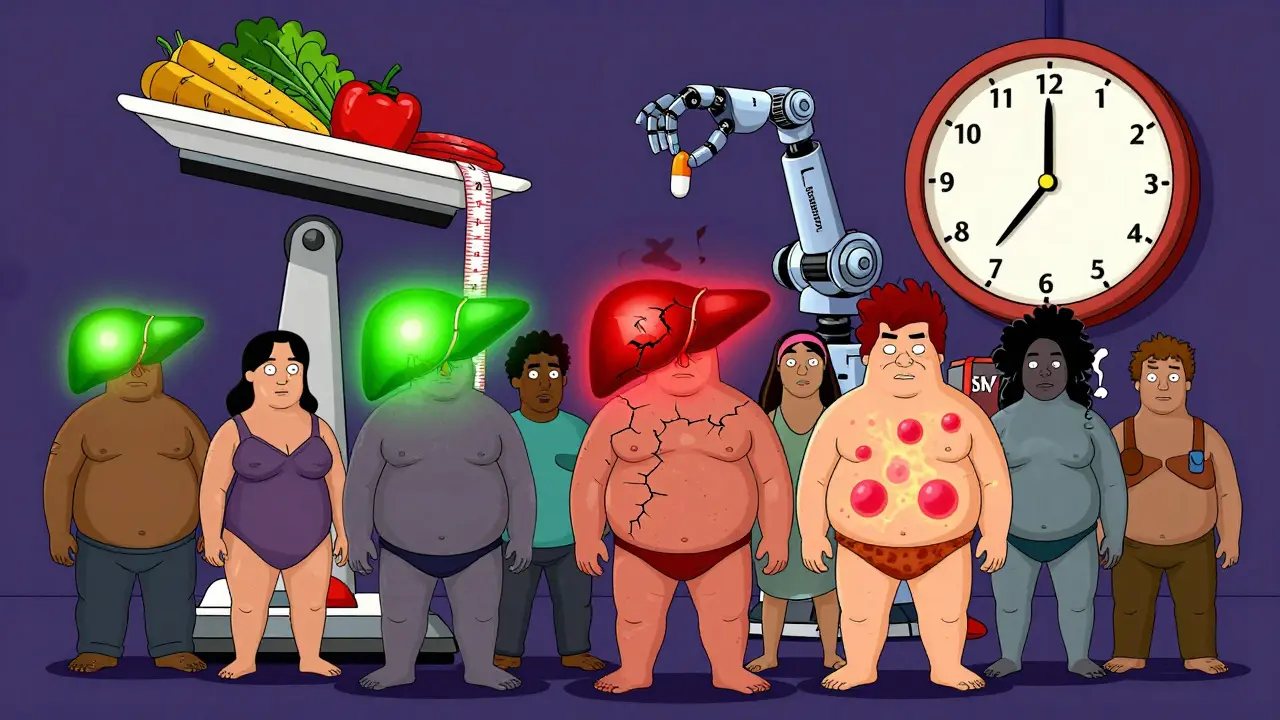
What Causes MASLD? It’s Not Just Fat
Forget the myth that it’s just from eating too much sugar. MASLD is caused by a tangled web of metabolic problems:
- Insulin resistance: Your body stops responding to insulin, so glucose piles up in the blood. The liver turns that extra sugar into fat.
- Visceral fat: Belly fat isn’t just cosmetic. It releases inflammatory chemicals that directly attack the liver.
- Dyslipidemia: High triglycerides and low HDL cholesterol are present in over 60% of MASLD cases.
- Chronic inflammation: Fat tissue becomes inflamed, sending signals that trigger liver damage.
- Genetics: Some people inherit a higher risk - especially those with the PNPLA3 gene variant.
It’s not about one food. It’s about the whole system. Eating processed carbs, drinking sugary drinks, sitting all day, and sleeping poorly - these habits don’t just add weight. They break your metabolism.
Prevention: It’s Not About Diets - It’s About Habits
Here’s the truth: no pill, no supplement, no miracle tea will fix MASLD. The only proven, science-backed way to reverse it is through sustained lifestyle change.
Studies show that losing just 5-7% of your body weight reverses fat buildup in 81% of cases. Lose 10%, and you have a 45% chance of clearing the inflammation entirely. That’s not a fantasy - it’s what happened in clinical trials with real people.
So how do you do it?
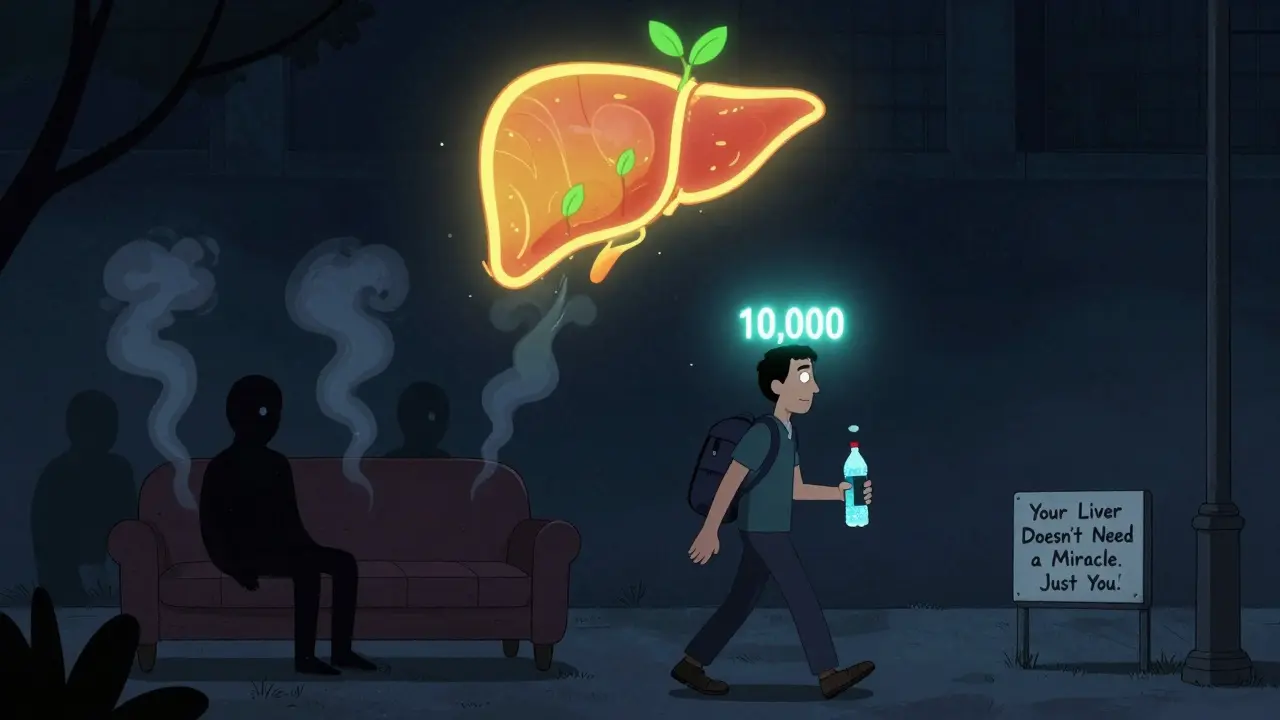
- Move daily: Aim for 150 minutes of moderate exercise per week - that’s 30 minutes, 5 days a week. Brisk walking counts. You don’t need a gym. A 10,000-step goal is realistic and effective.
- Change what you eat: Focus on whole foods. Vegetables, legumes, whole grains, lean protein, nuts, and olive oil. The Mediterranean diet has the strongest evidence: 76% of people who stuck with it for 6 months saw improvement in liver fat.
- Avoid sugar and refined carbs: Soda, candy, white bread, pastries - these spike insulin and feed liver fat. Even fruit juice. Stick to whole fruit.
- Control portion sizes: You don’t need to count calories forever, but you do need to know when you’re full. Use smaller plates. Eat slowly. Stop before you’re stuffed.
- Get enough sleep: Poor sleep raises cortisol and insulin resistance. Aim for 7-8 hours. No exceptions.
- Don’t drink alcohol: Even if you’re not an alcoholic, alcohol stresses the liver. The safest amount is zero.
One man from Manchester, who joined a local health program, lost 18 pounds in 8 months. His FibroScan score - a non-invasive liver test - dropped from 9.8 kPa (indicating fibrosis) to 5.2 kPa (normal). He didn’t take a drug. He walked every evening, swapped soda for sparkling water, and started cooking dinner instead of ordering takeout.
Why Most People Fail - And How to Succeed
Here’s the dark side: 41% of people quit structured exercise within 3 months. Why? Fatigue. Depression. Lack of support. The system isn’t designed for long-term change.
Successful people don’t rely on willpower. They rely on systems:
- They schedule walks like appointments.
- They prep meals on Sunday.
- They find a buddy - someone who’s also trying to improve their health.
- They track progress with weight, waist size, and liver enzymes - not just the scale.
Workplaces are starting to catch on. IBM reduced NAFLD incidence by 37% in three years by offering free nutrition coaching, gym access, and metabolic health screenings. If a company can do it, so can you.
The New Hope: First FDA-Approved Treatment
In March 2024, the FDA approved resmetirom - the first drug specifically for MASH. It’s not a cure. It doesn’t replace lifestyle change. But for people with advanced fibrosis, it can reduce liver scarring by 24% compared to placebo.
Here’s the catch: it’s only for those with confirmed advanced liver damage. And it’s expensive. Insurance coverage is still limited. For most people, especially those in early stages, lifestyle remains the gold standard.
Think of it like this: resmetirom is a life raft for someone already drowning. But if you act early, you never have to get in the water.
What You Can Do Today
You don’t need a diagnosis to start. If you have any of these:
- A waist size over 40 inches (men) or 35 inches (women)
- High blood sugar or prediabetes
- High triglycerides
- High blood pressure
- Fatigue with no clear cause
Then you’re at risk. Start here:
- Ask your doctor to check your ALT and AST liver enzymes - even if you feel fine.
- Measure your waist. Write it down. Check it monthly.
- Swap one sugary drink for water or unsweetened tea today.
- Take a 20-minute walk after dinner. Every day.
- Look at your food: if it comes in a box with a long list of ingredients, reconsider.
This isn’t about perfection. It’s about progress. One change at a time.
Final Thought: Your Liver Can Heal - If You Let It
Unlike cirrhosis from alcohol or hepatitis, MASLD is reversible - if caught early. The liver is the only organ that can regenerate itself. But it needs time, rest, and the right fuel.
It’s not about being thin. It’s about being metabolically healthy. You don’t need to run a marathon. You just need to move more, eat real food, and give your body a chance to reset.
The numbers are grim - but they’re not fate. MASLD is preventable. And for millions, it’s already being reversed - one step, one meal, one day at a time.
Can you reverse fatty liver disease without medication?
Yes. In fact, lifestyle changes are the most effective treatment for early-stage MASLD. Losing 5-7% of your body weight can reverse fat buildup in 81% of cases. A 10% weight loss can resolve inflammation in nearly half of people with MASH. No drug can match this level of effectiveness - and none are needed if you act early.
Is MASLD only a problem for overweight people?
No. While obesity increases risk, about 20% of people with MASLD have normal weight. They may still have insulin resistance, high blood sugar, or visceral fat around organs. This is sometimes called "lean MASLD." The key isn’t body weight - it’s metabolic health. Waist size, blood sugar, and liver enzymes matter more than the scale.
Can a vegetarian or vegan diet help with MASLD?
Yes - but only if it’s well-planned. A diet full of refined carbs, sugary plant-based snacks, and processed tofu substitutes won’t help. A whole-food, plant-based diet rich in vegetables, legumes, nuts, seeds, and whole grains can be very effective. Studies show that people following a Mediterranean-style diet (which includes some fish and olive oil) have the best outcomes. Focus on fiber, healthy fats, and low-glycemic foods - regardless of whether they’re animal or plant-based.
How long does it take to see improvement in liver health?
You can see changes in liver fat within 6 months. MRI-PDFF scans show a 30% reduction in liver fat after 6 months of losing 7% of body weight and exercising 150 minutes per week. Liver enzymes (ALT) often drop within 3 months. But real healing - reducing inflammation and fibrosis - takes 12 to 24 months of consistent effort. Patience and persistence are critical.
Should I get a liver biopsy if I’m told I have fatty liver?
Not necessarily. For most people, a FibroScan (a non-invasive ultrasound-based test) or blood tests like the ELF panel are enough to assess risk. A biopsy is only recommended if there’s strong suspicion of advanced fibrosis or if other liver diseases need to be ruled out. It carries a tiny risk (0.01-0.1%) of complications. Ask your doctor about less invasive options first.
Does alcohol make MASLD worse?
Yes - even small amounts. While MASLD is defined by the absence of heavy alcohol use, any alcohol adds stress to an already overloaded liver. Studies show that even 1-2 drinks per day can accelerate fibrosis in people with MASLD. The safest advice: avoid alcohol entirely. The liver doesn’t need extra toxins when it’s already fighting fat buildup.
steve sunio
February 14, 2026 AT 15:46lol so now they renamed it MASLD to make us feel worse? classic. i got fat liver? cool. guess i'll just keep eating my midnight pizza and calling it 'stress relief'.
also who decided 'visceral fat' is a thing? like... i have a belly. big deal. why is this suddenly a medical crisis? my grandpa drank whiskey till he was 90 and never saw a doctor.
they say 'no drug can match lifestyle changes' - yeah right. where's the pill for being poor and working two jobs? you think i got time to walk 150 mins a week? my kid's soccer practice is at 6pm. and yeah i know i got prediabetes. i also got rent due.
stop shaming people who can't afford kale smoothies. this isn't health advice. it's a rich person's guilt trip.
also 'avoid alcohol entirely'? bro i had one beer last weekend. not a binge. just one. and now i'm a liver villain? thanks for the guilt.
and why does every article have that one guy from 'Manchester'? like, is he the poster child now? 'He swapped soda for sparkling water' - yeah cool. i swapped soda for cheaper soda. same thing.
they say 'liver can heal' - sure. if you're white, middle class, and have health insurance. for the rest of us? we just wait till we pass out in the ER.
they want us to 'measure waist monthly'? i measure it when my pants fall off. that's my metric.
and why is every comment section full of people who 'lost 18lbs in 8 months'? like, you're not normal. you're an outlier. don't act like this is easy for everyone.
also 'no miracle tea'? yeah. but there's a miracle pill called 'not being poor'. wish i had that one.
so yeah. i have fatty liver. and i'm still here. still breathing. still eating pizza. and i'm not sorry.
Neha Motiwala
February 15, 2026 AT 07:57This is a scam. I’ve been reading everything and I’ve come to realize: Big Pharma is behind this whole MASLD rename. They want you scared so you’ll buy their $1200/month resmetirom pills. But the real cause? Glyphosate in our food. It’s in EVERYTHING. Even organic kale has traces. And it’s not just liver damage-it’s brain fog, anxiety, even depression. The CDC knows. They’ve been suppressing studies since 2018. I found a whistleblower on Reddit who leaked internal emails. They’re calling it ‘Metabolic Disruption Syndrome’ but they’re afraid to say it out loud because Monsanto owns half the FDA. And don’t get me started on 5G towers-they’re frying our mitochondria. You think walking helps? No. It’s detoxing your lymphatic system with infrared saunas and Himalayan salt. I did it. My ALT dropped in 3 weeks. No one believes me. But I’m not crazy. I’ve read 47 research papers. You’re all being gaslit.
Robert Petersen
February 16, 2026 AT 00:57I love how this post breaks it down so clearly. I was diagnosed last year with early-stage MASLD and honestly, I felt hopeless. But I started walking after dinner-just 20 minutes. No fancy gear. Just my sneakers and a podcast. Within 3 months, my energy went from ‘nap after lunch’ to ‘I actually want to do stuff.’
I swapped soda for sparkling water with lime. Not because it’s ‘healthy’ but because it tasted better. I started cooking one new veggie recipe a week. No pressure. No rules. Just curiosity.
And yeah, I still eat pizza. But now I make it with whole wheat crust, spinach, and mushrooms. It’s not perfect. But it’s progress. I’m not trying to be a health guru. I’m just trying to feel better. And if you’re reading this and thinking ‘I can’t do this’-you don’t have to do it all. Just one thing. One day. That’s enough.
You’re not broken. Your body just needs a little kindness. And you deserve that.
Craig Staszak
February 17, 2026 AT 05:33alex clo
February 18, 2026 AT 19:21The clinical data presented in this article is methodologically sound and aligns with current guidelines from the American Association for the Study of Liver Diseases. The shift from NAFLD to MASLD reflects a paradigmatic evolution in hepatology toward a metabolic framework rather than a purely phenotypic one. The emphasis on insulin resistance and visceral adiposity as primary drivers is empirically supported by longitudinal cohort studies including the Framingham Offspring Cohort and the NHANES dataset. Furthermore, the efficacy of lifestyle intervention in achieving histologic improvement is corroborated by randomized controlled trials such as the one published in The Lancet Gastroenterology & Hepatology in 2022. The absence of pharmacologic alternatives for early-stage disease remains a legitimate therapeutic gap, and the recent FDA approval of resmetirom represents a significant but narrowly indicated advancement. Public health initiatives should prioritize accessible metabolic screening, particularly in primary care settings where risk stratification is currently underutilized.
Alyssa Williams
February 19, 2026 AT 13:05Ernie Simsek
February 20, 2026 AT 07:32Okay so I read this whole thing and I’m like… 🤡
They say ‘avoid alcohol’? Bro I had one glass of wine. ONE. And now I’m a ticking time bomb? I’m supposed to be scared? Nah. I’m gonna keep drinking. I’m gonna keep eating tacos. I’m gonna keep scrolling at 2am. My liver? It’s fine. It’s a muscle. It can handle it.
And this ‘walk 150 mins a week’? I work 60 hours. I have two kids. I don’t have time to be a health influencer. My wife says I’m lazy. I say I’m surviving.
Also… why is everyone talking about ‘Mediterranean diet’ like it’s the holy grail? I live in Ohio. We don’t have olive oil. We have butter. And we’re fine.
Resmetirom costs $1200? That’s a scam. I’m not paying that. I’m gonna keep doing me.
And if you’re telling me I need to ‘measure my waist monthly’? I’ll measure it when I need new jeans. Until then… peace.
🔥
Joanne Tan
February 21, 2026 AT 21:39So I just found out I have MASLD last month and I cried. Not because I’m fat. But because I thought I was failing at life. Then I started doing the 20-min walk after dinner with my dog. We don’t even talk. We just walk. And it’s my favorite time of day.
I stopped buying sugary cereal. Not because I’m ‘healthy.’ But because I realized I didn’t even like it. I started eating oatmeal with banana. Simple. Tastes good.
I didn’t lose weight. But I feel lighter. Like my body isn’t fighting me anymore.
And yeah I still eat cake on birthdays. And I still binge Netflix. But now I feel proud of myself. Not because I’m perfect. But because I’m trying.
You’re not behind. You’re not broken. You’re just human. And that’s okay.
Stacie Willhite
February 23, 2026 AT 13:04I’ve been reading all these comments and I just want to say: if you’re here, you’re already trying. Even if you’re angry. Even if you’re scared. Even if you think this is all nonsense.
You didn’t have to read this. You didn’t have to click. But you did.
That means something.
You don’t have to fix everything today. You don’t have to walk 150 minutes. You don’t have to stop sugar forever.
Just breathe. Just sit with it. Just ask yourself: what’s one tiny thing that feels kind today?
Maybe it’s drinking water instead of soda. Maybe it’s calling your mom. Maybe it’s just not beating yourself up for one hour.
You’re not alone.