Antidotes: What They Are, How They Work, and When They Save Lives
When something toxic enters your body—whether it’s a drug overdose, a chemical spill, or accidental poisoning—an antidote, a substance that directly counteracts the harmful effects of a poison or toxin. Also known as antitoxin, it works by blocking, neutralizing, or reversing the poison’s action at the molecular level. This isn’t theoretical. Every year, antidotes like naloxone, a rapid-acting opioid blocker that restores breathing in overdose cases and atropine, a drug used to counteract nerve agent and pesticide poisoning by calming overactive nerves are used in hospitals, ambulances, and even by bystanders to prevent death.
Not all antidotes are the same. Some, like naloxone, act fast and are easy to use—even by non-medical people. Others, like antivenom, a specialized antibody treatment for snake or spider bites that must be given in a clinical setting, require precise dosing and timing. Then there are antidotes like activated charcoal, a porous powder that traps toxins in the gut before they’re absorbed, which only work if given within the first hour. The key isn’t just knowing the antidote—it’s knowing when and how to use it. Many people don’t realize that giving the wrong antidote can make things worse. For example, giving naloxone to someone who overdosed on alcohol won’t help, and giving atropine to someone with glaucoma could cause blindness.
These aren’t just hospital stories. The posts below show how antidotes show up in real-life situations: from naloxone being co-prescribed with opioids to prevent fatal overdoses, to how certain antidepressants like tricyclics can cause toxic reactions that need specific antidotes like sodium bicarbonate. You’ll find guides on emergency medication kits that include antidotes, how to recognize signs of poisoning from common household items, and why timing matters more than anything when treating drug toxicity. Whether you’re a patient on multiple meds, a caregiver, or just someone who wants to be prepared, understanding antidotes isn’t about fear—it’s about having the right tools when seconds count.
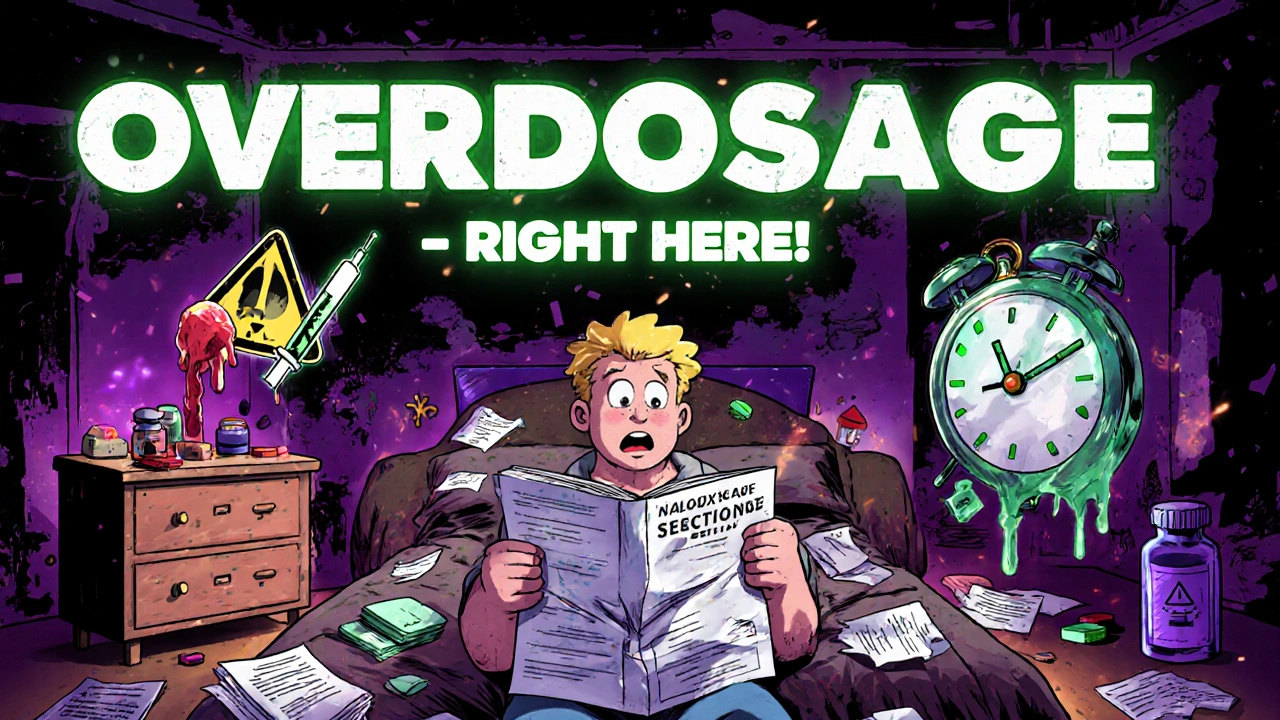
How to Read Medication Guides for Overdose Warnings and Antidotes
Learn how to find overdose warnings and antidotes in your medication guide. Know what to look for, how to act, and why skipping this step puts your life at risk.