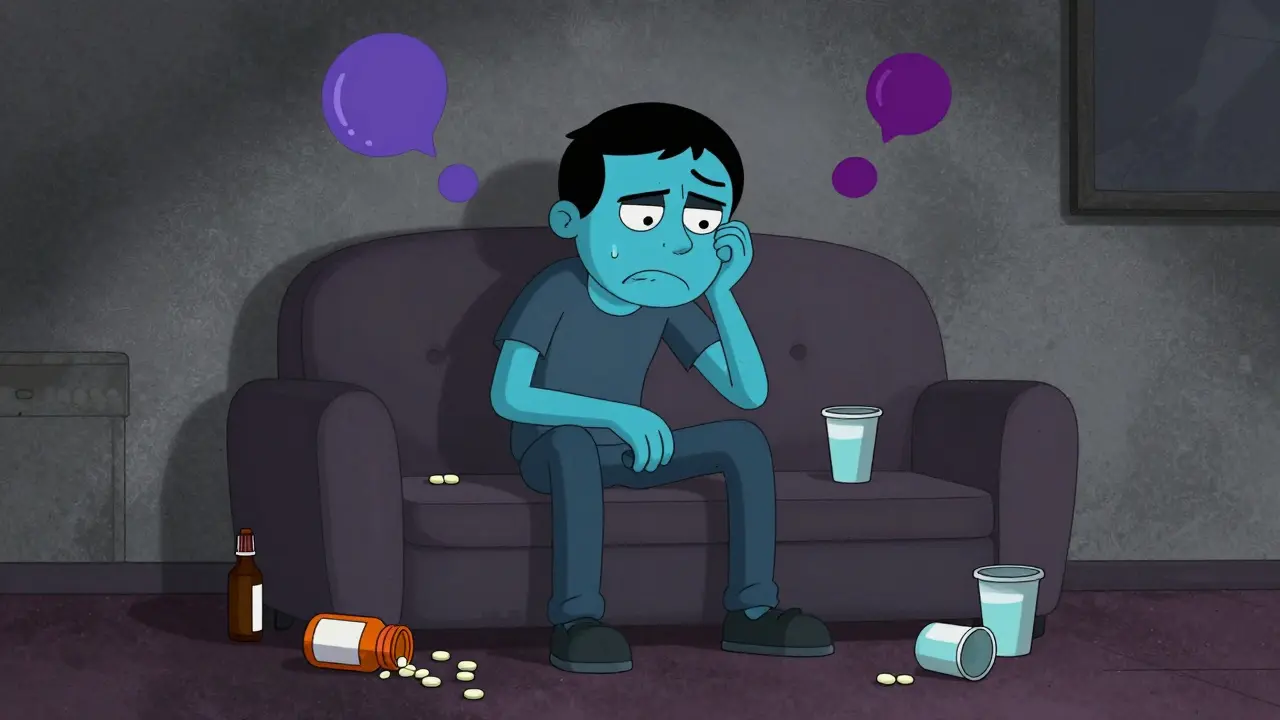
Imagine paying for a treatment plan that costs hundreds of dollars a month, only to have it fail because the pills never actually get taken. This isn't just a hypothetical nightmare; it is the reality for millions of people every year. Research shows that medication non-adherence affects approximately 50% of patients with chronic conditions. The World Health Organization has flagged this as a massive global health crisis, with the United States alone losing an estimated $100 to $300 billion annually due to avoidable hospitalizations and complications. When patients stop taking their medicine, the consequences ripple out to families, insurance providers, and the healthcare system as a whole.
So, what is the solution? For a long time, doctors relied on lectures and pamphlets. They told patients to "take it twice a day" and hoped for the best. But human behavior is messy. We get busy, we feel side effects, or we simply forget. That is where medication compliance support groups and community programs come in. These aren't just chat sessions; they are structured interventions designed to use social influence to change behavior. By connecting patients with peers who understand the struggle, these programs tackle the emotional and practical barriers to taking medicine. Let's explore how these systems work, the evidence behind them, and how you can access them.
What Exactly Are Medication Compliance Programs?
When we talk about support programs for taking medicine, we aren't just talking about a group of people sitting in a circle sharing feelings. These are organized efforts that blend education, accountability, and emotional backing. They generally fall into a few specific models depending on where they happen and who runs them.
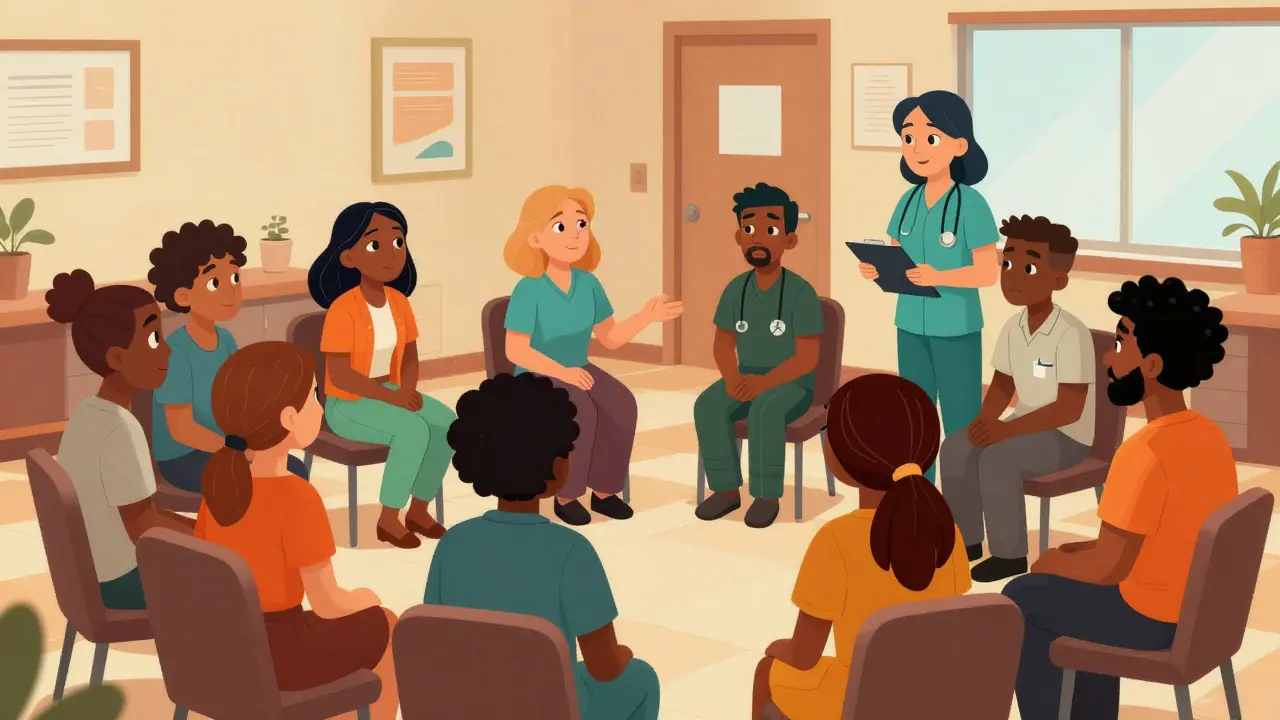
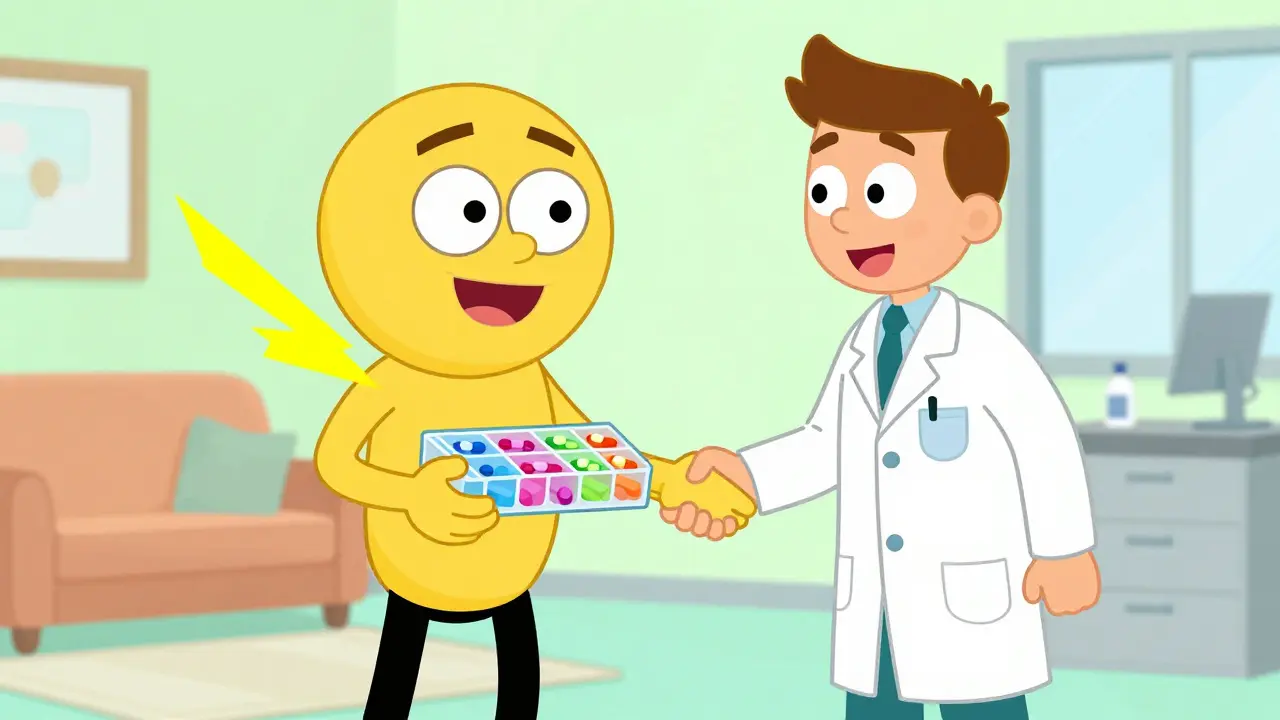
Hospital-based peer support groups are one of the most common forms. These usually operate within a clinic or medical center. They meet once or twice a week and keep the groups small, typically between 8 and 12 participants. This size is intentional; it allows everyone to speak while maintaining a sense of community. Another model involves community health workers. These are trained individuals who might visit patients at home. A typical program might involve 4 to 12 visits over a period of 3 to 6 months. They help set up pill organizers, explain side effects, and just check in to make sure the patient is okay.
Then there are the digital options. With the rise of smartphones, many programs have moved online. Digital peer support platforms offer 24/7 access to moderated communities. You don't have to travel to a meeting; you can log in from your couch. However, the most effective programs often combine these approaches. A hybrid model might use a mobile app for daily reminders but still offer a monthly in-person meetup for deeper connection. The goal across all these models is the same: to make taking medication feel less like a chore and more like a supported lifestyle choice.
Why Social Support Works Better Than Education Alone
You might wonder if a group chat is really better than a doctor's advice. The data says yes. A systematic review published in the Journal of Medical Care in 2020 compared peer-facilitated interventions against standard educational brochures. The results were clear. Peer support produced an effect size of Cohen's d=0.40 for medication adherence. In contrast, educational brochures alone only showed a d=0.15. That difference is significant. It means that talking to someone who has been in your shoes changes behavior more than just reading about it.
Why does this happen? It comes down to social networks. Dr. Karen Ladin from Tufts University School of Medicine noted in a 2022 commentary that social support systems create networks that encourage positive lifestyle changes. When you are in a group, you are not just learning about your condition; you are building a safety net. If you feel like skipping a dose because of a side effect, you can ask the group how they handled it. You might learn a trick that a doctor never mentioned, like taking the pill with a specific food to reduce nausea.
Family involvement is another huge factor. Research from PMC8234709 in 2021 looked at family support interventions. Out of 14 studies reviewed, 11 showed a statistically significant positive link between family involvement and medication adherence. When a spouse or child helps manage the schedule, the patient is less likely to forget. However, peer groups add a layer that family sometimes can't provide: shared experience. Family members care about you, but they haven't lived the life of the chronic condition. Peers have.
Types of Programs and Who They Serve
Not all programs are created equal. Some are designed for specific conditions, while others are broader. Let's look at a few examples to see how they differ.
| Program Type | Typical Frequency | Cost to Patient | Best For |
|---|---|---|---|
| Hospital-Based Peer Groups | 1-2 times weekly | Often free or covered by insurance | Patients needing clinical oversight |
| Community Health Worker Visits | 4-12 visits over 3-6 months | Varies (often grant-funded) | Elderly or homebound patients |
| Digital Peer Platforms | 24/7 Access | Free to subscription-based | Younger demographics, rural areas |
| Pharmacist-Led Clinics | Monthly or quarterly | Often covered by Medicare Part D | Complex medication regimens |
The American Heart Association's 'Heart360' program is a prime example of a structured initiative. Established in 2010, it features biweekly virtual sessions with certified peer mentors. These mentors aren't just anyone; they must have successfully managed cardiovascular conditions for at least two years before they can lead. This ensures the advice given is grounded in real-world experience.
For veterans, the Veterans Health Administration (VHA) has stepped up significantly. As of 2023, they implemented peer support programs across 140 facilities. These programs serve approximately 250,000 veterans annually. The VHA model is robust because it integrates directly with the veteran's medical record, allowing doctors to see if a patient is engaging with the support group.
Pharmacists also play a critical role. A Cochrane Review by Ryan et al. in 2014 analyzed 75 systematic reviews and concluded that interventions involving pharmacists had generally positive effects. Pharmacist-led support groups showed 23% higher adherence rates than physician-led interventions. Why? Pharmacists are the medication experts. They understand the interactions, the timing, and the logistics of the pharmacy pick-up process better than any other provider.
Real-World Results and Financial Impact
The benefits of these programs aren't just about feeling better emotionally; they are measurable in hard numbers. The Agency for Healthcare Research and Quality (AHRQ) identified that combination interventions using multiple behavior change strategies show 31% greater effectiveness than single-strategy programs. This means a program that mixes education, peer support, and text reminders works better than just one of those things alone.
Financially, the impact is staggering. The total annual cost of medication non-adherence in the U.S. healthcare system is estimated at $528 billion. Effective support programs can chip away at this number. A 2022 study in JAMA Network Open looked at a diabetes support program and found an 18:1 return on investment. For every dollar spent on the program, the healthcare system saved $18 by reducing hospitalizations by 27% over 12 months. This is why Medicare Advantage plans are increasingly incorporating these services. In 2023, 63% of Medicare Advantage plans included some form of medication adherence support.
Patients report tangible health improvements too. On Reddit's r/ChronicIllness forum, a user named 'DiabetesWarrior87' shared a personal story in March 2023. They reported that attending weekly diabetes support groups cut their missed doses from 3-4 per week to less than 1. Their A1c dropped from 8.5% to 6.9% in just 6 months. That is a massive health improvement that directly correlates to the support they received.
Barriers to Access and Common Challenges
Despite the clear benefits, getting into a support program isn't always easy. Geography plays a huge role. A 2022 study in Rural and Remote Health documented 32% lower participation rates in rural communities compared to urban areas. Simply put, there are fewer people in rural areas to form a group, and travel distances are longer. This creates a disparity where those who might need support the most often can't get it.
Language and culture are also significant barriers. Only 22% of programs offer non-English language support, even though 25% of the U.S. population has limited English proficiency. A qualitative study in BMC Health Services Research found that African American participants in hypertension support groups reported 35% higher satisfaction when groups were culturally matched. This highlights the need for programs that understand the specific cultural context of the patients they serve.
Scheduling is another common complaint. In a 2021 survey by the National Alliance on Mental Illness, 42% of participants reported scheduling conflicts. Life happens. Work, family, and appointments often clash with group meeting times. This is where digital platforms help, but they aren't a perfect solution. Mobile health apps improved adherence in a meta-analysis of 14 studies, but they lack the emotional support component. Research in Frontiers in Pharmacology (2023) showed that face-to-face peer groups still have 28% higher long-term adherence rates because of that emotional connection.
How to Find and Join a Support Program
If you or a loved one is struggling with taking medication, finding the right support is the first step. Start by asking your primary care physician or pharmacist. They often have lists of local hospital-based groups or community resources. Don't be shy about asking; many doctors are eager to refer patients to these programs because they know it helps.
Check with national disease-specific organizations. Groups like the American Heart Association or the American Diabetes Association often have directories of local chapters. These are usually well-organized and follow the standards we discussed earlier. If you are a veteran, the VHA website is your best resource for finding the 140 facilities offering peer support.
For those who prefer digital interaction, look for platforms that offer moderation. Unmoderated forums can sometimes spread misinformation. Platforms like PatientsLikeMe have surveys showing that 78% of participants in condition-specific support groups reported improved medication adherence. When looking at digital options, check if they offer text message reminders. Programs using text reminders show 15% lower attrition rates, meaning people stick with them longer.
Finally, consider the culture of the group. If you feel uncomfortable or unheard, it's okay to leave. A 2021 National Council for Mental Wellbeing survey rated active listening as essential by 92% of programs. If the facilitator isn't listening, the program won't work for you. Look for groups that emphasize cultural competency, especially if language or cultural background is important to your comfort level.
Frequently Asked Questions
Are medication support groups covered by insurance?
Coverage varies widely. Many hospital-based programs are covered under Medicare Part D or private insurance plans, especially if they are part of a disease management program. Nonprofit community programs are often free to participants and funded through grants, but you should always check with your specific insurance provider before committing.
Can digital support groups replace in-person meetings?
Digital groups are excellent for accessibility and reminders, but research suggests they lack the emotional depth of face-to-face interaction. A 2023 study in Frontiers in Pharmacology found that face-to-face peer groups had 28% higher long-term adherence rates. Hybrid models that combine both often yield the best results.
How do I know if a support group is effective?
Look for programs with trained facilitators. Research indicates that programs with less than 20 hours of facilitator training showed 37% lower effectiveness. Effective programs also track outcomes using validated tools like the Morisky Medication Adherence Scale and often involve pharmacists or community health workers.
What if I live in a rural area with no local groups?
Rural areas have 47% fewer support programs per capita. In this case, digital platforms or telehealth support groups are your best option. Some organizations offer home visitation programs where a community health worker travels to you, though availability depends on your specific region.
Do these programs help with mental health medication adherence?
Yes, they are particularly effective for mental health disorders. The Veterans Health Administration, for example, serves 250,000 veterans annually with peer support programs that address mental health. The National Alliance on Mental Illness also runs surveys showing high satisfaction rates among participants for mental health adherence support.
Next Steps for Getting Started
Getting started doesn't have to be overwhelming. If you are a patient, ask your doctor for a referral to a peer support program during your next visit. If you are a caregiver, look into community health worker programs in your area that might assist with home visits. If you are a healthcare provider, consider integrating these resources into your standard care plan to reduce readmission rates.
Remember, the goal is sustainable health. Taking medication is a daily habit, and like any habit, it is easier to maintain with support. Whether through a weekly meeting, a text message reminder, or a monthly check-in with a pharmacist, finding the right mix of support can make the difference between a managed condition and a crisis. Don't face the regimen alone; the community is there to help you succeed.

Aaron Sims
March 26, 2026 AT 16:52It is hilarious that we are told to rely on groups when the real issue is the pills themselves!!! Who pays for these groups??? The insurance companies!!! They want you sick so you keep paying!!! It is a cycle of control!!!
Jesse Hall
March 27, 2026 AT 09:58I love seeing this kind of info shared around here :-D It really helps to know there is a community out there willing to help people stick to their plans :D My cousin struggled for years until she found a local group :D Now she is doing so much better :D It gives me hope that we can make a difference :D
Natasha Rodríguez Lara
March 29, 2026 AT 05:45That is wonderful to hear about your cousin :D Cultural context is so important in these groups too :D I have seen how language barriers stop people from getting help :D It is great to see programs addressing that specific need :D
Sean Bechtelheimer
March 30, 2026 AT 09:32They track your data when you join these apps :O Why do they need to know when you take a pill :O It is all about the data mining :O Be careful what you share online :O
Namrata Goyal
March 30, 2026 AT 22:38You are being overly dramatic about the data situation :P The benefits outweigh the risks for most people :P It is not about mining it is about compliance :P Your fear is unfounded and petty :P
Brandon Shatley
April 1, 2026 AT 06:55I struggle with taking my meds sometimes because i forget :D My mom tries to help but she works all day :D So i miss doses and feel sick the next day :D Reading about the groups makes me want to try one :D I live in a small town so it might be hard to find :D But maybe the digital ones work for me :D I dont want to get sick again :D It is scary when you feel like you are losing control :D The doctor says i need to be better about it :D But i dont know how to do it alone :D Maybe i can ask about the text reminders :D That sounds like something i could use :D I hope the cost is not too high for me :D My insurance is kinda basic right now :D But i will look into it for sure :D
Caroline Dennis
April 1, 2026 AT 13:20Utilizing behavioral reinforcement strategies is key for adherence protocols :D Pharmacists often manage these intervention pathways effectively :D You should inquire about Part D coverage specifics :D
Marissa Staples
April 2, 2026 AT 12:06Perhaps the system is designed to fail us intentionally :D We are just cogs in a machine that needs us to keep consuming :D It is a sad reality to face :D
Rachele Tycksen
April 2, 2026 AT 23:14I dont think its intentional just bad planning :D People are busy and tired :D Its not a conspiracy just life :D Hope you find what works for you :D
Korn Deno
April 3, 2026 AT 04:28the human condition is flawed and we seek connection to fix it :D medication is just a tool but the will is the real thing :D support groups provide the will :D
Pat Fur
April 3, 2026 AT 07:16That is a beautiful way to put it :D Connection is the medicine we all need :D
Anil Arekar
April 4, 2026 AT 17:40Healthcare providers should investigate the statistical evidence regarding adherence rates.