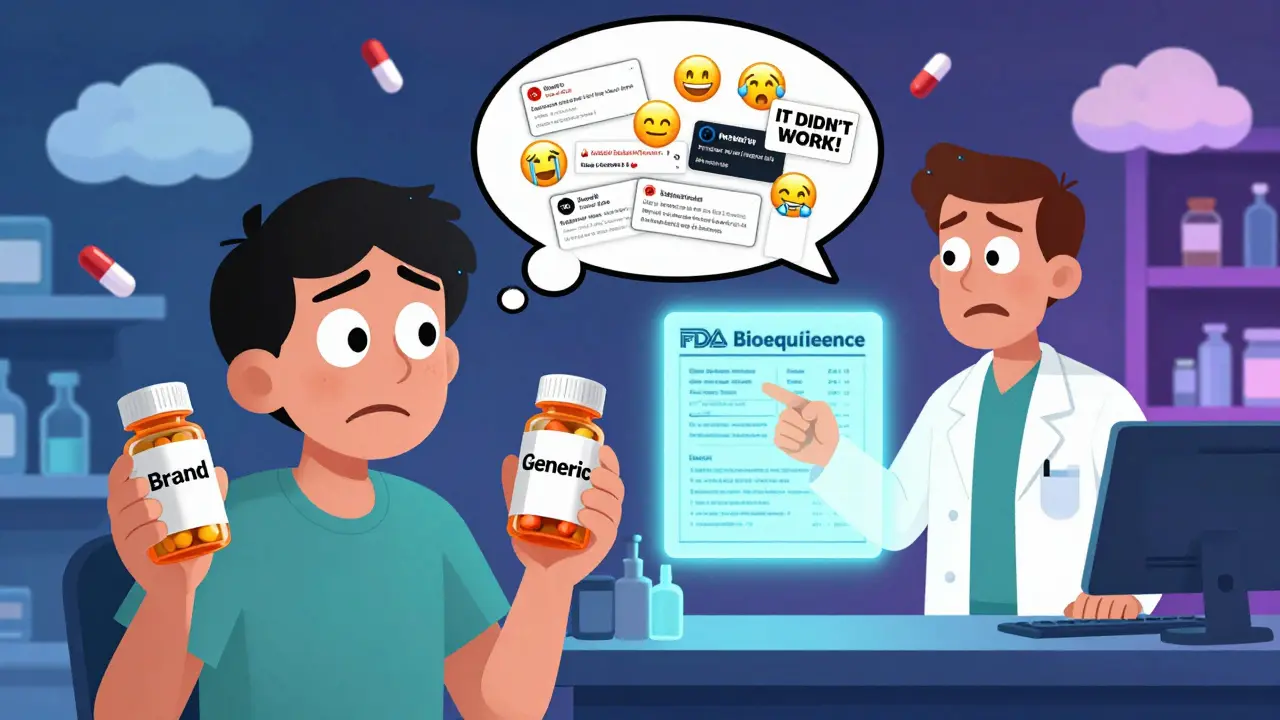
When you pick up a prescription for a generic drug, you’re getting the same active ingredient as the brand-name version-same chemistry, same FDA approval, same effectiveness. But if you’ve read online reviews where people say, "This generic didn’t work like the brand," or "I felt worse after the switch," it’s hard not to wonder: Are generics really the same?
Why Do People Doubt Generic Medications?
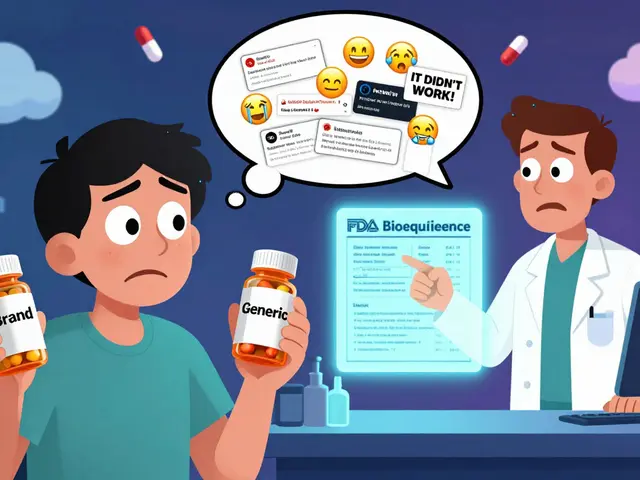
The science is clear: generics must meet strict bioequivalence standards. The FDA requires them to deliver between 80% and 125% of the brand-name drug’s absorption rate in the body. That’s not a guess-it’s lab-tested, regulated, and verified. Yet, nearly 36% of patients still believe generics are less effective, according to a review of 52 studies. Why the disconnect? It’s not about science. It’s about experience. And online reviews are where those experiences live. On Reddit, PatientsLikeMe, and Facebook groups, people share stories like: "I was on brand-name Lyrica for years. My doctor switched me to generic. My nerve pain came back worse than ever." Or: "Generic sertraline made me dizzy. The brand never did." These aren’t outliers. A 2023 analysis of over 6,000 posts found that 47% of complaints about generics focused on "different side effects," and 33% claimed the drug "just didn’t work." Here’s the twist: the medication might be identical. But the belief that it’s different changes how the body responds. That’s called the nocebo effect-when negative expectations cause real physical symptoms. Studies show patients who think they’re taking a weaker drug report more side effects, even when they’re not.The Cost Factor: Cheaper Doesn’t Mean Worse (But It Feels Like It)
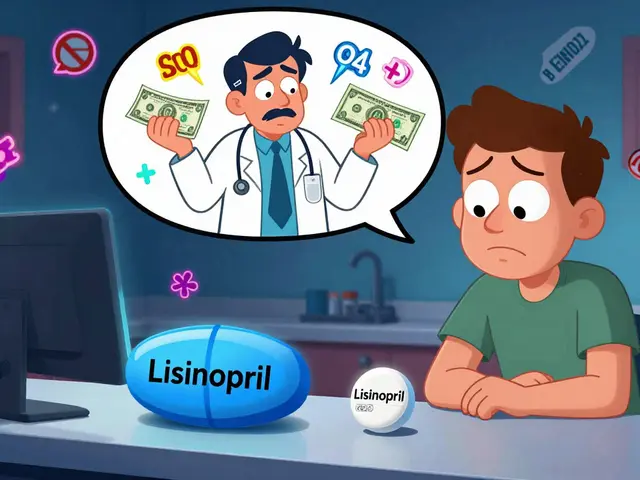
Generics cost 80-85% less than brand-name drugs. That’s huge. In 2023, generics made up 90% of all prescriptions filled in the U.S. But price is a psychological trigger. People associate low cost with low quality. It’s a bias that shows up everywhere-from electronics to groceries to medicine. One study gave patients the exact same tramadol pills, but labeled half as "brand" and half as "generic." Those who thought they were taking the brand reported less pain and were more likely to finish their course. The pills were identical. The label changed everything. And it’s not just patients. Even doctors and pharmacists, who should know better, sometimes hesitate. A 2018 study found that 29% of doctors and 28% of pharmacists still believe generics are less effective. When your provider says, "I’d take the brand if it were me," that sticks.Online Reviews Are Powerful-But Not Always Accurate
Patient reviews are valuable. They’re raw, real, and human. But they’re also biased. People don’t post when things go well. They post when something goes wrong. That’s why you see so many negative reviews about generics, and so few saying, "I saved $200 a month and feel exactly the same." A Reddit user named u/BudgetSavvyPatient wrote: "Three years on generic sertraline. Saved $2,180. Zero difference in mood or side effects." That post got 12 likes. The one complaining about Lyrica? Over 800 upvotes. This isn’t just about numbers. It’s about visibility. Negative stories dominate because they’re louder. And when someone Googles "generic antidepressant side effects," they’re more likely to land on a horror story than a success story.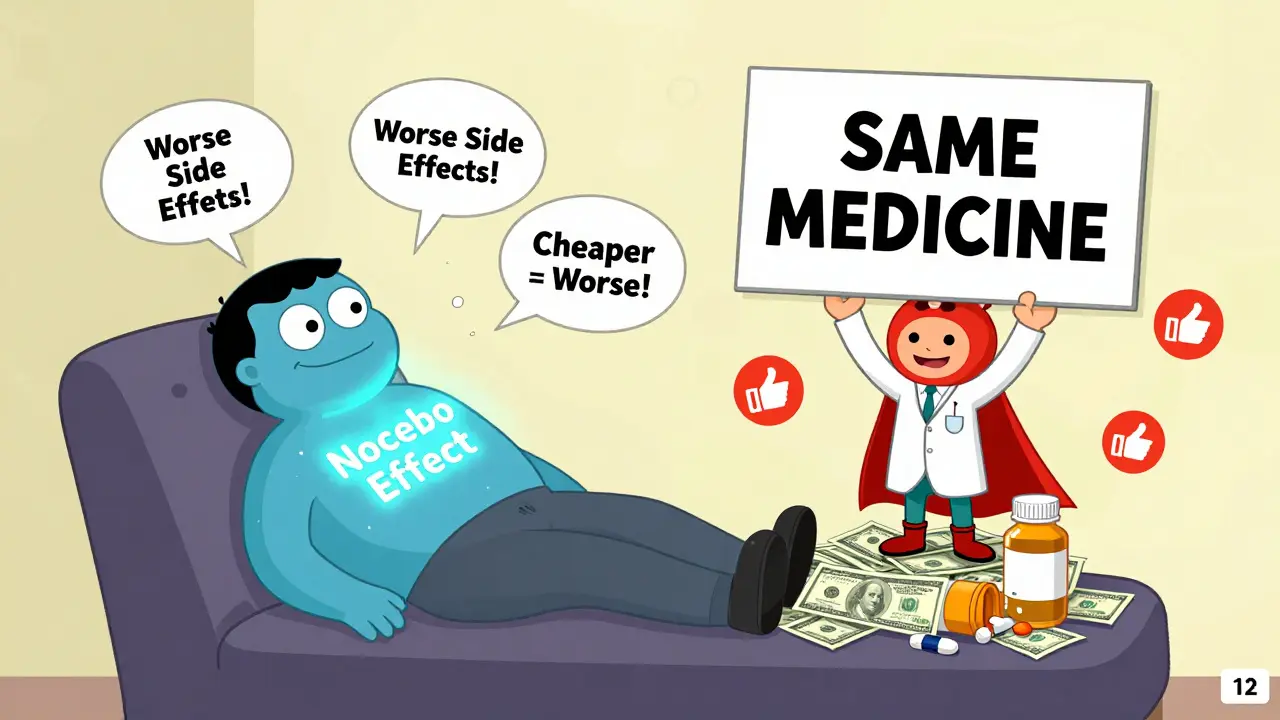
Who Influences Patients the Most?
The person who hands you the bottle matters more than any review. When a pharmacist says, "This is the same medicine, just cheaper. I’ve been taking generics for years," patient acceptance jumps by 40%. That’s not magic. That’s trust. A Kaiser Permanente study found that giving patients a simple one-page handout explaining how generics are approved-what bioequivalence means, why the color might be different-cut patient questions by over half. And adherence went up by nearly 20%. But here’s the problem: most doctors have less than two minutes to talk about meds during a visit. Pharmacists are swamped. So patients turn to Google-and the first thing they see is a story about someone who felt worse after switching.What About Those "Different" Side Effects?
Sometimes, the differences are real. Not because the active ingredient changed-but because the fillers, dyes, or coatings did. These inactive ingredients can cause reactions in sensitive people. A person allergic to a dye in one generic version might feel sick. Switch to another brand of the same generic? Fine. And for drugs with a narrow therapeutic index-like warfarin, levothyroxine, or seizure meds-tiny variations in absorption can matter. That’s why some patients need to stick with one brand or generic. But that’s not the norm. For 95% of prescriptions, switching is perfectly safe. The key is communication. If your doctor says, "We’re switching you to a generic because it’s cheaper and just as good," without explaining how, you’re setting yourself up for doubt.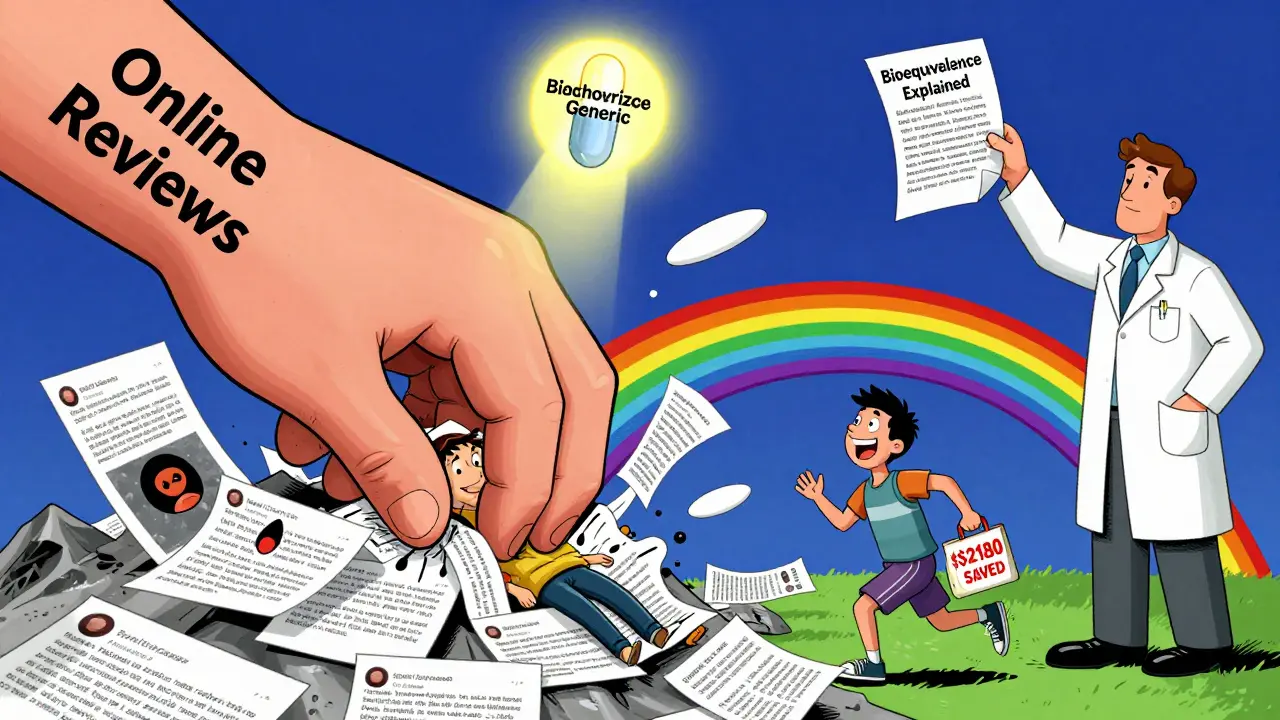
What’s Being Done to Fix This?
The FDA is finally stepping up. In 2023, they launched a $15.7 million public education campaign called "Generics: Same Medicine, Lower Cost." Early results? A 22% increase in patient confidence. Some pharmacies now use digital tools that show patients a side-by-side comparison of their brand and generic-same active ingredient, same dose, same manufacturer (sometimes it’s the same company making both). And there’s a new trend: authorized generics. These are brand-name drugs sold without the brand name-same formula, same factory, same quality. They’re not cheaper than regular generics, but they’re trusted because they come from the same company. Sales grew 37% in 2023.What Should You Do?
If you’re considering a generic:- Ask your pharmacist: "Is this the same as the brand?" Don’t assume. Ask.
- Check the label. Look up the active ingredient. If it matches your brand, it’s the same medicine.
- Don’t assume side effects mean it’s bad. Try it for a full cycle. If symptoms persist, talk to your doctor-don’t just switch back to brand.
- If you’re on a narrow therapeutic index drug (like thyroid meds or blood thinners), ask if your insurance allows you to stay on one consistent version.
- Share your positive experience. If you saved money and felt fine, post it. Counter the noise.
The Bigger Picture
This isn’t just about pills. It’s about trust in the system. When people believe generics are inferior, they skip doses, refill less often, or pay more for brand-name drugs they don’t need. The U.S. healthcare system loses over $14 billion a year because of this gap between perception and reality. The science says generics work. The data says they’re safe. But the stories people read online? Those shape behavior more than any study ever could. The fix isn’t more ads. It’s better conversations. It’s pharmacists taking 90 seconds to explain. It’s doctors saying, "I trust this too." It’s patients sharing their success stories-not just their complaints. Because when you take a generic, you’re not just saving money. You’re helping make healthcare affordable for everyone.Are generic medications really the same as brand-name drugs?
Yes, by law, generics must contain the same active ingredient, strength, dosage form, and route of administration as the brand-name drug. They must also meet strict bioequivalence standards set by the FDA, meaning they deliver the same amount of medicine into your bloodstream within the same timeframe. The only differences are in inactive ingredients like color, shape, or fillers-which don’t affect how the drug works.
Why do some people feel worse after switching to a generic?
Sometimes, it’s the nocebo effect-when expecting a problem causes real symptoms. Other times, it’s a reaction to a different inactive ingredient (like a dye or filler) in the generic version. Rarely, for drugs with a narrow therapeutic index (like warfarin or thyroid meds), even small absorption differences can matter. If you feel worse, talk to your doctor or pharmacist before switching back. You might just need a different generic brand.
Can online reviews be trusted when deciding whether to take a generic?
Online reviews are helpful for understanding real-world experiences, but they’re not scientific. People are more likely to post negative experiences than positive ones. A single bad review doesn’t mean the drug doesn’t work-it means someone had a bad experience. Look for patterns: if hundreds say it worked fine, that’s more reliable than one story about side effects.
Why do pharmacists sometimes recommend generics?
Pharmacists recommend generics because they’re just as effective and cost far less-often 80-85% cheaper. Many pharmacists have seen patients save hundreds per month without issues. They also know the FDA’s approval process is rigorous. When they explain this clearly, patient acceptance increases by up to 40%.
Are there cases where I should avoid generics?
For most medications, no. But for drugs with a narrow therapeutic index-such as levothyroxine, warfarin, or certain epilepsy meds-small changes in absorption can matter. In those cases, your doctor might recommend sticking with one brand or generic version. Always discuss this with your provider, especially if you’ve had issues after switching.
What’s the difference between a generic and an authorized generic?
An authorized generic is made by the same company that produces the brand-name drug, but sold without the brand name. It’s identical in every way-same ingredients, same factory, same packaging. It’s cheaper than the brand but usually costs the same as a regular generic. Some patients prefer it because it removes doubt about quality.
Jan Hess
January 15, 2026 AT 21:02Look, I’ve been on generic sertraline for five years now and I’ve never felt better. My anxiety? Gone. My sleep? Perfect. I saved over $200 a month. Why do people act like switching to generic is some kind of betrayal? It’s the same damn pill, just without the fancy logo.
Dan Mack
January 16, 2026 AT 14:28They’re not the same. The FDA doesn’t control the fillers. Big Pharma knows this. That’s why they push generics-so they can sell you the brand again later at full price. You think this is about cost? No. It’s about control. They want you dependent on the system. Read the patents. The inactive ingredients are designed to make you feel worse. Then you go back to the brand. Profit.
Diane Hendriks
January 17, 2026 AT 21:29It’s not about science. It’s about semantics. The word ‘generic’ carries a stigma that ‘brand-name’ doesn’t-despite identical chemical composition. Language shapes perception, perception shapes biology. The nocebo effect isn’t a fluke-it’s a cultural artifact. We’ve been conditioned to equate price with value, even when the value is objectively identical. This isn’t medicine-it’s psychology dressed in white coats.
Niki Van den Bossche
January 18, 2026 AT 07:18Oh honey, you think it’s the fillers? Please. The real issue is that Big Pharma doesn’t want you to know that the same factory that makes Lyrica also makes the generic-same line, same workers, same quality control. They just slap a different label on it and call it ‘economy.’ You’re not getting a cheaper version-you’re getting the exact same thing, but now you’re supposed to feel guilty for saving money. Meanwhile, your insurance company is doing cartwheels. The only thing that changed? Your belief system. And that, darling, is the most dangerous drug of all.
Mike Berrange
January 18, 2026 AT 20:25I switched to generic warfarin and my INR went haywire. I almost bled out. You can’t just say ‘it’s the same.’ That’s not science, that’s wishful thinking. If it were truly identical, why do doctors still prescribe the brand for high-risk patients? Because they know. They just won’t say it out loud.
Frank Geurts
January 19, 2026 AT 19:20It is, indeed, a matter of profound societal consequence. The psychological architecture surrounding pharmaceutical perception is not merely anecdotal-it is deeply entrenched in consumerist ideology. The phenomenon of the nocebo effect, as elucidated in peer-reviewed neuropharmacological literature, demonstrates that expectation modulates neurochemical pathways with measurable physiological outcomes. Furthermore, the disparity in patient reporting bias-where negative experiences are statistically overrepresented-underscores the necessity for structured, evidence-based patient education. The FDA’s campaign, while commendable, remains insufficient without institutional reinforcement at the point of dispensation.
Arjun Seth
January 20, 2026 AT 13:39India makes 80% of the world’s generics. You think they care about your tiny American nerves? They use cheaper fillers. They don’t test like you do. Your body is a lab rat for global cost-cutting. I’ve seen people get sick from Indian generics. You think the FDA checks every batch? Ha. They check one per month. You’re playing Russian roulette with your thyroid.
Jami Reynolds
January 22, 2026 AT 02:20Authorized generics are the only safe option. They are manufactured by the original brand company. The regular generics? Often outsourced to countries with lax regulations. Even if the active ingredient matches, the production environment doesn’t. You’re not just buying a pill-you’re buying a supply chain. And most people have no idea where it comes from. Don’t be fooled by the label.
Nilesh Khedekar
January 22, 2026 AT 23:10Wow, so the solution is to just… post more positive reviews? Like, that’s it? You’re telling me the entire healthcare system’s credibility crisis can be fixed by Reddit upvotes? That’s beautiful. Truly. I’m going to write a poem about it. ‘Ode to a Generic Sertraline Bottle.’
Nishant Garg
January 23, 2026 AT 05:42My aunt in Delhi takes the same generic metformin her cousin in Chicago takes-same batch, same manufacturer, same pill. She’s 78, has had diabetes for 40 years, and her sugar is stable. No drama. No panic. Just life. The problem isn’t the pill. It’s the noise. We’ve turned medicine into a soap opera. The real tragedy? The people who need these drugs the most are the ones too scared to take them because of stories they read on their phones at 3 a.m.
Gloria Montero Puertas
January 23, 2026 AT 13:20And yet, the most dangerous thing isn’t the generic-it’s the doctor who says, ‘It’s the same.’ No, it’s not. Not if the coating causes your stomach to rebel. Not if the dye triggers your allergies. Not if the absorption curve is 12% off because the manufacturer cut corners. You can’t dismiss real biological responses as ‘just the nocebo.’ That’s medical gaslighting. And you, dear internet, are enabling it.