For most patients, picking up a prescription feels simple: get the pill, take it, feel better. But behind that routine is a quiet battle between science and perception - one where generic medications are the most effective, affordable option, yet still face resistance from both patients and doctors.
Generics Aren’t Cheap Copies - They’re Identical Drugs
When you hear "generic," you might think of knockoffs or lower quality. That’s not true. A generic drug has the same active ingredient, strength, dosage form, and route of administration as the brand-name version. It’s not a copy - it’s the same medicine, just without the marketing.
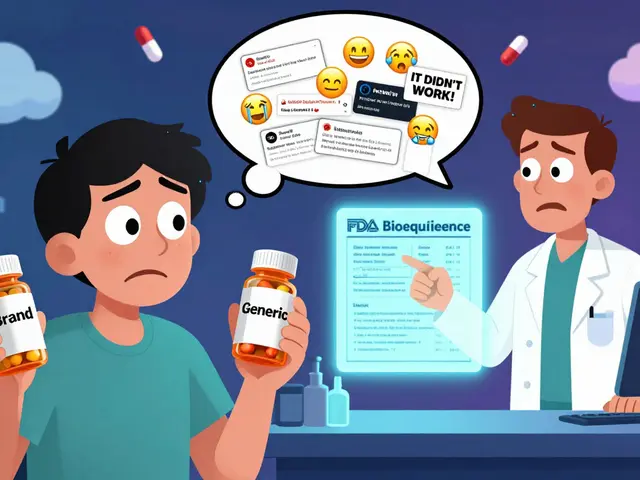
The FDA requires generics to prove bioequivalence. That means the drug must deliver the same amount of active ingredient into your bloodstream at the same rate as the brand-name drug. The standard? A 90% confidence interval between 80% and 125% for absorption. That’s not a guess - it’s a strict, scientifically validated requirement. The FDA inspects generic manufacturing plants just as often as brand-name ones - over 1,000 domestic and 500 foreign inspections every year.
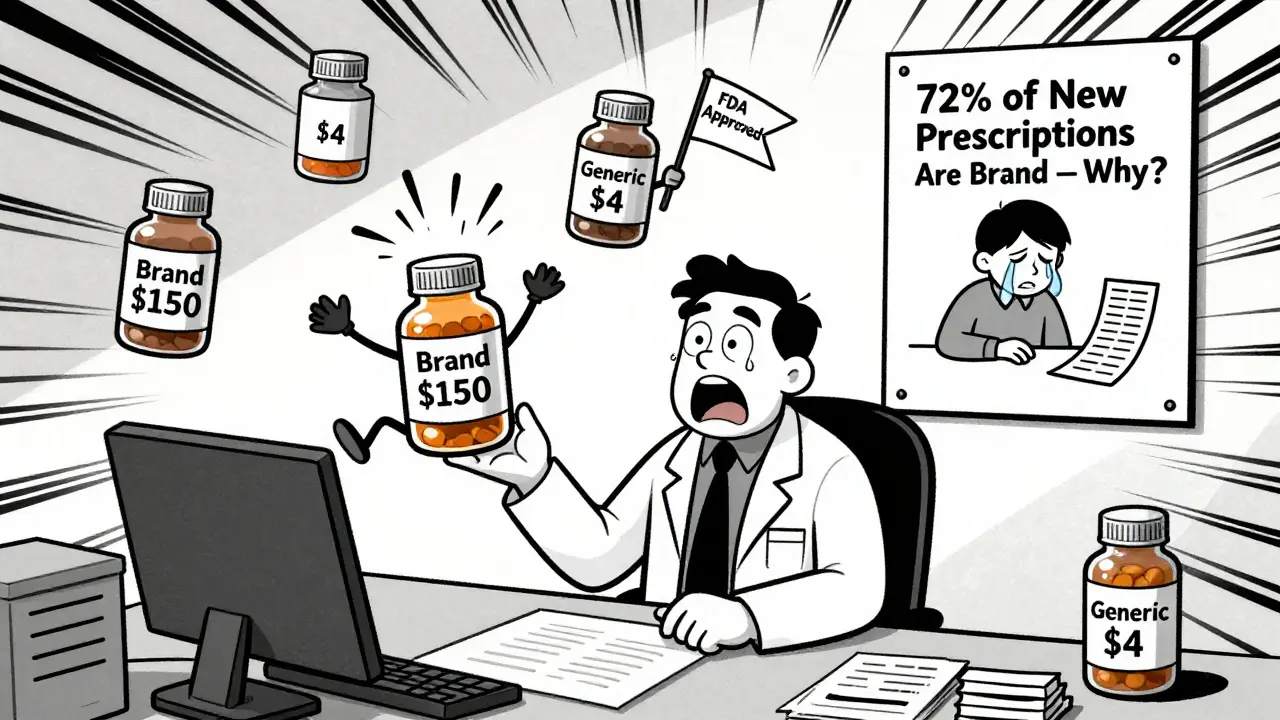
And the numbers don’t lie. In 2023, generics made up 90% of all prescriptions filled in the U.S. But they cost only 23% of what brand-name drugs do. A typical brand-name blood pressure pill might cost $150 a month. The generic? $4 at Walmart. That’s not a marketing trick - it’s the result of competition after patents expire.
Doctors Know Generics Work - So Why Don’t They Prescribe Them More?
Major medical organizations are clear: prescribe generics when possible. The American College of Physicians issued a formal recommendation in 2016 stating that clinicians should choose generics over brand-name drugs unless there’s a specific clinical reason not to. Why? Because adherence improves.
Patients taking generics are about 6% more likely to stick with their medication than those on brand-name versions. That’s not a small difference. It translates to a 2.2% drop in hospitalizations for chronic conditions like high blood pressure or diabetes. That’s thousands of avoided ER visits every year.
Yet, studies show that only 72% of new prescriptions are written as generics - even though 89% of filled prescriptions are. That gap tells you something: doctors are often still starting patients on brand-name drugs, even when generics exist.
Why? It’s not because they doubt the science. A 2016 study of 151 physicians found no link between a doctor’s belief in generic effectiveness and their prescribing habits. Instead, the barriers are psychological - both for doctors and patients.
The Real Problem: Patient Perceptions
Patients don’t trust generics - not because of data, but because of appearance.
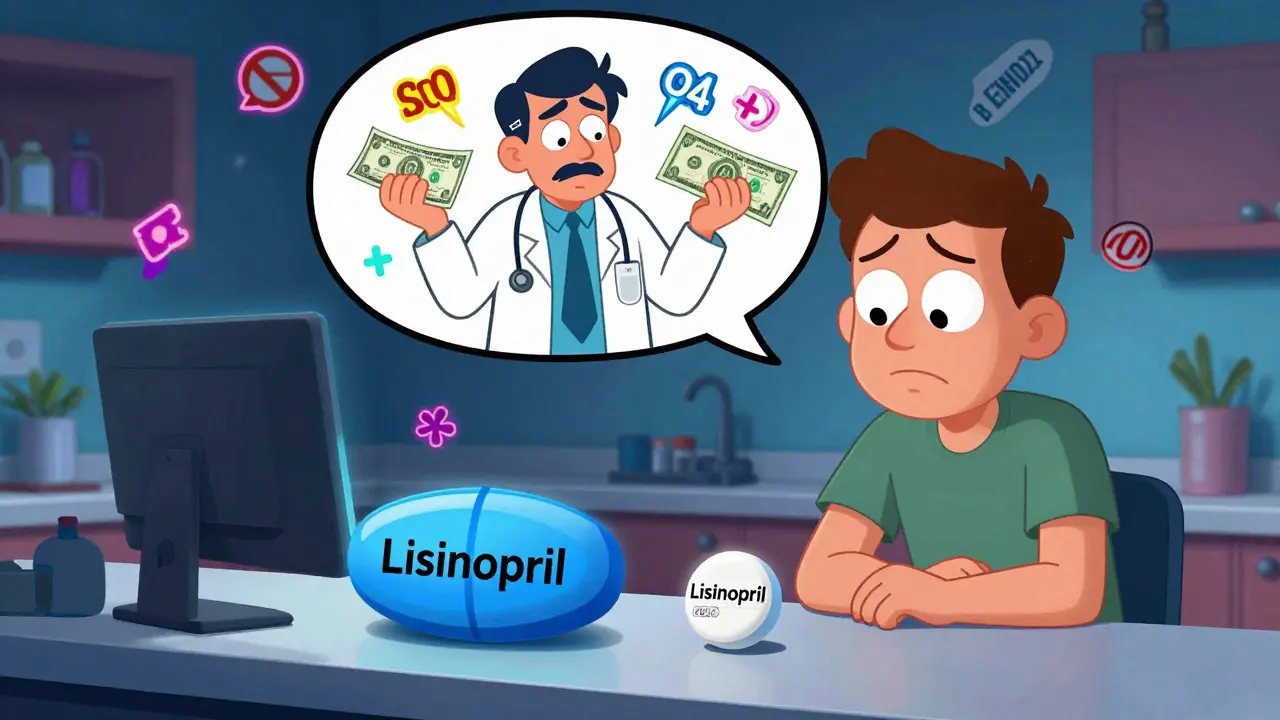
Imagine you’ve been taking a blue, oval pill for years. One day, your pharmacist hands you a white, round pill. Same name. Same dosage. But it looks different. Suddenly, you wonder: Is this the same? Did they switch me to something weaker? Is this safe?
That’s not irrational. It’s human. The FDA calls this the "Look Alike Sound Alike" problem. Patients associate pill shape, color, and size with effectiveness. When those change, even if the active ingredient is identical, trust drops.
Surveys show that 41% of physicians say patients sometimes pressure them to prescribe brand-name drugs. One internist on Reddit shared: "I’ve had patients insist on brand-name lisinopril costing $350/month when the generic is $4 at Walmart. They swear the brand works better - even though the science says otherwise."
And it’s not just patients. Some doctors worry too. A 2015 study in Saudi Arabia found that while 96% of doctors believed generics were therapeutically valuable, only 16% supported using them in "all" clinical situations. That gap between knowledge and action is huge.
Exceptions Exist - But They’re Rare
Are there cases where generics might not be ideal? Yes - but they’re few.
The FDA lists only 15 drugs with a "narrow therapeutic index" where tiny differences in blood levels could cause serious problems. These include drugs like warfarin, levothyroxine, and some anti-seizure medications. For these, doctors may choose to stick with one brand - not because generics are unsafe, but because consistency matters more than cost.
Even then, studies show that switching between FDA-approved generics of these drugs doesn’t lead to worse outcomes. The real issue isn’t the drug - it’s switching back and forth between multiple generic manufacturers. That’s why some doctors prefer to lock in one brand, even if it’s a generic.
Complex delivery systems like inhalers and topical creams also pose challenges. A 2015 FDA study found that patients with asthma or COPD sometimes felt their generic inhalers didn’t work as well - not because the medicine was different, but because the device design changed. The mechanism of delivery mattered more than the drug itself.
Cost Isn’t the Only Driver - Adherence Is
Many assume doctors prescribe brand-name drugs because they’re paid to. They’re not. Most doctors earn the same amount whether they prescribe a $4 generic or a $300 brand.
The real driver is habit - and fear of backlash.
Doctors know that if a patient’s blood pressure doesn’t improve, they’ll be blamed. If the patient thinks the generic didn’t work - even if it did - the doctor becomes the target. So some avoid the risk by prescribing the brand, even when it’s unnecessary.
Meanwhile, patients who switch to generics report better adherence. A Kaiser Family Foundation survey found Medicare beneficiaries using generics had 12.7% higher adherence rates than those on brand-name drugs. That’s not because generics are better - it’s because they’re cheaper. When people can afford their meds, they take them.
What’s Changing - And What’s Not
Things are slowly shifting. Medical schools and residency programs are finally teaching doctors how to prescribe generics confidently. In 2015, only 29% of internal medicine residencies included formal training on generics. By 2023, that number jumped to 68%.
The FDA has also launched new education programs, spending $15.2 million annually to help both patients and providers understand what generics really are. Pharmacists are being trained to explain switches better - not just hand over a new pill and say "it’s the same."
Still, the biggest barrier remains perception. Even with perfect science, people trust what they know. And for many, brand names = quality. That’s not based on evidence. It’s based on decades of advertising, packaging, and branding psychology.
What Patients Should Do
- Ask your doctor: "Is there a generic version of this?" Don’t assume there isn’t.
- Don’t panic if your pill looks different. Check the name on the label - it should match the active ingredient.
- If you feel worse after switching, talk to your doctor. It’s rarely the drug - it could be a change in inactive ingredients or your body adjusting.
- Compare prices. Generics are almost always cheaper, even without insurance.
What Doctors Should Do
- Start new prescriptions with generics unless there’s a clear clinical reason not to.
- Explain the switch to patients. Say: "This is the same medicine, just cheaper. The FDA requires it to work the same way."
- Don’t assume patients know the difference between active ingredients and brand names.
- Use the FDA’s "Look Alike Sound Alike" resources to help patients understand changes.
Generics aren’t a compromise. They’re the standard. They’re the science-backed, cost-effective, life-saving choice - for the vast majority of medications. The real question isn’t whether they work. It’s why we still hesitate to use them.
Are generic medications as safe as brand-name drugs?
Yes. The FDA requires generic drugs to meet the same strict standards for quality, strength, purity, and potency as brand-name drugs. They must prove bioequivalence - meaning they deliver the same amount of active ingredient into your bloodstream at the same rate. Manufacturing facilities for generics are inspected just as often as brand-name ones.
Why do some patients feel generics don’t work as well?
It’s usually about appearance or expectation, not effectiveness. Patients often associate pill color, shape, or size with the brand they’re used to. When those change - even if the active ingredient is identical - they assume something’s different. This is called the "look-alike, sound-alike" effect. The FDA has programs to reduce this confusion, but patient education is still needed.
Do doctors get paid to prescribe brand-name drugs?
No. Doctors do not receive payments or incentives from pharmaceutical companies for prescribing brand-name drugs over generics. Their income is based on the services they provide, not the prescriptions they write. The choice to prescribe a brand-name drug is usually based on habit, patient pressure, or outdated beliefs - not financial gain.
Are there any drugs where generics aren’t recommended?
Yes - but very few. The FDA maintains a list of 15 drugs with a narrow therapeutic index, where tiny differences in blood levels can cause serious effects. These include warfarin, levothyroxine, and some anti-seizure medications. For these, doctors may prefer to stick with one version - generic or brand - to avoid fluctuations. But even here, switching between FDA-approved generics has not been shown to cause harm in most cases.
How much money can I save by switching to a generic?
On average, generics cost 80% to 85% less than brand-name drugs. For example, a brand-name blood pressure pill might cost $150 a month. The generic version is often $4 to $10 at major pharmacies. The Congressional Budget Office estimates that if all new prescriptions were written as generics, Medicare Part D could save $17.3 billion per year.
Can pharmacists switch my brand-name drug to a generic without asking?
In 49 U.S. states, pharmacists can substitute a generic for a brand-name drug unless the doctor specifically writes "dispense as written" or "no substitution." Some states require the pharmacist to notify the patient or doctor. Always check your prescription label - if the generic was dispensed, it will be listed on the bottle.


Holly Robin
January 30, 2026 AT 10:44So let me get this straight - the FDA says generics are IDENTICAL, but somehow when I switch from my fancy blue pill to some white one that looks like it was made in a basement in Bangladesh, my anxiety spikes? LOL. I swear, Big Pharma brainwashed us so hard we think a different color = poison. My grandma took generic levothyroxine for 12 years and lived to 98. The real conspiracy? They want you to keep paying $150 for a pill that’s chemically the same as the $4 version. Wake up, sheeple.
KATHRYN JOHNSON
January 30, 2026 AT 16:32The data presented is statistically valid and methodologically sound. However, the assumption that patient perception is the primary barrier to generic adoption is oversimplified. Structural factors - including pharmacy formularies, physician inertia, and the absence of mandatory patient counseling protocols - remain unaddressed in this narrative. The FDA’s inspection regime, while rigorous, does not account for batch-to-batch variability in excipients, which can influence bioavailability in sensitive populations. This article, while well-intentioned, fails to acknowledge systemic healthcare inequities.
Niamh Trihy
January 31, 2026 AT 01:29As a pharmacist in Dublin, I see this every day. Patients panic when their pill changes color - even though the active ingredient is identical. I always take 2 minutes to explain: ‘This is the same medicine, just cheaper. The FDA doesn’t let them sell it unless it’s a perfect match.’ Most people calm down when you talk to them like a human, not a statistic. And yes, I’ve had people come back weeks later saying, ‘I thought it wouldn’t work… but I feel better.’ That’s the win.
Donna Fleetwood
January 31, 2026 AT 15:21Y’all are overthinking this. If your meds cost $4 instead of $150, just take them. I used to be scared of generics too - until I switched my blood pressure pill and didn’t die. Turns out, my body didn’t care what color the pill was. Now I tell everyone: ‘If your doctor says it’s fine, trust the science. Your wallet will thank you.’ Seriously, stop letting marketing scare you. You’re not saving money by paying more - you’re just giving Big Pharma a vacation.
Melissa Cogswell
February 2, 2026 AT 00:25I’m a nurse and I’ve seen patients on brand-name insulin pay $300/month while others on generic pay $25. The difference in adherence is staggering. One woman told me she was skipping doses because she couldn’t afford it - until we switched her to generic. She cried and said she hadn’t felt this good in years. It’s not about trust in the drug. It’s about trust in the system. We need to make this easier - not just explain it.
Diana Dougan
February 2, 2026 AT 08:42So… the FDA says it’s the same. But what if they’re lying? I mean, they approved 37,000 pills last year and 12 of them had ‘unapproved’ ingredients. Coincidence? I think not. Also, my cousin’s dog took a generic flea pill and now it’s a zombie. Just saying. Also, why do they always change the shape? It’s gotta be a scam. Also, I read this one Reddit post that said generics cause autism. So… yeah.
Bobbi Van Riet
February 2, 2026 AT 12:25I used to be the person who refused generics because I thought they were ‘weaker.’ I had high blood pressure, took brand-name lisinopril for 5 years, and my doctor finally pushed me to switch. I was terrified. But I did it. And honestly? I felt better. Not because the drug changed - because I stopped stressing about it. The real problem isn’t the pill. It’s the fear we carry around like a backpack full of commercials and TV ads telling us that expensive = better. We’ve been trained to distrust our own bodies and trust logos. It’s sad. And it’s killing people who can’t afford their meds. I wish doctors would say, ‘This is the same, and I’m prescribing it because I care about you.’ Not just ‘It’s cheaper.’
Blair Kelly
February 3, 2026 AT 15:52Let me be clear: if you’re still prescribing brand-name drugs because you’re ‘afraid of backlash,’ you’re not a doctor - you’re a coward. Patients don’t care about your fear. They care about their health. And if you’re too lazy to explain that a $4 pill is just as effective, you shouldn’t be allowed to write prescriptions. This isn’t a psychological issue. It’s a moral failure. Fix it. Or get out.
Gaurav Meena
February 3, 2026 AT 18:39From India, where generics save lives daily. My dad took generic statins for 10 years - no issues. We don’t have luxury of brand names here. But guess what? We have the same science. Same FDA standards. Same results. Maybe the problem isn’t the drug - it’s the privilege to believe you need a fancy brand to feel safe. 💪❤️
Beth Beltway
February 4, 2026 AT 15:00Interesting how this article ignores the fact that generics are often manufactured in countries with zero regulatory oversight. The FDA inspects ‘some’ plants - but not all. And the ‘bioequivalence’ standard? 80–125%? That’s a 45% variance. That’s not identical - that’s a gamble. And don’t even get me started on inactive ingredients. Some generics use talc or dyes linked to endocrine disruption. This isn’t science. It’s corporate propaganda dressed up as public health.
Natasha Plebani
February 5, 2026 AT 23:39The epistemological dissonance here is fascinating: we live in a post-Enlightenment society that venerates empirical evidence, yet we outsource our medical agency to branding psychology. The generic pill is ontologically identical to its branded counterpart - yet phenomenologically, it is perceived as alien. This is not a pharmacological failure. It is a semiotic collapse. The signifier (pill shape, color, imprint) has become detached from the signified (therapeutic outcome), and we’ve collectively regressed into a pre-scientific mode of belief. The solution isn’t more FDA pamphlets. It’s a cultural re-education in the epistemology of pharmaceuticals - one that dismantles the myth of the branded as the authentic.