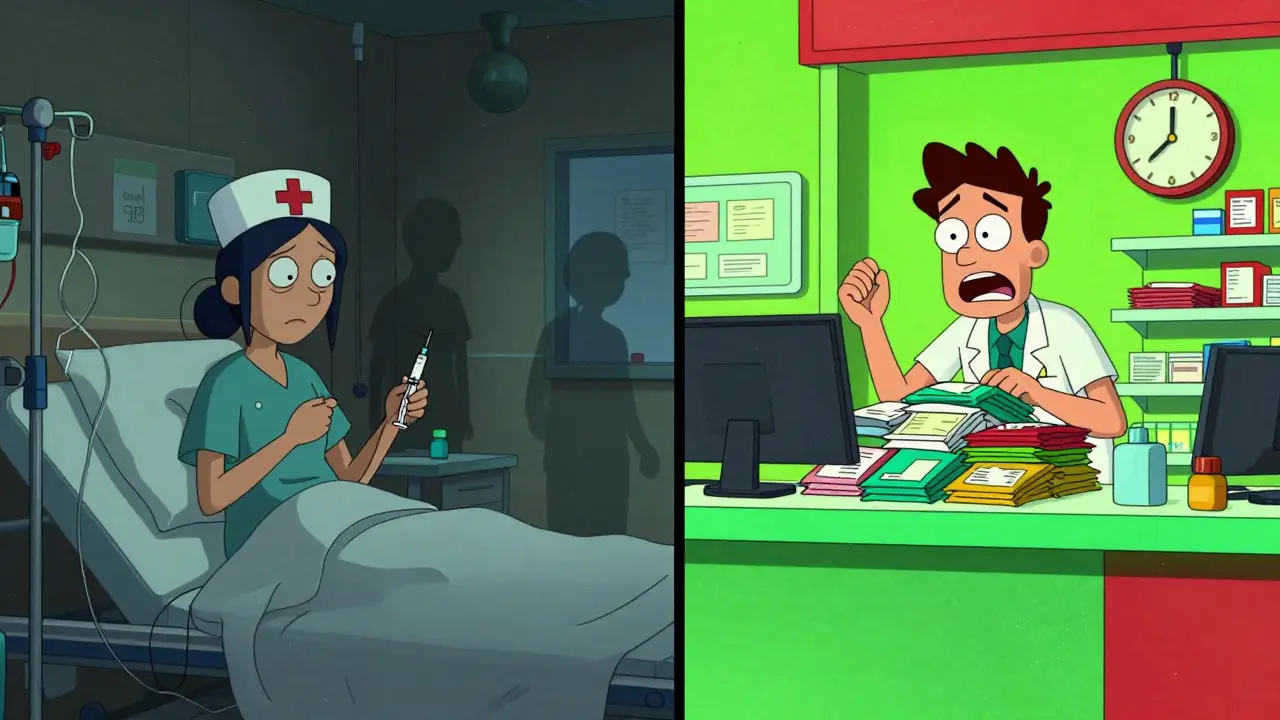
Imagine picking up a prescription for blood pressure medication, only to realize later that the dosage instructions were wrong. Or picture a nurse in a busy ward administering a drug at the wrong time. These aren't just hypothetical nightmares; they are real-world scenarios that happen every day. Medication errors are a massive public health issue, but they don't look the same everywhere. The way mistakes happen, how often they occur, and who catches them differs wildly between the high-stakes environment of a hospital is a large healthcare facility providing inpatient care with multiple layers of clinical oversight and the fast-paced counter of a retail pharmacy is a community-based outlet dispensing prescriptions directly to patients with limited intermediate verification steps.
You might assume hospitals are safer because they have more doctors and nurses. You might also think retail pharmacies are safer because they handle fewer complex cases. The truth? It’s complicated. Both settings have unique vulnerabilities. Understanding these differences isn’t just academic-it’s about knowing where the gaps are so we can plug them before someone gets hurt.
The Stark Difference in Error Rates
When you look at the raw numbers, the contrast is jarring. In hospital settings, medication errors are surprisingly common. A landmark study published in JAMA Internal Medicine found that nearly one in five doses (20%) contained some kind of error in typical hospital facilities. That means if you take five medications in a hospital, there’s a good chance one of them has a mistake attached to it-whether it’s the wrong dose, the wrong time, or the wrong route of administration.
Compare that to retail pharmacies. A 2018 meta-analysis in the Journal of Patient Safety estimated the overall dispensing error rate in community pharmacies at around 1.5%. That sounds much better, right? But here’s the catch: volume matters. With billions of prescriptions filled annually in the U.S., even a small percentage translates to millions of errors. A 2003 national observational study cited by the Agency for Healthcare Research and Quality (AHRQ) estimated roughly 51.5 million dispensing errors among 3 billion prescriptions. That’s about four errors per day in a typical pharmacy filling 250 scripts. So while the *rate* is lower in retail, the *absolute number* of people affected is huge.
| Metric | Hospital Setting | Retail Pharmacy Setting |
|---|---|---|
| Error Rate | ~20% of doses (administration phase) | ~1.5% of prescriptions (dispensing phase) |
| Primary Error Type | Timing, dosage, wrong medication during administration | Transcription errors, incorrect directions, wrong dose |
| Last Checkpoint | Nursing staff / Clinical team | Patient |
| Detection Mechanism | Multi-layered verification (pharmacist → nurse → doctor) | Pharmacist review only; patient self-check |
Who Catches the Mistake? The Critical Role of the Last Checkpoint
This is the most important difference between the two worlds. In a hospital, when a pharmacist dispenses a medication, it doesn’t go straight to the patient. It goes to a nurse. That nurse checks the label against the order. They check the patient’s ID. They verify the dose. If there’s an error, the nurse catches it before it enters the patient’s body. This layered safety net is why hospital errors, while frequent, rarely result in harm. The system is designed to intercept mistakes.
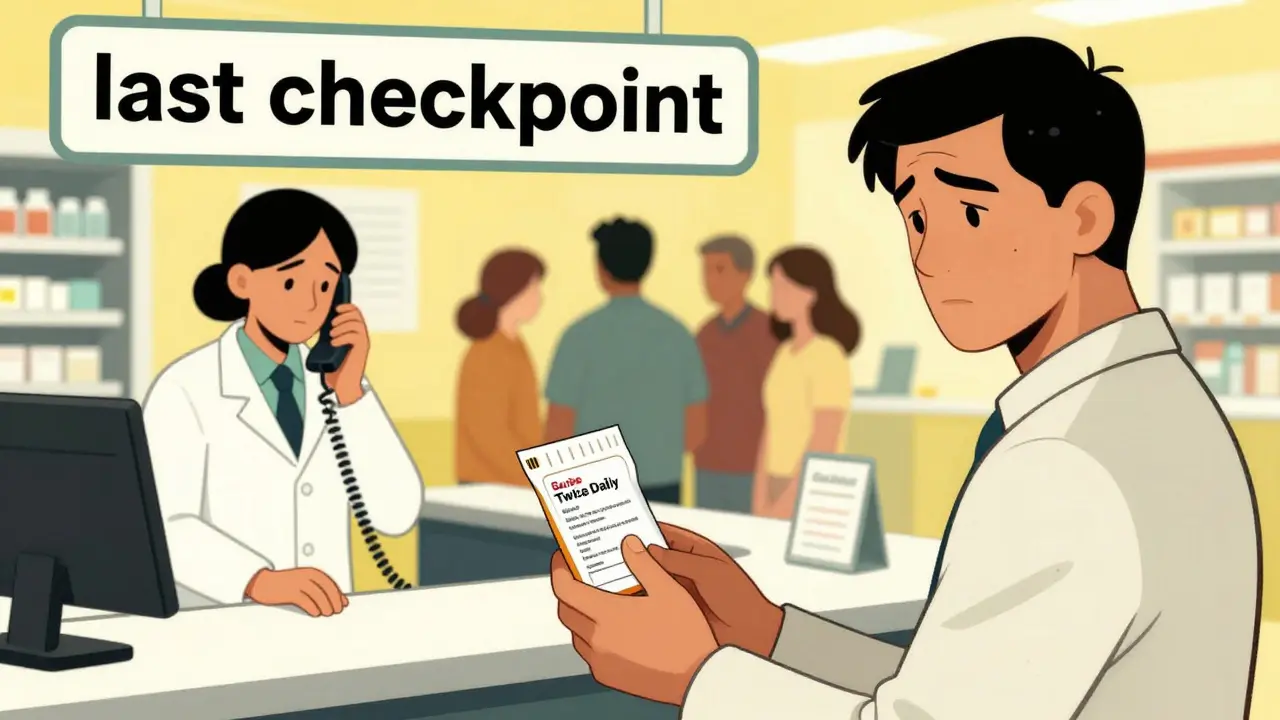
In a retail pharmacy, there is no nurse. There is no second clinical professional checking the bag before it leaves the counter. The patient is the last checkpoint. Think about what that means. If a pharmacist accidentally types “twice daily” instead of “twice weekly” on a label, as happened in a documented case involving estradiol, the patient walks out with the wrong instructions. They might not notice until they feel sick days later. By then, the damage could be done. A 2018 systematic review highlighted this structural vulnerability: the absence of intermediate verification in community settings significantly increases the potential for harm because the burden of detection falls on someone who may lack medical training.
Why Do Errors Happen? Different Causes, Same Human Factor
Errors in both settings are largely human, but the triggers differ. In retail pharmacies, cognitive overload is king. Pharmacists are often managing hundreds of transactions a day. A study of 429 pharmacies found that organizational conditions, physical environment, and task complexity accounted for about 80% of dispensing errors. Distractions, similar-sounding drug names (like Zoloft and Zofran), and rushed workflows lead to transcription errors. For example, misreading a handwritten script or mistyping a decimal point can change a safe dose into a dangerous one.
In hospitals, the chaos is different. It’s less about typing speed and more about communication breakdowns. Handoffs between shifts, incomplete patient records, and understaffing contribute to errors. A nurse might administer a drug too early because the schedule was unclear. Or a doctor might prescribe a medication without realizing the patient is already on a conflicting drug. The complexity of acute care means more variables are in play, increasing the risk of interaction errors.
The Cost of Mistakes: Economic and Health Impacts
Medication errors are expensive. Really expensive. The Academy of Managed Care Pharmacy (AMCP) estimates that medication error morbidity and mortality cost the U.S. economy over $77 billion annually. When you include the total cost of all medication misadventures, that figure jumps to $177 billion. Hospitals bear a significant portion of this burden due to the severity of patient conditions. Treating drug-related injuries in hospitals alone costs at least $3.5 billion a year. However, retail pharmacy errors also drive up costs through emergency room visits and hospital admissions that could have been prevented with correct dosing.
Beyond money, the health impact is severe. While hospital errors are caught more often, when they do reach patients, the consequences can be fatal due to the acuity of the condition. Retail errors, though less frequent, often involve chronic medications like insulin or anticoagulants. A single missed dose or double dose of these drugs can lead to stroke, bleeding, or coma. Three cases from one NIH study resulted in hospitalization solely due to community pharmacy dispensing errors.
Reporting and Culture: Why We Don’t Know the Full Picture
One reason comparing these settings is tricky is that reporting systems are uneven. Hospitals have robust, mandatory error reporting systems. Large academic centers report hundreds of errors monthly, allowing for continuous monitoring and improvement. This data helps refine protocols and train staff. Community pharmacies, historically, lacked comparable systems. While states like California now require error logging, many regions still rely on voluntary reporting. The FDA receives over 100,000 reports annually, but experts agree this is a fraction of actual incidents. Underreporting is rampant due to fear of blame or regulatory action.
Dr. David Bates from Harvard Medical School noted that hospital errors are more frequent but have more safety nets, while community errors are less frequent but more likely to reach the patient unchecked. To fix this, both sectors need a culture shift toward non-punitive reporting. Staff must feel safe admitting mistakes so that systemic issues can be addressed rather than hidden.
Technology and Prevention: Bridging the Gap
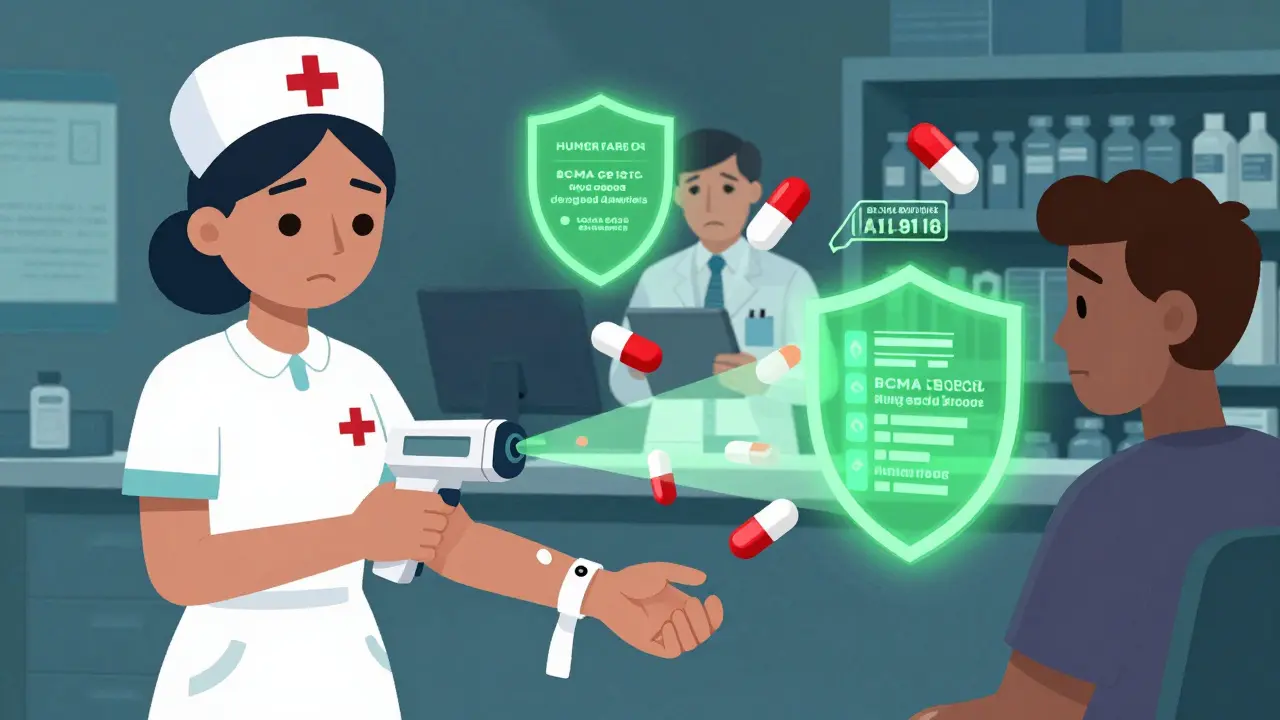
So, how do we stop these errors? Technology is playing a bigger role than ever. In hospitals, barcode medication administration (BCMA) systems have reduced errors by up to 86%. Nurses scan the patient’s wristband and the medication, ensuring the right drug goes to the right person at the right time. Integrated electronic health records also help flag interactions before a prescription is even written.
In retail pharmacies, Clinical Decision Support Systems (CDSS) are becoming standard. These software tools alert pharmacists to incorrect doses or potential interactions during transcription. CVS Health, for instance, implemented AI-powered verification systems that cut dispensing errors by 37%. Looking ahead, the FDA’s Digital Health Center of Excellence initiatives aim to integrate AI monitoring across both settings. Pilot programs show promise in reducing transcription errors by up to 63%. But technology isn’t a silver bullet. It requires proper training, reliable infrastructure, and a willingness to adapt workflows.
Are medication errors more common in hospitals or retail pharmacies?
In terms of rate, errors are more common in hospitals, with studies showing up to 20% of administered doses containing errors. However, retail pharmacies have a lower rate (~1.5%) but handle a vastly higher volume of prescriptions, leading to millions of errors annually. The key difference is detection: hospitals have multiple checkpoints, while retail relies heavily on the patient.
What is the most common type of error in a retail pharmacy?
Transcription errors are the most frequent, including incorrect medication names, wrong doses, or mistaken directions (e.g., "twice daily" instead of "once daily"). These often stem from cognitive fatigue, distractions, or similar-looking drug names.
Why are hospital medication errors considered safer despite higher rates?
Hospitals use a closed-loop system with multiple verification points. After a pharmacist dispenses a drug, a nurse verifies it against the patient’s record and orders before administration. This layered approach catches most errors before they cause harm, unlike retail settings where the patient is the final check.
How can patients protect themselves from medication errors?
Patients should always read their labels carefully before leaving the pharmacy. Ask questions if anything seems unclear. Verify the drug name, dose, and instructions match what your doctor prescribed. In hospitals, encourage nurses to scan your wristband and the medication. Never hesitate to speak up if something feels wrong.
What role does technology play in preventing these errors?
Technology like Barcode Medication Administration (BCMA) in hospitals and Clinical Decision Support Systems (CDSS) in retail pharmacies significantly reduce errors. AI-powered verification tools are also emerging, helping to catch transcription mistakes and flag dangerous drug interactions automatically.