Medication Safety Implementation Estimator
Facility Parameters
Projected Outcomes
Select interventions and click "Calculate Impact" to see projected safety improvements.
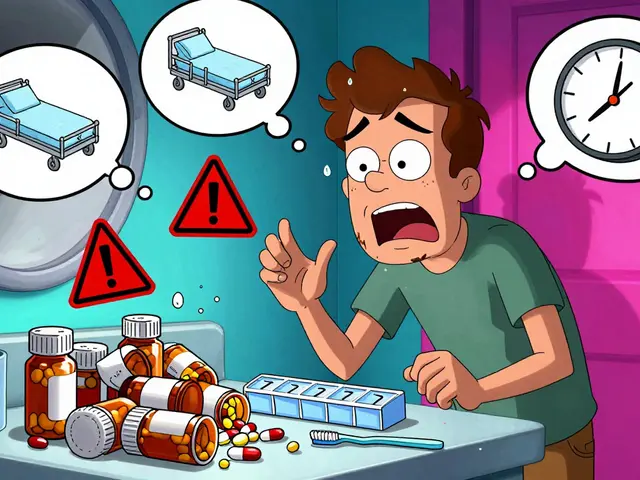
Every year, over 7,000 people in the United States die from medication errors, which are mistakes made during the prescribing, dispensing, or administration of drugs that cause harm to patients. That is not just a statistic; it represents real lives lost due to preventable mistakes. For healthcare providers, who are professionals including doctors, nurses, and pharmacists responsible for patient care, this reality demands more than good intentions. It requires rigorous adherence to best practices, which are standardized protocols and procedures designed to minimize risk and ensure optimal patient outcomes and continuous training, which involves structured education and skill development programs for medical staff.
The World Health Organization (WHO) defines medication safety as a systematic approach to preventing errors and minimizing risks throughout the entire medication use process as a critical component of healthcare. The goal is simple but difficult: ensure patients get the right drug, at the right dose, at the right time, without adverse effects. This article breaks down exactly how you can achieve this in your daily practice.
Key Takeaways
- Systemic barriers work better than memory: Relying on human recall leads to errors; implement hard stops and barcode scanning to enforce the "five rights" automatically.
- Training must be continuous: Initial training should last 16-24 hours, with 8 hours of annual refresher courses involving simulation to maintain proficiency.
- High-alert medications need special protocols: Drugs like intravenous oxytocin require double-checks and specialized workflows because small errors can be fatal.
- Culture drives compliance: A nonpunitive reporting environment encourages transparency, allowing teams to fix root causes rather than hiding mistakes.
- Technology has limits: While Electronic Health Records (EHRs) reduce handwriting errors, they introduce new risks like alert fatigue and incorrect default selections.
Understanding the Scope of Medication Errors
To solve the problem, we first need to understand its scale. According to the Agency for Healthcare Research and Quality (AHRQ), medication errors cause an estimated 1.3 million injuries annually in the U.S. These errors don’t happen in a vacuum. They occur across the entire medication use process, from prescription writing to patient administration.
The WHO launched the "Medication Without Harm" initiative in 2017 with a bold target: reduce severe, avoidable medication-related harm by 50% within five years. As of 2026, this initiative has been extended through 2027, focusing on high-risk situations, polypharmacy in older adults, and digital health safety. This global push highlights that medication safety is not just a local hospital issue-it’s a worldwide priority.
Why do these errors happen? Often, it’s not negligence. It’s system failure. Handwritten prescriptions are illegible. Look-alike sound-alike (LASA) drugs are stored next to each other. Nurses are overwhelmed and bypass safety checks during emergencies. Understanding these root causes is the first step toward building a safer environment.
Core Best Practices for Preventing Errors
The Institute for Safe Medication Practices (ISMP) publishes targeted best practices every two years based on real-world error reports. Implementing all 12 of their recommended practices can reduce serious medication errors by 63%. Here are the most critical ones for any healthcare setting:
- Enforce the "Five Rights": Right patient, right drug, right dose, right route, and right time. Barcode-assisted medication administration (BCMA) systems verify these automatically. Studies show BCMA reduces administration errors by 41.1%, but only if scanning compliance reaches 100%.
- Standardize High-Alert Medications: Drugs like insulin, heparin, and intravenous oxytocin carry a heightened risk of harm. Use pre-programmed smart pumps with dose limits and mandatory double-checks for these agents.
- Clarify Prescriptions: The American College of Obstetricians and Gynecologists (ACOG) emphasizes that orders must include the drug name, dose, route, frequency, and reason. Ambiguity kills. Never abbreviate dangerous terms like "U" (units) or "QD" (once daily).
- Maintain Medication Reconciliation: Compare the patient’s current medication list against new orders at every transition of care-admission, transfer, and discharge. Only 32% of primary care practices have formal reconciliation processes, leaving a huge gap in safety.
- Separate LASA Drugs: Store look-alike sound-alike drugs in different locations and add tall-man lettering (e.g., DOXEpacin vs. DORipenem) to distinguish them visually.
These practices aren’t optional suggestions. They are evidence-based standards that directly impact patient survival rates. When hospitals implement comprehensive programs, error rates drop from 5.9 per 100 orders to just 1.2 per 100 orders within 18 months.
The Role of Technology: EHRs and Clinical Decision Support
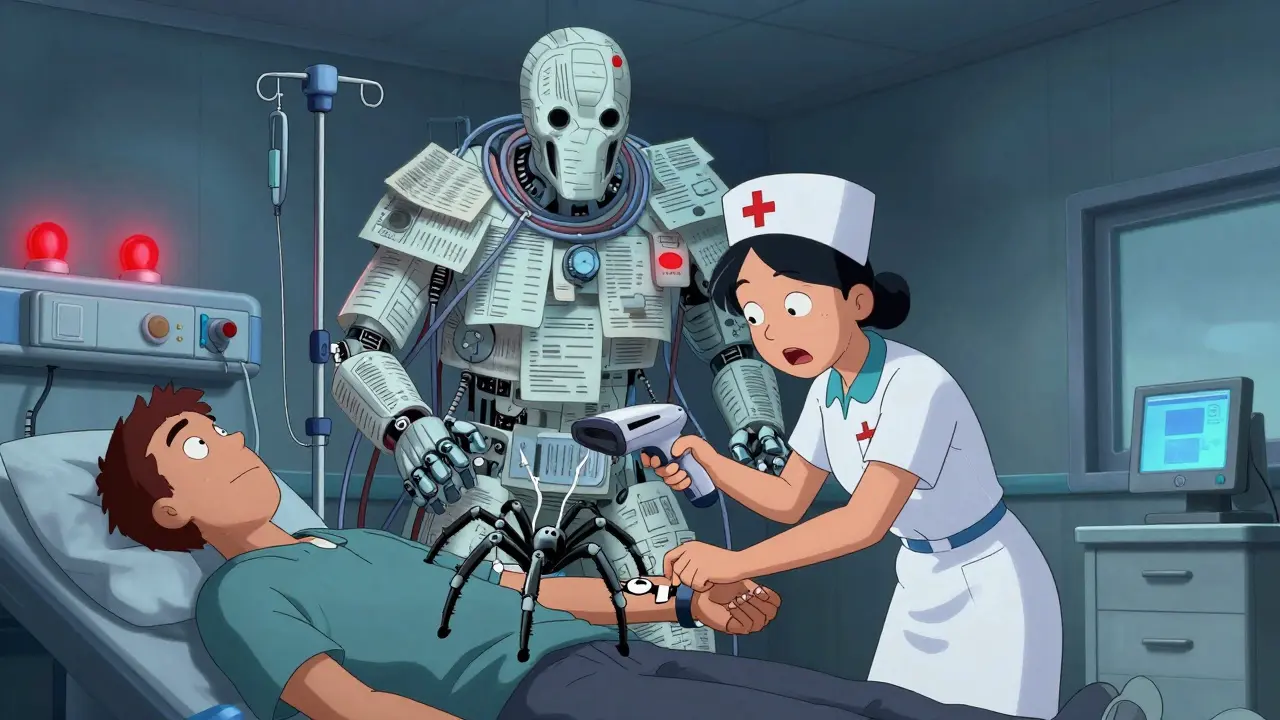
Technology is a double-edged sword. On one hand, electronic prescribing reduces errors by 48% compared to handwritten notes. On the other, it introduces new pitfalls. Dr. David Bates’ research at Brigham and Women’s Hospital found that 34% of medication errors in digital systems stem from incorrect default values or dropdown menu selections.
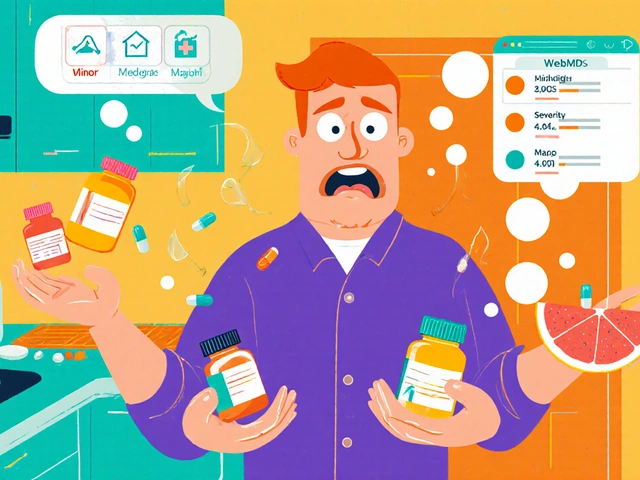
Clinical decision support (CDS) systems trigger alerts for drug interactions, allergies, and dosage errors. However, alert fatigue, which refers to the phenomenon where clinicians become desensitized to frequent, irrelevant warnings, is a major problem. Clinicians override 49-96% of medication alerts, especially when systems generate more than 20 alerts per patient encounter. Most of these alerts are false positives.
To combat this, institutions must tune their CDS systems carefully. Prioritize high-severity alerts and suppress low-risk notifications. Integrate pharmacy information systems, laboratory results, and clinical documentation so the software has full context before flagging an issue. Remember, technology supports judgment-it doesn’t replace it.
Effective Training Strategies for Healthcare Teams
You can buy the best software in the world, but if your team doesn’t know how to use it safely, it won’t matter. Training is the backbone of medication safety. The AHRQ Patient Safety Network recommends 16-24 hours of initial training for new clinicians, followed by 8 hours of annual refresher training.
But what makes training effective? Traditional lecture-style sessions fall flat. Instead, focus on simulation-based learning. Simulate near-miss scenarios where a nurse almost administers the wrong dose, then debrief the team on what went wrong and how the system prevented disaster. This builds muscle memory and situational awareness.
Common challenges include resistance to change. Studies show 42% of nursing staff initially resist BCMA implementation because they perceive it as slowing down workflow. Address this by involving frontline staff in the design phase. Show them data: compliance typically reaches 95% within six months once they see the benefits. Provide dedicated super-users who can troubleshoot issues in real-time.
Required skills for safe medication handling include:
- Proficiency in using EHR safety features and smart infusion pumps.
- Deep knowledge of high-alert medications specific to your unit.
- Effective communication techniques for medication reconciliation, such as read-back verification.
- Ability to recognize and report near-misses without fear of punishment.
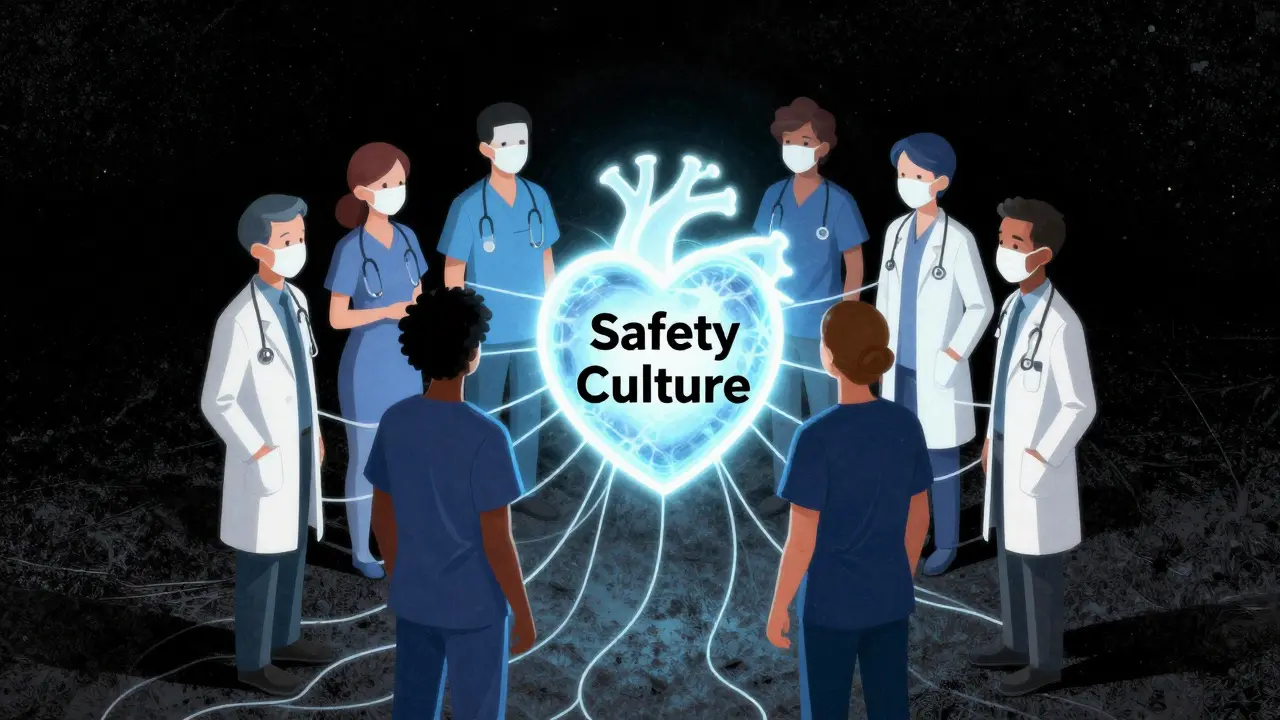
Fostering a Culture of Safety
Technology and training are tools, but culture is the foundation. Dr. Tejal Gandhi, President of the National Patient Safety Foundation, states that a nonpunitive approach to error reporting encourages transparency. When staff feel safe reporting mistakes, you can perform root cause analysis and fix systemic flaws before someone gets hurt.
Use validated tools like the AHRQ Hospital Survey on Patient Safety Culture to measure your organization’s health. Top-performing institutions score in the 75th percentile or higher on "organizational learning" and "teamwork across units." If your scores are low, start leadership workshops focused on psychological safety. Encourage open discussions about errors in morbidity and mortality conferences, focusing on system improvements rather than individual blame.
Success stories abound. Johns Hopkins Hospital embedded pharmacists in intensive care units, reducing medication errors by 81% through real-time order verification. The Veterans Health Administration implemented Computerized Provider Order Entry (CPOE) with CDS across 127 facilities, cutting serious errors by 55%. These results didn’t happen by accident-they happened because leaders prioritized safety culture above all else.
Comparison of Safety Interventions
| Intervention | Error Reduction Rate | Implementation Cost | Key Challenge |
|---|---|---|---|
| Barcode-Assisted Medication Administration (BCMA) | 41.1% | $250,000 - $1.2M (initial) | Workflow disruption & bypassing |
| Electronic Prescribing (CPOE) | 48% | Variable (EHR integration) | Alert fatigue & usability issues |
| Embedded Pharmacists | 81% | Staffing costs | Requires multidisciplinary collaboration |
| Simulation-Based Training | Indirect (improves compliance) | Low to Moderate | Time commitment for staff |
Future Trends: AI and Personalized Medicine
As we move further into 2026, artificial intelligence is reshaping medication safety. Early studies demonstrate that AI algorithms can identify 89% of potential prescribing errors before they reach patients, compared to 67% detection by standard CDS. ISMP’s upcoming 2024-2025 guidelines will address telehealth medication management and AI-assisted prescribing systems.
However, caution is warranted. The FDA reported 214 adverse events related to EHR usability issues in 2022, a 37% increase from the previous year. Over-reliance on technology can erode clinical judgment. The future of medication safety lies in hybrid models: AI handles pattern recognition and data processing, while humans provide contextual understanding and ethical decision-making.
Personalized medicine also brings new complexities. Genomic testing may reveal unique metabolic pathways affecting drug efficacy. Social determinants of health-like housing stability or access to refrigeration for biologics-must be integrated into risk assessments. The National Academy of Medicine predicts medication safety will remain a top priority through 2030, driven by these emerging challenges.
How much does implementing a comprehensive medication safety program cost?
Costs vary significantly by facility size. For a 300-bed hospital, initial investment for BCMA systems ranges from $250,000 to $1.2 million, plus 15-20% annual maintenance. However, the cost of medication errors-including litigation, extended stays, and lost productivity-far exceeds these investments. Hospitals often see ROI within 18-24 months through reduced error rates and improved efficiency.
What are the "five rights" of medication administration?
The five rights are: Right Patient, Right Drug, Right Dose, Right Route, and Right Time. These principles form the core of safe medication administration. BCMA systems automate verification of these rights by scanning patient wristbands and medication barcodes before administration.
How can we reduce alert fatigue in our EHR system?
Start by auditing your current alerts. Suppress low-priority notifications that rarely result in action. Prioritize high-severity alerts (e.g., life-threatening interactions) and customize thresholds based on patient-specific factors like renal function or age. Involve clinicians in tuning the system to ensure alerts are relevant and actionable.
Is medication reconciliation really necessary for every patient?
Yes. Medication reconciliation is crucial at every transition of care-admission, transfer, and discharge. Incomplete reconciliations lead to duplicate therapies, omitted medications, and dosing errors. Given that only 32% of primary care practices have formal processes, making it a universal standard significantly reduces preventable harm.
What role do pharmacists play in medication safety?
Pharmacists are central to medication safety. ASHP guidelines state they should lead collaborative, multidisciplinary efforts. Embedded pharmacists in ICUs verify orders in real-time, consult on complex cases, and educate staff. Their expertise in pharmacokinetics and drug interactions makes them invaluable partners in preventing errors.
How often should medication safety policies be updated?
Policies should be reviewed and updated at least every two years, aligned with ISMP’s publication cycle. Many institutions fail here, with 31% of hospital policies remaining outdated for over three years. Regular updates ensure alignment with emerging evidence, new drug approvals, and technological advancements.
Can AI completely replace human oversight in medication safety?
No. While AI improves detection rates, it lacks contextual understanding and ethical judgment. Humans must oversee AI outputs, interpret nuances, and make final decisions. Hybrid models combining AI efficiency with human expertise offer the safest path forward.