
You take your magnesium for better sleep or muscle cramps. You take your osteoporosis pill to keep your bones strong. It seems like a harmless routine, right? Wrong. If you take them at the same time, you might be throwing away half the value of your life-saving bone medication. This isn't just a minor inconvenience; it is a chemical battle happening in your stomach that can lead to fractures if ignored.
The core issue is simple: Bisphosphonates are first-line drugs used to treat osteoporosis by slowing down bone breakdown. Common brands include Alendronate (Fosamax) and Risedronate (Actonel). These drugs are notoriously picky about how they are absorbed. When they meet Magnesium in the digestive tract, they grab onto each other and form a solid clump that your body cannot absorb. The result? Your blood levels of the bone drug drop significantly, leaving your skeleton unprotected.
Why Magnesium Blocks Bone Drugs
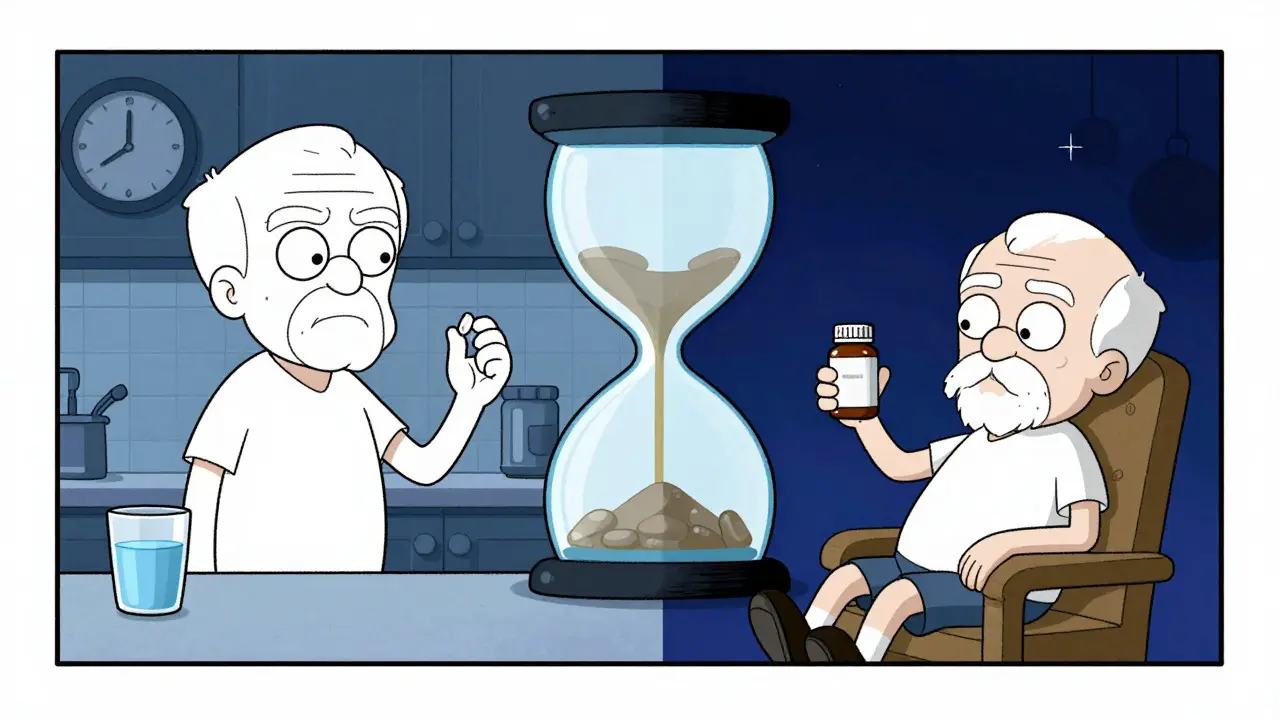
To understand why timing matters, you need to look at the chemistry. Bisphosphonates work by attaching to bone tissue and stopping cells called osteoclasts from eating away at your bones. However, when you swallow an oral tablet, it has to dissolve in your stomach and pass through your intestines to enter your bloodstream. This process is already inefficient. Under perfect conditions, only about 0.6% to 12% of an oral bisphosphonate dose actually makes it into your system.
Magnesium changes this equation drastically. Magnesium ions bind tightly to the phosphonate groups on the drug molecules. This process, known as chelation, creates an insoluble complex. Think of it like trying to drink water through a clogged straw. The drug is there, but it’s stuck. Studies show that taking magnesium at the same time as alendronate can reduce its absorption by 40% to 60%. For a patient relying on these meds to prevent hip or spine fractures, losing nearly half the dose is a serious risk.
The Critical Two-Hour Rule
So, how do you fix this? The gold standard advice from the FDA and major health organizations is strict separation. You must take your bisphosphonate and your magnesium at least two hours apart. This window is not arbitrary; it is based on how long it takes for your stomach to empty. Most supplements clear the stomach within one to two hours. By waiting two hours, you ensure the first substance has moved past the point where it can interfere with the second.
Here is the practical breakdown for daily dosing:
- Morning Protocol: Take your bisphosphonate first thing in the morning with a full glass of plain water. Stay upright for at least 30 minutes. Do not eat or drink anything else during this time.
- The Wait: After the 30-minute upright period, you can have your breakfast. Then, wait until at least two hours have passed since you took the pill before introducing any magnesium.
- Evening Alternative: If you prefer taking magnesium at night for sleep, that works too. Just ensure your last dose of the bisphosphonate was taken at least two hours prior.
Note that this rule applies specifically to oral bisphosphonates. If you receive Zoledronic Acid (Reclast) via IV infusion once a year, it bypasses your gut entirely, so the timing conflict does not exist for that specific administration.
Beyond Pills: Hidden Sources of Magnesium
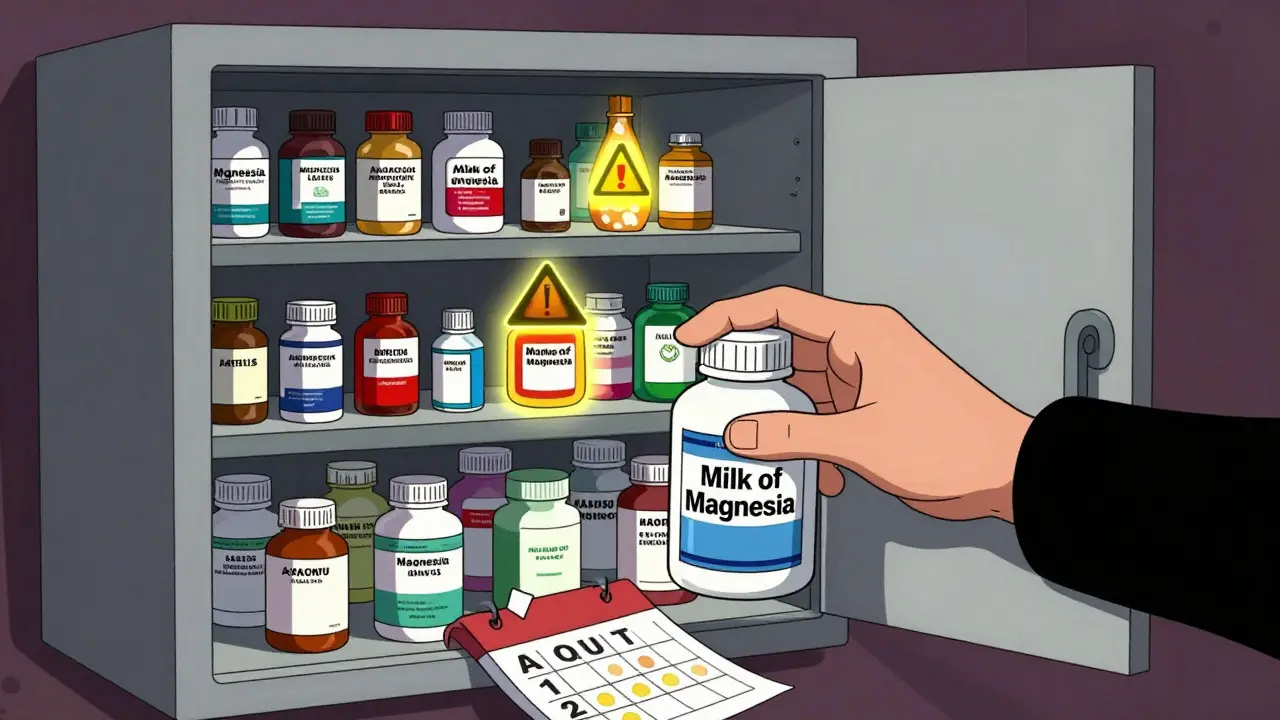
Many patients think the interaction only applies to dedicated magnesium capsules. That is a dangerous assumption. Magnesium hides in many common over-the-counter products. If you use these while taking oral bisphosphonates, the two-hour rule still applies.
| Product Type | Example Brand | Magnesium Content | Risk Level |
|---|---|---|---|
| Dedicated Supplement | Magnesium Glycinate/Oxide | 200-400 mg elemental | High |
| Laxative | Milk of Magnesia | 800 mg per 5 mL | Very High |
| Antacid | Maalox / Mylanta | Variable (often high) | High |
| Bottled Water | San Pellegrino | 51 mg/Liter | Low-Moderate |
For example, Milk of Magnesia contains a massive amount of magnesium hydroxide. If you take this for constipation at the same time as your Fosamax, you are essentially neutralizing your bone medication. Even antacids like Maalox can contain enough magnesium to cause significant binding issues. Always check the label. If "magnesium" appears in the active ingredients list, treat it like a supplement regarding timing.
Real-World Consequences of Poor Timing
This isn't just theoretical. Patient experiences highlight the real stakes. In online communities for osteoporosis support, users frequently report frustration after discovering they had been taking their supplements simultaneously for months. One user described breaking a wrist after six months of co-administration, only to find zero improvement on their bone density scan. Another realized their "antacid" was the culprit behind their stalled treatment progress.
Data backs up these anecdotes. A survey by the National Osteoporosis Foundation found that 37% of patients taking both medications were unaware of the interaction. Of those, 22% admitted to taking them at the same time. The consequence is often subtle: bone mineral density doesn't improve as expected, or it starts to decline again. Dr. Felicia Cosman, a leading expert in the field, notes that non-adherence to dosing protocols is the single largest preventable cause of treatment failure. It’s not that the drug doesn’t work; it’s that it never reaches your bones in sufficient quantities.
Strategies for Perfect Adherence
Knowing the rule is easy; following it every day is hard, especially if you manage multiple medications. Here are proven strategies to help you stay on track:
- Use a Visual Timer: Set a phone alarm labeled "MAGNESIUM OK" for exactly two hours after your morning dose. Relying on memory is risky.
- Separate Your Pill Organizer: Standard AM/PM boxes aren't enough. Use a 4-compartment organizer or separate containers for your bisphosphonate and your magnesium to force a physical separation.
- Check All Labels: Review your entire medicine cabinet. Identify every product containing magnesium, calcium, iron, or zinc, as all these minerals can interfere with bisphosphonate absorption.
- Talk to Your Pharmacist: They can create a personalized schedule that accounts for your specific medications and meal times. Ask them to explain the "why" so you remember the importance.
Recent data shows that patients who receive written instructions and visual aids have an 89% adherence rate, compared to only 43% for those who rely on verbal counseling alone. Don't hesitate to ask for a printed schedule or a "timing wheel" if your provider offers them.
Frequently Asked Questions
Can I take magnesium citrate with bisphosphonates?
Yes, but you must follow the two-hour separation rule. The form of magnesium (citrate, oxide, glycinate) does not change the fact that the magnesium ion binds to the drug. As long as you space them out by at least two hours, it is safe.
Does food affect the timing between magnesium and Fosamax?
Food affects how quickly your stomach empties, which is why the two-hour buffer is recommended. Since you should wait 30 minutes after taking Fosamax before eating, the clock for the magnesium usually starts after your meal. To be safe, count two hours from the moment you swallowed the bisphosphonate, not from when you finished eating.
What happens if I accidentally take them together?
One accidental instance likely won't cause permanent harm, but it reduces the effectiveness of that day's dose. Try to correct the timing the next day. If you notice a pattern of frequent mistakes, talk to your doctor about adjusting your schedule or switching to an IV formulation if appropriate.
Do natural sources of magnesium like spinach require spacing?
Generally, no. The amount of magnesium in food is much lower than in supplements or laxatives. While some experts suggest caution, clinical guidelines primarily focus on supplemental doses (200mg+). Eating a normal diet with leafy greens is unlikely to cause significant chelation, but if you consume very large amounts of magnesium-rich foods, a small gap is a good precaution.
Is this interaction different for women versus men?
No. The chemical mechanism of chelation is identical regardless of gender. The timing rules apply to anyone taking oral bisphosphonates, whether male or female. The higher prevalence of osteoporosis in postmenopausal women simply means more women encounter this specific interaction scenario.





Amy Zalkin
August 28, 2026 AT 01:18ok so i just realized my morning routine is basically a chemical war zone in my tummy
i take my fosamax with water then immediately grab my magnesium gummies because i forget the timing thing
turns out im probably feeding my bones nothing but empty promises
its wild how easy it is to mess this up when you are trying to be healthy
i feel like we should have a giant neon sign on every pill bottle that says WAIT TWO HOURS
or maybe just make the pills taste bad if you take them together lol
anyway thanks for the wake up call
i am setting an alarm right now before i forget again
Alex Brown
August 28, 2026 AT 09:26This highlights a fascinating aspect of pharmacokinetics: the fragility of oral bioavailability. We often assume that if a drug is FDA-approved, the delivery mechanism is robust, yet here we see that a simple cation can render a life-saving agent inert. It is a reminder that adherence is not just about taking the pill, but respecting the physiological timeline. The two-hour window is not arbitrary; it is a negotiation with gastric motility. I find it encouraging that such a simple behavioral adjustment-separation of intake-can yield such profound clinical outcomes. It underscores the power of informed patient agency.
Kaylyn Mello
August 28, 2026 AT 10:07i use milk of magnesia for constipation and never thought twice about it until now
my mom takes risedronate and i always handed her the laxative at the same time thinking it would help her stomach
turns out i was probably undoing all her bone work
so glad i read this before our next visit
joyce Hogewoning
August 30, 2026 AT 06:33You know what really gets me about these medical guidelines is how they seem to assume everyone has the cognitive bandwidth to track multiple chemical interactions while also dealing with the sheer terror of having osteoporosis in the first place which is already enough to keep you up at night worrying about whether your hip will snap if you sneeze too hard let alone remembering that you need to wait two hours after swallowing a bitter little white pill before you can safely consume a mineral that helps you sleep better without turning your entire digestive tract into a chemistry set experiment that goes wrong in ways only a board-certified gastroenterologist could fully appreciate in their spare time between saving lives and writing grant proposals for research that might one day lead to a cure for something else entirely but for now we are stuck with this fragile dance of molecules in our guts that determines whether our skeletons hold together or crumble like stale crackers under the weight of our own existence and honestly who has the energy to keep all of that straight while also trying to maintain a semblance of a normal social life where you don't end up looking at your watch every thirty seconds wondering if it is safe to eat your yogurt yet or if you should just throw it out and starve yourself to be sure you are doing everything perfectly by the book because that is the only way to avoid the nightmare scenario where you spend thousands of dollars on medication only to find out later that you were effectively taking expensive chalk instead of actual medicine and the irony of that situation is just too much for any reasonable person to bear without wanting to scream into a pillow until the sun comes up and burns away the last remnants of your sanity
Thhomas Fox
August 30, 2026 AT 21:32Great breakdown. The visual timer tip is gold. I switched to a 4-compartment organizer and my adherence went from chaotic to consistent. Small change, big impact.
Owen John
September 1, 2026 AT 09:28Typical. Big Pharma wants you to think the problem is the supplement, not the fact that oral bisphosphonates are barely absorbed to begin with. If you look at the data, the IV route is far superior, yet they push the daily pill because it keeps you dependent on their supply chain. The 'two-hour rule' is just a band-aid on a systemic failure of modern medicine's reliance on gut absorption for critical drugs. Wake up people. The real enemy isn't magnesium, it's the inefficiency of the delivery system they chose to profit from.
Maneesh kv
September 1, 2026 AT 17:36this is so true bro 🤯 i was taking my mag with my meds and wonder why my dxa scan didnt improve 😤
thanks for the info man! 🔥👊
John Park
September 2, 2026 AT 11:15Let's be real, most patients are just following instructions blindly because they trust the doctor over their own common sense. The idea that you need a 'timing wheel' suggests the system is broken. Why not just make the drug stable? But no, we need to play games with our stomachs. It's a testament to how complex and confusing modern healthcare has become for the average person. Just another reason to question if we're getting the best possible care or just the most bureaucratic.
Kathleen McGrath
September 3, 2026 AT 11:28I love this post! I always wondered why my bones felt so brittle even though I was taking my meds. Turns out it was the antacid I took for heartburn. Simple fix, huge difference. Thanks for sharing!
Lemuel Gomez
September 5, 2026 AT 03:25Agreed with the previous comment about the IV option; however, for many, cost and access remain barriers. Still, the advice on label checking is crucial. I've found that simply separating my pill bottles physically helps me remember the sequence. It’s a small habit, but it works well for me.