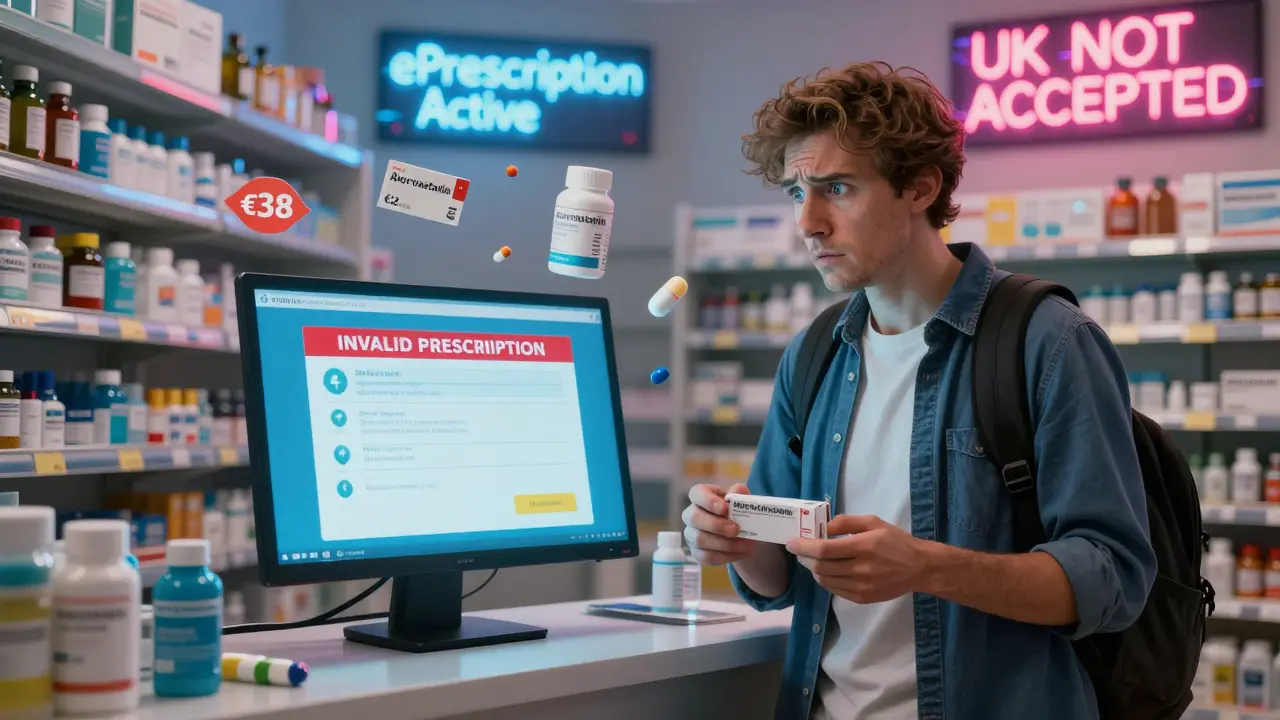
Imagine you’re on vacation in Spain and your blood pressure medication runs out. You walk into a local pharmacy with your prescription, but they refuse to fill it. Why? Because your prescription was issued in the UK, and Spain’s system doesn’t recognize it - even though you’re an EU citizen. This isn’t a rare scenario. It’s one of the everyday frustrations people face when trying to access generic drugs across borders in the European Union.
How Cross-Border Pharmacy Services Actually Work
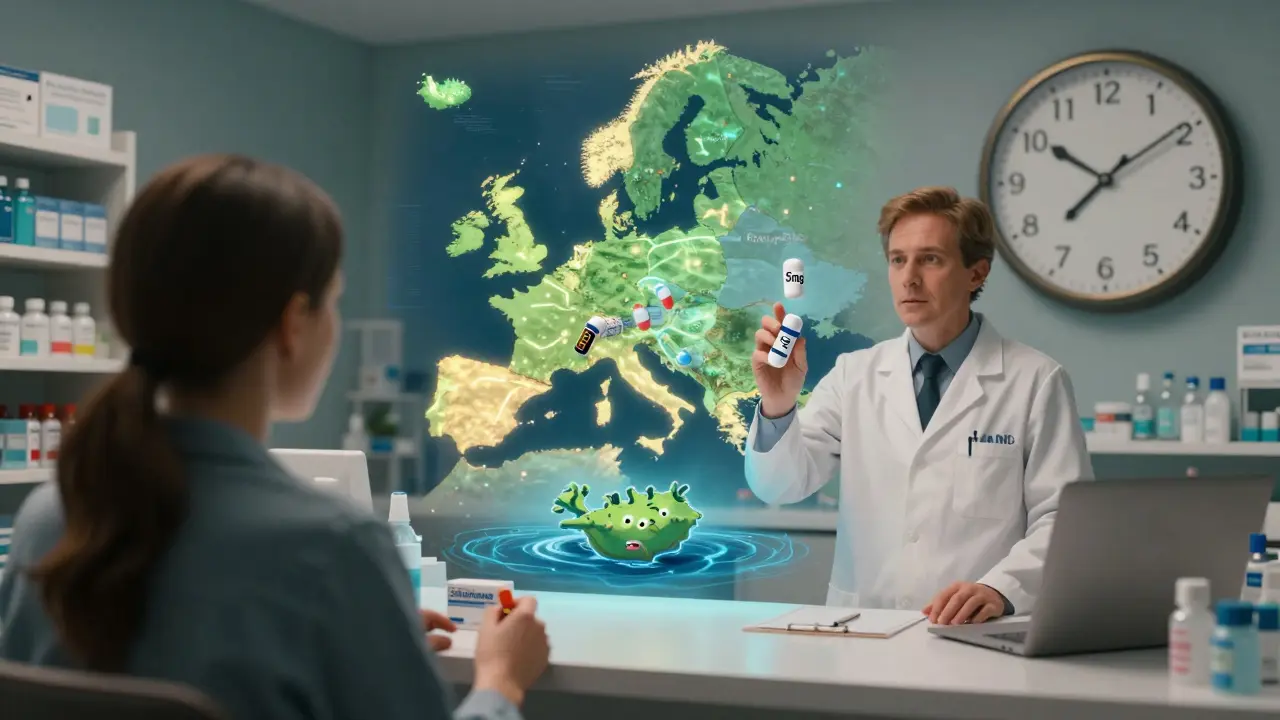
The EU has built a digital system called the eHealth Digital Service Infrastructure (a secure network connecting national health systems across the EU) to let people get their medicines in any member country. This isn’t theory - it’s live. Right now, 27 EU and EEA countries support ePrescription and eDispensation services. That means if you’re prescribed a generic drug in Germany, you can pick it up in Portugal, France, or even Iceland - as long as both countries are connected to the system.The process is simple: your doctor sends your prescription electronically to a national portal. You log in with your ID, authorize the pharmacy abroad to access it, and the system sends the data securely. No paper. No fax. No waiting. The pharmacy sees your name, dosage, and medical history - including allergies and current meds - through something called a Patient Summary (a digital document containing key health info translated into the local language).
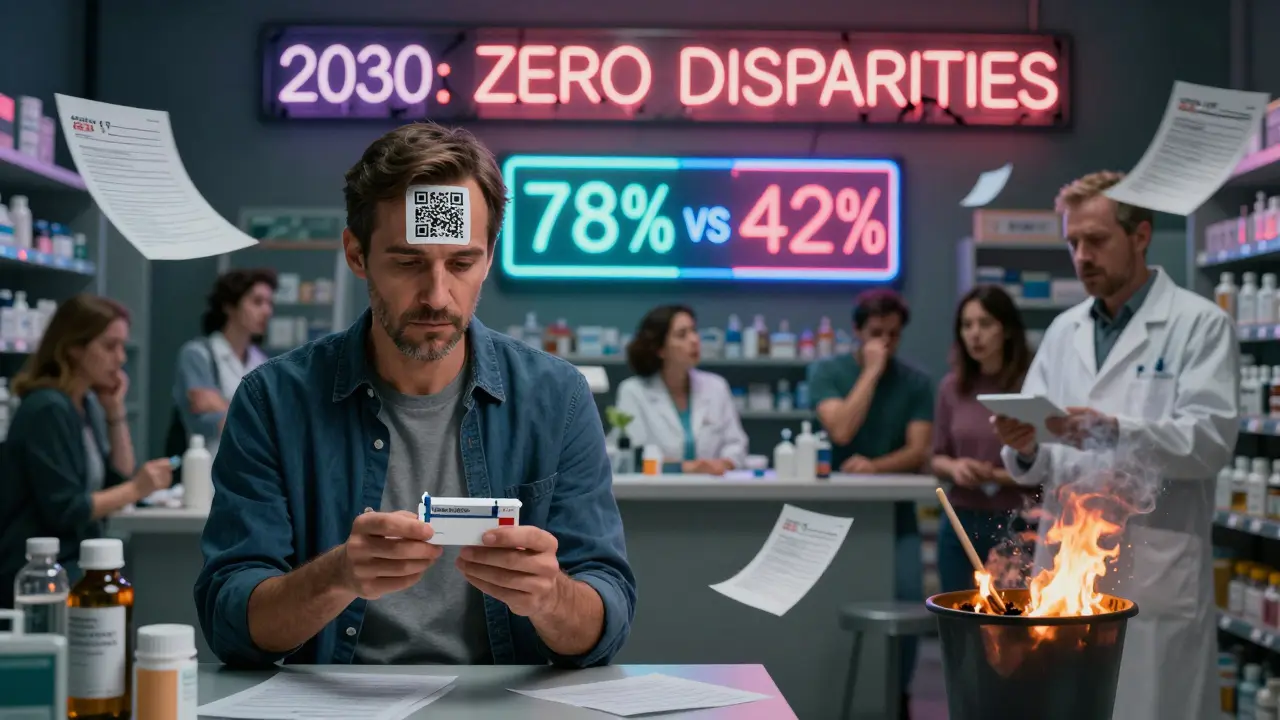
But here’s the catch: not every country is on the same page. Only 8 EU nations have clear rules for how pharmacists should handle e-pharmacy prescriptions. That creates a patchwork. In some places, pharmacists are trained and equipped. In others, they’re guessing. A 2025 study found that 78% of patients in border regions like the Netherlands-Germany frontier had no trouble getting their meds abroad. But in non-border areas, that number dropped to 42%.
What’s Changing in 2025? The New Rules
This year brought major shifts. Italy replaced the old paper "bollino" sticker on prescriptions with GS1 DataMatrix codes (scannable barcodes that link to digital prescription records) as of February 9, 2025. Germany, France, and Austria now allow full online prescription delivery. Meanwhile, the Critical Medicines Act (a regulation requiring drugmakers to report supply and demand data in real time) kicked in, forcing manufacturers to alert authorities when a generic drug might run short.The European Shortages Medicines Platform (a centralized system tracking medicine availability across the EU) is now live. It’s designed to stop situations where one country has a surplus while another has none. But it only works if all countries report accurately - and not all do.
Even Iceland, which wasn’t part of the EU system until now, is scheduled to fully connect by August 31, 2025. That means patients from Norway or Sweden traveling to Reykjavik will soon be able to refill prescriptions the same way they would in Stockholm.
Where It Falls Apart: The UK Factor
The UK’s exit from the EU created a blind spot. Even though the UK and EU still share some health agreements, prescriptions from UK telehealth services are explicitly invalid in Ireland and several other EU countries. Pharmacists in Dublin must check not just the prescription, but also how the doctor consulted the patient - was it in person? Via video? Through a UK-based app? If it doesn’t meet their local rules, they can’t fill it.That’s not just bureaucracy. Real people are affected. One Reddit user from Belfast reported being denied a month’s supply of generic metformin in Galway because the prescription came from a UK online clinic. "I had to drive back home and pay £40 for a new one," they wrote. "I’m diabetic. This isn’t a convenience issue - it’s a health risk."
Meanwhile, Irish pharmacists are required to verify prescriber registration and contact details - something most EU pharmacists don’t have to do for their own citizens. This creates delays, confusion, and sometimes dangerous gaps in care.
Why Patients Still Don’t Know About This
You’d think this system would be common knowledge. But a September 2025 Eurobarometer survey found that only 38% of EU citizens know they can get their meds across borders. That number jumps to 72% in regions with established cross-border health networks - like southern Sweden and northern Denmark, or the French-Belgian border.Why the gap? For starters, national health websites rarely mention it. Pharmacies don’t advertise it. Doctors don’t bring it up during appointments. And when patients do ask, pharmacists often give inconsistent answers. A 2025 EAEP study found that pharmacists need 40 hours of training just to handle cross-border prescriptions properly. Many haven’t had it.
Language is another barrier. Even with Patient Summaries, some medications have different brand names or dosages across countries. A patient from Poland might get a 5mg tablet in Germany, but their home pharmacy only stocks 10mg. Without clear guidance, they’re left guessing.
The Real Impact: Safety, Cost, and Access
This isn’t just about convenience. It’s about saving lives. Studies show that when patients can access their meds across borders, medication errors drop by 22% and chronic disease compliance improves by 17%. For people with conditions like diabetes, epilepsy, or heart disease, that’s huge.Cost-wise, generic drugs are often cheaper abroad. A 30-day supply of atorvastatin (a common cholesterol drug) costs €12 in Poland but €38 in the UK. A Belgian patient with stable health can legally travel to Poland, fill their prescription, and save over 70%. That’s not tax evasion - it’s legal under EU law.
But here’s the twist: reimbursement rules vary wildly. Some countries cover the cost if you buy abroad. Others don’t. And if you’re on a fixed income - say, a retiree living in rural Romania - you might not have the means to travel just to save money on meds.
What’s Next? The Road to 2030
The EU’s long-term goal is clear: by 2030, 35% fewer medication access disparities across member states. That means no one should have to choose between their health and their wallet because of where they live.To get there, three things must happen:
- All 27 countries must fully implement ePrescription and Patient Summary services with consistent training for pharmacists.
- UK prescriptions need a formal recognition pathway - or a separate, secure exchange system.
- Reimbursement rules must be harmonized so patients aren’t penalized for using cheaper options.
By 2027, the system will expand to include lab results, hospital discharge reports, and even medical images. Imagine being in a car accident in Austria and having your entire health history - including allergies and past surgeries - instantly available to paramedics in German. That’s the future.
But progress won’t happen on its own. It needs pressure - from patients, pharmacists, and policymakers. Right now, the system works best for those who know it exists. The goal should be for it to work for everyone.
Can I get my generic drug from another EU country if I’m traveling?
Yes, if your country and the destination country are both connected to the eHealth Digital Service Infrastructure. You need an electronic prescription issued in your home country, and you must authorize the foreign pharmacy to access it through your national health portal. Most EU countries now support this - but check your country’s health website first.
Are UK prescriptions valid in EU countries?
No, not automatically. EU countries like Ireland, France, and Spain do not recognize prescriptions from UK-based telehealth services. Pharmacists must verify the prescriber’s location and method of consultation. If it’s from a UK online clinic, they are legally required to refuse it. Always carry a paper prescription or get a new one locally.
Why do some pharmacies refuse to fill my EU ePrescription?
It could be due to lack of training, outdated systems, or unclear local rules. Only 8 EU countries have detailed regulations for pharmacists handling cross-border prescriptions. Many pharmacies simply don’t know how to process them. Ask for a supervisor or contact your national contact point for digital health for assistance.
Is it cheaper to buy generic drugs in another EU country?
Often, yes. Generic versions of the same drug can cost 30-70% less in countries like Poland, Hungary, or Lithuania. You’re allowed to bring back a personal supply for your own use. Just make sure the prescription is valid and you follow import limits (usually a 3-month supply).
What if I need a drug that’s not available in the country I’m visiting?
You may need to contact your home country’s health authority or a local doctor to get an alternative. Some medications have different brand names or formulations across borders. The Patient Summary should help, but if it doesn’t list alternatives, you might need a new prescription. Always carry a list of your meds and their generic names.
How do I know if my country is part of the ePrescription network?
Check your national health ministry’s website or the European Commission’s eHealth Digital Service Infrastructure page. All 27 EU and EEA countries are connected as of late 2025. But some, like Malta and Cyprus, have slower adoption. If you’re unsure, call your pharmacy or local health office before traveling.

Mandy Vodak-Marotta
February 4, 2026 AT 01:58Okay but real talk - I had to get my dad’s blood pressure med refill while we were in Portugal last year, and it was a nightmare. We showed the pharmacist his e-prescription, his EU health card, even his passport. He just shrugged and said, ‘Sorry, we don’t handle foreign digital scripts.’ We ended up driving 40 minutes to a bigger pharmacy in Coimbra where someone actually knew what the system was. And that’s in a country that’s supposed to be fully connected. It’s not just bureaucracy - it’s apathy. People are dying because pharmacists don’t get trained. Not everyone can afford to drive across borders for a pill.
Also, why isn’t this on every national health website? Why do doctors never mention it? My mom’s a nurse and she didn’t even know this existed until I told her. That’s insane.
And don’t even get me started on the brand name chaos. My dad’s on amlodipine - in Germany it’s Norvasc, in Poland it’s just ‘amlodipine 10mg’ with no brand. He panicked for two days thinking he got the wrong drug. We need standardized labeling across the EU. Like, seriously. People are scared to take meds they can’t recognize.
I’m not even mad anymore. Just exhausted. This should be basic. It’s 2025. We have apps that deliver tacos in 12 minutes. Why can’t we deliver life-saving meds across a border without a PhD in health policy?
Amit Jain
February 5, 2026 AT 20:25As someone who works in pharmacy tech in Delhi, I’ve seen how digital systems work in developing countries - and the EU’s system is actually ahead of most of the world. The real issue isn’t the tech - it’s implementation. A lot of rural pharmacies in Spain, Italy, or Greece still use paper logs. They scan the barcode, but the system doesn’t sync. So they panic and say ‘no.’ It’s not malice - it’s lack of infrastructure.
Also, the 40-hour training requirement? That’s not enough. Pharmacists need 80 hours with hands-on simulations. I’ve trained staff on digital prescriptions in India - it takes weeks to build confidence. Most EU pharmacists get a 2-hour webinar and are expected to handle cross-border cases. That’s why patients get turned away.
And yes - the UK issue is a mess. But it’s fixable. Just link the NHS e-prescription system to the EU network. Simple. No political drama. Just tech. Why hasn’t this happened yet?
Sherman Lee
February 7, 2026 AT 12:22Okay, so let me get this straight - the EU is spending billions on digital prescriptions… while China is building AI pharmacies that deliver meds via drone? 🤡
And you’re telling me the solution is ‘more training’? Bro. We’re in 2025. Why not just let people order meds online from any EU country and ship them? No bureaucracy. No pharmacy staff guessing. Just Amazon for pills.
Also - who decided ‘Patient Summary’ was a good name? Sounds like a middle school health project. Call it ‘HealthPass.’ Simple. Cool. Like a passport. We’re not in the 1990s anymore.
And the UK thing? LOL. Of course they’re not recognized. The EU is scared of Britain. It’s like they’re still mad about Brexit. This isn’t policy - it’s pettiness. 🤦♂️
Meanwhile, in America, we just text our doctor and get a script emailed to CVS. No drama. No ‘authorization.’ Just… work. Why can’t Europe be like that?
Also - if Poland sells atorvastatin for €12, why isn’t the EU buying it in bulk? Are they all just sitting on their hands waiting for someone to ‘harmonize reimbursement’? Someone wake up. This is a supply chain crisis. Not a paperwork puzzle.
Meenal Khurana
February 9, 2026 AT 05:13Simple: if the system works, use it. If not, ask for help. Many pharmacists want to help - they just need clear instructions.
Joy Johnston
February 9, 2026 AT 23:04I work in a pharmacy in rural Vermont, and we’ve been doing cross-border prescription refills for Canadian patients for years - same system, same tech. The EU just needs to standardize training and make it mandatory. No exceptions. If you’re a licensed pharmacist in the EU, you must be able to process e-prescriptions from other member states. Period.
Also - the UK issue is solvable. The NHS has a secure API. The EU has a secure API. They just need to connect them. No political negotiation needed. Just IT departments talking. Why hasn’t that happened? Because no one’s pushing for it. Patients aren’t organized. Pharmacists aren’t lobbying. Politicians don’t care until someone dies.
And the brand name confusion? That’s easy. Every drug should have one EU-wide generic name, printed in bold on every package. No exceptions. No ‘Amlodipine’ in one country, ‘Amlodipin’ in another. Just one name. One standard. One system.
This isn’t rocket science. It’s logistics. And logistics can be fixed - if we stop treating it like a political issue and start treating it like a public health emergency.
Justin Fauth
February 10, 2026 AT 04:51Let me get this straight - we’re spending EU tax dollars to let people from Poland buy cheaper meds in Hungary and bring them back? And you’re calling that ‘access’? That’s just tax avoidance dressed up as healthcare. Why don’t we just let Americans fly to Mexico for insulin? Oh wait - we do. But we don’t call it ‘EU progress.’
This isn’t about health. It’s about letting people game the system. And now we’re supposed to build a whole digital infrastructure to make it easier? No. No. No.
Fix your own country. If you can’t afford your meds in Romania, that’s a Romanian problem. Not an EU problem. Why should German taxpayers fund Polish drug discounts? This is socialism with a side of free travel.
And don’t even get me started on Iceland. Why are we letting non-EU countries join? Next thing you know, Norway’s going to demand free healthcare for their tourists. This is a slippery slope. We need borders. We need control. This system is a joke.
Keith Harris
February 11, 2026 AT 12:54Oh wow. Another ‘EU is great’ love letter. Let me guess - you’ve never had to wait 3 hours in a pharmacy because the guy behind the counter doesn’t know what ‘ePrescription’ means? Let me tell you something: this whole system is a scam built on PowerPoint slides.
Here’s the truth: 80% of these ‘eHealth’ systems are just glorified PDFs with a fancy logo. I worked with a startup in Lisbon that built the backend for 3 countries. The code was written in 2018. It still runs on Windows XP. The ‘secure network’? It’s hosted on a server in a basement in Brussels with a sticky note that says ‘DO NOT UNPLUG.’
And the ‘Patient Summary’? I saw one. It had a typo. The patient’s allergy was listed as ‘peanuts’… but the system translated it to ‘pea nuts’ - like, the nut from a pea. The pharmacist laughed and gave him a bag of roasted peanuts. He ended up in the ER.
This isn’t innovation. It’s a digital version of ‘paperwork in triplicate.’ And now we’re going to expand it to hospital records? Are you kidding me? The next thing you know, a paramedic in Vienna will be reading a discharge summary written in 2007 French that says ‘patient has no history’ - when the patient has 12 surgeries.
Stop pretending this is progress. It’s a monument to bureaucratic vanity.
Kunal Kaushik
February 12, 2026 AT 19:55Bro, I just got my diabetes meds in Prague last month. My prescription was from India, but I used my EU digital ID. Worked like a charm. The pharmacist even gave me a free lollipop. 🍭
Point is - it works if you know how. Most people don’t because no one tells them. I posted a 5-minute TikTok on how to do it. Got 200k views. People are hungry for this info.
Also - the UK thing? Yeah, it’s dumb. But guess what? I know a guy in Belfast who got his meds in Dublin by walking into the pharmacy with his NHS letter + a selfie holding his prescription. They said ‘eh, close enough.’
Human beings adapt. Systems don’t. Let’s not over-engineer this. Just give people the tools. And stop talking about ‘harmonization.’ Just let it work.
Jesse Naidoo
February 13, 2026 AT 12:23Wait - so if I’m from the UK and I’m traveling to France, and I need my insulin, and my prescription came from a UK telehealth app - they’ll just say no? Even if I have a valid prescription, a valid ID, and a valid blood sugar log? That’s not policy. That’s cruelty.
What if I’m in a car crash? What if I’m alone? What if I can’t drive back? Do I just… die because a bureaucrat won’t check a box?
This isn’t about ‘rules.’ It’s about whether we value human life over paperwork. And right now, the answer is ‘no.’
I have a friend who had a stroke in Spain. She had her meds. She had her e-prescription. The pharmacy refused. She had to call her UK doctor, who called a Spanish doctor, who called the hospital, who called the pharmacy… 12 hours later, she got her meds. She was in the ER the whole time.
Who’s responsible for this? Who gets fired? No one. Because it’s ‘policy.’
I’m done. I’m not traveling in the EU anymore. I’m not trusting their system. And if you are - you’re either naive or lucky.
Wendy Lamb
February 15, 2026 AT 05:25Small tip: Always carry a printed copy of your prescription - even if you have the digital one. Pharmacies still rely on paper backups. And write the generic name on it in big letters. Saves time. Saves stress.
Rachel Kipps
February 15, 2026 AT 19:19I’ve been trying to get my thyroid med refilled in Italy for 3 weeks now. I’ve emailed my doctor, the EU health portal, the Italian consulate, and 3 different pharmacies. One said ‘yes’ - then said ‘no’ the next day. Another said ‘ask the pharmacist.’ The pharmacist said ‘ask the doctor.’ I’m exhausted. I’m not a bureaucrat. I’m a patient. Why does this have to be so hard? I just want to live.
Prajwal Manjunath Shanthappa
February 16, 2026 AT 17:04Let’s be clear: this isn’t a ‘healthcare access’ issue - it’s a symptom of the EU’s existential crisis. The eHealth infrastructure is a performative gesture - a digital placebo to convince citizens that integration is working. Meanwhile, the real issues - wage stagnation, pharmaceutical monopolies, pension collapses - are left untouched. We’re being distracted by QR codes while our social fabric disintegrates.
And don’t get me started on ‘reimbursement harmonization.’ That’s code for ‘let’s force poorer nations to subsidize the wealthier ones.’ Poland isn’t selling atorvastatin for €12 because it’s ‘cheap’ - it’s because they’ve been forced into a race-to-the-bottom labor market. You think that’s ethical? You think that’s justice?
This system doesn’t empower patients - it commodifies them. And the EU’s solution? More digital paperwork. More bureaucracy. More… EU.
Lorena Druetta
February 16, 2026 AT 20:34I just want to say - thank you for writing this. As someone whose mother is on a life-sustaining medication and who lives near the Canadian border, I’ve seen how fragile access can be. This system isn’t perfect - but it’s the best we have. And it’s worth fighting for.
I’ve called my MEP. I’ve written to my local pharmacy. I’ve shared this post with 12 friends. We need more people like you - not just angry, but engaged. Not just complaining, but connecting.
This isn’t about politics. It’s about people. And if we keep showing up - if we keep asking - if we keep sharing our stories - then maybe, just maybe, this system will work for everyone. Not just the ones who know how to use it.
Thank you for not giving up.
Amit Jain
February 18, 2026 AT 00:17Wendy Lamb nailed it. Always carry a printed copy. Also, write the generic name in bold. And if a pharmacy refuses, ask for the ‘National Contact Point for eHealth.’ They’re required by law to help you. I’ve done it - it works. You’re not being difficult. You’re exercising your right.