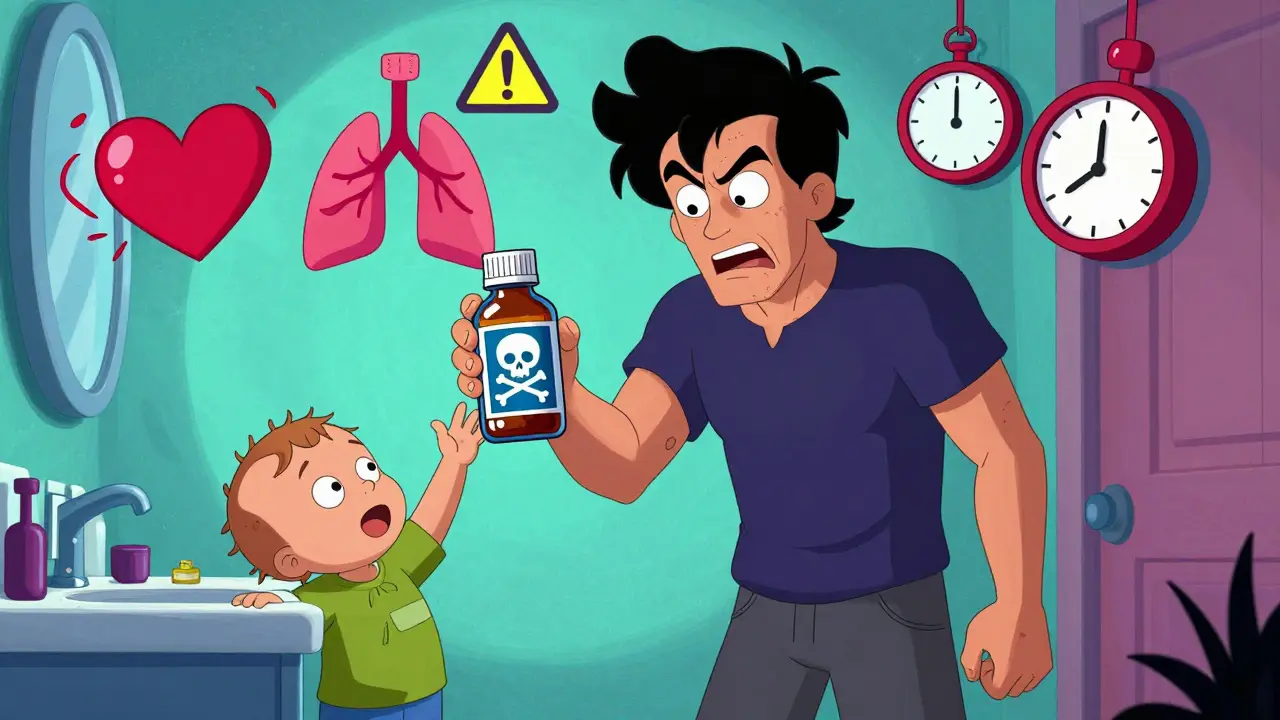
Every winter, parents reach for the medicine cabinet when their child starts coughing, sniffles, or can’t sleep. It’s natural to want to help. But here’s the hard truth: OTC cold medicine is not safe for young children - and giving it to them can be dangerous.
Why OTC Cold Medicine Isn’t Safe for Kids Under 4
The U.S. Food and Drug Administration (FDA) has been clear since 2008: don’t give over-the-counter cough and cold medicines to children under 4. That’s not a suggestion. It’s a safety rule based on real harm.
These medicines often contain a mix of ingredients - antihistamines like diphenhydramine, decongestants like phenylephrine, cough suppressants like dextromethorphan, and expectorants like guaifenesin. None of them have been proven to work well in young kids. But they’ve been linked to serious side effects: seizures, fast heart rates, trouble breathing, coma, and even death.
A 2012 study found that 5.2% of all pediatric drug-related emergency visits were from OTC cold medicines. Between 2004 and 2015, over 1,500 children under age 2 were hospitalized after taking them. In 90% of those cases, the child got into the medicine on their own. That’s not a mistake - it’s a hazard.
What About Kids Ages 4 to 6?
The label says “do not use under 4.” But some bottles still say “for ages 4-6.” That’s misleading.
Manufacturers updated labels after pressure from the FDA and the American Academy of Pediatrics (AAP). But many parents still think “if it’s on the shelf, it’s okay.” It’s not.
There’s still no solid proof these medicines help kids under 6. The FDA reviewed every study submitted by drug companies - and found none showed real benefit. Meanwhile, the risk stays the same. Kids this age are still small. Their bodies process drugs differently. A teaspoon too much can turn a stuffy nose into an emergency room visit.
One study showed that 23-37% of dosing errors happen because parents use age-based labels instead of weight. A 3-year-old weighing 25 pounds gets the same dose as a 3-year-old weighing 38 pounds. That’s like giving two people the same size coat - one fits, the other chokes.
What About Kids 7 and Older?
Some doctors say dextromethorphan might help with cough in kids 6-11. But even that’s debated.
The American Academy of Family Physicians gives OTC cold medicines a “D” rating for kids under 6 - meaning the harm outweighs any tiny benefit. For older kids, the rating is “C” - possible benefit, but weak evidence.
Parents report better sleep after giving cough syrup to a 7-year-old. But is that the medicine working - or just the placebo effect? Or maybe the child was getting better on its own? Colds last 7-10 days. No medicine changes that.
And here’s the catch: many of these products are multi-ingredient. One bottle might have cough suppressant, decongestant, and antihistamine. That’s three ways to overdose. A 2020 study found 68% of dosing errors came from these combo products. If your child is already taking acetaminophen for fever, adding a cold medicine with the same ingredient can lead to liver damage.
What Parents Are Actually Doing
Despite all the warnings, a 2021 survey found 38% of parents still give OTC cold medicine to kids under 4. Why? Many say their doctor told them to. But only 17% of those parents had actually talked to a doctor.
On parenting forums like Reddit, parents describe desperate nights: “My 2-year-old couldn’t breathe. I gave him Robitussin because I didn’t know what else to do.”
That’s not negligence - it’s lack of better options. Parents aren’t ignoring warnings. They’re stuck between a sick child and no real solution.
What You Can Do Instead
You don’t need medicine to help your child feel better. Here’s what actually works:
- Saline nasal drops: Put 2-3 drops in each nostril, then gently suction with a bulb syringe. This clears mucus without drugs. Works great for babies.
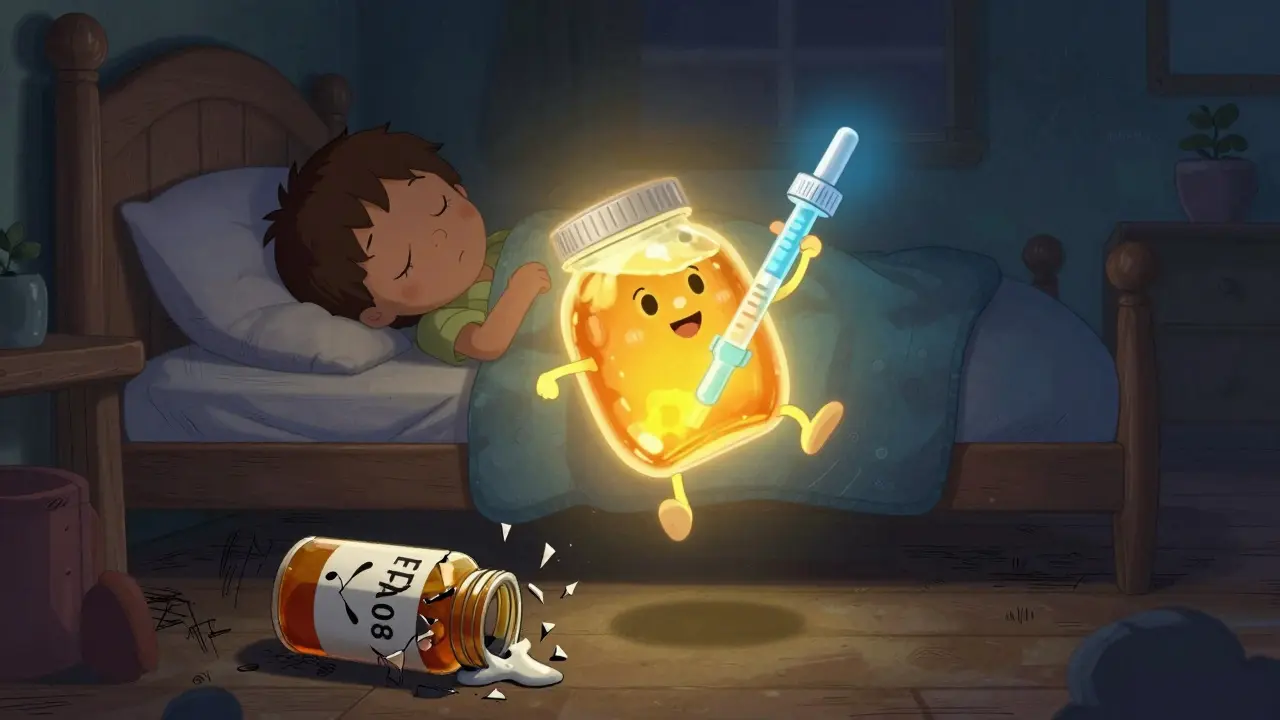
- Honey: For kids over 1 year old, give 2.5 mL (half a teaspoon) of honey before bed. A 2018 Cochrane review found it reduced cough frequency 36% more than placebo. Honey soothes the throat and helps sleep. Never give honey to babies under 1 - it can cause botulism.
- Hydration: Keep fluids flowing. Water, breast milk, or electrolyte solutions. Dehydration makes congestion worse.
- Humid air: Run a cool-mist humidifier in the room. Moist air loosens mucus. Keep humidity between 40-60%.
- Fever relief: If your child has a fever and is uncomfortable, use acetaminophen (10-15 mg/kg every 4-6 hours) or ibuprofen (5-10 mg/kg every 6-8 hours). Always dose by weight, not age.
These methods are safe, effective, and backed by the CDC and AAP. They don’t come in colorful bottles with cartoon characters. But they work.
How to Avoid Mistakes
If you ever do use a medicine - even something like children’s acetaminophen - follow these rules:
- Never use a kitchen spoon. Use the measuring cup or syringe that came with the bottle. Household spoons vary too much. Using one increases dosing errors by 47%.
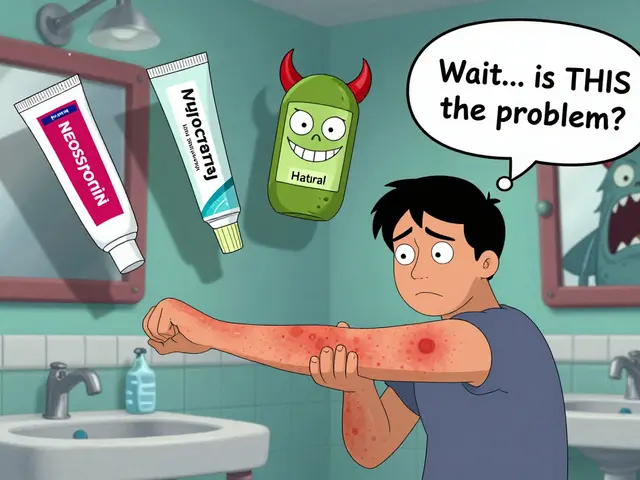
- Don’t mix medicines. Check every label. If two products have “acetaminophen” or “dextromethorphan,” don’t give both. You’ll overdose.
- Lock it up. Store all medicines out of reach and sight. Most exposures happen when kids grab them while unsupervised.
- Know the poison control number: 1-800-222-1222. Save it in your phone. If you’re unsure what to do, call. Don’t wait.
What’s Changing? What’s Next?
The market for pediatric OTC cold medicine has dropped from $1.2 billion in 2007 to $840 million in 2022. Why? Because parents are learning. And regulators are pushing harder.
The FDA is working on new rules expected by mid-2025. They’re considering mandatory clinical trials for all pediatric OTC drugs. The American Academy of Pediatrics wants age restrictions extended to under 6. Some European countries already banned these medicines for kids under 6.
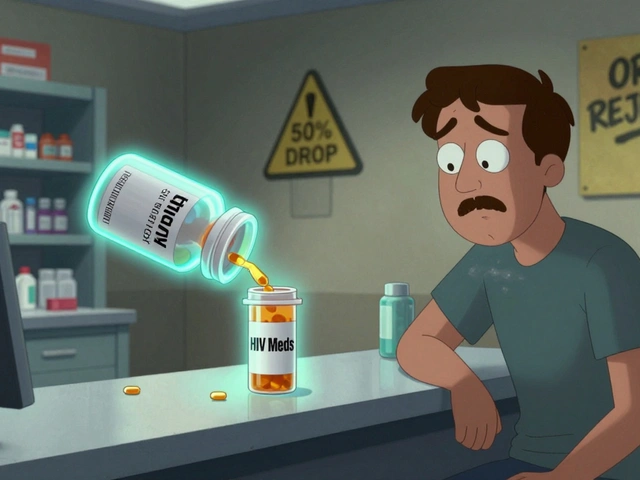
Research is also testing lower-dose versions for kids 2-4. Early results show a 50% dose reduction could cut adverse events without losing effectiveness. But until then, the safest choice is no medicine at all.
Meanwhile, the global market for saline nasal sprays is growing 9.3% a year. That’s not an accident. It’s a sign parents are choosing safer paths.
Final Takeaway
OTC cold medicine isn’t the quick fix parents think it is. For kids under 4, it’s a known danger. For kids under 12, it’s mostly useless.
Your child’s cold will run its course. Your job isn’t to cure it - it’s to keep them comfortable and safe. Saline drops, honey, fluids, and rest do more than any bottle of syrup ever could.
Don’t trust the label. Don’t trust the ads. Trust the science. And when in doubt - call your pediatrician or poison control. There’s no shame in asking for help. Your child’s safety is worth it.


Katherine Blumhardt
December 26, 2025 AT 03:09I gave my 3-year-old Robitussin last winter and she slept through the night for the first time in weeks 😭 I know it’s ‘not recommended’ but sometimes you just do what works. My pediatrician didn’t even blink when I asked.
sagar patel
December 27, 2025 AT 11:33OTC cold medicines are dangerous for children under 4. This is not debatable. The data is clear. The FDA has stated it. The AAP has reinforced it. Parents who ignore this are risking their child’s life.
Bailey Adkison
December 28, 2025 AT 22:13So let me get this straight - you’re saying honey works better than medicine but we can’t give it to babies under one because of botulism? That’s like saying a ladder is unsafe to climb but we’ll hand you a rope that might snap. The system is broken. Why is honey approved for toddlers but not for infants? Who decided that?
Michael Dillon
December 30, 2025 AT 09:31Let’s be real - if OTC cold meds were truly that dangerous, why are they still on shelves? Why aren’t they banned? Why do pharmacies still sell them like candy? Someone’s making money off this. And it’s not the parents. It’s Big Pharma. They know it doesn’t work. They just need you to believe it does.
Winni Victor
December 31, 2025 AT 11:09My kid’s cough sounded like a dying raccoon in a tin can. I gave him the syrup. He didn’t die. He slept. He smiled. I’m not a monster. I’m a mom who didn’t want to hear that noise for another 72 hours. And yes I used a kitchen spoon. Sue me.
Terry Free
January 1, 2026 AT 22:39Oh great. Another guilt-trip article from people who’ve never held a feverish 2-year-old at 3am while their partner is working the night shift. You want us to use saline drops? Cool. Do you know how hard it is to get a screaming toddler to sit still for that? Try it. Then come back and tell me what ‘evidence-based’ looks like at 2am with spit-up on your shirt.
Lindsay Hensel
January 3, 2026 AT 17:34Thank you for this comprehensive, compassionate, and scientifically grounded guide. The clarity with which you present the risks and alternatives is precisely what parents need. This is public health communication at its finest.
Sophie Stallkind
January 3, 2026 AT 21:45I appreciate the thoroughness of this post. The emphasis on weight-based dosing and the avoidance of multi-ingredient formulations is critical. Many parents are unaware that acetaminophen is present in over 200 OTC products. This information could save lives.
Linda B.
January 4, 2026 AT 02:51Did you know the FDA only banned these drugs for under 4 because of lobbying from pediatricians? The real reason they’re still sold is because the FDA is owned by pharmaceutical companies. They’re testing new formulations on kids right now. They call it ‘clinical trials.’ I call it human experimentation.
Christopher King
January 5, 2026 AT 10:18This whole thing feels like a control mechanism. Why do we need to be told what to do for our own children? Why is there no trust in parental instinct? We’ve been raising kids for millennia without FDA approval. Now we’re told honey is okay but not syrup? Who decided that honey is ‘natural’ and syrup is ‘chemical’? What if the syrup is just sugar and water with a little plant extract? Are we being manipulated into fear?
Justin James
January 6, 2026 AT 00:13Look, I’ve read every study cited here. The 2012 pediatric ER data? Flawed. It includes cases where kids ingested adult doses. The 2020 dosing error study? Most of those were from parents who didn’t read the label. The real problem isn’t the medicine - it’s the lack of education. If we taught parents how to read labels, how to measure properly, and how to avoid combinations, we wouldn’t need a ban. We’d need better parenting resources. But that’s too expensive for the system to fund, so instead we just outlaw everything and call it safety.
Zabihullah Saleh
January 7, 2026 AT 22:35There’s a quiet revolution happening. More parents are choosing humidifiers over syrup, saline over sedatives. It’s not flashy. It’s not profitable. But it’s real. We’re choosing presence over pills. And that’s not weakness - it’s wisdom. The body heals. We just have to let it.
Rick Kimberly
January 9, 2026 AT 04:08Could you clarify the difference between dextromethorphan and guaifenesin in terms of efficacy for children over 6? I’m curious if any recent meta-analyses have revisited this since 2020. Also, is there data on the long-term cognitive effects of repeated exposure to antihistamines in early childhood?
Oluwatosin Ayodele
January 11, 2026 AT 01:29In Nigeria, we use ginger and lemon tea for colds. No medicine needed. Children recover faster because we don’t poison them with chemicals. Your system is broken. You trust pills more than plants. That’s why your kids are sick all the time.
Mussin Machhour
January 11, 2026 AT 01:38Just want to say - thank you. I used to panic every time my son got a cold. Now I keep saline drops, honey, and a humidifier on my nightstand. No more midnight pharmacy runs. He sleeps. I sleep. We’re both better off. This post changed my parenting.