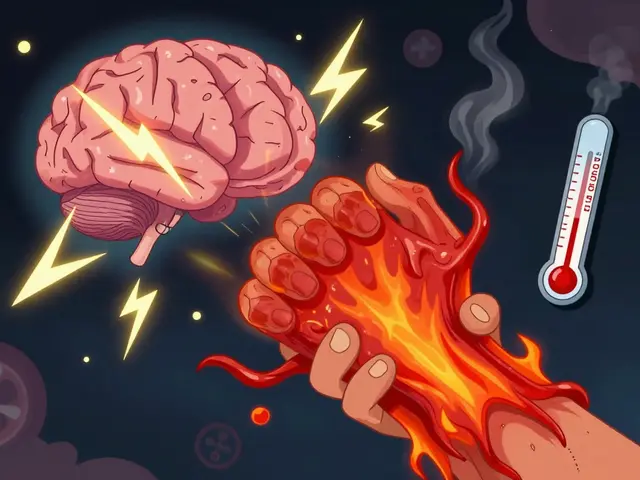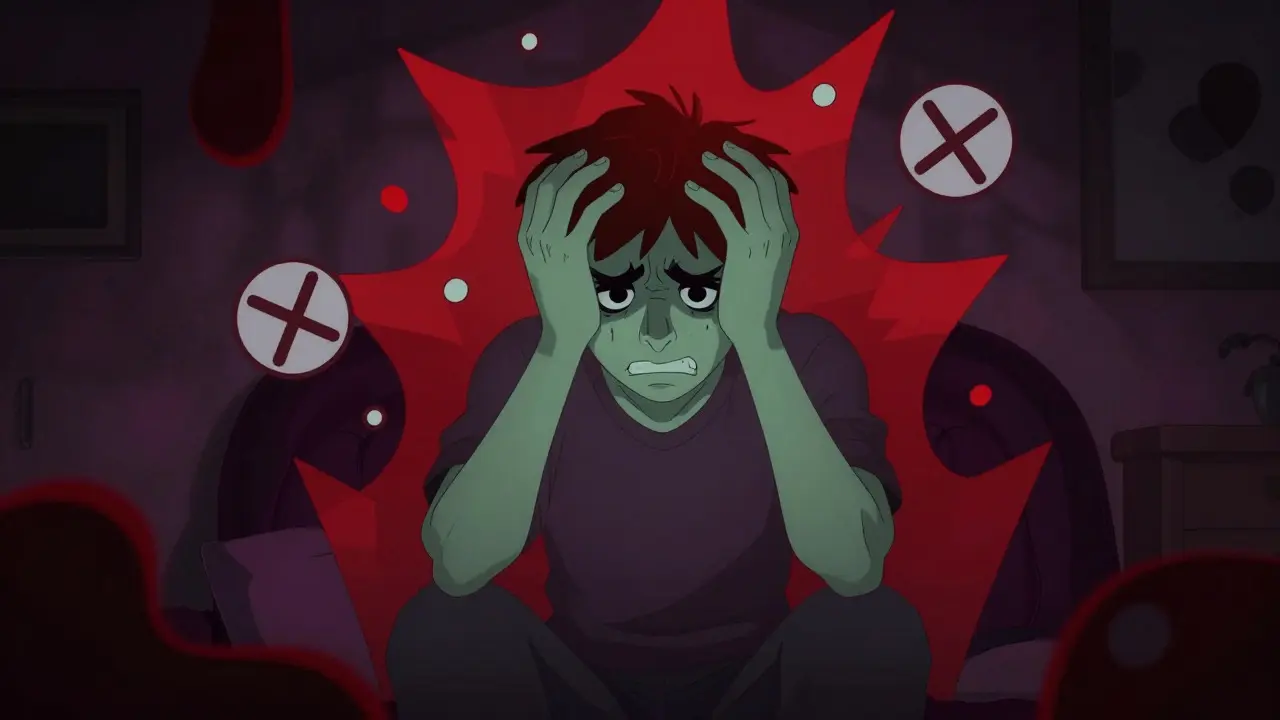
Imagine living with a headache that never truly goes away. You wake up in pain, you go to work in pain, and you try to sleep through the pain. For people with chronic migraine, this isn't just a bad day; it is their daily reality. If you have tried every pill on the shelf without success, you might be wondering if there is another way out. That is where Botox (scientifically known as onabotulinumtoxinA) comes into the picture.
Most people know Botox for smoothing wrinkles, but since 2010, it has been a powerful tool for preventing migraines. But does it work for everyone? Is it worth the injections? Let’s break down exactly who benefits, how the science works, and what you can realistically expect from the treatment.
Who Actually Qualifies for Botox Migraine Treatment?
Not every headache sufferer is a candidate for Botox. In fact, using it for the wrong type of migraine can be a waste of time and money. The U.S. Food and Drug Administration (FDA) approved onabotulinumtoxinA specifically for chronic migraine. Chronic migraine is defined as experiencing 15 or more headache days per month, with at least 8 of those days featuring migraine characteristics like throbbing pain, sensitivity to light or sound, or nausea.
If you have fewer than 15 headache days a month, you likely have episodic migraine. Clinical trials showed that Botox did not significantly help this group compared to a placebo. So, before you book an appointment, check your calendar. Are you hitting that 15-day threshold consistently?
Even if you qualify by frequency, insurance companies and doctors usually require one more step: proof that other treatments failed. Typically, you need to have tried and failed at least three conventional preventive medications-such as beta-blockers, anticonvulsants, or antidepressants-before Botox becomes a viable option. This ensures the treatment is reserved for those who truly need a non-oral alternative.
How Does Botox Stop a Migraine?
You might think Botox stops migraines by relaxing tight muscles in your neck and forehead. While muscle relaxation plays a small role, the real magic happens at a microscopic level inside your nerves.
Research published in the Headache Journal explains that Botox works by inhibiting a process called SNARE-mediated vesicle trafficking. In simpler terms, it cleaves a protein called SNAP-25. This action blocks the release of inflammatory and excitatory neurotransmitters from nerve endings. The biggest target here is a protein called CGRP (calcitonin gene-related peptide). CGRP is a key driver of migraine pain and inflammation. When a migraine hits, CGRP levels spike, causing blood vessels to expand and sending pain signals to the brain.
By blocking CGRP release, Botox essentially cuts off the fuel supply for the migraine attack. Dr. Stephen Silberstein, a leading headache expert, notes that while newer drugs (CGRP monoclonal antibodies) target different nerve fibers, Botox targets C-fibers. This unique mechanism means Botox can sometimes work synergistically with other treatments, offering relief when nothing else does.
The Procedure: What to Expect During Your Visit
If you decide to proceed, the treatment follows a strict protocol known as PREEMPT (Phase III Research Evaluating Migraine Prophylaxis Therapy). Here is how the session typically unfolds:
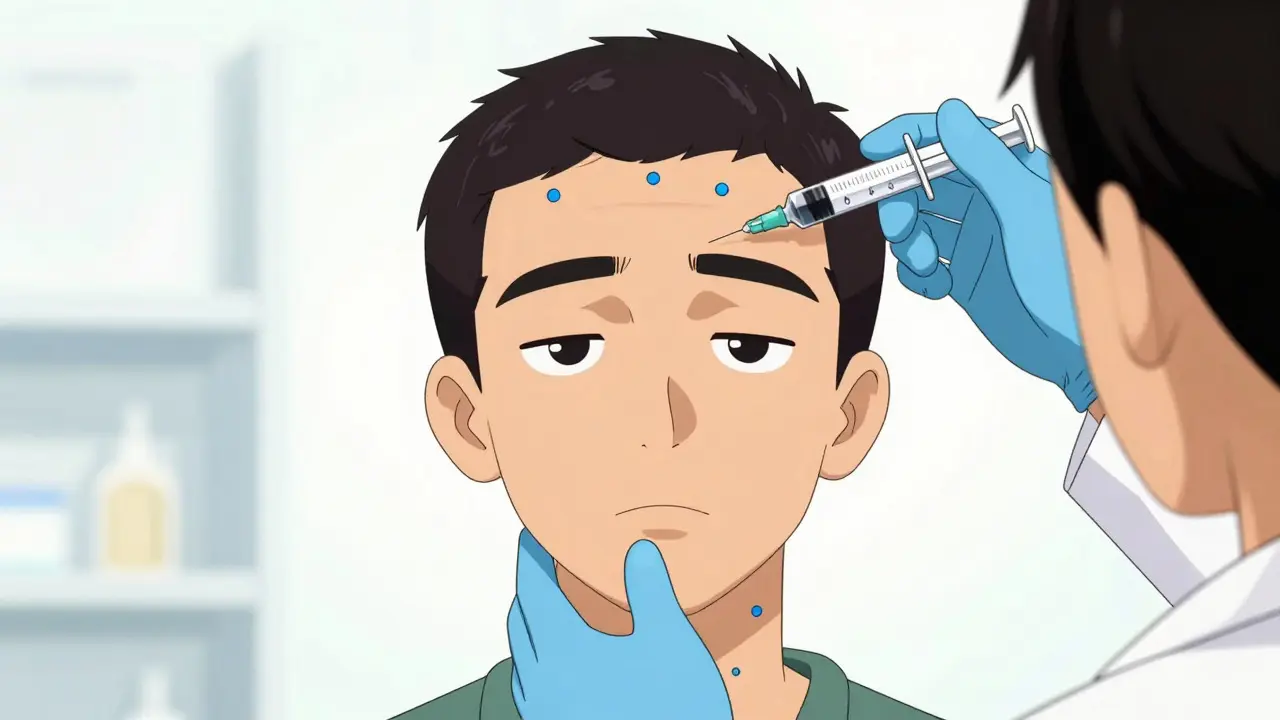
- The Setup: You will sit in a clinic chair. The doctor or nurse will mark specific injection sites on your head and neck. There are seven main areas targeted: the forehead, temples, back of the head, neck, and shoulders (trapezius).
- The Injections: You will receive between 31 and 39 tiny injections. Each injection uses a very small amount of medication (about 5 units), totaling around 155 to 195 units for the whole session.
- The Duration: The entire process takes about 15 minutes. Most patients describe the sensation as a series of quick pinpricks rather than deep, painful shots.
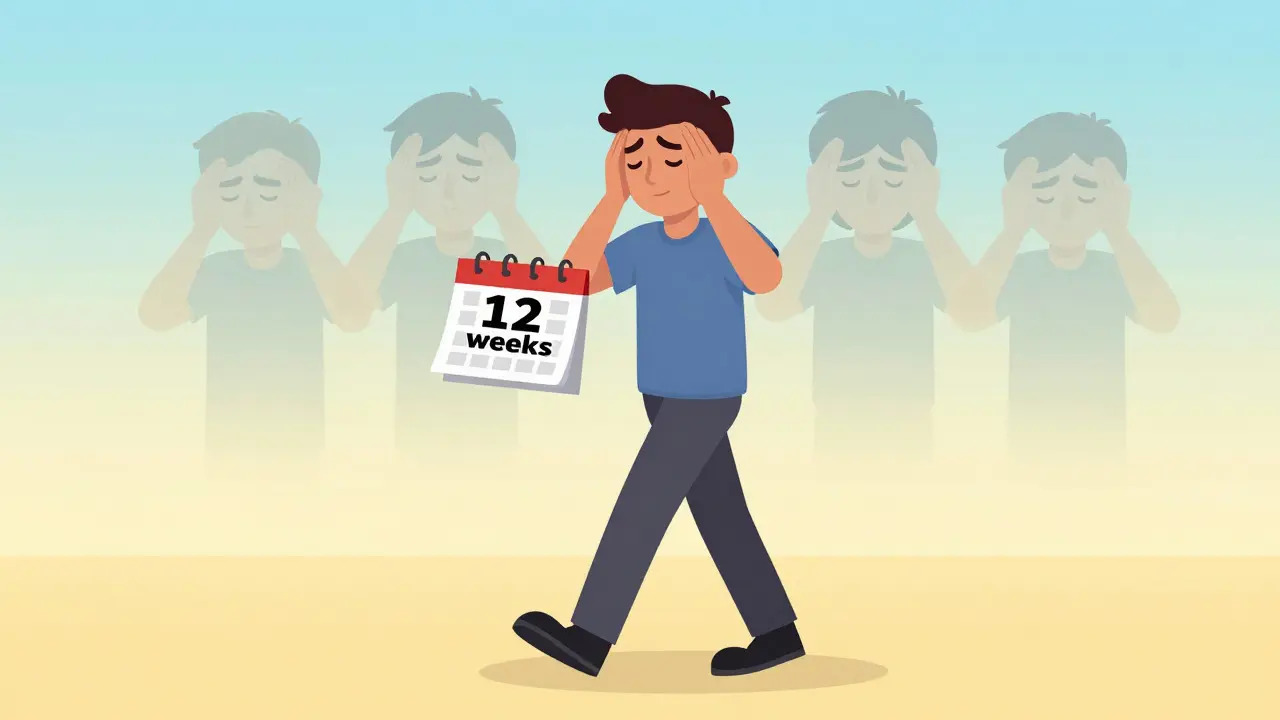
- The Frequency: This is not a one-time fix. To maintain results, you must return for this same procedure every 12 weeks. Skipping a session can mean your symptoms return.
There is minimal downtime. You can usually drive yourself home and return to work immediately. However, about 18% of patients report mild pain at the injection sites, and a smaller percentage experience temporary weakness in nearby muscles, such as a drooping eyelid (ptosis).
Does It Really Work? The Data Behind the Hype
Skepticism is healthy, especially when dealing with chronic pain. So, let’s look at the numbers. The initial large-scale clinical trials (PREEMPT studies) showed that approximately 70% of patients treated with Botox experienced at least a 50% reduction in headache days after two treatment cycles.
Real-world data supports these findings. A 2022 study published in the Journal of Neurological Sciences followed over 1,200 patients. They found that 63.2% achieved a significant reduction in monthly headaches after one year. On average, patients saw a drop of 8 to 9 headache days per month compared to placebo groups.
However, patience is key. According to patient adherence studies, 61% of people do not see the maximum benefit until their third or fourth treatment cycle. Your body needs time to adjust to the reduced nerve signaling. If you stop after one or two sessions because you don’t feel "cured," you might miss the window where it starts working best.
Botox vs. Other Migraine Treatments
Botox is not the only game in town. Newer classes of drugs, particularly CGRP monoclonal antibodies (like erenumab or fremanezumab), have changed the landscape. How does Botox stack up?
| Feature | Botox (OnabotulinumtoxinA) | CGRP Monoclonal Antibodies | Traditional Oral Preventives (e.g., Topiramate) |
|---|---|---|---|
| Administration | Injections every 12 weeks | Monthly or quarterly injection/pill | Daily pill |
| Responder Rate | ~47% achieve 50%+ reduction | ~52% achieve 50%+ reduction | ~38% achieve 50%+ reduction |
| Side Effects | Neck pain, mild ptosis (eyelid droop) | Constipation, injection site reactions | Brain fog, weight loss, tingling |
| Cost (Before Insurance) | $6,000 - $7,200 annually | $7,000 - $10,000+ annually | $100 - $500 annually |
| Best For | Patients who fail oral meds or have medication-overuse headache | Patients seeking highest efficacy regardless of cost | First-line treatment for most patients |
Botox shines for patients who cannot tolerate the systemic side effects of daily pills, such as the "brain fog" associated with topiramate. It is also highly effective for those with medication-overuse headache, a condition where taking too many acute painkillers actually worsens migraines. Botox breaks this cycle because it is not taken orally.
Costs, Insurance, and Practical Hurdles
Let’s talk about the elephant in the room: money. Without insurance, a single Botox session for migraine costs between $1,500 and $1,800. That adds up to roughly $6,000 to $7,200 per year. For most people, this is unaffordable out-of-pocket.
Fortunately, 85% of major insurance providers cover Botox for chronic migraine, but they make you jump through hoops. You will likely need:
- Documentation: Headache diaries kept for at least 3 months showing consistent frequency.
- Prior Authorization: Proof that you have tried and failed three other preventive medications.
- Specialist Referral: Treatment must be administered by a board-certified neurologist or headache specialist trained in the PREEMPT protocol.
Denials are common initially. Many patients spend weeks appealing decisions. Keep detailed records of your previous medication failures, including why you stopped them (side effects, lack of efficacy). This paper trail is your best friend during the appeals process.
Common Side Effects and Risks
While generally safe, Botox is not risk-free. The most common side effects are mild and temporary:
- Neck Pain: Reported by nearly 10% of patients, often resolving within a few days.
- Headache: Paradoxically, some patients experience a headache shortly after the injections.
- Eyelid Ptosis: A drooping eyelid occurs in about 3% of cases. This is usually due to the medication spreading slightly from the forehead injection site. It typically resolves in 2-4 weeks.
- Muscle Weakness: Some patients report difficulty turning their head or shrugging their shoulders temporarily.
Serious adverse events are rare. Over 12 years of post-marketing surveillance, no major safety signals have emerged. However, if you have a neuromuscular disorder like myasthenia gravis, Botox may not be suitable for you.
When Should You Consider Stopping?
Botox is a long-term commitment. If you are considering stopping, ask yourself these questions:
- Have you completed at least four treatment cycles (one year)? If not, give it more time.
- Are the side effects outweighing the benefits? Mild neck pain is normal; severe weakness or vision issues are not.
- Has your migraine pattern changed? If you’ve moved from chronic to episodic migraine, your doctor might switch you to a less intensive regimen.
Don’t quit prematurely. The data shows that retention rates remain high (78% at 24 months) because patients who stick with it see cumulative benefits. Your nervous system desensitizes over time, making each subsequent cycle potentially more effective.
Future Directions: What’s Next for Migraine Care?
The field of migraine treatment is evolving rapidly. In 2023, the FDA expanded Botox’s approval to include adolescents aged 12-17 with chronic migraine, opening doors for younger patients who suffer from debilitating headaches. Additionally, research is exploring longer-acting formulations that could extend the interval between injections from 12 weeks to 16-20 weeks, reducing the burden on patients.
Combination therapy is also gaining traction. Studies show that pairing Botox with CGRP monoclonal antibodies can yield higher responder rates (up to 68%) than either treatment alone. As precision medicine advances, doctors may soon tailor Botox injection patterns based on individual patient phenotypes, maximizing efficacy and minimizing side effects.
For now, Botox remains a cornerstone of chronic migraine management. It is not a cure, but for many, it is the key that unlocks a life with less pain and more freedom. If you meet the criteria, have exhausted other options, and are willing to commit to the schedule, it might be the breakthrough you’ve been waiting for.
How long does it take for Botox to work for migraines?
You may notice some improvement after the first session, but maximum benefit typically requires 3 to 4 treatment cycles (9 to 12 months). About 61% of patients do not experience full efficacy until their third or fourth round of injections. Patience is crucial during this buildup phase.
Does Botox for migraine cause memory loss or brain fog?
No. Unlike oral preventives such as topiramate, which are known to cause cognitive side effects like brain fog or word-finding difficulties, Botox acts locally on peripheral nerves. It does not cross the blood-brain barrier in significant amounts, so it rarely affects cognition or memory.
Can I use Botox if I have episodic migraine?
Generally, no. Clinical trials showed that Botox was not significantly more effective than placebo for episodic migraine (fewer than 15 headache days per month). It is FDA-approved specifically for chronic migraine. Patients with episodic migraine usually respond better to oral preventives or CGRP inhibitors.
Will insurance cover Botox for migraines?
Most major insurers cover Botox for chronic migraine, but it requires prior authorization. You typically need to provide documentation of failing at least three other preventive medications and keep headache diaries for 3 months. Denials are common initially, so be prepared to appeal with detailed medical records.
Is Botox safer than CGRP monoclonal antibodies?
Both are considered safe, but they have different side effect profiles. Botox has a longer track record (since 2010) and primarily causes local side effects like neck pain or eyelid drooping. CGRP antibodies are newer and generally well-tolerated, with constipation being a common complaint. Safety depends on your individual health history and tolerance for specific side effects.
How many injections are in a Botox migraine session?
A standard session involves 31 to 39 injections across seven specific muscle groups in the head and neck. Each injection contains a very small amount of medication (approximately 5 units), totaling 155 to 195 units per treatment. The entire process takes about 15 minutes.
Can Botox be combined with other migraine medications?
Yes. Many patients continue to use acute rescue medications (like triptans or gepants) for breakthrough headaches. Furthermore, recent studies suggest that combining Botox with CGRP monoclonal antibodies can have a synergistic effect, improving outcomes for patients who do not fully respond to either treatment alone.