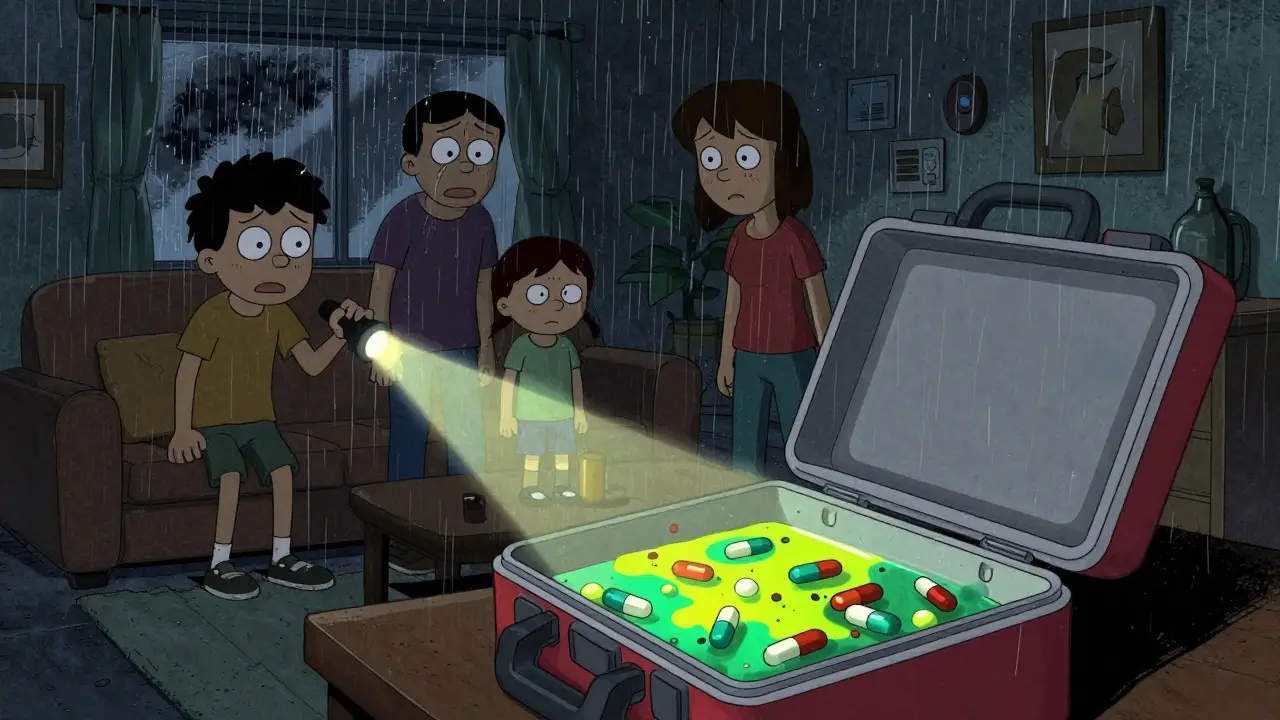
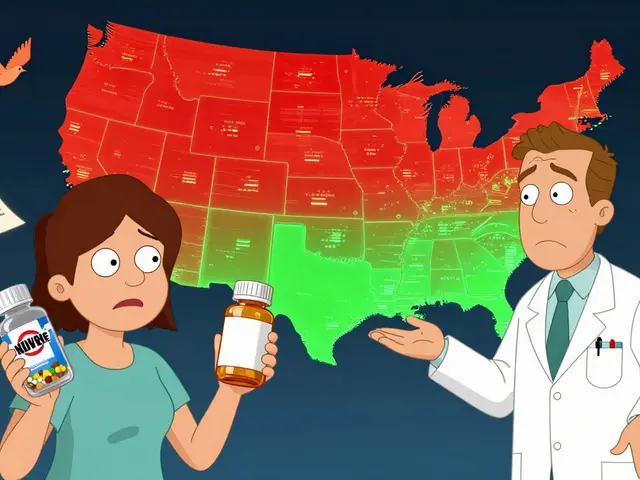
Imagine you are trapped in your home for three days after a severe storm knocks out the power. The lights are off, the fridge is warming up, and your family needs their daily prescriptions. You reach for your emergency kit is a collection of supplies designed to help people survive during disasters, but when you check the medicine, it looks discolored or the liquid has separated. Did that heat ruin the drug? Will it still work? This isn't just a hypothetical scenario; it is a reality for thousands of households every year. Improper storage can turn life-saving drugs into useless pills.
The goal of this guide is simple: keep your medications potent, safe, and ready to use when disaster strikes. We will break down exactly how to store different types of drugs, what temperatures matter most, and which containers actually protect your supply. By following these steps, you ensure that when an emergency happens, your medical supplies do exactly what they are supposed to do.
Why Storage Conditions Matter More Than Expiration Dates
We often look at the expiration date on a bottle and assume that is the only thing that matters. In reality, environmental factors like heat, humidity, and light degrade medications long before that date arrives. According to data from the Centers for Disease Control and Prevention (CDC) is the national public health institute of the United States, improper storage is a leading cause of medication failure during crises. A study published in the Journal of Emergency Medicine found that epinephrine auto-injectors lost 37% of their effectiveness in just 72 hours when stored incorrectly during simulated disaster conditions.
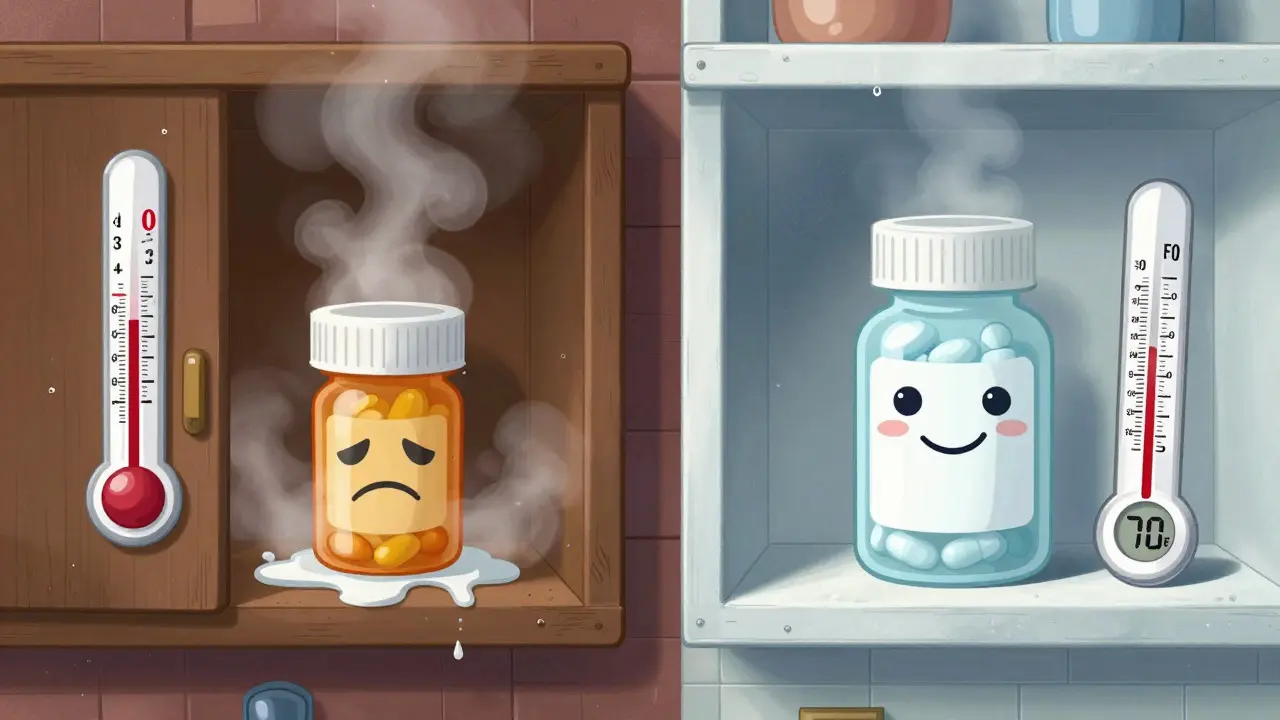
Think about where you usually keep your meds. Many people stash them in the bathroom cabinet because it is convenient. But bathrooms are steam rooms. Every shower spikes the humidity and temperature. Research from the American College of Emergency Physicians shows that medications stored in bathrooms degrade 40% faster than those kept in kitchen cabinets. If you want to maximize shelf life, convenience must take a back seat to stability.
The Golden Rules of Temperature and Humidity
To keep drugs effective, you need to control two main variables: temperature and moisture. Most standard medications require a "cool, dry place" defined by the Food and Drug Administration (FDA) is an agency of the U.S. Department of Health and Human Services as between 59°F and 77°F (15°C to 25°C). Going above or below this range can alter the chemical structure of the drug.
- Avoid Heat Sources: Do not store kits near furnaces, water heaters, or in direct sunlight. Sunlight is particularly damaging; a 2020 study showed amoxicillin capsules lost 42% of their active ingredients after just 48 hours in direct sun.
- Control Humidity: Keep relative humidity below 60%. High moisture causes tablets to crumble or dissolve prematurely. A University of Florida study demonstrated that acetaminophen stored at 75% humidity saw a 28% drop in dissolution rate within a month.
- Use Original Containers: Always keep meds in their original bottles with labels intact. FDA testing from 2022 revealed that original manufacturer containers maintain medication integrity 33% better than transferred storage solutions over 12 months. Plus, having the National Drug Code (NDC) visible helps first responders identify what you are taking.
Special Handling for Refrigerated Medications
Some drugs, like insulin, certain antibiotics, and eye drops, need refrigeration between 36°F and 46°F (2°C to 8°C). These are the most vulnerable items in your kit during a power outage. Insulin, for example, loses 15% of its potency if exposed to temperatures above 46°F for 12 consecutive hours, according to Merck's stability testing.
If the power goes out, your refrigerator will stay cold for only about four hours. After that, the temperature rises rapidly. Here is how to handle this:
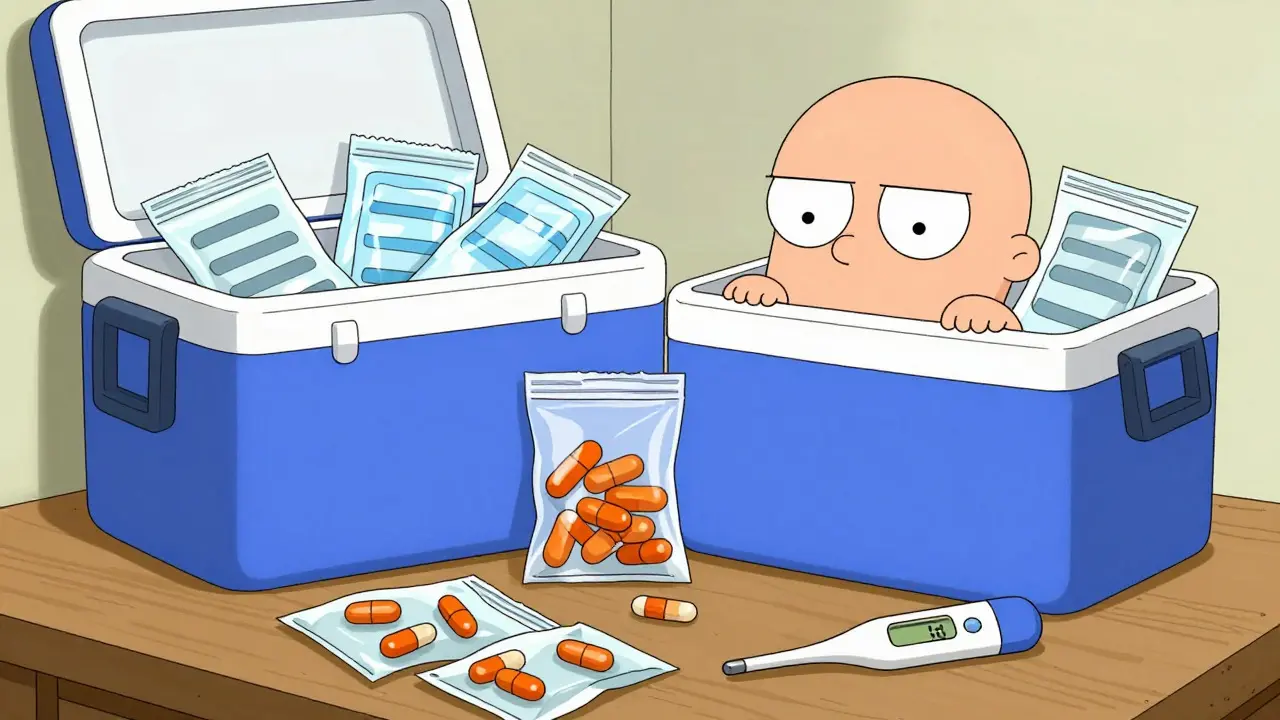
- Pre-Chill Coolers: Keep a high-quality cooler with frozen gel packs ready in your emergency kit. When the power fails, move refrigerated meds immediately.
- The Toilet Tank Trick: If you don't have a cooler, the toilet tank (not the bowl!) can keep items 15-20°F cooler than the room air for 8-12 hours, as validated by Consumer Reports. It is not ideal, but it buys time.
- Battery-Powered Options: For critical conditions, invest in a battery-powered medical cooler. These devices can maintain proper temperatures for 72+ hours, far outperforming passive cooling methods.
Vacuum Sealing: Extending Shelf Life Beyond Expiration
One of the most effective ways to extend the life of solid medications is vacuum sealing. By removing oxygen and moisture, you slow down the degradation process significantly. Dr. Michael Rhodes' research at Intermountain Healthcare indicates that vacuum-sealed pills can retain efficacy for 1-2 years beyond their printed expiration dates.
However, there are caveats. This method works best for solid tablets and capsules. Liquid medications generally do not benefit from vacuum sealing and may only last 30-60 days past expiration even under ideal conditions. Also, never vacuum seal syringes, needles, or fragile glass vials, as the pressure can break them.
| Storage Method | Best For | Shelf Life Impact | Key Risk |
|---|---|---|---|
| Vacuum-Sealed Bags | Solid pills/capsules | Extends by 1-2 years | Crushing fragile tablets |
| Original Bottles | All medications | Maintains labeled potency | Label fading over time |
| Cooler with Ice Packs | Insulin/biologics | Preserves for 72+ hours | Freezing damage if ice touches meds |
| Bathroom Cabinet | None | Reduces potency by 40% | High humidity and heat spikes |
Building Your Emergency Medication Kit
Knowing how to store meds is only half the battle. You also need the right amount. The Department of Homeland Security recommends a minimum 14-day supply for all households, doubling previous guidelines. Dr. Michael Rhodes argues for a 30-day supply, noting that three days is merely the absolute minimum for minor disruptions.
When assembling your kit, follow these protocols:
- Inventory Check: List every prescription, dosage, and frequency. Include over-the-counter pain relievers, antihistamines, and digestive aids.
- Organize by Expiration: Place the oldest medications in front. This "first-expired, first-out" system reduced waste by 65% in a Veterans Administration pilot program.
- Include Monitoring Tools: Add a digital thermometer with ±0.5°F accuracy to your kit. During an emergency, you need to know if your cooler is still working. Log temperatures twice daily if possible.
- Secure Access: Store the kit in a locked cabinet to prevent accidental pediatric exposure, which reduces risk by 97% per CDC data. Ensure the key is accessible to adults in the household.
Maintenance and Rotation Strategy
An emergency kit is not a "set it and forget it" project. Medications expire, and supplies get used. The CDC recommends spending 2-3 hours initially to assemble the kit, followed by monthly 15-minute checks.
During these checks, look for signs of degradation: discoloration, strange odors, or crumbling tablets. Pay special attention to epinephrine auto-injectors. Even under perfect storage conditions, they lose 15% potency annually. Replace them every 12-18 months regardless of the expiration date.
If you find expired meds, dispose of them properly. Do not flush them unless the label specifically says so. Take them to a local pharmacy or community take-back event to prevent environmental contamination.
How long can I keep medications in an emergency kit?
Most solid medications can last 1-2 years beyond their expiration date if vacuum-sealed and stored in a cool, dry place. However, liquid medications and biologics like insulin degrade much faster and should be replaced every 6-12 months. Always check for physical signs of spoilage before use.
Is it safe to store medications in a car during an emergency?
Generally, no. Cars can reach temperatures exceeding 120°F (49°C) on hot days, which destroys many drugs. If you must transport meds, keep them in an insulated bag with ice packs and avoid leaving them in the vehicle for more than a few hours.
What should I do if my insulin freezes?
Frozen insulin is usually ruined. Thawing it slowly in the refrigerator may restore some clarity, but its potency is likely compromised. If possible, replace it. Never inject frozen insulin directly; let it reach room temperature first if you have no other option, but expect reduced effectiveness.
Do I need a thermometer in my emergency kit?
Yes. A digital thermometer with ±0.5°F accuracy is crucial for monitoring refrigerated medications during power outages. It helps you determine if your cooler is maintaining the required 36-46°F range for sensitive drugs.
Can I transfer pills to weekly organizers for my emergency kit?
It is better to keep them in original bottles. Original containers protect against moisture and light better than plastic organizers. They also provide essential information like dosage and NDC numbers, which are vital for medical identification during emergencies.
Morikeoluwa Ayodeji
August 11, 2026 AT 12:07hey everyone, this is super useful info for sure. i live in nigeria and power outages are basically a way of life here so we deal with this stuff daily. the tip about using frozen gel packs in a cooler is gold because our grid goes down for days sometimes. people always forget that insulin is fragile and if you just leave it on the counter it ruins fast. also vacuum sealing is something we do with food but never thought to apply it to pills until now. it makes total sense since moisture is the enemy of everything really. thanks for sharing this guide, it feels like we need more practical advice like this instead of just saying buy a generator. generators are loud and expensive and not everyone can afford them.
Dennis Leeftink
August 13, 2026 AT 03:45this article is dumb. most people dont care about shelf life they just want cheap meds. the fda guidelines are outdated anyway. who cares if its 40 degrees or 80 degrees? pills are plastic. they dont melt. stop making people panic over nothing. i keep my meds in the bathroom and ive been fine for 20 years. science is fake news mostly. just take the pill and see what happens. if you die then maybe you should have read this. but seriously this is fear mongering at its finest. nobody reads labels anyway.
Traci Bobbitt
August 13, 2026 AT 09:51actually dennis you are wrong. heat definitely degrades medication. i work in a pharmacy and we throw out tons of stock every year because patients stored it in their cars or bathrooms. its basic chemistry. the molecules break down when exposed to heat and humidity. its not conspiracy theory its fact. also the bathroom cabinet thing is huge. steam from showers is terrible for tablets. they get soft and crumble. you think you are being smart by ignoring rules but you are just risking your health. please educate yourself before commenting online. it shows.
Sansaray Jones
August 13, 2026 AT 16:01i guess keeping things dry is good. i never thought about the toilet tank trick though. seems weird but maybe it works in a pinch. i usually just put stuff in a drawer in the closet. its dark and cool there. hope that is enough. i try to keep it simple. less stress is better for everyone. thanks for the tips. nice to know there are options if the power goes out again. it happened last summer and my fridge got warm pretty quick.
Michelle Alavaski
August 14, 2026 AT 05:01one must consider the ulterior motives behind such prescriptive storage guidelines. the pharmaceutical industry profits immensely from forced obsolescence. by convincing the populace that medications degrade rapidly under normal conditions, they ensure a continuous cycle of consumption and replacement. the concept of an 'expiration date' is largely a legal shield for manufacturers rather than a scientific absolute. furthermore, the recommendation to use original containers serves to maintain brand loyalty and traceability for corporate surveillance purposes. one should question why the government agencies cited here are so eager to dictate household logistics. perhaps the true emergency is the loss of self-reliance imposed by these bureaucratic decrees. trust no one and store your supplies where only you know.
Veronica Agbanyim
August 14, 2026 AT 22:59it is simply negligent to ignore proper storage protocols. when you fail to protect your medications, you are essentially gambling with your own well-being and potentially that of your family. morality dictates that we take responsibility for our preparedness. relying on chance is not a strategy; it is laziness disguised as skepticism. the data presented here is clear and undeniable. to dismiss it is to dismiss the value of human health itself. we owe it to ourselves to be diligent. do not let apathy ruin your chances of survival during a crisis. take action today. check your kit. fix your mistakes. be better.
jackie healey
August 15, 2026 AT 03:40hello friends!! i am so glad you all are discussing this topic! it is incredibly important! i would love to add that many people overlook the importance of labeling! please make sure you label your vacuum sealed bags clearly!! include the name of the drug! the dosage! and the expiration date!! it can get very confusing later! especially if you have multiple types of pills! i recommend using a permanent marker! and maybe even taping a printed list inside the bag too! safety first everyone!! let us help each other stay safe!!
Anna Salamon
August 15, 2026 AT 04:07in my culture we often share resources during hard times so having a well organized kit helps not just you but your neighbors too. i appreciate the emphasis on community preparedness. it reminds me of how we used to store food in our village. careful planning saves lives. i will be sharing this with my local group. we meet every month to update our supplies. it is a great tradition. thank you for the detailed breakdown. it is very helpful for those of us who are new to prepping.
Lilith Stepanyan
August 15, 2026 AT 10:27the author assumes everyone has access to high quality coolers and battery powered devices. this is classist nonsense. poor people do not have extra money for fancy medical coolers. they have ice cubes and hope. the article ignores the economic reality of disaster preparedness. meanwhile the rich buy arks and bunkers. the rest of us get told to buy gel packs. typical. also the toilet tank trick is disgusting. who wants their meds near sewage water? even if it is separate it feels unhygienic. the whole premise is flawed because it relies on consumerism. you need to buy more stuff to survive. ridiculous.
Josh Atkinson
August 16, 2026 AT 20:50lol lilith you are overthinking it :) look i know some of you guys are skeptical but trust me on this one. i have been prepping for years and i learned the hard way. i lost a bunch of antibiotics once because i left them in my car trunk during summer. they turned into chalk dust. totally useless. so yeah heat is bad. humidity is worse. i use a dehumidifier in my storage room now. costs a bit of electricity but worth it. also the vacuum sealing trick is legit. i tested it myself. kept some old pills sealed and they were still good after two years past expiry. just dont do it with liquids. liquid separates and gets gross. anyway hope this helps. stay safe folks ;)
Tegan Morey
August 18, 2026 AT 02:21i am curious about the thermometer part. does it have to be digital? i have an old analog one hanging in my garage. would that work? also i live in australia so our summers are brutal. temperatures hit 40c easily. i worry about my dad's heart meds. he keeps them in the kitchen cupboard which gets hot. thinking of moving them to the linen closet. is that okay? any other tips for hot climates? i want to make sure he is covered. thanks!
charlie student
August 18, 2026 AT 08:48we tend to view time as linear but degradation is exponential. the moment you open a bottle the clock starts ticking faster. oxygen enters. moisture enters. light enters. it is a battle against entropy. storing meds is not just about hiding them away. it is about creating a microclimate. a sanctuary for chemistry. we must respect the fragility of these compounds. they are complex structures designed to interact with our biology. treat them with reverence. keep them stable. keep them pure. in the end it is about control. controlling our environment to preserve our ability to heal. a small act of order in a chaotic world.
sam howard
August 18, 2026 AT 08:54bathroom cabinet is trash. everyone knows that. why is this even a debate. just put it in a drawer in your bedroom. done. stop reading articles and start acting. simple logic. heat kills drugs. cold preserves them. middle ground is fine. dont overcomplicate it. sam out.