Transplant Safety & Management Checklist
Select the actions you have completed today to assess your current risk level.
Your Daily Score
Select your daily habits above and click "Analyze My Status" to see your risk assessment.
Getting an organ transplant is a miracle. It gives you a second chance at life when your body’s own systems have failed. But that new life comes with a heavy price tag: lifelong medication. You are now taking immunosuppressants, drugs designed to trick your immune system into accepting foreign tissue. These medications save your graft, but they also suppress the very defenses keeping you alive. The result? A delicate balancing act between preventing rejection and managing severe side effects and dangerous drug interactions.
If you are a recipient or caring for one, you know the anxiety of every pill bottle. What happens if I take this antibiotic? Will my kidney function drop? This guide cuts through the medical jargon to explain exactly how these drugs work, what can go wrong, and how to stay safe in 2026.
The Core Team: How Immunosuppressants Work
You aren’t just taking "one" drug. Most recipients follow a triple-therapy regimen. Think of it as a three-pronged attack on your immune system to stop it from attacking the new organ. According to the 2022 OPTN/SRTR Annual Data Report, nearly all kidney transplant recipients (98.7%) rely on this approach.
- Calcineurin Inhibitors (CNIs): The backbone of therapy. Drugs like tacrolimus (Prograf) and cyclosporine block T-cell activation. They prevent the signal that tells your immune cells to destroy the graft. Tacrolimus is the gold standard, used in over 92% of cases because it works better than cyclosporine.
- Antimetabolites: Agents like mycophenolate mofetil (CellCept) or azathioprine. These stop lymphocytes from multiplying by blocking their DNA building blocks.
- Corticosteroids: Prednisone reduces inflammation broadly. While effective, many centers are moving toward early steroid withdrawal to avoid long-term damage.
Why so many drugs? Because relying on one creates resistance and higher rejection risks. However, each class brings unique dangers. CNIs are potent but toxic to kidneys. Antimetabolites wreck your gut. Steroids change your metabolism entirely.
The Hidden Danger: Drug Interactions
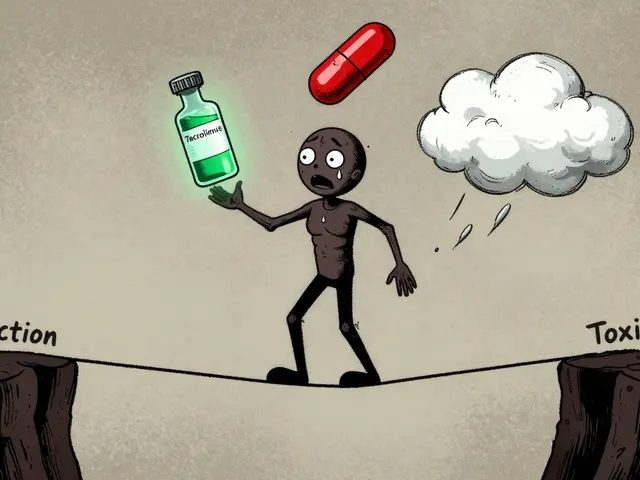
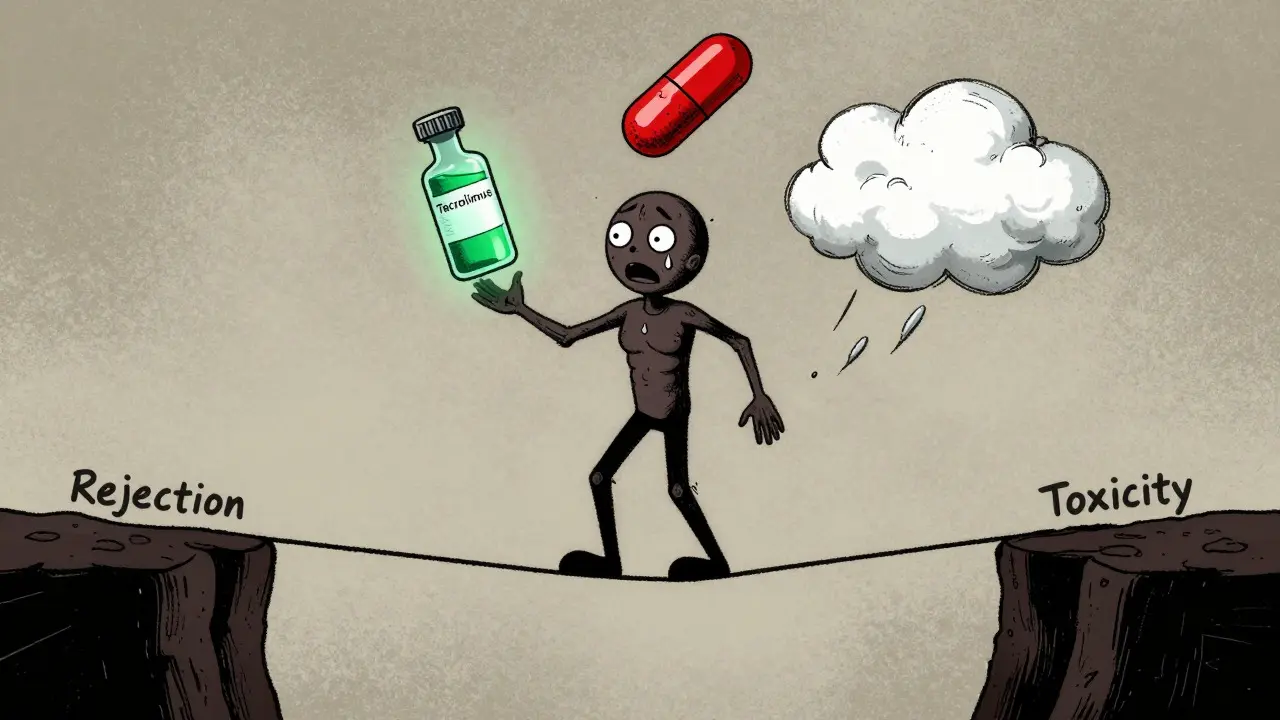
This is where most patients stumble. Immunosuppressants, especially tacrolimus and cyclosporine, have a "narrow therapeutic window." This means the difference between a dose that saves your organ and a dose that poisons you is tiny. They are metabolized by an enzyme called CYP3A4 in your liver and moved around your body by P-glycoprotein.
Here is the problem: about 30-40% of common medications mess with this system. A 2020 review in Transplantation Direct highlights this as a critical safety issue. If you inhibit the enzyme, drug levels skyrocket. If you induce it, levels crash, leading to rejection.
| Drug Class / Example | Effect on Immunosuppressant Levels | Risk |
|---|---|---|
| Azole Antifungals (Fluconazole, Voriconazole) | Increase by 50-200% | Toxicity, kidney failure, tremors |
| Macrolide Antibiotics (Erythromycin, Clarithromycin) | Increase significantly | Nephrotoxicity, neurological issues |
| Rifampin (for TB) | Decrease by 60-90% | Acute organ rejection |
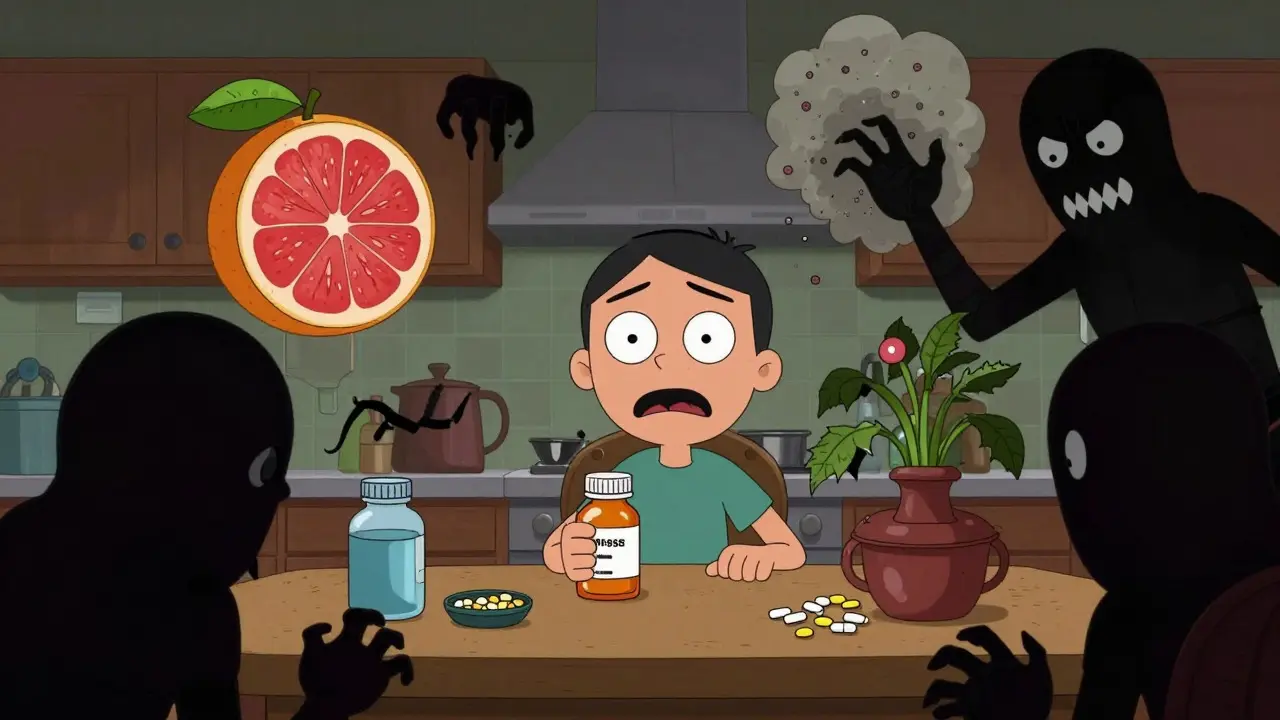
| Grapefruit Juice | Increase unpredictably | Toxicity due to enzyme inhibition |
| St. John’s Wort | Decrease significantly | Rejection risk |
Never start a new medication-even an over-the-counter cold remedy-without checking with your transplant team. The Budde et al. review in the American Journal of Transplantation emphasizes that therapeutic drug monitoring is non-negotiable here.
Side Effects: The Daily Reality
The drugs keep the organ alive, but they often make life miserable. Side effects vary by drug class, but some patterns are universal among recipients.
Kidney Toxicity (Nephrotoxicity)
Ironically, the drugs protecting your transplanted kidney can damage it. Nephrotoxicity affects 25-40% of kidney recipients on CNIs. It manifests as chronic interstitial fibrosis and tubular atrophy. By year five, histological evidence of this damage is found in 65% of protocol biopsies. This is why doctors monitor your creatinine and GFR so closely.
Metabolic Chaos
New-onset diabetes after transplantation (NODAT) is a major concern. Tacrolimus carries a higher risk (20-30%) compared to cyclosporine (10-15%). Corticosteroids worsen this by spiking blood sugar. Combined with high cholesterol (affecting 62% of recipients), your cardiovascular risk skyrockets. Dr. Kurt Vermeire notes that these metabolic burdens contribute to shorter life expectancy compared to the general population.
Infection and Cancer Risk
When you suppress your immune system, germs win. 85% of recipients report increased infection risk. Simple things like raw chicken or crowded malls become threats. More sinister is cancer. Non-melanomatous skin cancers affect ~23% of liver recipients. Gastrointestinal cancers are also more common, partly due to viruses like HPV that your body can no longer fight off. As Dr. Richard Ruiz points out, HPV-associated cancers occur 100 times more frequently in transplant patients.
Quality of Life Issues
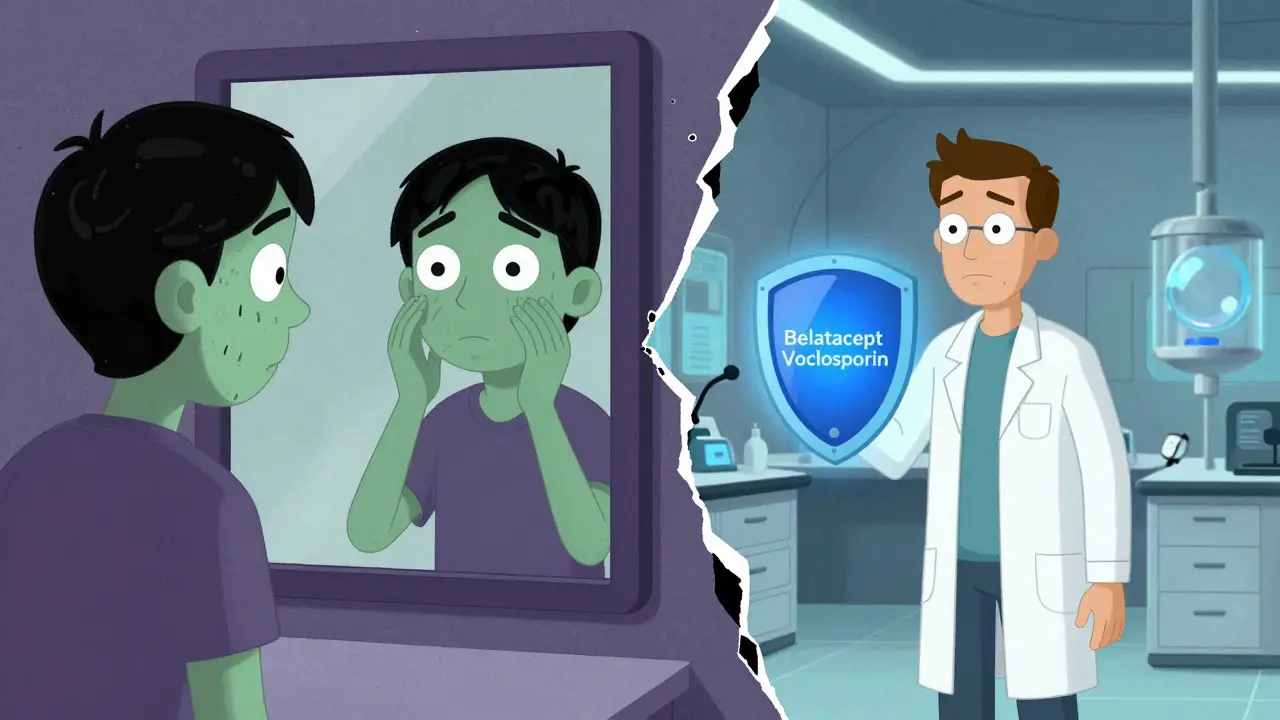
It’s not just internal damage. Patients report "moon face," weight gain (15-20 lbs in six months), tremors, insomnia, and emotional instability ("steroid rage"). A survey by NHS Blood and Transplant found 38% of patients struggled with recognizing themselves in the mirror due to physical changes. Chronic fatigue hits 72% of recipients.
Tacrolimus vs. Cyclosporine: Making the Choice
While both are calcineurin inhibitors, they behave differently. The 2005 ELITE-Symphony trial provided definitive data that shapes current guidelines.
| Feature | Tacrolimus (Prograf) | Cyclosporine (Neoral) |
|---|---|---|
| Acute Rejection Rate (1 Year) | 6.7% (Lower) | 22.3% (Higher) |
| New-Onset Diabetes Risk | 20-30% (Higher) | 10-15% (Lower) |
| Graft Survival (1 Year) | 83.1% | 76.6% |
| Common Side Effects | Tremors, Diabetes, Neurotoxicity | Gum Overgrowth, Hair Growth, Hypertension |
Tacrolimus wins on efficacy, which is why it’s the default. However, if you have a history of diabetes or severe tremors, your doctor might consider cyclosporine or an alternative like belatacept.
Emerging Alternatives and Future Hope
Medicine is evolving. We are seeing a shift away from "one size fits all."
- Voclosporin (Lupkynis): Approved recently, this novel CNI shows 24% lower nephrotoxicity than tacrolimus while maintaining efficacy. It offers a safer profile for those struggling with kidney strain.
- Belatacept (Nulojix): A costimulation blocker. The BENEFIT-EXT study showed 30% lower cardiovascular mortality and reduced malignancy rates compared to tacrolimus. However, it requires careful screening for EBV status and has higher acute rejection risks initially.
- mTOR Inhibitors (Sirolimus/Everolimus): Used less commonly now due to poor wound healing and proteinuria, but valuable for patients with cancer histories or severe CNI toxicity. One Reddit user shared improving their GFR from 38 to 52 mL/min after switching to sirolimus, despite dealing with mouth ulcers.
The ultimate goal? Operational tolerance. The ONE Study consortium reported in 2023 that regulatory T cell therapy allowed 15% of kidney recipients to stop immunosuppression entirely at two years. We are not there yet, but the horizon is brightening.
Practical Steps for Safe Management
You can control your health outcomes by being proactive. Here is your checklist:
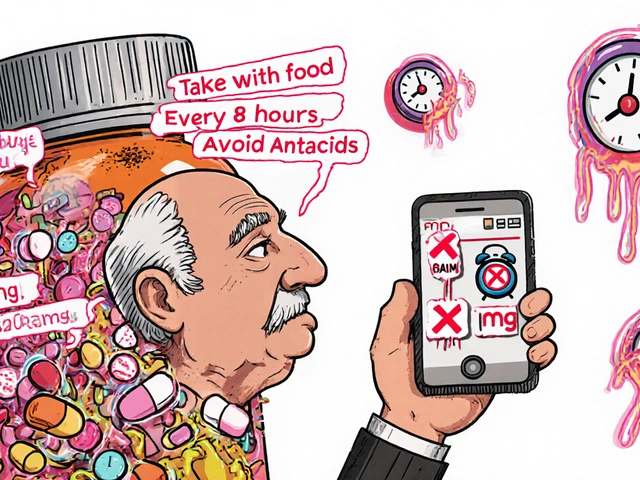
- Adhere Strictly: Take pills at the same time daily. Missed doses lead to rejection; double doses lead to toxicity. Electronic dispensers improved adherence from 72% to 89% in Cleveland Clinic studies.
- Monitor Levels: Expect frequent blood draws. Tacrolimus troughs typically target 5-8 ng/mL in the first year (per KDIGO 2019 guidelines). Don’t skip these appointments.
- Dietary Precautions: Avoid grapefruit and Seville oranges. Watch sodium intake for blood pressure. Cook meat thoroughly to avoid Listeria.
- Sun Protection: With high skin cancer risk, wear SPF 50+ daily. Cover up. Regular dermatology checks are mandatory.
- Communication: Tell every doctor, dentist, and pharmacist you are a transplant recipient. Carry a medical alert card.
As Dr. Dianne McKay warns, fear of side effects shouldn’t lead to non-adherence, which causes 22% of late graft losses. Talk to your team. Adjustments are possible. You don’t have to suffer in silence.
Can I drink alcohol while on immunosuppressants?
Moderation is key. Alcohol can interact with medications and increase liver stress. Since your liver processes tacrolimus and mycophenolate, heavy drinking can spike drug levels. Always consult your transplant coordinator for specific limits based on your organ type and current lab results.
What should I do if I miss a dose of my immunosuppressant?
If you remember within a few hours, take it immediately. If it’s close to the next scheduled dose, skip the missed one. Never double up to make up for a missed dose, as this can cause acute toxicity. Contact your center if you miss multiple doses.
Are live vaccines safe for transplant recipients?
Generally, no. Live vaccines (like MMR, Varicella, Yellow Fever) can cause the actual disease in immunocompromised patients. Inactivated vaccines (flu shot, pneumonia) are recommended but may be less effective. Always check with your team before any vaccination.
How does pregnancy affect immunosuppressant therapy?
Pregnancy is possible but high-risk. Some drugs like mycophenolate and sirolimus are teratogenic (cause birth defects) and must be stopped well before conception. Tacrolimus is generally considered safer during pregnancy. Planning ahead with your obstetrician and transplant team is crucial for a healthy outcome.
What are the signs of acute organ rejection?
Signs vary by organ. For kidneys: swelling, decreased urine output, fever, and pain over the graft site. For hearts: fluid retention, shortness of breath, irregular heartbeat. For livers: jaundice, dark urine, abdominal pain. Any sudden change in symptoms warrants immediate contact with your transplant center.