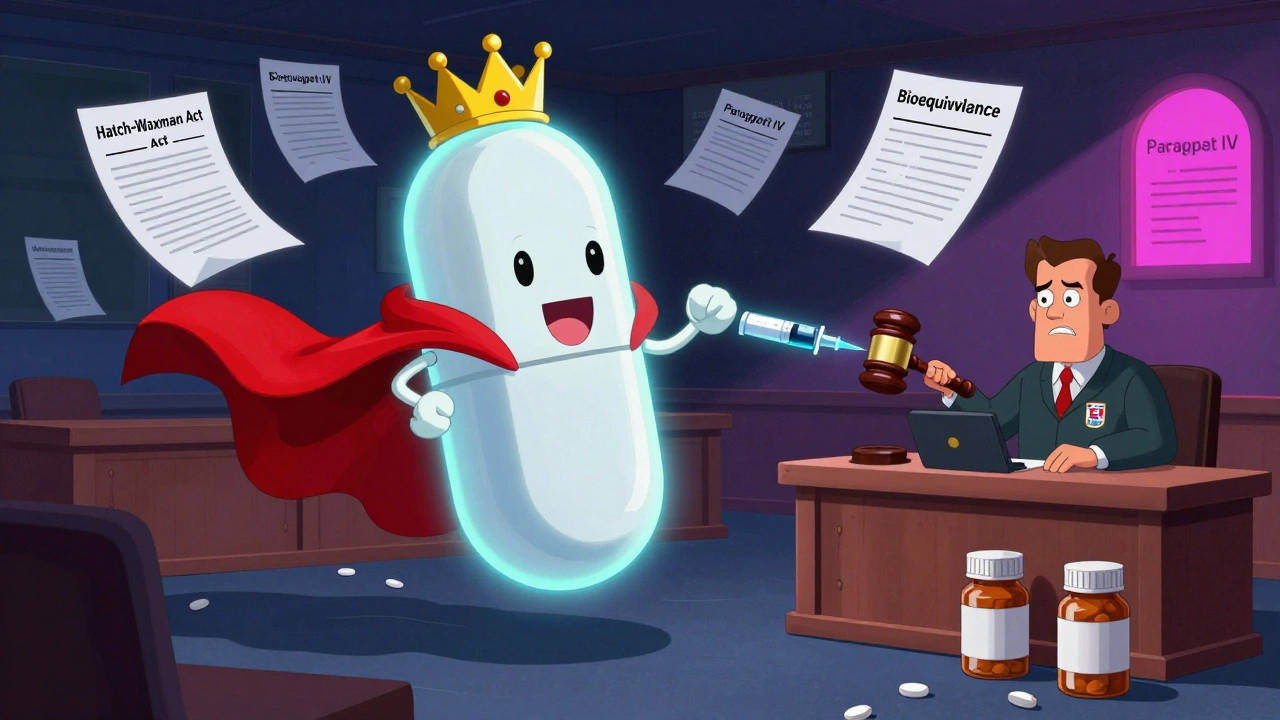
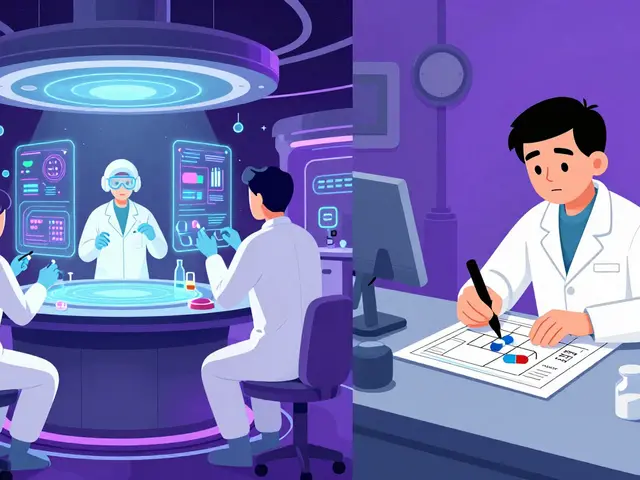
The ANDA process is the legal pathway in the United States that lets generic drug makers get their products approved without redoing the expensive clinical trials that brand-name drugs already went through. It’s not a shortcut-it’s a carefully designed system that balances innovation with affordability. Since the Hatch-Waxman Act passed in 1984, this process has made generic drugs the backbone of U.S. prescription medicine, accounting for over 90% of all prescriptions filled today. But getting an ANDA approved isn’t just about filling out forms. It’s a complex legal and scientific dance with strict rules, hidden pitfalls, and high stakes.
What the Hatch-Waxman Act Actually Did
The ANDA process didn’t exist before 1984. Before that, every new drug-no matter how similar to an existing one-had to go through the same full clinical trial process as a brand-new medicine. That made generic versions too expensive and slow to bring to market. The Drug Price Competition and Patent Term Restoration Act, better known as the Hatch-Waxman Act, changed that. It gave generic companies a legal way to prove their drugs were the same as the original, without repeating every test. In return, brand-name companies got extra patent protection to make up for time lost during FDA review. This deal created the modern generic drug industry. Today, thanks to this law, U.S. consumers have saved over $2.2 trillion in drug costs over the last decade alone.
The Core Legal Requirements for an ANDA
To get approval, a generic drug must meet five non-negotiable legal requirements set by the FDA:
- Identical active ingredient: The generic must contain the exact same active pharmaceutical ingredient (API) as the brand-name drug. No substitutions. No variations. Even a different salt form requires a special petition.
- Same dosage form and strength: If the brand is a 10mg tablet taken once daily, the generic must be the same. No changing tablets to capsules or altering the dose without going through a different approval path.
- Same route of administration: Oral, injectable, topical-whatever the original uses, the generic must match. A pill can’t become a patch and still qualify for ANDA.
- Bioequivalence: This is the scientific heart of the ANDA. The generic must show it releases the same amount of drug into the bloodstream at the same rate as the brand. The FDA requires 90% confidence intervals for Cmax and AUC to fall between 80% and 125% of the brand’s values. This isn’t a suggestion-it’s a legal standard. Failure here means rejection.
- Identical labeling: The prescribing information must be the same, except for minor changes like removing the brand name or adding a generic disclaimer. No adding new warnings or removing existing ones without FDA approval.
These aren’t guidelines. They’re legal requirements written into the Federal Food, Drug, and Cosmetic Act. Skipping any one of them means your application will be refused to receive-or worse, denied after months of review.
Manufacturing and Quality Rules You Can’t Ignore
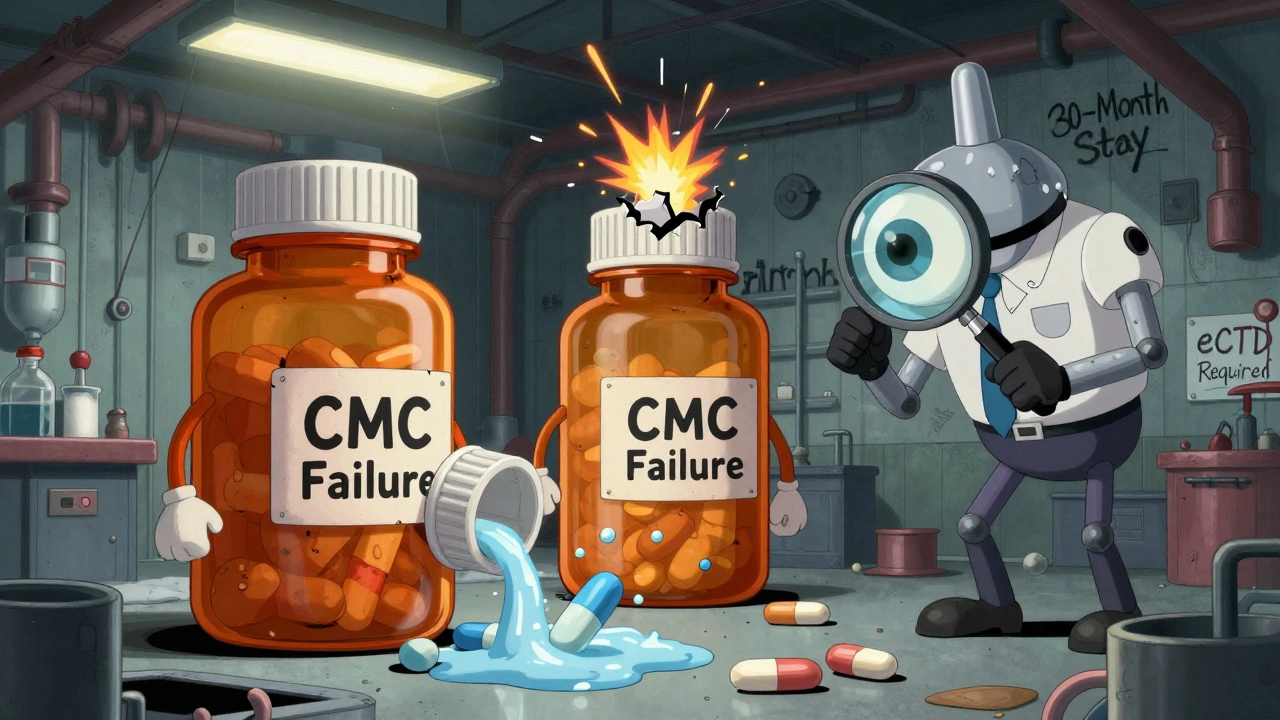
It’s not enough to prove your drug works the same. You must prove you can make it the same, every single time. The FDA requires full Chemistry, Manufacturing, and Controls (CMC) documentation. This includes:
- Exact details of every step in the manufacturing process
- Specifications for raw materials and finished product
- Stability data showing the drug won’t degrade before its expiration date
- Validation of packaging materials and container closure systems
Many ANDAs fail because of CMC issues. One regulatory affairs professional in Texas told me their team lost three applications because the seal on the pill bottle didn’t meet FDA standards for moisture protection. That’s not a minor detail-it’s a legal requirement. The FDA inspects every manufacturing facility, whether it’s in Ohio or India. In 2022, 68% of all Form 483 observations (which list violations) were at overseas plants. If your facility gets flagged, your ANDA is on hold.
Submission must be in eCTD format, with Form FDA-356h and FDA-3674 attached. Missing one form? Refused to receive. No second chances.
Patent Certification and Legal Risks
One of the most complex parts of the ANDA is patent certification. When you file, you must choose one of four certifications:
- Paragraph I: No patent listed for the drug
- Paragraph II: Patent has expired
- Paragraph III: Patent expires on a certain date-your product will launch after
- Paragraph IV: Patent is invalid or won’t be infringed
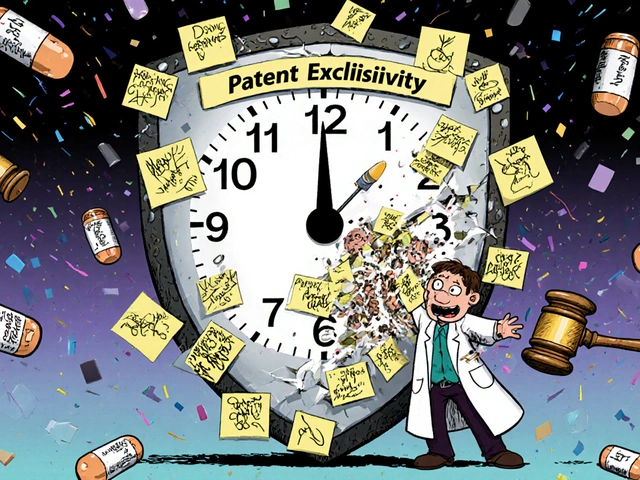
Paragraph IV is the most dangerous. It’s a legal challenge. If you file a Paragraph IV certification, the brand-name company has 45 days to sue you for patent infringement. If they do, the FDA must delay approval for up to 30 months-even if your drug is perfect. This is called a 30-month stay. Some companies use this to delay competition. Teva spent 42 months fighting a patent case over a generic version of Advair Diskus. They eventually won, but it cost them $28 million extra.
There’s no way around this. If you’re targeting a drug with active patents, you’re entering a legal minefield. You need patent lawyers, not just regulatory experts.
Costs, Fees, and Timelines
The ANDA process isn’t cheap, but it’s a fraction of the cost of a new drug. For fiscal year 2024, the FDA charges $129,500 for an original ANDA submission. That’s just the user fee. Add in bioequivalence studies, CMC development, facility upgrades, legal fees, and consultant costs, and you’re looking at $5 million to $10 million total per application. Compare that to $2.3 billion for a new drug.
Timeline-wise, the FDA aims to review standard ANDAs in 10 months under GDUFA III (the current user fee agreement). But reality is messier. In 2022, the average approval time was 36 months. Why? First-cycle deficiency rates are high-58% of applications get a letter asking for more information. Common reasons? Incomplete bioequivalence protocols (28%) and weak CMC data (23%).
Companies that succeed often use pre-ANDA meetings with the FDA. In 2022, there were over 1,800 of these meetings. They’re not required, but skipping them is like flying blind.
Complex Generics: The New Frontier
Not all generics are created equal. Simple tablets? Easy. Inhalers, nasal sprays, topical creams, injectables? Hard. These are called complex generics. They’re harder to replicate because their performance depends on delivery devices, particle size, or viscosity-not just chemical content. The FDA approved only 42% of complex generic applications on first review in 2022, compared to 78% for simple ones.
Companies are shifting toward these products because brand-name makers are running out of easy targets. But the FDA is catching up. In September 2023, they released new draft guidance for bioequivalence studies on drugs that act locally in the GI tract-something that’s been a gray area for years. This shows the rules are evolving. What worked five years ago might not work today.
Who Succeeds-and Who Doesn’t
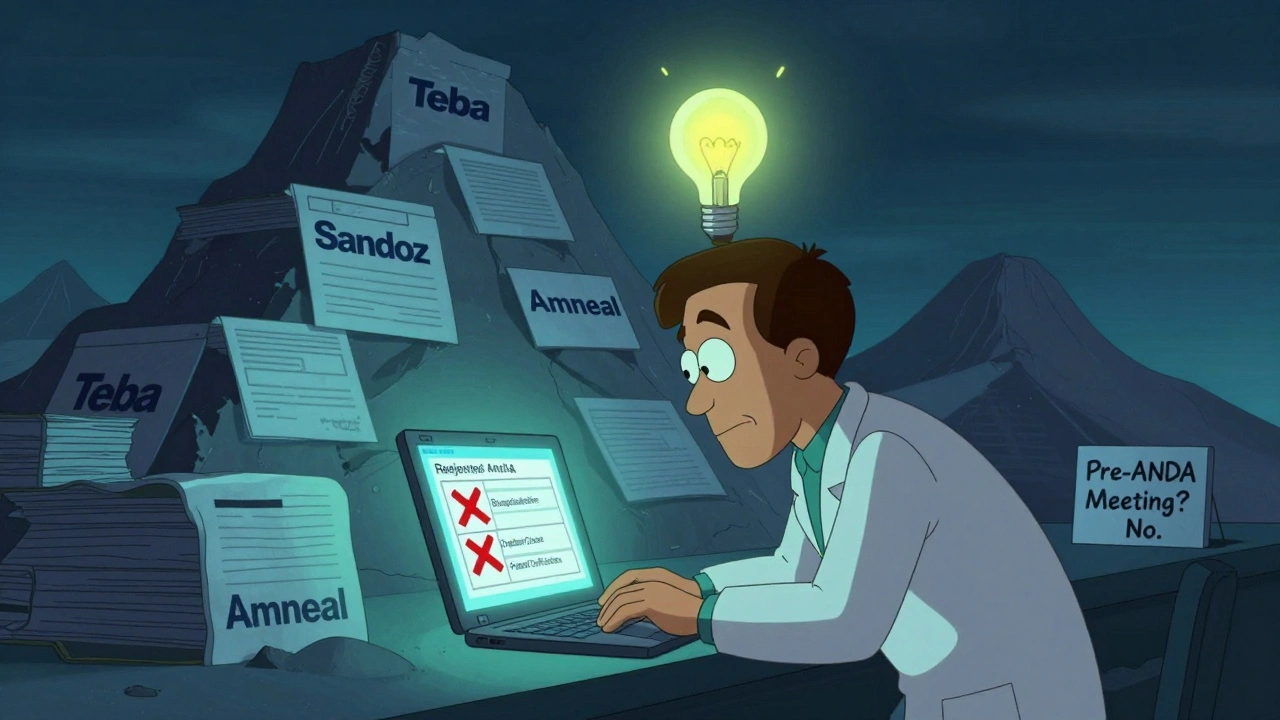
Top generic manufacturers like Teva, Sandoz, and Amneal have teams of 50+ regulatory specialists, legal experts, and quality control engineers. They file dozens of ANDAs a year. They know the FDA’s inspectors, their expectations, and their common refusal reasons.
Smaller companies? They often fail because they underestimate the CMC section. One Reddit user with 15 years in regulatory affairs said: “We’ve had three ANDAs rejected solely because of inadequate container closure system validation.” That’s not a technical glitch-it’s a legal failure. The FDA doesn’t care if your drug works. If your packaging doesn’t meet standards, it’s not approved.
Success means more than science. It means precision, patience, and deep regulatory knowledge. You need to know the Orange Book inside out, understand patent expiration dates, and be ready to respond to deficiency letters within 15 days. One missed deadline can delay approval by months.
What’s Next for the ANDA Process
The FDA is trying to speed things up. GDUFA III (2023-2027) promises faster reviews, better communication, and more transparency. They’re investing $15 million in new tools to evaluate complex generics. They’re also cracking down on practices that delay competition-like the CREATES Act, which prevents brand companies from blocking access to samples needed for testing.
But the biggest change might be AI. The FDA’s 5-year plan mentions using artificial intelligence to review documents faster. Imagine a system that flags missing CMC data before you even submit. That’s coming. Companies that adapt will win. Those who treat the ANDA as a form-filling exercise will keep getting rejected.
The ANDA process is not broken. It’s working exactly as intended: keeping drugs safe, affordable, and accessible. But it’s not simple. It’s legal, scientific, and strategic. Get any part wrong, and you lose. Get it right, and you help millions save money on their prescriptions.
What is the difference between ANDA and NDA?
An NDA (New Drug Application) is for brand-name drugs and requires full clinical trials to prove safety and effectiveness. An ANDA (Abbreviated New Drug Application) is for generics and only needs to prove bioequivalence to an already-approved drug. The NDA takes 10-15 years and costs over $2 billion. The ANDA takes 3-5 years and costs $5-10 million.
Can a generic drug have different inactive ingredients?
Yes. The active ingredient must be identical, but inactive ingredients (like fillers, dyes, or preservatives) can be different. However, these changes can’t affect how the drug is absorbed or how safe it is. If they do, the FDA may require additional testing or reject the application.
How long does it take to get an ANDA approved?
The FDA aims to approve standard ANDAs in 10 months under current goals, but the average is closer to 36 months. Delays happen due to deficiency letters, patent litigation, or complex product reviews. Priority generics can be approved in as little as 8 months if they meet specific criteria.
What happens if my ANDA gets a refusal to receive?
A refusal to receive means your application didn’t meet basic submission requirements-it wasn’t even reviewed. Common reasons include missing forms, incorrect format, or incomplete bioequivalence data. You must fix the issues and resubmit. This resets the clock and delays approval by months.
Do I need a manufacturing facility to file an ANDA?
You don’t need to own one, but you must have a contract manufacturer that’s FDA-inspected and compliant with cGMP. The FDA will inspect the facility before approval. If it fails inspection, your ANDA will be denied-even if the science is perfect.
Can I file an ANDA for a drug still under patent?
Yes, but only with a Paragraph IV certification, which declares the patent is invalid or won’t be infringed. This triggers a 30-month legal stay if the brand company sues. You can’t launch until the patent expires or you win in court.
What’s the biggest mistake companies make with ANDAs?
Underestimating the CMC section. Many companies focus on bioequivalence and forget that the FDA requires detailed, validated proof of manufacturing consistency. Incomplete container closure validation, poor stability data, or unclear process controls are top reasons for rejection.
john damon
December 11, 2025 AT 00:21matthew dendle
December 11, 2025 AT 03:44Jimmy Kärnfeldt
December 11, 2025 AT 11:51Ariel Nichole
December 11, 2025 AT 12:14Monica Evan
December 12, 2025 AT 17:30Taylor Dressler
December 13, 2025 AT 04:53Aidan Stacey
December 14, 2025 AT 17:23Jean Claude de La Ronde
December 15, 2025 AT 18:47Jim Irish
December 17, 2025 AT 09:16Mia Kingsley
December 17, 2025 AT 22:35