Medication Response Calculator
How Your Genes Affect Medication Response
This tool demonstrates how genetic variations can impact how your body processes common medications. Select a medication and your metabolizer type to see potential effects.
Results will appear here
Select a medication and your metabolizer type to see how your genes might affect your response.
Imagine taking a pill that doesn’t work - or worse, makes you sick - because your body handles drugs differently than the average person. This isn’t rare. In fact, pharmacogenomics testing is becoming one of the most practical tools in modern medicine to stop this from happening. It’s not science fiction. It’s science, right now, helping real people avoid dangerous side effects and find the right drug on the first try.
Why Your Genes Matter When You Take Medicine
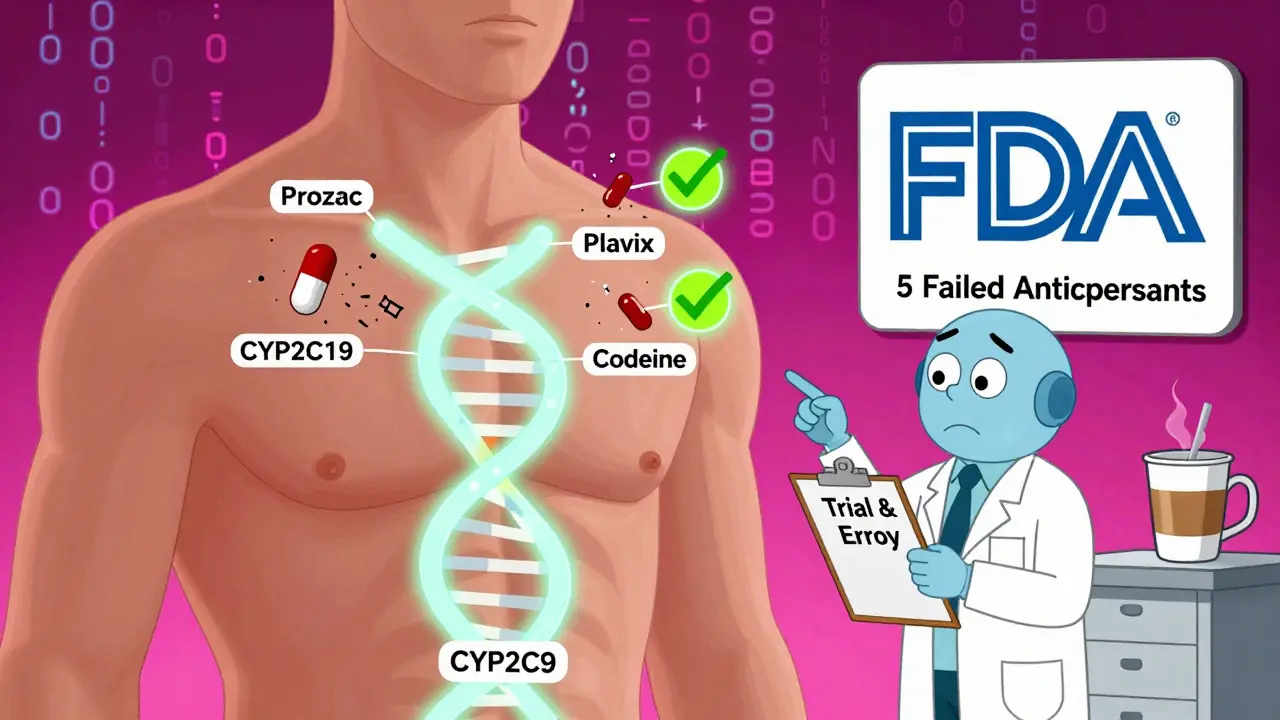
Not everyone reacts to the same medication the same way. Two people with the same diagnosis, on the same dose, can have wildly different outcomes. One feels better. The other ends up in the hospital. Why? It’s often because of genes. Your DNA holds clues about how your body breaks down drugs. Some people are fast metabolizers - their bodies clear medications too quickly, making the dose ineffective. Others are slow metabolizers - drugs build up to toxic levels. This isn’t guesswork. It’s measurable. Genes like CYP2D6, CYP2C19, and CYP2C9 control the enzymes that process about 75% of all prescription drugs. These include antidepressants, blood thinners, painkillers, and even cancer treatments. For example, if you carry a certain variant of CYP2D6, standard doses of codeine or tramadol won’t relieve your pain - because your body can’t convert them into their active form. On the flip side, if you’re a super metabolizer, you might turn a low-dose opioid into a dangerous overdose without realizing it. The FDA has flagged over 178 drugs with genetic warnings in their labels. One of the clearest cases is abacavir, an HIV drug. People with the HLA-B*57:01 gene variant have a 50-60% chance of a life-threatening allergic reaction if they take it. Testing for this gene before prescribing has nearly eliminated these reactions. No more guesswork. Just safety.How Pharmacogenomics Testing Works
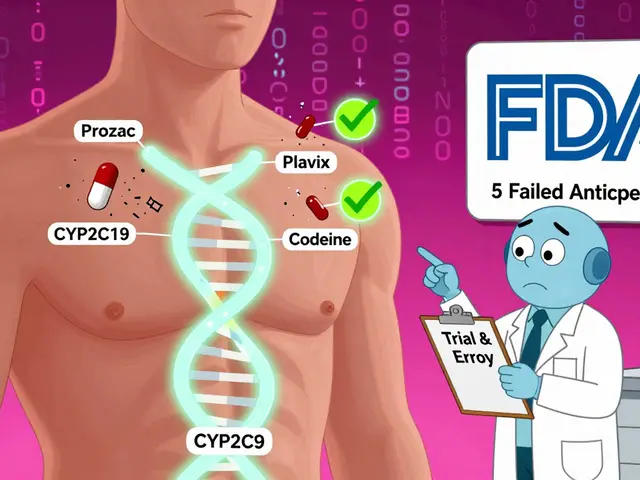
Getting tested is simple. A swab from your cheek or a drop of blood is sent to a lab. In 3 to 14 days, you get a report that tells your doctor how you’re likely to respond to specific medications. Most tests focus on 10-20 key genes tied to common drugs. The cost? Usually between $250 and $500 - a one-time fee that can save you years of trial and error. The results don’t tell you what drug to take. They tell your doctor what to avoid. A typical report might say: “Avoid fluoxetine (Prozac) - poor metabolizer.” Or: “Dose of clopidogrel (Plavix) should be doubled.” These aren’t opinions. They’re based on guidelines from the Clinical Pharmacogenetics Implementation Consortium (CPIC) - a group backed by the NIH and top hospitals that reviews hundreds of studies to make evidence-based recommendations. Some labs, like OneOme and Invitae, now offer reports that integrate directly into electronic health records. If your doctor prescribes a drug that conflicts with your genes, the system flags it automatically. No more missed alerts.Where It Makes the Biggest Difference
Pharmacogenomics isn’t useful for every drug. Penicillin? No need. But for medications with narrow safety margins - where small changes in dose can mean the difference between healing and harm - it’s game-changing. Psychiatry: About 40-60% of people with depression don’t respond to their first antidepressant. A 2022 study in the Journal of Clinical Psychiatry found that patients who got gene-guided treatment were 30.5% more likely to achieve remission. One patient on Reddit shared that after five failed antidepressants, testing revealed he was a CYP2D6 poor metabolizer. Switching to bupropion worked immediately. Cardiology: Clopidogrel (Plavix) is a blood thinner used after heart attacks. But if you have a CYP2C19 variant, your body can’t activate it. The FDA says these patients have a 50% higher risk of heart events. Testing prevents that. Doctors simply switch to ticagrelor or prasugrel - drugs that don’t rely on that enzyme. Oncology: Tamoxifen, used for breast cancer, needs CYP2D6 to work. Poor metabolizers get little benefit. Testing helps avoid months of ineffective treatment. For pain management, opioids like oxycodone and hydrocodone are also heavily influenced by CYP2D6 status.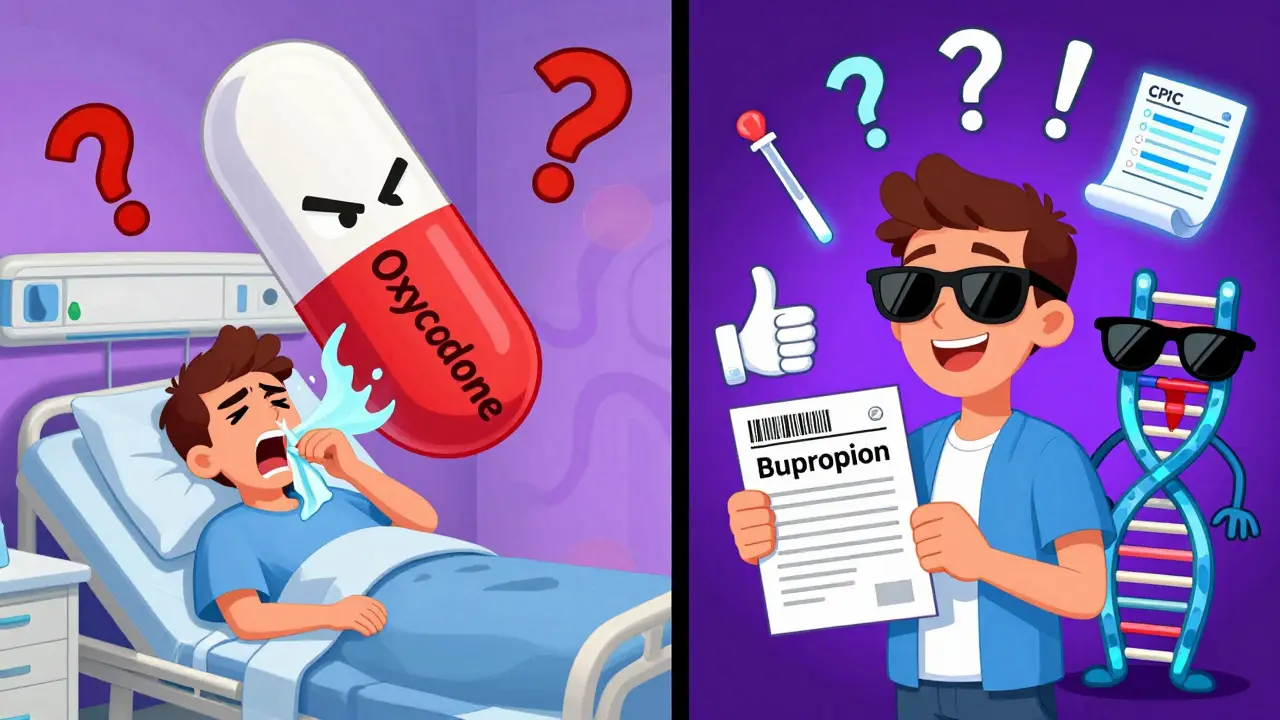
What It Can’t Do
It’s easy to think genes control everything. They don’t. Pharmacogenomics explains only about 10-15% of why people respond differently to drugs. Other factors matter too: age, liver function, other medications, diet, even gut bacteria. Also, most studies have been done on people of European descent. Data on African, Asian, and Indigenous populations is still limited. A 2023 review in Nature Medicine warned that over 90% of genetic variants with potential drug effects haven’t been studied in non-European groups. That means test results might be less accurate for some people. And not every gene-drug pair has strong evidence. The Institute for Clinical and Economic Review (ICER) gave high value scores only for specific uses - like depression treatment - but low scores for broad, pre-emptive testing in healthy people. Don’t expect a gene test to solve every medication problem. It solves the big ones.Who’s Using It - And Who’s Not
Adoption is growing fast. In 2017, only 2.1 million pharmacogenomic tests were done in the U.S. By 2022, that jumped to 18.3 million. Academic hospitals lead the way - 63% now have formal programs. Community clinics? Only 17% do. Insurance coverage is still spotty. Only 35% of private plans cover testing. Medicare Part B covers it for certain cases, like antidepressant selection. Out-of-pocket costs can be a barrier. Even when patients get tested, providers often don’t know how to use the results. A 2022 study found that only 52% of doctors fully followed pharmacogenomic recommendations. Why? Lack of training. Only 15% of physicians feel confident interpreting reports. That’s changing. More medical schools now teach pharmacogenomics. Pharmacist specialists - trained to decode these reports - are becoming standard in hospitals.
The Future Is Here - But It’s Not Perfect
The FDA approved its first next-generation pharmacogenomic test in early 2023. EHR systems like Epic now auto-flag dangerous drug-gene combinations. The NIH’s All of Us program is collecting genetic data from over 620,000 Americans - including diverse populations - and returning results to participants. By 2027, experts predict 30% of prescriptions will include genetic data. By 2030, half of all U.S. adults may have their pharmacogenomic profile stored in their medical record. That’s not hype. It’s the trajectory. The savings could be massive. The Rand Corporation estimates widespread use could cut U.S. healthcare costs by $137 billion a year by preventing hospitalizations from bad drug reactions. But here’s the catch: technology alone won’t fix this. We need better training for doctors. Fairer data for all populations. More insurance coverage. And realistic expectations from patients.Is It Right for You?
If you’ve tried multiple medications without success - especially for depression, anxiety, heart disease, or chronic pain - pharmacogenomics testing might be worth considering. If you’ve had a bad reaction to a drug before, it’s even more relevant. Talk to your doctor or pharmacist. Ask if they’ve used genetic testing before. If they haven’t, ask if they’re willing to learn. Bring up CPIC guidelines. Mention specific genes like CYP2D6 or CYP2C19. You’re not asking for a miracle. You’re asking for science. This isn’t about replacing your doctor. It’s about giving them better tools. And for many people, that’s the difference between suffering and healing.Is pharmacogenomics testing covered by insurance?
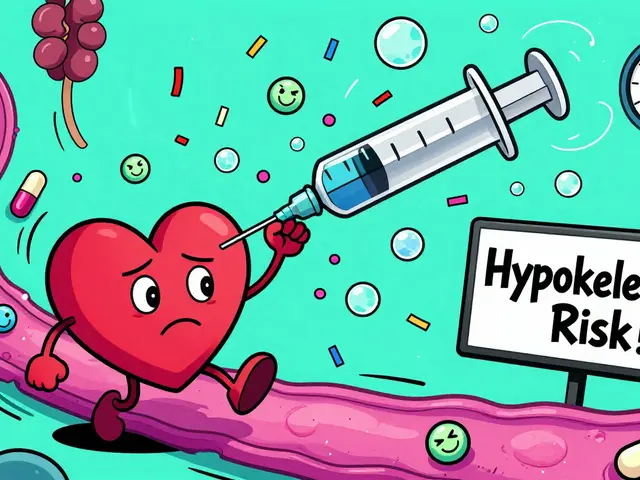
Coverage varies. Medicare Part B covers testing for certain antidepressants and antiplatelet drugs like clopidogrel. Most private insurance plans don’t cover it broadly yet - only about 35% do. Some employers and large health systems offer it as part of preventive care. Always check with your insurer before testing.
How long does it take to get results from a pharmacogenomics test?
Most clinical tests take 3 to 14 days. Some labs offer expedited results in under 72 hours. Turnaround time depends on the lab, the number of genes tested, and whether the sample is sent to a CLIA-certified facility. Results are usually delivered to your provider, not directly to you.
Can pharmacogenomics testing predict side effects for all medications?
No. It only applies to drugs with known gene-drug interactions - about 178 medications listed by the FDA. Common examples include antidepressants, blood thinners, painkillers, and some cancer drugs. For medications like antibiotics or blood pressure pills with wide safety margins, genetic testing usually isn’t needed.
Do I need to retake the test if I get a new one?
No. Your genes don’t change. Once you’ve had a pharmacogenomics test, the results are lifelong. You don’t need to repeat it unless a new, more comprehensive test becomes available - and even then, your original data can still be useful.
Are there risks to getting a pharmacogenomics test?
The test itself is low-risk - it’s just a saliva swab or blood draw. The bigger risk is misunderstanding results. Some people think a negative result means a drug is completely unsafe, or that a positive result guarantees success. Neither is true. Results guide decisions, not replace them. Always discuss them with a qualified provider.
What if my doctor doesn’t believe in pharmacogenomics?
It’s common. Many providers haven’t been trained in this area. Bring printed guidelines from CPIC or PharmGKB. Ask to speak with a clinical pharmacist - they’re often more familiar with pharmacogenomics. If your doctor refuses to consider the results, consider seeking a second opinion from a specialist in personalized medicine or a hospital-affiliated clinic.

peter vencken
March 25, 2026 AT 03:32man i got tested last year after my doc nearly killed me with that SSRIs mess. turns out i'm a CYP2D6 ultra-rapid metabolizer. took 3 years and 5 different meds before someone thought to check my genes. now i'm on bupropion and actually sleep at night. why isn't this routine??
Caroline Bonner
March 26, 2026 AT 22:45I can’t believe this isn’t standard practice everywhere. I’m in Canada, and my psychiatrist pushed for testing after I had three failed antidepressant trials-each one left me nauseous, zoning out, or suicidal. The results? I’m a slow CYP2C19 metabolizer. Fluoxetine? Toxic. Sertraline? Barely processed. Switched to escitalopram and a tiny dose of vortioxetine, and within 10 days, I felt like myself again. It’s not magic-it’s biology. Why are we still guessing with people’s lives? I’ve been lobbying our provincial health ministry to mandate testing for psychiatric meds. Someone needs to make this mandatory. It’s not expensive-it’s cheaper than ER visits.
Also, the part about HLA-B*57:01 and abacavir? That’s the poster child for how this works. We’ve known about this since 2008. Why isn’t every HIV clinic running this test before the first prescription? It’s insane.
And yes, the data gaps for non-European populations are real. My mom’s from the Philippines, and I’m terrified her results might not reflect her actual metabolism. We need more diversity in research. Not just for equity-but for accuracy.
Pharmacogenomics isn’t about replacing doctors. It’s about arming them with data they’re not getting in med school. I’ve sent CPIC guidelines to three different GPs. Two replied with ‘interesting.’ One said, ‘I’ve never heard of that.’ We’re still in the Stone Age.
My sister’s cardiologist refused to change her Plavix dose after her test showed CYP2C19 loss-of-function. She had a stent clot. Now she’s on ticagrelor. She’s alive because she demanded a second opinion. Please, if you’ve had bad drug reactions-ask. Push. Bring printouts. Be annoying. It could save your life.
And yes, the test is a one-time deal. Your genes don’t change. Store that report like your passport. I keep mine in my phone, my cloud, and a printed copy in my wallet. Just in case.
Also-insurance? My employer covered it. Yours might too. Ask. If they say no, ask again. And again. We’re not asking for a luxury. We’re asking for basic science.
Linda Foster
March 27, 2026 AT 20:43While the scientific foundation of pharmacogenomics is compelling, its clinical implementation remains inconsistent. The evidence supporting gene-drug interactions for a limited number of medications is robust, yet the broader application of preemptive testing in healthy populations lacks sufficient cost-benefit validation. The Institute for Clinical and Economic Review has rightly flagged the absence of conclusive data for universal screening. Furthermore, the integration of genetic data into electronic health records introduces complex ethical, privacy, and interpretive challenges that require standardized protocols, which are currently underdeveloped. Until these systemic issues are addressed, targeted testing for high-risk clinical scenarios remains the most prudent approach.
Kevin Siewe
March 29, 2026 AT 19:14I work in a hospital pharmacy and see this daily. The biggest hurdle isn't the science-it's the doctors. Half of them don't even open the report. They just glance at the top line and say 'oh, okay.' We have pharmacists trained to interpret these, but they're not always consulted. We're starting a program where we flag high-risk meds in the EHR and auto-notify the prescriber + pharmacist. It's working. Slowly. But it's working.
Also-yes, the data gap for non-European populations is a huge problem. We had a patient last month with a rare variant that wasn't even in the database. We had to call the lab for a manual review. We need more global data. Period.
And no, you don't need to retake the test. Ever. Unless you're a clone.
Chris Farley
March 29, 2026 AT 23:26so you're telling me we should be running dna tests on everyone before they get a prescription? next they'll be testing our blood for political views. this is just big pharma and tech bros pushing another surveillance tool under the guise of 'personalized medicine.' they don't care about you-they care about selling more tests and locking you into their ecosystem. we don't need genetic profiling-we need better training for doctors and cheaper drugs. stop turning medicine into a sci-fi dystopia.
Darlene Gomez
March 31, 2026 AT 16:07I love how this post doesn’t sugarcoat it. Yes, it’s not perfect. Yes, the data is skewed. Yes, most docs don’t know what to do with it. But that doesn’t mean we throw it out. It means we push harder.
I’m a nurse practitioner, and I started requiring gene testing for anyone on three or more meds. Not because I’m obsessed with DNA-but because I’ve seen too many people suffer needlessly. One woman had been on five different blood pressure pills for years. Her test showed she was a CYP2C9 poor metabolizer. Switched to a non-metabolized alternative. BP dropped to normal in a week. No side effects. No dizziness. Just… normal.
It’s not about replacing intuition. It’s about upgrading it. We’re not talking about destiny. We’re talking about avoiding poison. And if you’ve ever been on a med that made you feel worse, you know what I mean.
Also-yes, we need better data for non-European populations. But that’s not a reason to ignore what we know. It’s a reason to demand more research. Let’s not let perfect be the enemy of life-saving.
Katie Putbrese
April 1, 2026 AT 03:11THIS IS WHY AMERICA IS FALLING APART. We used to have REAL doctors who knew their stuff. Now we’re letting computers and gene tests make decisions? What’s next? AI prescribing insulin based on your zodiac sign? I’ve been on the same meds for 20 years. I’m fine. Why should I pay $500 to let some lab tell me what my doctor already knows? This is just another scam to make money off scared people. And don’t get me started on the 'diversity' nonsense-we don’t need more testing for people who didn’t even know what a gene is. Stop overcomplicating simple medicine.
Jacob Hessler
April 1, 2026 AT 03:19bro i got tested after i got hospitalized from a migraine med. turns out i was a slow metabolizer. doc didn't even know what cyp2d6 was. i had to print out the cpic page and show him. now i'm on a diff med and i'm alive. if u had a bad reaction to a drug u should get tested. it's like 500 bucks. it's worth it. also my genes don't change so i'm good for life. lol
Amber Gray
April 2, 2026 AT 13:30omg same!! I got tested after 4 failed antidepressants and it changed my life 🥹💊. my doc was like 'huh' and then googled it on his phone. but now i'm on bupropion and i actually like my life again. also my genes don't change so i'm basically a superhero now 🦸♀️✨