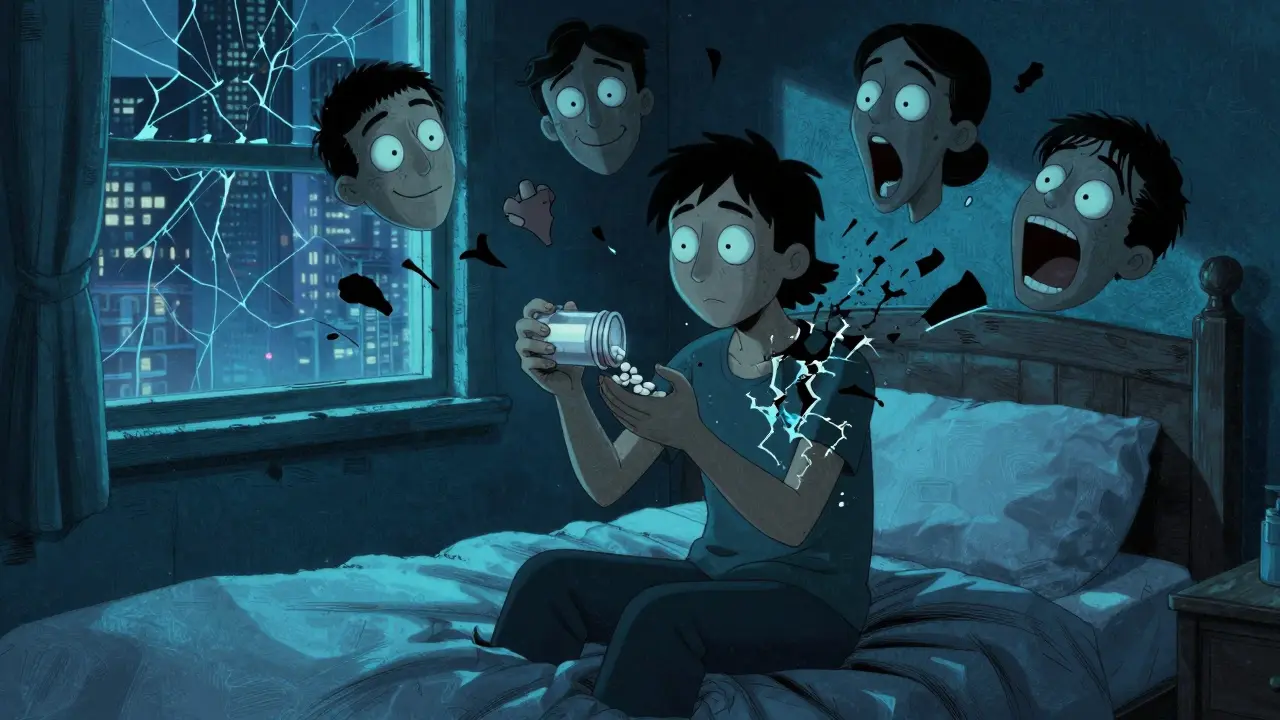
When you’ve been on the same psychiatric medication for months-or years-it stops feeling like a drug. It becomes part of you. The morning pill, the steady rhythm, the quiet relief from anxiety or the lifting fog of depression. Then one day, your doctor says: medication switching is needed. Maybe it’s not working well enough. Maybe your insurance dropped coverage. Maybe they switched you to a generic. Suddenly, you’re not just changing a pill. You’re changing how you feel, think, and even who you are.
Why Switching Feels Like Losing Yourself
It’s not just about chemistry. It’s about identity. A 2023 study from King’s College London found that over 11% of people on antidepressants in the UK switched meds within 90 days. Most didn’t choose to. They were told it was necessary. And for many, the psychological fallout was worse than the original symptoms. People describe it as feeling like a stranger in their own body. One Reddit user wrote: “I felt like a different person after the switch. Like someone stole my emotions and replaced them with static.” Another said, “I lost six months of progress. All the therapy, all the hard work-gone.” This isn’t rare. The National Alliance on Mental Illness (NAMI) surveyed over 1,800 people and found 63% experienced psychological distress during a switch. Nearly 4 in 10 reported increased anxiety. Over a third had thoughts of suicide. These aren’t side effects. These are emotional earthquakes.The Three Psychological Phases of Switching
Research shows people go through predictable emotional stages when switching meds:- Loss of self - When you first start taking a medication, it often feels like a miracle. You sleep. You smile. You get out of bed. But when you stop, you don’t just lose the drug-you lose the version of yourself it helped create. A 2023 Frontiers in Psychiatry study found 100% of participants felt this way at first.
- Withdrawal chaos - Your brain is rewiring. You might get electric-shock sensations, dizziness, or brain zaps. One patient described it as “a junky who needs the drug.” These aren’t myths. They’re documented. Up to 78% of people report these symptoms during withdrawal, especially with short-half-life drugs like paroxetine.
- Stability-or not - Only about 35% of people ever feel like they’ve truly settled into a new routine. For others, it’s a cycle: switch, crash, stabilize, switch again. Each time, the trust in your treatment erodes.
Generic vs. Brand: It’s Not About the Pill
Most switches happen because of cost. Insurance companies push generics. Doctors agree. But here’s the truth: it’s not the generic itself that causes problems. It’s the switch. A 2019 review by Dr. Pierre Blier found that 68% of bad reactions happened when people switched between two different generic versions-not between brand and generic. Why? Because even “identical” generics can have different fillers, coatings, or release rates. For drugs with narrow therapeutic windows-like SSRIs, antipsychotics, or mood stabilizers-those tiny differences matter. One patient switched from brand-name sertraline to a generic and spent three weeks emotionally numb. Then came panic attacks she hadn’t had in two years. She ended up hospitalized. Her doctor didn’t know why. Neither did the pharmacist. The medication was “bioequivalent.” But her brain didn’t care.
Who Gets Left Behind
Not everyone experiences switching the same way. Your income, education, and access to care play a huge role. UK Biobank data shows people with university degrees were 25% less likely to switch antidepressants than those without a high school diploma. Why? They had better access to specialists, more time to ask questions, and the confidence to push back when something felt wrong. Meanwhile, people earning under $30,000 a year were 33% more likely to have a negative psychological outcome after a switch. They couldn’t afford to wait. They couldn’t afford to switch back. They were stuck. And it’s getting worse. Primary care doctors now handle 85% of mental health prescriptions. But only 22% of family medicine residencies teach proper switching protocols. Most aren’t trained to recognize withdrawal symptoms. They’re told: “It’s just a pill. Swap it.”How to Switch Safely
Switching doesn’t have to be a disaster. But it needs care. The safest method? Cross-tapering. That means slowly lowering the old medication while slowly raising the new one. It takes 3-4 weeks. It’s not quick. But it cuts psychological side effects by 37% compared to cold turkey. Here’s what works:- Know your drug’s half-life. Paroxetine leaves your system in 21 hours. Fluoxetine takes nearly 4 days. The faster it clears, the slower you must taper.
- Track your mood daily. Use a simple app or notebook. Note sleep, anxiety, energy, thoughts. This helps your doctor spot early warning signs.
- Ask for a written plan. Don’t rely on memory. Get the taper schedule in writing. How much to reduce? When? What symptoms to watch for?
- Insist on communication. If you’re switched without warning, speak up. Say: “I need to understand why. I need to be involved.”
The Trust That Breaks
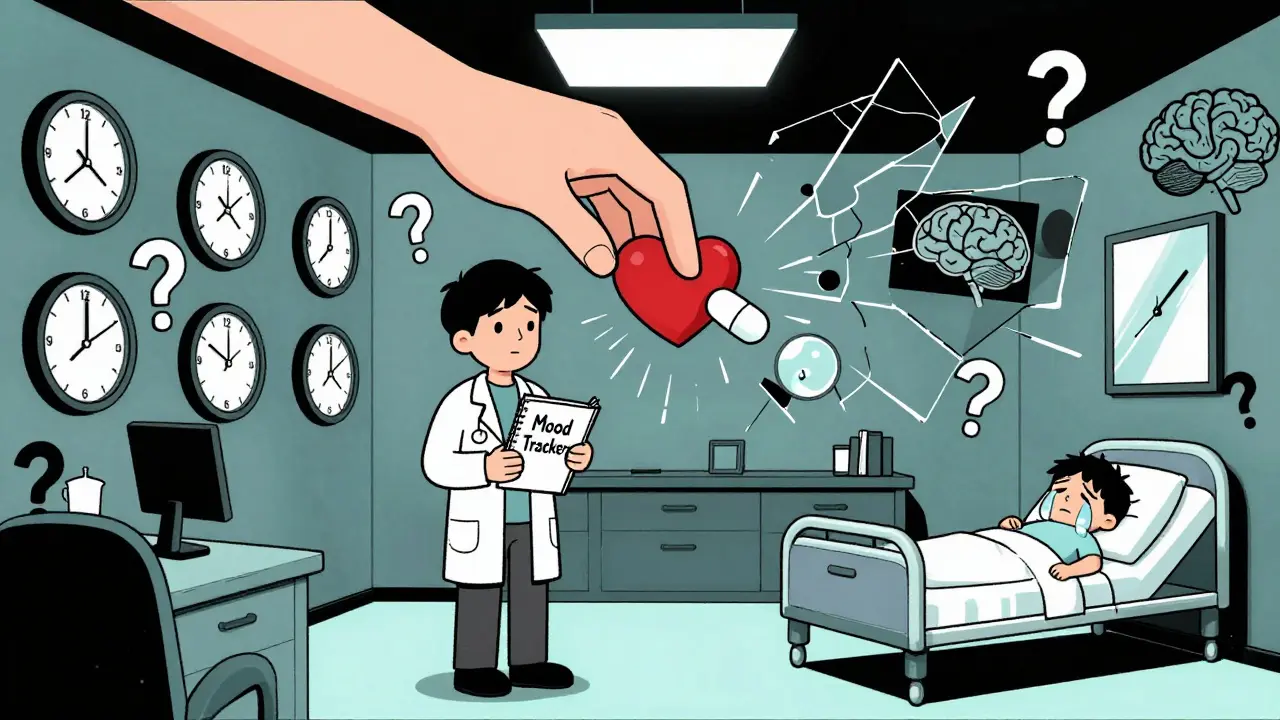
The deepest wound isn’t the dizziness or the panic. It’s the erosion of trust. A Psych Central poll found 74% of people felt less confident in their treatment after an unplanned switch. That’s not just about the drug. It’s about feeling like your body, your mind, your life-was treated like a data point. Dr. K. N. Roy Chengappa puts it plainly: “Patients often feel betrayed. They think, ‘If they could switch me so easily, was any of this real?’” That’s the hidden cost of medication switching. It’s not just psychological. It’s relational. You’re not just changing meds. You’re changing your relationship with your own healing.What’s Changing Now
There’s hope. The FDA is launching a new surveillance system in 2024 to track psychological outcomes from switching across 25 million patients. The American Psychiatric Association is updating its guidelines to include genetic predictors of switching response. And apps like Pear Therapeutics’ reSET are helping people monitor symptoms during transitions-with a 27% drop in hospitalizations in trials. But the biggest change needs to happen in the doctor’s office. Switching isn’t a cost-saving tactic. It’s a medical procedure. And like any procedure, it needs consent, preparation, and follow-up. If you’re being asked to switch, ask these questions:- Why now? Is this because the drug isn’t working-or because my insurance changed?
- What’s the plan? How will we taper? How often will we check in?
- What symptoms should I watch for? When should I call you?
- Can I go back to the original if things go wrong?
You’re Not Overreacting
If you’ve switched meds and felt like you’ve lost yourself-you haven’t imagined it. You’re not weak. You’re not crazy. You’re responding to a biological and psychological disruption that’s been poorly understood for decades. The system treats medication switching like changing a lightbulb. But your brain isn’t a bulb. It’s a living, adapting, deeply personal system. The next time someone tells you “it’s just a different pill,” remember: it’s not just a pill. It’s the thing that helped you breathe again. And when you lose that, you don’t just lose a drug-you lose a part of your recovery. The real question isn’t whether you should switch. It’s whether anyone is listening when you say it hurts.Can switching antidepressants cause depression to get worse?
Yes. Up to 71% of patients in case studies experienced symptom worsening or relapse after switching, especially when moved from branded to generic versions without warning. Withdrawal symptoms can mimic or trigger depression, anxiety, or even suicidal thoughts. This isn’t always due to the new drug-it’s often the shock of withdrawal and destabilization.
Why do I feel weird after switching to a generic medication?
Generic drugs must meet FDA bioequivalence standards, but those standards don’t always capture subtle differences in how your brain responds. Fillers, coatings, and release rates can vary between generics-even from the same manufacturer. For drugs with narrow therapeutic windows, like SSRIs or antipsychotics, these tiny changes can trigger withdrawal symptoms, mood swings, or emotional numbness.
How long do withdrawal symptoms last after switching meds?
It depends on the drug. For short-half-life medications like paroxetine, symptoms can start within 24-48 hours and last 1-3 weeks. For longer-acting drugs like fluoxetine, withdrawal may be delayed but can linger for weeks or even months. Cross-tapering over 3-4 weeks reduces severity and duration. If symptoms last longer than 6 weeks, consult your doctor-this may indicate the new medication isn’t right.
Is it safe to switch psychiatric meds without a doctor’s supervision?
No. Abruptly stopping or switching psychiatric medications can lead to severe withdrawal syndromes, including seizures, psychosis, or suicidal ideation. Even if the new drug is in the same class, your brain needs time to adjust. Always follow a medically supervised tapering plan. Never change dosage or switch on your own.
Can genetic testing help predict how I’ll respond to a medication switch?
Some companies offer pharmacogenetic tests that analyze how your body metabolizes drugs. While promising, evidence is still limited. Only 15% of primary care providers use them regularly. They may help identify if you’re a slow or fast metabolizer, but they can’t predict how your brain will emotionally respond to a switch. Use them as one tool-not a guarantee.
What should I do if I feel worse after a medication switch?
Don’t wait. Contact your prescriber immediately. Keep a daily log of your symptoms-mood, sleep, energy, thoughts. If you’re having suicidal thoughts, go to an emergency room or call a crisis line. You’re not alone. Many people have been where you are, and recovery is possible. You have the right to be heard and to return to a medication that works for you.
Virginia Seitz
December 15, 2025 AT 17:05Just took my pill this morning and cried for no reason. 🥲 I didn’t even know I was holding my breath until I stopped. It’s not the drug. It’s the ghost of the person I was before the switch.
Peter Ronai
December 16, 2025 AT 06:03Oh wow, another ‘I lost myself’ sob story. Newsflash: your brain isn’t a snowglobe you shake and expect it to stay pretty. You’re on psych meds because you’re broken. The system isn’t out to get you-it’s just trying to cut costs. Get over it. Some of us have real problems like rent and food.
Sachin Bhorde
December 18, 2025 AT 05:24Bro, I switched from escitalopram to fluoxetine last year after my insurance dropped coverage. Felt like a zombie for 3 weeks-brain zaps, insomnia, zero motivation. But here’s the thing: cross-tapering saved me. Went from 10mg to 5mg over 10 days, then added 10mg fluoxetine at 5mg increments. Took 4 weeks. No hospital. No panic. Just patience. Also, use Moodfit app. Logs help u track the chaos. 💪
Jody Patrick
December 19, 2025 AT 16:30Stop whining. America pays for your meds. That’s more than most countries do. If you can’t handle a pill change, maybe you shouldn’t be on them at all.
Jonathan Morris
December 21, 2025 AT 08:50The FDA’s bioequivalence standards are a joke. 80%-125% range? That’s not medicine-it’s Russian roulette with serotonin. And you think the pharmaceutical-industrial complex doesn’t profit from this? They make billions off repeat switches. The real ‘psychological fallout’ is systemic fraud disguised as healthcare policy. They don’t care if you feel like a ghost. They care if your insurance paid.
CAROL MUTISO
December 22, 2025 AT 05:30Oh honey. I’ve been through three switches. Each time, I felt like someone rewired my soul with duct tape and hope. But here’s what I learned: you’re not losing yourself-you’re rediscovering what’s underneath the chemical veil. The numbness? That was the armor. The panic? That’s your real self screaming to be heard. It’s ugly. It’s messy. But it’s yours. And you’re not broken-you’re becoming. 🌱
Martin Spedding
December 22, 2025 AT 19:22Switched from sertraline to generic and had a full-on emotional breakdown in Target. Cried over the cereal aisle. Like, why is this happening to me? My doctor just shrugged. ‘It’s just a pill.’ I swear to god, I thought I was going to die. Took 6 weeks to feel human again. Now I’m on brand again. Screw insurance.
Raven C
December 23, 2025 AT 08:57It is, in fact, profoundly disconcerting to experience a disruption in one’s neurochemical equilibrium without informed consent. The commodification of mental health care, wherein pharmacological interventions are treated as interchangeable commodities, represents a grotesque failure of medical ethics. One’s identity is not a variable in a cost-benefit analysis. This is not merely a pharmacological issue-it is a moral catastrophe.
Patrick A. Ck. Trip
December 24, 2025 AT 04:49I appreciate the depth of this post. It’s rare to see such care taken in explaining the human side of medication changes. I’ve been on the same SSRI for 8 years and am terrified of switching. But your advice about cross-tapering and written plans? That’s gold. I’m printing this out to take to my doctor next week. Thank you.
Sam Clark
December 24, 2025 AT 15:14This is exactly why we need better training in primary care. I’m a nurse practitioner and I’ve seen too many patients get switched without a taper, without education, without follow-up. It’s not negligence-it’s systemic neglect. We need policy changes, yes, but also more empathy in the exam room. Your voice matters. Keep speaking up.
amanda s
December 24, 2025 AT 23:28So what? You think you’re the only one who’s suffered? My brother died from an overdose after switching meds. He was told it was ‘just a different pill.’ You think your panic attacks are special? Get over yourself. This country is falling apart and you’re crying about your serotonin levels? Pathetic.