
PAMORA Suitability & Comparison Tool
Patient Profile Assessment
Assessment Result
Recommended Options
Imagine living with chronic pain. You take your opioids because they are the only thing that lets you function. But then comes the side effect that makes life miserable: severe, stubborn constipation. Traditional laxatives just don't cut it. They might help a little, but often they fail to move things along, leaving you in discomfort while still dealing with your underlying pain.
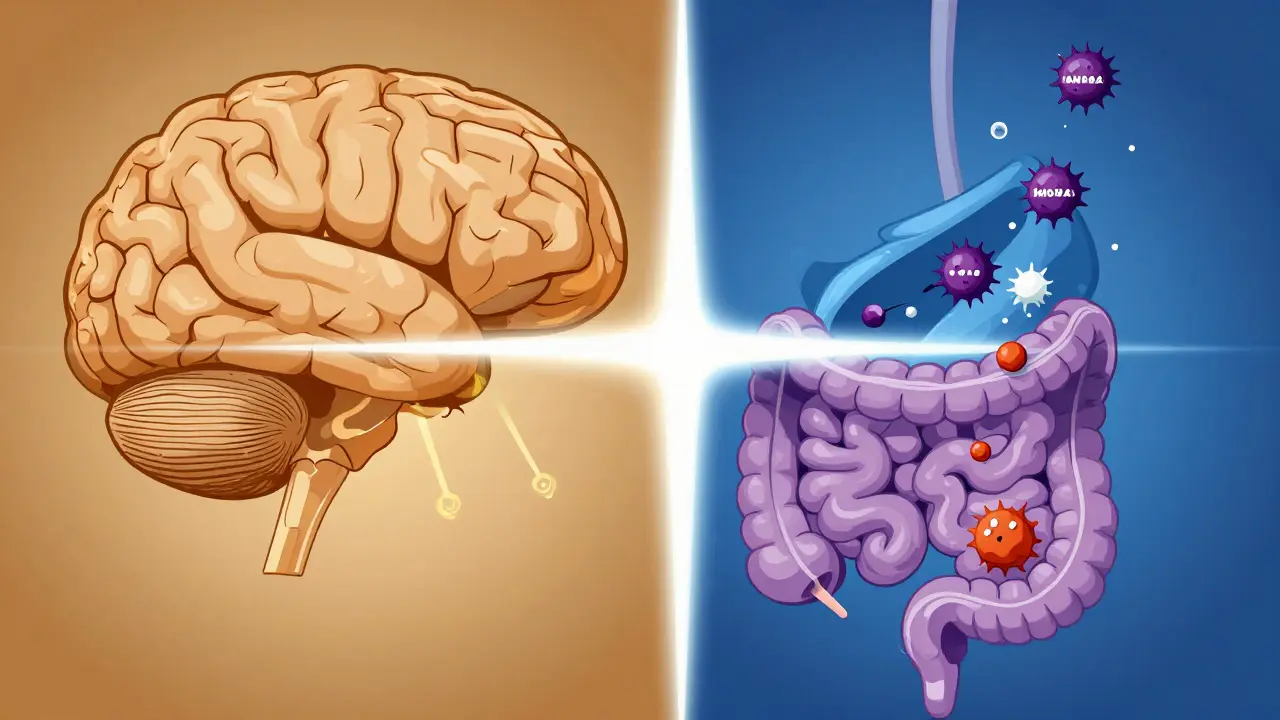
This is where PAMORAs, or peripherally acting mu-opioid receptor antagonists, come into play. These drugs are designed specifically for this problem. They block the opioid effects in your gut without crossing into your brain. The result? Your bowel movements return to normal, but your pain relief stays intact. It sounds like magic, but it is actually precise pharmacology.
What Exactly Are PAMORAs?
To understand how these drugs work, you first need to know why opioids cause constipation. Opioids bind to mu-opioid receptors. These receptors are everywhere, including in your central nervous system (which handles pain) and in your gastrointestinal tract (which handles digestion). When opioids hit the receptors in your gut, they slow down motility, increase fluid absorption, and tighten sphincters. The result is hard, infrequent stools.
PAMORAs are a class of medications that selectively block mu-opioid receptors in the peripheral nervous system, particularly in the gut, without affecting central pain relief.
The key word here is "peripheral." These molecules are engineered so they cannot cross the blood-brain barrier in significant amounts. Because they stay out of the brain, they do not reverse the analgesic (pain-relieving) effects of opioids. At the same time, they kick the opioids off the receptors in your intestines, restoring normal movement. This targeted approach solves the root cause of opioid-induced constipation (OIC), rather than just treating the symptoms like traditional laxatives try to do.
The Main Players: Methylnaltrexone, Naloxegol, and Naldemedine
There are three primary PAMORAs approved for use today. Each has its own chemical structure, administration method, and specific use cases. Knowing the differences helps you and your doctor choose the right one.
| Drug Name | Brand Name | Formulation | Key Feature |
|---|---|---|---|
| Methylnaltrexone | Relistor | Subcutaneous injection & Oral tablet | Quaternary amine structure prevents BBB crossing; no CYP450 interactions |
| Naloxegol | Movantik | Oral tablet | Pegylated derivative of naloxone; requires hepatic dose adjustment |
| Naldemedine | Symproic | Oral tablet | Polyethylene glycol chain enhances peripheral selectivity; once-daily dosing |
Methylnaltrexone was the pioneer, approved by the FDA in 2008. It comes as an injection under the skin or as an oral tablet. Its molecular structure includes a charged quaternary amine group. This charge acts like a lock, keeping the molecule from slipping through the tight junctions of the blood-brain barrier. It is also unique because it is not metabolized by the liver's cytochrome P450 enzymes. This means it has very few drug-drug interactions, which is huge for patients taking multiple medications.
Naloxegol is a pegylated version of naloxone. Pegylation involves attaching polyethylene glycol chains to the molecule, making it larger and more water-soluble. This modification ensures it stays in the periphery. It is taken orally once a day. However, because it is processed differently, patients with moderate liver impairment may need a lower dose.
Naldemedine, approved in 2017, also uses a polyethylene glycol chain to achieve peripheral selectivity. Like naloxegol, it is an oral tablet taken daily. Clinical trials showed it had a response rate similar to other agents in the class, offering another option for patients who prefer oral medication over injections.
Who Should Consider PAMORAs?
Not everyone on opioids needs a PAMORA. For many people, lifestyle changes and standard laxatives are enough. However, if you have tried stimulant laxatives (like senna or bisacodyl) and osmotic laxatives (like polyethylene glycol) for at least a week without success, you might be a candidate.
PAMORAs are indicated for two main groups:
- Patients with chronic non-cancer pain: If you live with conditions like osteoarthritis, back pain, or fibromyalgia and take opioids long-term, OIC can severely impact your quality of life. Studies show that up to 80% of chronic opioid users experience some form of constipation, and for many, it is severe.
- Cancer patients receiving palliative care: In this population, maintaining pain control is critical. OIC can lead to nausea, vomiting, and even bowel obstruction. Methylnaltrexone, in particular, has strong evidence supporting its use in palliative settings, with clinical trials showing over 50% of patients having a bowel movement within four hours of treatment.
It is important to note that Alvimopan (Entereg) is another agent in this family, but it is used differently. It is restricted to hospital settings for accelerating gut recovery after bowel resection surgery. Due to potential cardiovascular risks with long-term use, it is not intended for chronic outpatient management of OIC.
Effectiveness and What to Expect
When you start a PAMORA, what happens? Most patients notice a change quickly. In clinical trials for methylnaltrexone, about 52% of patients had a spontaneous bowel movement within four hours, compared to 30% on placebo. For naloxegol and naldemedine, the response rates were around 44-48% over 12 weeks.
Does it stop working over time? Some patients report tolerance, where the drug seems less effective after a few weeks or months. This is not fully understood, but it may relate to changes in gut physiology or opioid dosage adjustments. If this happens, doctors may switch between different PAMORAs or adjust the timing of doses.
One common concern is whether PAMORAs will reduce pain relief. The design of these drugs minimizes this risk, but individual responses vary. A small percentage of patients (estimated at 15-20% in early studies, though later data suggests lower rates) may experience a slight reduction in analgesia. If you notice your pain breaking through more than usual, talk to your doctor immediately. Do not stop the medication abruptly without medical advice.
Safety, Side Effects, and Contraindications
Like all medications, PAMORAs have side effects. The most common ones are related to the gut itself, since that is where the drug is active.
- Abdominal cramping or pain: As the gut starts moving again, you may feel cramps. This is usually mild and temporary.
- Diarrhea: If the dose is too high, you might go from constipated to having loose stools. Dose adjustment can fix this.
- Nausea and bloating: These are reported by some patients but often resolve within a few days.
There is one major contraindication for all PAMORAs: mechanical gastrointestinal obstruction. If you have a physical blockage in your intestines (such as from a tumor, stricture, or adhesion), taking a PAMORA can be dangerous. By stimulating gut movement against a blockage, you risk perforation (a tear in the intestine). Always rule out mechanical causes before starting therapy.
Renal and hepatic function matters too. Methylnaltrexone requires a 50% dose reduction if you have severe kidney impairment (creatinine clearance below 30 mL/min). Naloxegol is contraindicated in severe renal impairment. Naldemedine generally does not require dose adjustment for kidney issues but should be used cautiously in liver disease.

Cost and Access Challenges
Here is the tricky part: PAMORAs are expensive. Without insurance coverage, the annual cost can range from $5,000 to $6,000. Even with insurance, copays can be high. Many patients report frustration when their preferred drug is denied coverage or requires prior authorization.
Manufacturer coupons and patient assistance programs can help. For example, Salix Pharmaceuticals (maker of Relistor) and Takeda (maker of Movantik) offer savings cards. However, access remains a barrier for many. A 2023 white paper from the American Gastroenterological Association noted that without price reductions, only 35-40% of eligible patients actually get access to these treatments. This gap drives many to stick with cheaper, less effective laxatives.
If cost is an issue, discuss generic alternatives or older laxative combinations with your doctor. Sometimes, rotating types of laxatives or adding fiber supplements can provide partial relief until financial situations improve.
Practical Tips for Taking PAMORAs
To get the best results, follow these practical steps:
- Timing is key: Take your PAMORA at the same time every day. Some experts recommend taking it about an hour before your peak opioid effect for optimal synergy.
- Stay hydrated: Since PAMORAs restore fluid balance in the gut, drinking plenty of water helps prevent diarrhea and keeps stools soft.
- Monitor closely: Keep a simple log of your bowel movements and any side effects. Share this with your doctor during follow-ups. It helps them fine-tune your dose.
- Do not crush tablets: Unless specified, swallow oral tablets whole. Crushing can alter absorption and potentially affect safety.
- Watch for interactions: While methylnaltrexone has few interactions, always inform your pharmacist about all meds you take, especially if you are on other gut-affecting drugs.
Future Directions
Research into OIC treatments continues. New formulations are emerging, such as higher-strength methylnaltrexone tablets for resistant cases. There are also trials combining PAMORAs with other pro-motility agents (like 5-HT4 agonists) to boost effectiveness. Biosimilars may enter the market in the coming years, potentially lowering costs. For now, PAMORAs remain the gold standard for managing opioid-induced constipation when conservative measures fail.
Can PAMORAs cause addiction?
No. PAMORAs are antagonists, meaning they block opioid receptors rather than activate them. They do not produce euphoria or dependence. They are safe to use alongside opioids without addiction risk.
How long does it take for PAMORAs to work?
Many patients experience a bowel movement within 4 to 24 hours of the first dose. For oral agents like naloxegol and naldemedine, consistent daily use over 1-2 weeks establishes a regular pattern.
Are PAMORAs safe for elderly patients?
Yes, but with caution. Elderly patients often have reduced kidney or liver function. Dose adjustments may be necessary. Always consult a doctor to assess renal and hepatic status before starting.
What if I forget a dose?
Take it as soon as you remember, unless it is close to the next scheduled dose. Do not double up. Missing one dose occasionally is unlikely to cause immediate severe constipation, but consistency is best for ongoing management.
Can I stop taking my opioids if I start a PAMORA?
No. PAMORAs are meant to allow you to continue opioids safely. Stopping opioids abruptly can lead to withdrawal symptoms. Any changes to opioid dosage should be managed by your healthcare provider.