It starts as a simple headache or a sore knee. You reach for the ibuprofen, naproxen, or aspirin sitting in your medicine cabinet. It’s safe, right? It’s over-the-counter. But what happens when you take too much, or take it for too long? The answer isn’t just a stomach ache. It’s gastrointestinal bleeding, a silent and potentially deadly complication that turns a routine painkiller into a hospital emergency.
Non-steroidal anti-inflammatory drugs (NSAIDs) are among the most widely used medications globally. While they effectively reduce pain and inflammation, their mechanism of action carries a heavy price tag for your digestive system. An NSAID overdose doesn’t always look like a dramatic poisoning event; often, it manifests as chronic, cumulative damage that leads to severe bleeding without prior warning symptoms.
How NSAIDs Damage the Gut Lining
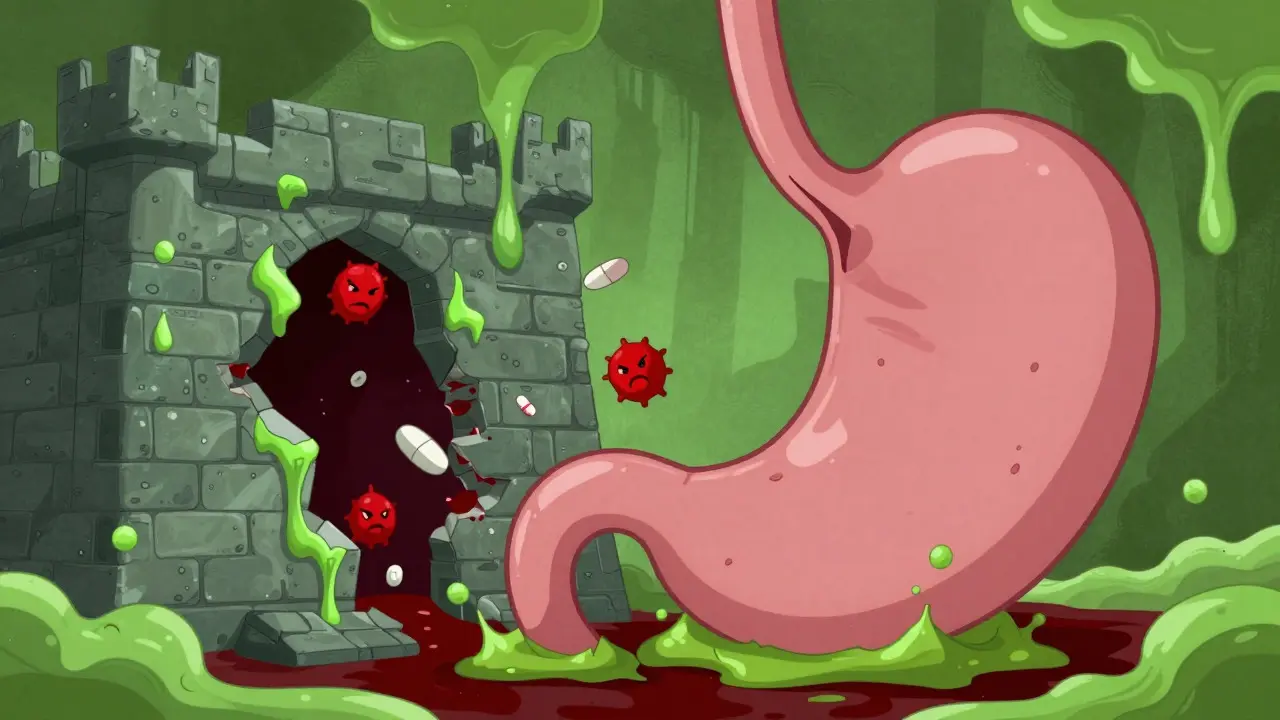
To understand the risk, you need to know how these drugs work. NSAIDs block enzymes called cyclooxygenase (COX). There are two main types: COX-1 and COX-2. COX-2 is involved in inflammation and pain. COX-1, however, protects your stomach lining by stimulating the production of prostaglandins-chemicals that keep the mucosal barrier thick and healthy.
When you take an NSAID, especially in high doses or frequently, you inhibit COX-1. This strips away your stomach’s natural defense shield. Without this protection, stomach acid begins to eat away at the tissue. This process creates erosions, which can deepen into ulcers. If an ulcer erodes into a blood vessel, bleeding occurs.
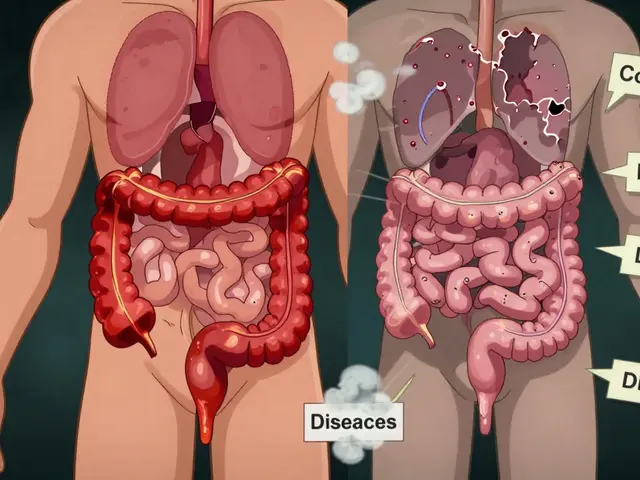
This injury isn’t limited to the stomach. NSAIDs can cause damage throughout the entire gastrointestinal tract, from the esophagus down to the colon. In fact, studies show that up to 70% of patients taking NSAIDs long-term have endoscopic abnormalities like erosions or subepithelial hemorrhage, even if they feel perfectly fine. Only about 10% report classic symptoms like heartburn or indigestion. This disconnect between feeling sick and being sick is what makes NSAID-induced injury so dangerous.
The Silent Killer: Occult vs. Overt Bleeding
Not all bleeding is visible. Understanding the difference between overt and occult bleeding is crucial for early detection.
- Overt Bleeding is visible signs of gastrointestinal hemorrhage, such as vomiting blood (hematemesis) or passing black, tarry stools (melena). Melena occurs because blood is digested as it moves through the intestines, turning dark and sticky.
- Occult Bleeding is hidden blood loss that is not visible to the naked eye but causes iron deficiency anemia over time. This is particularly insidious because patients may only notice fatigue or shortness of breath, mistaking it for aging or stress.
Clinical trials have shown that over 50% of patients on long-term NSAID therapy develop anemia defined as a hemoglobin drop of more than 2 g/dL, yet many show no obvious lesion on standard upper endoscopy. This suggests that small bowel bleeding, which is harder to detect, plays a significant role in NSAID toxicity.
Who Is at Highest Risk?
Not everyone who takes an extra pill will bleed. However, certain factors create a perfect storm for gastrointestinal catastrophe. The risk is not linear; it compounds.
| Risk Factor | Impact on Bleeding Risk | Mechanism |
|---|---|---|
| History of Peptic Ulcer | Highest Risk | Prior damage weakens the mucosal integrity, making recurrence likely. |
| Helicobacter pylori Infection | 1.2-Fold Increase | Synergistic effect: H. pylori damages the lining while NSAIDs inhibit healing. |
| Concomitant Aspirin Use | 2- to 4-Fold Increase | Dual inhibition of platelet function and mucosal protection drastically raises risk. |
| Advanced Age (>65) | Significant Increase | Aging reduces mucosal blood flow and resilience; often combined with polypharmacy. |
| Dual Antiplatelet Therapy | Two-Fold Increase | Common post-heart attack; adds cardiovascular risk alongside bleeding risk. |
One of the most dangerous scenarios involves patients taking low-dose aspirin for heart protection who then add an over-the-counter NSAID for pain. The American College of Cardiology and other bodies note that combining NSAIDs with aspirin increases the annual risk of upper GI events to nearly 6%. Surprisingly, switching to a COX-2 selective inhibitor (like celecoxib) does not necessarily solve this problem when aspirin is also in the mix, as the aspirin itself remains a major irritant.
Recognizing an NSAID Overdose
An acute NSAID overdose-taking a large amount at once-presents differently than chronic misuse. While GI bleeding is a delayed consequence, acute toxicity affects multiple systems.
If someone ingests a massive dose of ibuprofen or naproxen, watch for these immediate signs:
- Gastrointestinal Distress: Nausea, vomiting, abdominal pain, and potential bleeding.
- Neurological Symptoms: Dizziness, tinnitus (ringing in the ears), headache, and in severe cases, seizures or coma.
- Renal Failure: NSAIDs constrict blood vessels in the kidneys. An overdose can lead to acute kidney injury, characterized by reduced urine output and swelling.
- Metabolic Acidosis: A buildup of acid in the body, leading to rapid breathing and confusion.
Aspirin overdose is particularly tricky because it causes a mixed acid-base disorder. Patients may initially breathe rapidly (respiratory alkalosis) before crashing into metabolic acidosis. This requires immediate medical intervention.
Immediate Care and Management
If you suspect an NSAID overdose, time is critical. Do not wait for symptoms to worsen. Here is the standard approach to care, based on clinical guidelines.
1. Stabilization and Decontamination
In a hospital setting, the first step is stabilizing vital signs. If the patient arrived within one to two hours of ingestion, doctors may consider activated charcoal to absorb the drug in the stomach. Gastric lavage (stomach pumping) is rarely used now unless the ingestion was massive and recent. Hemodialysis is sometimes employed for severe salicylate (aspirin) poisoning to remove the drug from the blood.
2. Treating the Bleed
Once bleeding is identified, usually via endoscopy, the goal is to stop it. Endoscopic therapies include injecting epinephrine, applying thermal coagulation, or clipping the bleeding vessel. Simultaneously, intravenous proton pump inhibitors (PPIs) are administered to raise the stomach pH, which helps clots form and stay stable.
3. Pharmacological Support
For patients with ongoing risk, PPIs are the gold standard for prophylaxis. However, be aware that while PPIs protect the stomach and duodenum, they do not fully prevent small bowel injury caused by NSAIDs. In some cases, misoprostol-a synthetic prostaglandin-may be prescribed to replace the protective chemicals the NSAID blocked, though its side effects (diarrhea, cramping) limit its use.

Prevention Strategies for Long-Term Users
If you require daily pain management, you must balance efficacy with safety. Here is how to minimize risk:
- Use the Lowest Effective Dose: More drug does not always mean less pain. Higher doses exponentially increase GI risk without proportional benefit.
- Limit Duration: Try to use NSAIDs for the shortest period possible. Rotate with acetaminophen (paracetamol) if appropriate, as it has a different safety profile regarding the gut (though it has liver risks).
- Screen for H. pylori: If you have a history of ulcers, ask your doctor to test for this bacteria. Eradicating it significantly lowers bleeding risk.
- Review All Medications: Bring a complete list of supplements and prescriptions to your pharmacist. Hidden NSAIDs exist in cold medicines and combination pain relievers.
- Consider Topical Alternatives: For joint pain, topical NSAID gels deliver medication locally with minimal systemic absorption, drastically reducing GI exposure.
Frequently Asked Questions
How quickly can an NSAID cause gastrointestinal bleeding?
Bleeding can occur after a single high dose in susceptible individuals, but it is more common after weeks or months of regular use. Acute overdoses may cause immediate mucosal irritation and vomiting, but significant ulceration and bleeding typically develop over time as the protective lining erodes. However, in patients with pre-existing ulcers or those taking blood thinners, bleeding can happen very rapidly.
Is it safe to take ibuprofen with aspirin for heart health?
Generally, no. Combining ibuprofen with low-dose aspirin increases the risk of gastrointestinal bleeding by two to four times. Ibuprofen can also interfere with aspirin's ability to prevent blood clots. If you need pain relief while on aspirin, acetaminophen is usually the safer choice. Always consult your cardiologist before adding any new medication.
What are the signs of internal bleeding from NSAIDs?
Visible signs include black, tarry stools (melena) or vomiting material that looks like coffee grounds. Less obvious signs include unexplained fatigue, dizziness, pale skin, and shortness of breath, which indicate anemia from slow, hidden blood loss. Abdominal pain that is sharp or persistent is also a red flag.
Do enteric-coated NSAIDs prevent stomach bleeding?
No. Enteric coating delays the dissolution of the pill until it reaches the intestine, which might reduce immediate stomach irritation, but it does not prevent systemic inhibition of prostaglandins. Since the drug still enters the bloodstream and affects the entire GI tract, the risk of ulcers and bleeding remains similar to non-coated versions.
Can NSAID overdose damage the kidneys permanently?
Yes. NSAIDs reduce blood flow to the kidneys by constricting afferent arterioles. In a healthy person, this might be temporary. However, in an overdose scenario, or in dehydrated/elderly patients, this can lead to acute tubular necrosis or interstitial nephritis. If untreated, this can progress to permanent chronic kidney disease or require dialysis.
What should I do if I accidentally take too many NSAIDs?
Contact Poison Control or seek emergency medical attention immediately, even if you feel fine. Symptoms can be delayed. Bring the medication bottle with you to help medical staff determine the exact dose and type of drug ingested. Do not induce vomiting unless instructed by a professional.