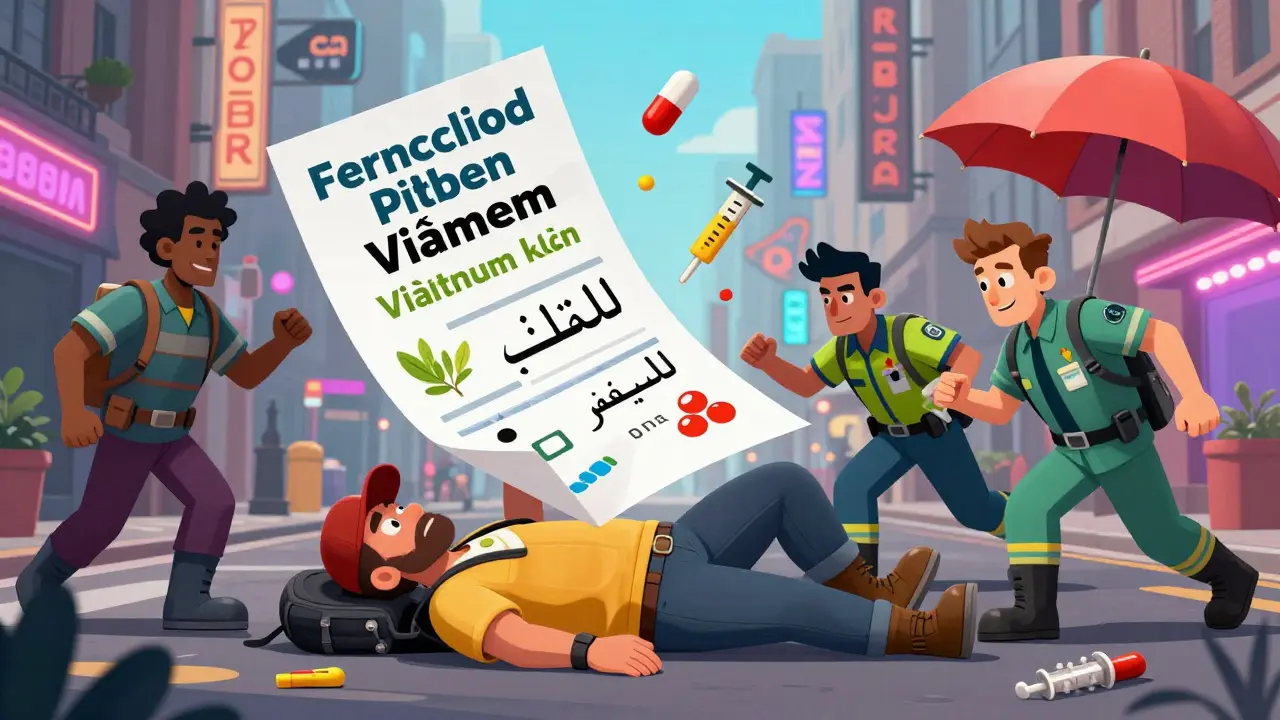
Imagine you’re traveling abroad, and suddenly you feel dizzy, your chest tightens, or your skin breaks out in hives. You can’t speak the local language. The paramedics ask what medications you’re taking-but you can’t explain. This isn’t a rare scenario. Every year, thousands of travelers and immigrants face medical emergencies where language becomes a life-or-death barrier. The solution isn’t complicated: keep a multilingual medication list. But most people don’t know how to make one that actually works in a crisis.
Why a Simple List Isn’t Enough
A handwritten note saying "I take blood pressure medicine" won’t help an ER doctor in Tokyo or Barcelona. Medication names vary by country. Lisinopril might be called "Lisinopril" in the U.S., but in France it’s "Lisinopril" too-wait, no, sometimes it’s "Zestril." And if you’re taking a traditional herb like turmeric or ashwagandha, most translation tools won’t recognize it. The problem isn’t just translation-it’s accuracy, context, and accessibility.Studies show that patients with limited English proficiency are 50% more likely to have a medication error during an emergency. In one case, a woman in Chicago had a severe allergic reaction because the ER staff didn’t know she was taking penicillin. Her Spanish-language medication list, printed from the Tennessee Pharmacists Association’s Universal Medication List (UML), had the exact name, dosage, and reason for use. The doctor saw it, recognized the allergy, and avoided a fatal mistake.
What Goes on a Real Emergency Medication List
A good multilingual medication list isn’t just a translation. It’s a standardized medical document. Here’s what you need to include for every medication:- Brand and generic name (e.g., "Lisinopril (Zestril)")
- Dosage (e.g., "10 mg")
- Frequency (e.g., "once daily")
- Purpose (e.g., "for high blood pressure")
- Prescribing doctor’s name and phone number
- Start date (e.g., "January 2024")
- Supplements and herbal remedies (yes, even turmeric and ginkgo)
Don’t leave out anything. Even if you think it’s "just a vitamin," it could interact with emergency drugs. One man in London collapsed after taking ibuprofen with his blood thinner. The ER team didn’t know he was taking fish oil supplements-until his daughter showed them his multilingual list, which included it in Arabic and English.
Where to Get Reliable Multilingual Templates
You don’t have to guess or translate yourself. Several trusted organizations offer free, professionally translated templates:- Tennessee Pharmacists Association (TPA) UML: Available in 10 languages including Spanish, Chinese, Vietnamese, Arabic, Russian, and Somali. It’s printable, simple, and used in U.S. hospitals. Download it from their official site.
- NPS MedicineWise: Australia’s national health service offers a free app (iOS and Android) that lets you store your meds in 11 languages. You can even set dose reminders. It’s great if you’re traveling to Australia or have family there.
- MedlinePlus: Run by the U.S. National Library of Medicine, this site offers medication guides in over 40 languages. Search for "medication list" and pick your language. It’s not interactive, but it’s accurate and free.
- British Red Cross Emergency Phrasebook: Not a medication list, but it includes 150+ medical phrases in 36 languages, including "I am taking these medications" and "I am allergic to." Keep this in your wallet alongside your list.
Don’t use Google Translate for this. It often mistranslates medical terms. "Take with food" might become "eat with medicine," which changes everything.
How to Use It in an Emergency
Having the list isn’t enough-you need to make sure it’s found and understood.- Carry a physical copy in your wallet, purse, or travel bag. Use a clear plastic sleeve so it doesn’t get wet.
- Take a photo and save it on your phone with a clear label: "MEDS - EMERGENCY." Set your lock screen to show it if someone needs to access your phone.
- Wear a medical alert bracelet if you have serious allergies or conditions like diabetes. Add a QR code that links to your digital list (you can generate one for free on sites like QRCode Monkey).
- Tell someone-a travel companion, family member, or host-where you keep it. In a panic, you might not be able to speak or move.
One woman in Bali had a seizure. Her husband couldn’t speak Indonesian. He pulled out her printed list in English and Vietnamese. The nurse recognized the name of her seizure medication, called the hospital pharmacy, and gave her the right dose within minutes.
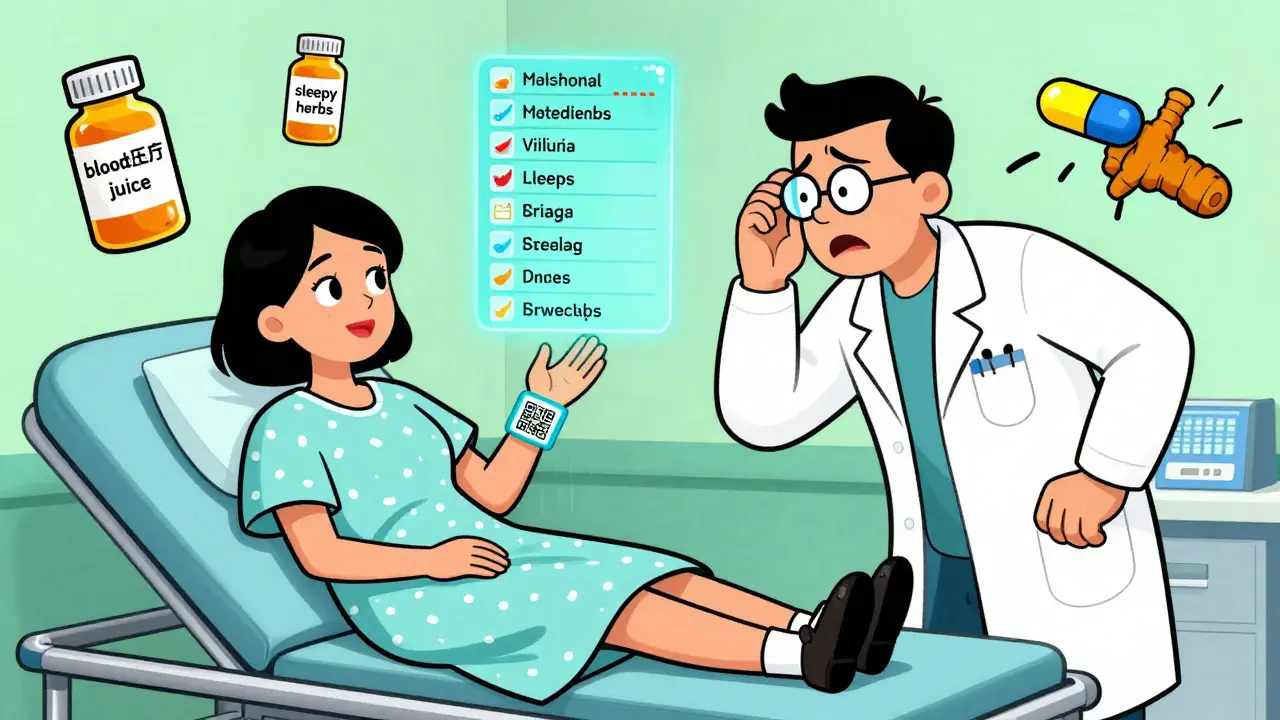
Language Gaps You Can’t Ignore
Not all languages are treated equally. Spanish and French are widely covered. But what about Hmong, Karen, or Oromo? The CDC added those languages to their resources in early 2024 because refugee populations in the U.S. were being left out. If your language isn’t listed, here’s what to do:- Ask your pharmacist. Many now offer free translation services through phone interpreters.
- Use a local community health center. They often have volunteers who speak your language and can help write a list.
- Write your list in your native language first, then have a trusted bilingual friend or interpreter translate it into English. Don’t rely on apps.
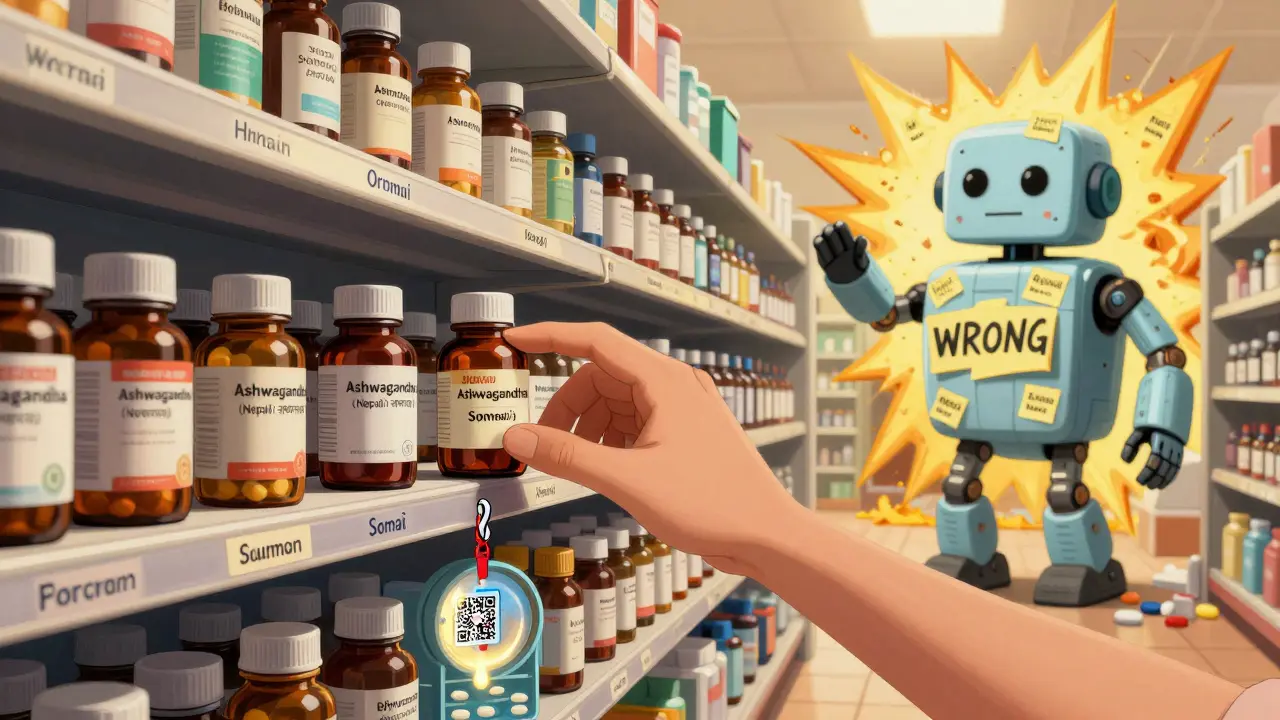
Also, remember that some cultures use herbal remedies or traditional medicines. Include them. In one case, a patient from Nepal was given a drug that interacted with his ashwagandha. His list had it listed in Nepali-and the doctor knew exactly what it was because the hospital had a database of common traditional remedies.
Update It Like Your Life Depends on It
Your medication list isn’t a one-time task. It’s a living document. Every time you see a doctor, get a new prescription, or stop a drug, update it. A 2022 study found that 78% of medication errors happened during transitions of care-like going from hospital to home, or switching doctors.Set a reminder on your phone: "Update meds list" every 3 months. Or better yet, update it after every doctor visit. If you’re traveling, update it before you leave. Don’t wait until you’re in the ER.
What to Do If You Can’t Find Your Language
If your language isn’t available on any of the official lists:- Write your list in your native language.
- Find a local interpreter-through a hospital, clinic, or community group.
- Ask them to translate it into English, then back into your language to check for errors.
- Print two copies: one in your language, one in English.
Some pharmacies now offer free translation services. Ask. If they say no, ask for the name of the organization they use for interpreter services. You can call them directly.
Common Mistakes That Cost Lives
People make these mistakes-and they’re deadly:- Writing "blood pressure pill" instead of the actual name.
- Leaving out over-the-counter meds or supplements.
- Using outdated lists from 2020.
- Keeping it in a suitcase instead of a wallet.
- Assuming the hospital will know your language.
One man in New York had a heart attack. His list was in Urdu, but he’d written "1 tablet daily" instead of "10 mg once daily." The doctor guessed the dose-and gave him too much. He survived, but barely.
Final Checklist Before You Travel
Before you leave for any trip:- Make your list using a trusted template (TPA or NPS MedicineWise).
- Include every medication, supplement, and herb.
- Translate it into the language(s) of your destination.
- Print two copies-one for your wallet, one for your travel companion.
- Save a photo on your phone with "EMERGENCY MEDS" in the file name.
- Wear a medical alert bracelet if you have allergies or chronic conditions.
- Tell someone where it is.
This isn’t about being prepared. It’s about being safe. You wouldn’t leave home without your passport. Don’t leave home without your medication list.
Can I just use a translation app for my medication list?
No. Translation apps like Google Translate often get medical terms wrong. Words like "dosage," "frequency," or "allergy" can be mistranslated, leading to dangerous errors. Always use professionally translated templates from trusted sources like the Tennessee Pharmacists Association or MedlinePlus.
What if my language isn’t on any list?
Write your list in your native language first, then take it to a local community health center, hospital, or pharmacist who offers translation services. Ask them to translate it into English and back again to check accuracy. Print both versions and carry them together.
Do I need to include vitamins and herbal supplements?
Yes. Supplements like fish oil, turmeric, or ginkgo can interact with emergency medications. Many ER doctors don’t ask about them unless they’re listed. Include everything-even if you think it’s "natural" or "harmless."
How often should I update my medication list?
Update it every time you see a doctor, get a new prescription, or stop a medication. At minimum, review it every 3 months. Medication errors are most common during transitions of care, like leaving the hospital or switching doctors.
Is a digital app better than a printed list?
Both are useful. A printed list works even if your phone dies or you’re unconscious. A digital app (like NPS MedicineWise) lets you update easily and set reminders. Carry both: the printed version in your wallet, and the app saved on your phone with a clear label.

Jake Moore
January 19, 2026 AT 08:11Just made my multilingual meds list using the TPA template-printed two copies, saved the photo on my phone with "EMERGENCY MEDS" as the filename, and gave one to my sister. Best 10 minutes I’ve spent all year. Seriously, if you travel or have chronic meds, do this. It’s not paranoia-it’s preparedness.
Joni O
January 19, 2026 AT 12:54i just realized i never updated mine since last year 😅 guess i'm adding that to my calendar now... also, i put my list in a plastic sleeve in my purse and wrote "IF I PASS OUT, CHECK MY WALLET" on the outside. weird? maybe. lifesaving? probably.
Eric Gebeke
January 21, 2026 AT 07:56Wow. Another one of those "just carry a list" feel-good posts. But let’s be real-most people don’t even know their own meds. I’ve seen ERs where the patient couldn’t even name their blood pressure pill. And don’t get me started on people who think "vitamins don’t count." If you’re taking something that changes your physiology, it’s a drug. Period. This isn’t a suggestion-it’s basic survival literacy.
Ryan Otto
January 22, 2026 AT 18:07Let’s not pretend this is about safety. This is a corporate-backed initiative disguised as public health. The Tennessee Pharmacists Association? Who funds them? Big Pharma. The "universal list" is designed to standardize you into their system. What about traditional remedies? They’re erased unless they’re in their database. And QR codes? That’s surveillance disguised as convenience. Your meds are now a digital footprint. This isn’t empowerment-it’s control.
Max Sinclair
January 24, 2026 AT 13:01I love how practical this is. I used to think I was being careful by just memorizing my meds-until my cousin had a reaction in Mexico and couldn’t communicate. We ended up calling a local pharmacy via WhatsApp, and they helped us translate. But having the list printed? That’s the real game-changer. I’m printing mine today. Also, the British Red Cross phrasebook is gold-got mine last year for my trip to Portugal. Small things save lives.
Praseetha Pn
January 26, 2026 AT 06:10OMG I KNEW IT!! This is all a setup!! They want us to write down EVERYTHING so they can track us through our meds!! And don’t even get me started on QR codes-those are microchips in disguise!! I read on a forum that the CDC is secretly linking these lists to immigration databases!! I’m writing mine in my native tongue, hiding it in my sock drawer, and only telling my cat. Also, turmeric is a mind-control suppressant, FYI. I’ve been taking it since 2018 and I’m still sane. Coincidence? I THINK NOT.
Nishant Sonuley
January 27, 2026 AT 11:20Look, I get it-having a list is smart. But let’s be honest, the real issue isn’t the list, it’s the systemic failure of healthcare systems to accommodate multilingual patients in the first place. Why should I, a person who speaks three languages and takes seven meds, have to carry a physical document like some kind of medical passport? Why isn’t the hospital system just… trained? Why isn’t there a universal EHR that auto-translates? We’re putting the burden on the patient instead of fixing the broken infrastructure. This list is a Band-Aid on a hemorrhage.
Emma #########
January 28, 2026 AT 08:48I just shared this with my mom. She’s 72, takes 8 meds, and only speaks Bengali. We printed her list in Bengali and English, and she cried. Not because she was scared-because someone finally made something for people like her. Thank you for writing this. I’ll make sure she carries it in her sari pocket. Always.
Wendy Claughton
January 29, 2026 AT 14:54This is beautiful. 🙏✨ I’ve been doing this since my dad had that stroke in Italy… I still carry his list in my wallet, even though he’s gone. It’s not just about meds-it’s about dignity. And yes, I use emojis now: 💊🌍📝❤️. I also made a little card that says: "I am not confused. I just need help reading this." It’s changed how people respond. Small things. Big impact.
Andrew Short
January 30, 2026 AT 16:43And yet, 90% of people who read this won’t do it. They’ll scroll past, say "good post," and go back to their "I’ll remember it" delusion. You know what’s worse than not having a list? Having one that’s outdated. I’ve seen ER charts with meds from 2019. That’s not negligence-that’s criminal. And don’t even get me started on people who put "as needed" without specifying what "as needed" means. "Take 1 tablet as needed"-for what? Pain? Anxiety? The devil? Stop being lazy. Your life isn’t a suggestion box.
Robert Cassidy
February 1, 2026 AT 12:31So now we’re supposed to trust a "universal list" created by Americans? Who says Lisinopril is the same as Zestril? What if I’m in a country that doesn’t recognize U.S. brand names? What if the translator is a CIA asset? This is how they track immigrants. And don’t tell me about "trusted sources"-they’re all connected. The Red Cross? Phony. The CDC? Controlled. The only safe thing to do is memorize your meds in your native tongue, write them in invisible ink, and burn the paper after use. That’s real security.
Dayanara Villafuerte
February 1, 2026 AT 18:59As someone who’s translated med lists for refugee families in LA for 8 years-YES. This. I’ve seen people die because they wrote "heart medicine" and the doctor thought it was aspirin. I’ve seen grandmas hand me a crumpled note with Hindi and English scribbled together. This system works. And yes, I use emojis. 🌎💊❤️🩹 I also teach people to say: "I take this for my blood, my heart, my sleep." Simple. Human. Real.
Andrew Qu
February 1, 2026 AT 23:31One quick tip: if you’re on blood thinners, always write the exact INR target range if you know it. ER docs in rural areas don’t always have time to dig through charts. And if you’re using herbal stuff-list the brand name too. Ashwagandha from Himalaya vs. NOW Foods? Different extracts. Different effects. I’m a pharmacist. I’ve seen this go wrong too many times. Don’t skip the details. Your life isn’t a grocery list.