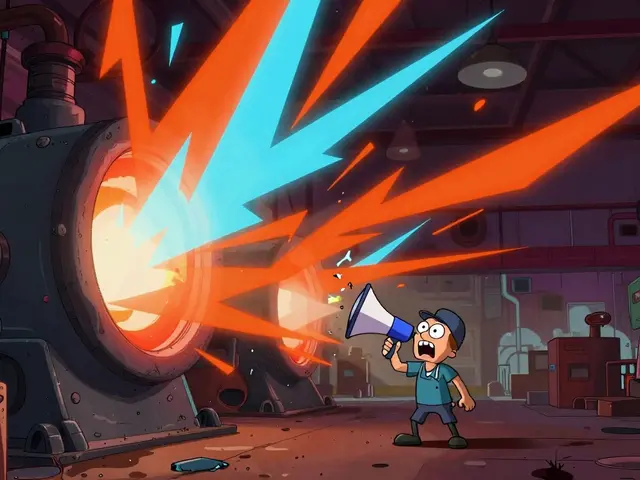
Imagine walking onto a factory floor where the roar of machinery is so loud that you have to shout just to be heard by someone standing two feet away. Now imagine doing that for eight hours a day, five days a week, for twenty years. For millions of workers, this isn’t a hypothetical scenario-it’s their daily reality. The result? Noise-induced hearing loss (NIHL), one of the most common yet entirely preventable work-related illnesses in the United States.
If you manage a team exposed to high noise levels, or if you’re an employee wondering why your employer insists on those earplugs and annual tests, you need to understand Hearing Conservation Programs (HCPs). These aren’t just bureaucratic checkboxes; they are legally mandated safety protocols designed to stop permanent damage before it starts. Under OSHA’s regulation 29 CFR 1910.95, employers must implement these programs when noise exposure hits specific thresholds. But what exactly does that mean for your business or your health?
When Does Your Workplace Need a Hearing Conservation Program?
The trigger for a mandatory Hearing Conservation Program is precise. It kicks in when employee noise exposures equal or exceed an 8-hour time-weighted average (TWA) of 85 decibels measured on the A-scale with slow response. This is known as the "action level." If your workers are consistently exposed to noise at or above this level, your company is legally required to have a compliant HCP in place.
Why 85 dBA? Because science shows that prolonged exposure at this level begins to cause physiological changes in the inner ear. While the permissible exposure limit (PEL) remains at 90 dBA-a standard unchanged since 1983-the action level serves as an early warning system. According to data from the National Institute for Occupational Safety and Health (NIOSH a federal agency dedicated to researching occupational safety and health), approximately 22 million American workers are exposed to hazardous noise levels annually. Ignoring the 85 dBA threshold doesn’t save money; it risks costly lawsuits, penalties, and, more importantly, irreversible worker disability.
The Five Pillars of a Compliant Hearing Conservation Program
A Hearing Conservation Program isn’t a single document; it’s a living system built on five core components mandated by OSHA. Missing even one can lead to citations. Here is what each pillar entails:
- Noise Monitoring: You must measure noise levels using calibrated sound level meters or dosimeters. This identifies which areas and jobs expose workers to 85 dBA TWA or higher. Crucially, monitoring isn’t a one-time event. If you change equipment, processes, or layout, you must re-monitor because noise profiles shift.
- Audiometric Testing: This is the diagnostic heart of the program. It involves regular hearing tests to detect shifts in hearing ability over time.
- Hearing Protection: Employers must provide a variety of hearing protectors (earplugs and earmuffs) free of charge. Workers must be trained to use them correctly. The goal is to attenuate exposure to below 90 dBA TWA.
- Training: Annual training is non-negotiable. Workers need to understand how noise damages hearing, how to insert their protectors properly, and why the audiometric tests matter.
- Recordkeeping: Documentation is your proof of compliance. Noise monitoring records must be kept for at least two years. Audiometric test results must be maintained for the duration of the employee’s employment.
Navigating Audiometric Testing: Baselines and Annual Checks
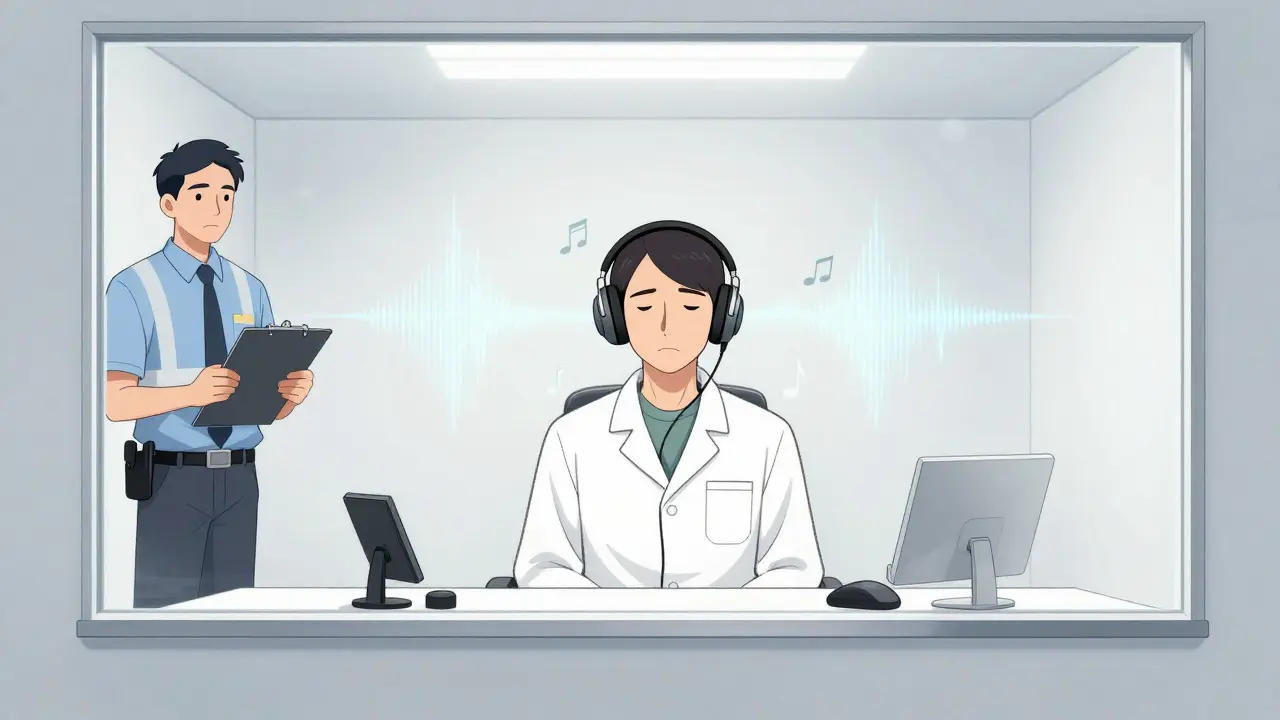
Audiometric testing is often the most misunderstood part of an HCP. It’s not just about checking boxes; it’s about establishing a medical baseline for each worker’s hearing health.
The Baseline Audiogram Every employee who enters a zone with noise exposure at or above 85 dBA TWA must receive a baseline audiogram within six months of their first exposure. There is a strict catch: the employee must be free from workplace noise for at least 14 hours prior to this test. Why? To ensure temporary threshold shifts from recent noise exposure don’t skew the long-term data. If the 14-hour quiet period isn’t met, the test is invalid, and you’ll have to reschedule.
Annual Follow-Ups After the baseline, annual audiograms are required for all covered employees. These tests must be conducted in rooms that meet specific background sound pressure levels outlined in Appendix C of OSHA regulations. The equipment used must be calibrated audiometers meeting ANSI American National Standards Institute specifications (currently transitioning to ANSI S3.6-2018).
The tests must cover specific frequencies, including at minimum 500, 1000, 2000, and 3000 Hz. Some state plans, like California Title 8 Section 5097, require additional frequencies. The environment matters just as much as the machine; a noisy break room is not a valid testing site.
| Requirement | Specification | Purpose |
|---|---|---|
| Baseline Timing | Within 6 months of first exposure | Establish individual hearing reference point |
| Pre-Test Quiet Period | Minimum 14 hours | Eliminate temporary threshold shift interference |
| Testing Frequencies | 500, 1000, 2000, 3000 Hz (min) | Detect early signs of noise-induced damage |
| Equipment Standard | ANSI S3.6-2018 (proposed) | Ensure accuracy and calibration consistency |
What Happens When Hearing Loss Is Detected?
The most critical moment in any Hearing Conservation Program is the detection of a Standard Threshold Shift (STS). An STS is defined as a change in hearing threshold relative to the baseline audiogram of an average of 10 dB or more at 2000, 3000, and 4000 Hz.
If an STS is identified, the clock starts ticking. Employers have specific obligations within 30 days:
- Notify the Employee: Written notification must occur within 21 days of the determination. Transparency is key here.
- Refit and Retrain: The employee must be refitted with hearing protectors and retrained on their proper use. Often, an STS indicates the current protection isn’t fitting well or being worn correctly.
- Upgrade Protection: If necessary, provide hearing protectors with greater attenuation capabilities.
- Medical Referral: Refer the employee for a clinical audiological evaluation if a medical pathology is suspected or if further testing is needed.
If the follow-up test confirms the shift is persistent, the baseline audiogram is revised. This prevents the same shift from being flagged repeatedly, focusing resources on new changes rather than old data.
Cost, Compliance, and Real-World Challenges
Implementing a robust HCP has costs, but the price of non-compliance is far steeper. The average cost for a comprehensive HCP ranges from $250 to $400 per employee annually, with audiometric testing accounting for nearly half of that expense. Small businesses face particular hurdles, with non-compliance rates significantly higher than in larger corporations.
However, effective programs pay dividends. Workplaces with strong HCPs report 5-10% higher productivity and 15-20% lower absenteeism. Why? Because workers who can hear clearly communicate better, make fewer errors, and feel safer. In 2022 alone, OSHA issued over 1,800 citations for hearing conservation violations, with penalties ranging from $15,000 to over $150,000 depending on severity. That’s money better spent on mobile audiometric units-which reduce employee downtime by 60%-or high-quality hearing protection.
Common pitfalls include inconsistent employee participation in testing (reported by 68% of safety managers) and difficulties with proper fit testing. Many companies struggle with the "one size fits all" approach to earplugs. Custom-molded options or professional fit-testing services can resolve this, ensuring the Noise Reduction Rating (NRR) actually matches real-world performance.
Looking Ahead: Regulatory Changes and Best Practices
The landscape of hearing conservation is evolving. OSHA’s recent initiatives propose modernizing standards, such as requiring the latest ANSI calibration standards and expanding test frequencies to include 4000 and 6000 Hz. These changes aim to catch high-frequency hearing loss earlier, which is often the first sign of NIHL.
For employers, the takeaway is clear: treat your HCP as a dynamic health initiative, not a static legal requirement. Invest in proper training, use technology like mobile testing units to boost participation, and prioritize fit-testing. For employees, wear your protection, attend your tests, and speak up if your hearing feels off. Early detection through annual audiometric testing combined with proper hearing protection can prevent permanent hearing damage in up to 75% of at-risk workers. Don’t wait for the silence to set in.
What is the action level for noise exposure under OSHA?
The action level is an 8-hour time-weighted average (TWA) of 85 decibels (dBA). When employee exposure reaches or exceeds this level, employers must implement a Hearing Conservation Program, including audiometric testing and hearing protection.
How often must audiometric testing be performed?
A baseline audiogram is required within six months of an employee's first exposure at or above the action level. After that, annual audiometric testing is mandatory for all employees covered by the program.
What is a Standard Threshold Shift (STS)?
An STS is a measurable change in hearing sensitivity, defined as an average increase of 10 dB or more at 2000, 3000, and 4000 Hz compared to the baseline audiogram. Detecting an STS triggers specific employer actions, including notification and retraining.
Do small businesses need a Hearing Conservation Program?
Yes. OSHA regulations apply regardless of company size. If workers are exposed to noise at or above 85 dBA TWA, a compliant HCP is legally required. However, small businesses often face higher non-compliance rates due to resource constraints.
What happens if an employee fails the 14-hour quiet period before a baseline test?
The baseline test is considered invalid because temporary noise-induced threshold shifts may skew the results. The employer must reschedule the test after the employee has been free from workplace noise for at least 14 hours.
How long must audiometric records be kept?
Employers must maintain audiometric test results for the entire duration of an employee's employment. Noise exposure monitoring records must be kept for at least two years.