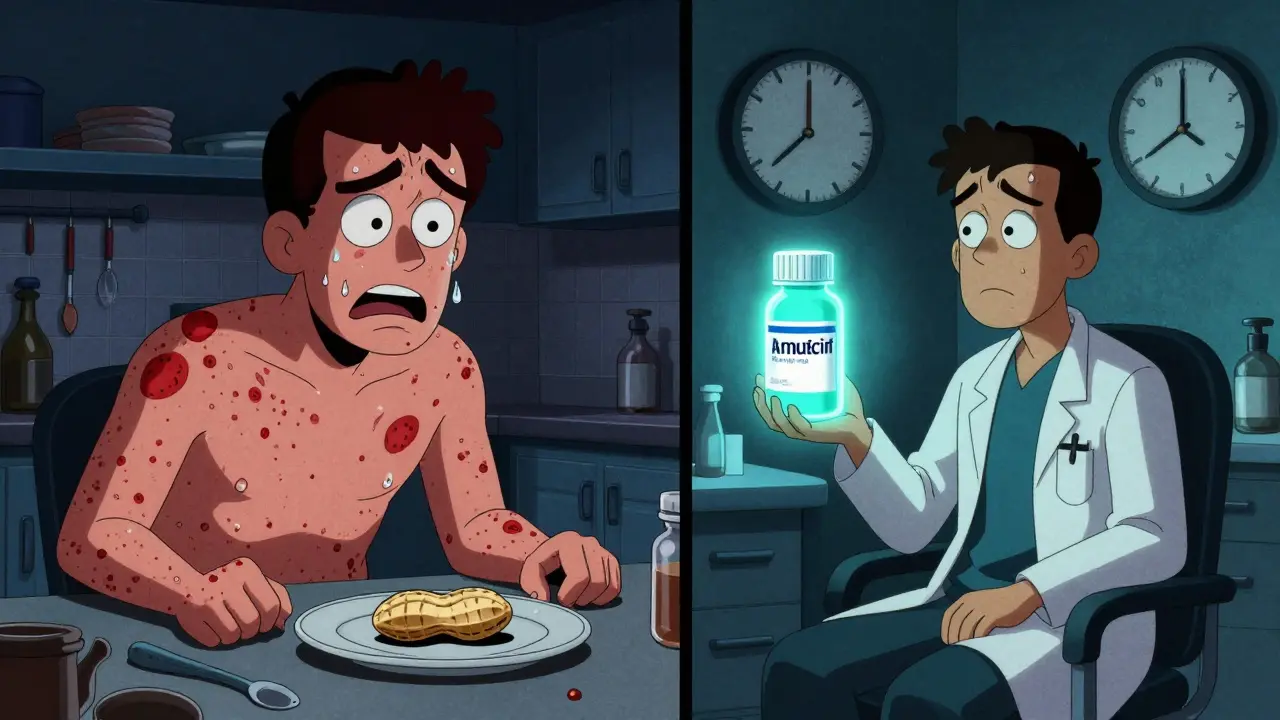
Imagine you eat a peanut and break out in hives. Or maybe you take a dose of amoxicillin and your throat swells up. Both scenarios sound like allergies, but treating them as the same thing can be dangerous-and expensive. Getting this wrong means either avoiding life-saving medications unnecessarily or risking a fatal reaction by ignoring a food trigger. The good news? Your body usually gives you clear clues if you know where to look.
Distinguishing between food allergies and immune responses to specific foods that typically occur within minutes of ingestion and medication allergies is immune system reactions to drugs that can appear immediately or weeks later isn't just about labeling; it’s about survival and quality of life. According to the American Academy of Allergy, Asthma & Immunology (AAAAI), food allergies affect roughly 32 million Americans. Meanwhile, drug allergies account for 6-10% of all adverse drug reactions. While both involve your immune system mistakenly attacking harmless substances, they follow different timelines, show up differently on your skin and gut, and require completely different diagnostic tests. Here is how to spot the difference before it becomes a crisis.
The Timing Clue: Minutes vs. Weeks
If you want to know what triggered your reaction, look at your watch. Timing is the single most reliable indicator for separating food from medication issues. For food allergies, the clock starts ticking the moment the food touches your tongue. In 95% of cases, symptoms hit within two hours, often within 20 minutes. It’s fast, sudden, and usually undeniable.
Medication allergies are trickier because they don’t always play by those rules. Immediate drug reactions happen within an hour, similar to food. But many medication allergies are "delayed." You might start taking a new antibiotic for a sore throat and feel fine for three days. Then, a rash appears. This delayed response-occurring 48 to 72 hours after exposure-is common with non-IgE mediated drug reactions. If your symptoms showed up days after you started a pill, it’s likely a medication issue, not something you ate yesterday.
- Food Allergy: Symptoms usually begin within 2 hours (median 20 minutes).
- Immediate Drug Allergy: Symptoms begin within 1 hour of taking the dose.
- Delayed Drug Allergy: Symptoms appear 2 days to several weeks after starting the medication.
Symptom Profiles: Gut vs. Skin
Where do you feel the pain? Food allergies love your gastrointestinal tract. About 55% of children with food allergies vomit, and 30% experience diarrhea. You’ll also notice oral allergy syndrome-itching or swelling of the lips, mouth, or throat-in 70% of cases. It’s local and visceral. Hives show up too, but they’re rarely the only sign.
Medication allergies, on the other hand, tend to paint your skin. A maculopapular rash-a flat, red area covered with small bumps-is the hallmark of delayed drug reactions, appearing in 95% of those cases. Fever is also much more common with drug allergies, showing up in 60% of serum sickness cases. While wheezing happens in both, severe systemic involvement like high fever and widespread rash points strongly toward a medication culprit rather than a snack.
| Feature | Food Allergy | Medication Allergy |
|---|---|---|
| Onset Time | Within 2 hours (usually minutes) | Immediate (1 hr) OR Delayed (days to weeks) |
| Primary Symptoms | Vomiting, diarrhea, oral itching, hives | Rash, fever, joint pain, hives |
| Immune Mechanism | Mostly IgE-mediated (immediate) | IgE (immediate) or T-cell (delayed) |
| Common Triggers | Peanuts, milk, eggs, shellfish, sesame | Penicillin, sulfa drugs, NSAIDs, chemotherapy |
| Diagnosis Gold Standard | Oral Food Challenge | Drug Provocation Test / Skin Testing |
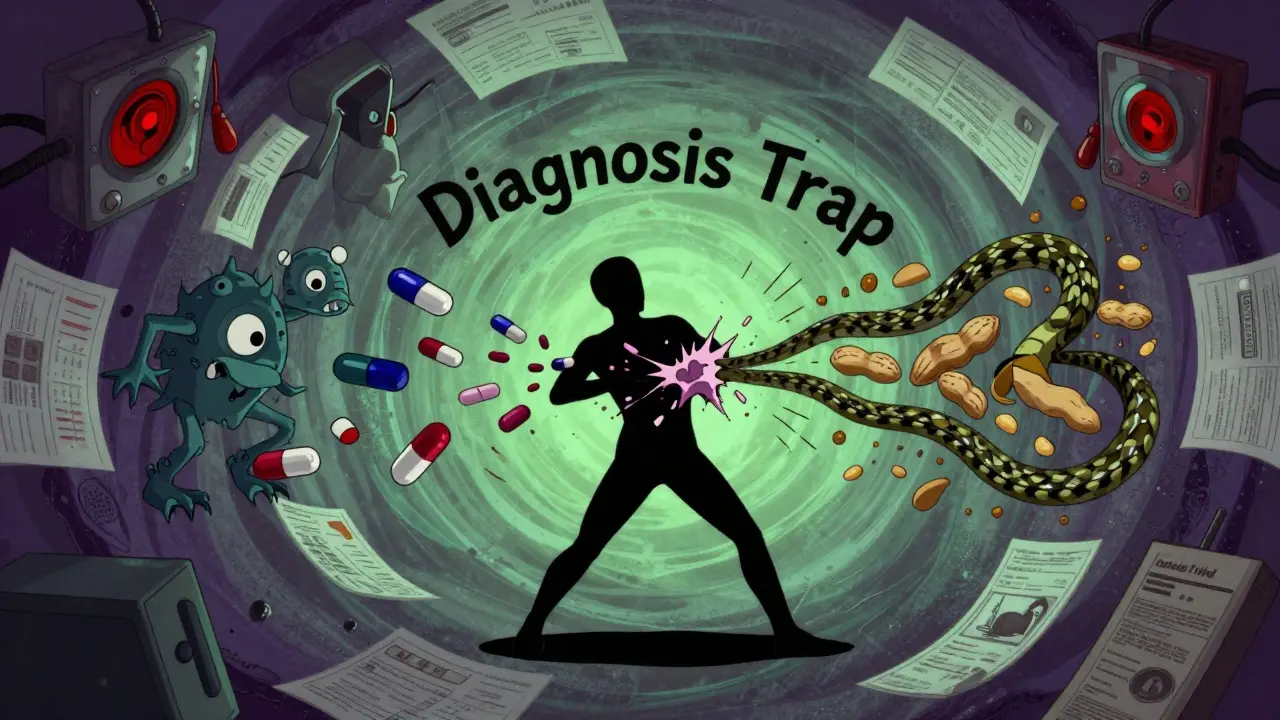
The Diagnosis Trap: Why History Isn't Enough
We’ve all heard someone say, “I’m allergic to penicillin.” Most of the time, they aren’t. Up to 90% of self-reported penicillin allergies are false positives. People confuse a mild rash from a viral infection with a drug reaction, or they mistake nausea (a side effect) for an allergy. This mislabeling is costly. Patients avoid first-line antibiotics and end up taking broader-spectrum drugs that are 30% more expensive and carry a 25% higher risk of causing Clostridium difficile infections, a serious gut disease.
Food allergy diagnosis is equally prone to error, but in the opposite direction. Many people think they have a food allergy when they actually have an intolerance, like lactose intolerance. Intolerances cause discomfort but don’t involve the immune system and aren’t life-threatening. However, dismissing a true food allergy as “just indigestion” can be fatal. Anaphylaxis from food kills 150-200 people annually in the US, often because epinephrine was delayed.
To cut through the noise, allergists use specific tests. For food, skin prick testing has 90% sensitivity for IgE-mediated reactions, but the gold standard is the oral food challenge, where you eat tiny amounts of the suspected food under medical supervision. For medications, penicillin allergy testing achieves a 99% negative predictive value through sequential skin testing and oral challenges. Newer blood tests, like the FDA-approved ImmunoCAP Penicillin test (2023), now offer 98% sensitivity in distinguishing true penicillin allergies from false alarms.
Real-Life Scenarios: When Confusion Costs
Consider Sarah, a 34-year-old who avoided all NSAIDs (like ibuprofen) for a decade because she thought she had an aspirin allergy. She experienced stomach upset after taking pills. Turns out, it wasn’t the active drug; it was lactose fillers in the pills reacting with her undiagnosed lactose intolerance. By avoiding NSAIDs, she limited her pain management options unnecessarily.
Now consider Mark, whose son broke out in hives every time he took antibiotics for ear infections. Doctors labeled it a drug allergy. But an allergist discovered the real trigger was dairy, which the child consumed daily. The antibiotics were innocent bystanders. Once the dairy was managed, the “antibiotic allergy” vanished.
These stories highlight why detailed history-taking matters. Dr. Scott Sicherer from Mount Sinai Hospital notes that food allergies are reproducible with every exposure to that specific food. Medication reactions, however, can be confounded by the illness itself. If you get a rash every time you take amoxicillin, but never when you take it while healthy, it might be the virus causing the rash, not the drug.

Managing the Risk: Actionable Steps
If you suspect an allergy, don’t guess. Keep a detailed diary. For food, record exactly what you ate, how it was prepared, and when symptoms started (to the minute). For medications, note the drug name, dosage, and whether the reaction happened with multiple brands or formulations. This data helps allergists distinguish between true allergies, intolerances, and side effects.
For those with confirmed food allergies, carrying epinephrine auto-injectors is non-negotiable. Read labels carefully, especially for the “Big 9” allergens regulated by the Food Allergen Labeling and Consumer Protection Act (FALCPA): milk, eggs, fish, shellfish, tree nuts, peanuts, wheat, soy, and sesame.
For medication allergies, advocate for delabeling. If you’ve been told you’re allergic to penicillin since childhood, ask for testing. Removing false allergies from your medical record can save you money, reduce hospital stays, and protect you from harder-to-treat infections. Hospitals implementing antibiotic stewardship programs have seen a 25% drop in broad-spectrum antibiotic use simply by clarifying these records.
Future Outlook: Smarter Testing
Technology is making distinction easier. Component-resolved diagnostics (CRD) introduced in 2022 allow doctors to differentiate between a true peanut allergy and pollen-food syndrome with 90% accuracy by looking at specific protein components. Pharmacogenetic testing is also emerging to predict individual susceptibility to drug allergies based on DNA. These tools mean fewer unnecessary restrictions and safer treatments for everyone.
Can I be allergic to both food and medication?
Yes, it is possible to have both food and medication allergies. Having one type of allergy does increase your general risk for developing others due to a hyper-reactive immune system. However, each allergy must be diagnosed and managed separately because their triggers and emergency protocols differ significantly.
How long does a medication allergy last?
Unlike some food allergies that children outgrow (80% of kids outgrow milk and egg allergies by age 5), medication allergies can persist for years or even decades. However, immunity can wane. Regular re-testing by an allergist is recommended every few years to see if you can safely tolerate the drug again, especially for critical medications like penicillin.
What is the difference between an allergy and an intolerance?
An allergy involves the immune system and can be life-threatening (anaphylaxis). Symptoms appear quickly. An intolerance is a digestive issue, such as lacking an enzyme to break down lactose. It causes discomfort like bloating or gas but does not involve antibodies or risk death. Misdiagnosing intolerance as allergy leads to unnecessary dietary restrictions.
Why is my doctor hesitant to test for drug allergies?
Testing for certain high-risk drugs, like chemotherapy agents, is often too dangerous to perform routinely. Additionally, thorough allergy histories take time-often more than the average 90 seconds providers spend documenting meds. However, for common antibiotics like penicillin, testing is highly recommended and safe when done by specialists.
Can a rash from a virus be mistaken for a drug allergy?
Yes, this is very common. Viruses like Epstein-Barr (mono) or HIV can cause rashes that look exactly like drug reactions. If you take amoxicillin while sick with a virus, the resulting rash is often blamed on the drug, leading to a lifelong false penicillin allergy label. Specialists use clinical context to distinguish these cases.

Sumit gupta
June 23, 2026 AT 12:15pretty interesting read. i always thought if it hurt my stomach it was food, but the timing thing makes so much sense now.
Tucker Brown
June 23, 2026 AT 15:49they want you to think its an allergy so they can sell you more tests and drugs. the real reason for the rash is the chemicals in the water or the vaccines they pushed on you last year. wake up people. stop trusting the medical establishment blindly. they profit from your confusion. every time you take a pill they are watching. its all about control and keeping you dependent on their system. dont let them gaslight you into thinking your body is broken just because you ate something natural. the big pharma lobby writes these guidelines to keep you scared and compliant. check the dates on those studies. who funded them? follow the money. its not about health, its about liability and revenue streams. stay vigilant.
Jake Kitzmiller
June 23, 2026 AT 16:08Great point about the penicillin mislabeling. I work in a clinic and we see this constantly. Patients list 'penicillin allergy' because they got a mild rash as a kid, which was likely a viral exanthem. We actually started doing rapid desensitization protocols and skin testing for these patients. It’s amazing how many of them can safely take amoxicillin once properly evaluated. It really does improve treatment options for things like strep throat or UTIs without jumping straight to vancomycin or other heavy hitters that mess up gut flora. If you have a vague drug allergy listed, ask your doctor if it’s worth re-evaluating. It could save you from unnecessary side effects later.
Charlotte Stuart
June 24, 2026 AT 18:49The article is adequate, though it lacks nuance regarding non-IgE mediated mechanisms in adults. The distinction between immediate hypersensitivity and delayed-type reactions is critical, yet often glossed over by laypeople. One must consult a board-certified allergist rather than relying on internet articles for diagnostic criteria. Self-diagnosis is dangerous and reflects a lack of intellectual rigor.
Annemarie Kautz
June 25, 2026 AT 07:31ugh why do i have to read all this to know what hurts me :/ i just feel sick after eating dairy and taking ibuprofen. maybe its both lol. doctors never listen anyway so who cares about the science behind it. just give me something to make the pain go away plz.
alexander barrera
June 26, 2026 AT 01:17Typical US healthcare nonsense 🇺🇸💊 Why should we trust these foreign-funded studies? Our domestic pharmaceutical companies are superior and produce better diagnostics. The fact that we need to distinguish between allergies shows our advanced medical infrastructure. Other countries don't even have this luxury. Stick to American-made meds and ignore the globalist narrative pushing generic alternatives. Your safety depends on supporting local industry and rejecting imported uncertainty. 🚫🌍
Dale Simpson
June 26, 2026 AT 20:56You guys are totally onto something here! Its so easy to get confused when you feel bad. But hey, dont stress too much about it. Just keep a simple diary like the post says. Write down what you ate and how you felt. Its super helpful for the doc to see patterns. And remember, most people outgrow some stuff or just have intolerances. Stay positive and keep tracking! You got this! 💪✨
Hema Khimasia
June 27, 2026 AT 00:51The epistemological framework surrounding adverse drug reactions versus immunoglobulin E-mediated food sensitivities requires rigorous scrutiny. The temporal dissociation between exposure and symptom onset in T-cell mediated pathways suggests a distinct pathophysiological mechanism compared to the immediate mast cell degranulation observed in food allergies. Furthermore, the confounding variable of concurrent viral infections necessitates a differential diagnosis approach that prioritizes clinical context over isolated serological markers. The prevalence of false-positive penicillin allergy labels represents a significant failure in clinical documentation practices, leading to suboptimal therapeutic outcomes and increased healthcare expenditures due to the utilization of broader-spectrum antimicrobials. This phenomenon underscores the necessity for standardized delabeling protocols within primary care settings to mitigate the risk of Clostridioides difficile infection and preserve the efficacy of first-line antibiotics.
krystal Live
June 28, 2026 AT 19:49Omg this is so true!! I used to think I was allergic to everything because I felt bloated all the time. Turns out it was just lactose intolerance and not an actual allergy. So scary tho bc I didnt carry epi pens. Now I do just in case for my nuts allergy. Everyone needs to check their records! Its empowering to know whats really going on with your body. Go get tested ppl! You deserve to feel good! ❤️