Imagine you just got sick. You need medication. You go to the pharmacy, but instead of paying $5 for a generic pill, you are handed a bill for $40. Why? Because your ACA plan is a health insurance policy sold on the federal or state marketplace under the Affordable Care Act has a specific list of covered drugs called a formulary, and that drug might be on a higher tier.
This is not a glitch. It is how insurance works today. Understanding insurance formularies are lists of prescription drugs covered by an insurance plan, usually organized into tiers based on cost is the single most important thing you can do to control your healthcare spending in 2026. The rules changed significantly after the enhanced premium tax credits expired at the end of 2025, making out-of-pocket costs for medications more critical than ever.
What Is an Insurance Formulary?
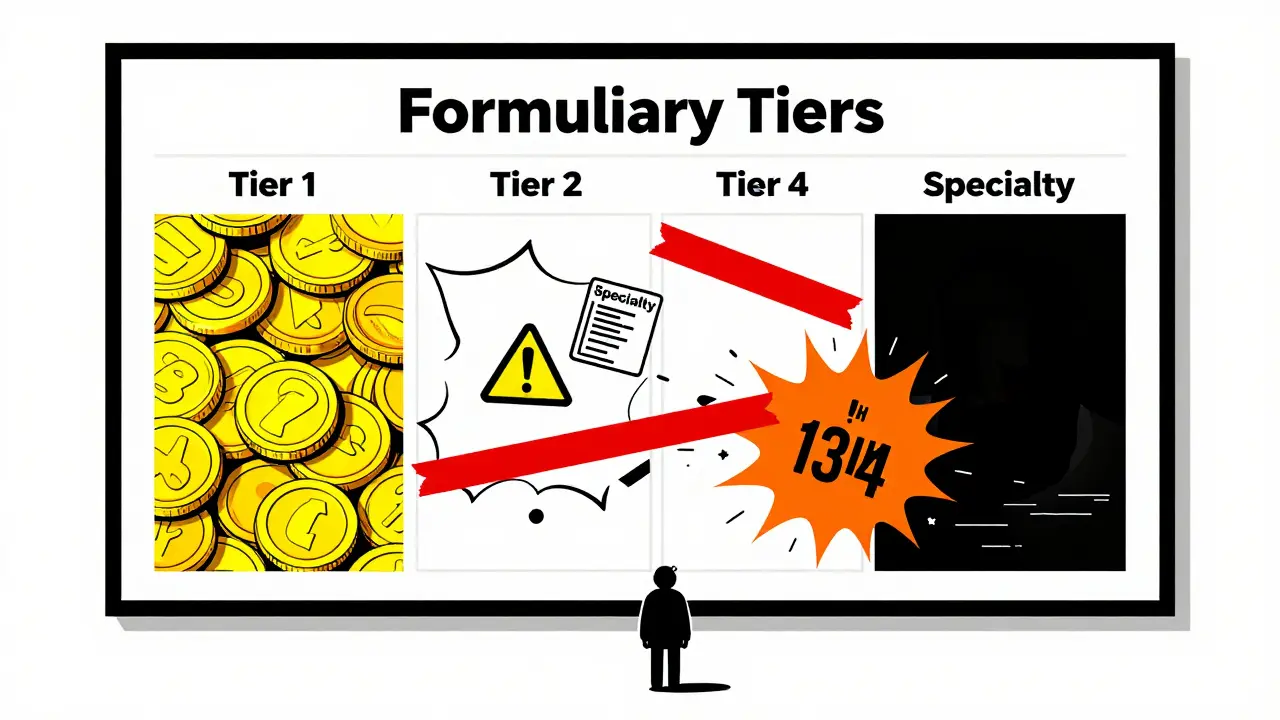
A formulary is simply a menu. Insurance companies negotiate prices with pharmaceutical manufacturers. In exchange for volume guarantees, they get lower rates. They then pass some of those savings to you, but only if you choose the drugs they prefer. These lists are grouped into tiers.
- Tier 1: Generic drugs. These have the lowest copays, often $5 to $15.
- Tier 2: Preferred brand-name drugs. Moderate copays, maybe $30 to $50.
- Tier 3: Non-preferred brand-name drugs. Higher copays, perhaps $60 to $100.
- Tier 4: Specialty drugs. These are expensive treatments for complex conditions like cancer or rheumatoid arthritis. You usually pay a percentage of the cost (coinsurance), which can run into thousands of dollars.
If your doctor prescribes a Tier 4 drug when a Tier 1 generic exists, you will pay significantly more. Sometimes, the difference is hundreds of dollars per month. This is why knowing your formulary matters before you sign up for a plan.
How ACA Metal Tiers Change Your Drug Costs
When you shop on HealthCare.gov is the official website for the US Health Insurance Marketplace where individuals can compare and purchase ACA-compliant health insurance plans, you see Bronze, Silver, Gold, and Platinum plans. These metal levels determine how much the insurer pays versus how much you pay. This applies to prescriptions too.
| Metal Tier | Actuarial Value | Typical Generic Copay | Best For |
|---|---|---|---|
| Bronze | 60% | $10 - $20 | Low usage; high deductible protection | Silver | 70% | $8 - $15 | Eligible for Cost-Sharing Reductions (CSR) |
| Gold | 80% | $5 - $10 | Regular medication users |
| Platinum | 90% | $0 - $5 | High frequency specialty drug use |
Here is the catch. If you earn between 100% and 250% of the Federal Poverty Level (FPL), you qualify for Cost-Sharing Reductions (CSRs). CSRs only apply to Silver plans. With CSR, your generic copays often drop to $0. Without CSR, even a Silver plan might charge you $15 for a generic. So, if you take daily medications, a Silver plan with CSR is almost always cheaper than a Gold plan without it, even if the monthly premium looks higher initially.
The 2026 Shift: Post-Enhanced Credit Reality
For years, the Inflation Reduction Act kept premium tax credits high, capping premiums at around 8.5% of income for many people. That ended in 2025. As we move through 2026, subsidies are calculated using stricter IRS caps. This means more people are paying full price for their premiums. When premiums rise, insurers may adjust formularies to keep overall costs down. Some plans have moved popular generics to Tier 2 or added prior authorization requirements.
According to data from the Kaiser Family Foundation (KFF), average premium payments for Marketplace coverage increased by over 100% for some enrollees after the enhanced credits expired. This financial pressure makes every dollar saved on prescriptions vital. You cannot afford to guess about your drug coverage anymore.
Step-by-Step: Checking Your Drug Coverage
Do not assume your current medication is covered. Follow these steps to verify your costs before enrolling or renewing your plan.
- Identify your exact drug names. Ask your doctor for the generic name and the brand name. Know the dosage (e.g., 10mg vs 20mg) because coverage can differ by strength.
- Go to HealthCare.gov. Use the "Shop for Plans" tool. Enter your zip code and household size.
- Select a plan. Click on "Plan Details" for any Bronze, Silver, Gold, or Platinum option you are considering.
- Find the Formulary. Look for a link labeled "Drug List" or "Formulary." Download the PDF or view it online.
- Search for your drug. Use the Ctrl+F function to find your medication. Note the tier number next to it.
- Check for restrictions. Look for codes like PA (Prior Authorization), QT (Quantity Limit), or Step Therapy. These mean you must get permission from the insurer or try a cheaper drug first.
If your drug is not on the list, or it is on a high tier, contact your doctor. Ask if there is a therapeutic alternative that is on Tier 1. Often, doctors are willing to switch prescriptions if it saves you money.
Prior Authorization and Step Therapy: Hidden Hurdles
Even if a drug is on your formulary, you might not get it immediately. Insurers use utilization management tools to control costs.
Prior Authorization (PA): The insurer requires your doctor to prove medically why you need this specific drug. This can take days or weeks. If you run out of medicine while waiting, you face health risks. Always start PA requests early.
Step Therapy: Also known as "fail first," this policy requires you to try one or more cheaper drugs before the insurer will cover the prescribed one. If the cheaper drugs cause side effects or don't work, your doctor must document this failure. Then, the insurer approves the original drug. This process delays treatment and adds administrative burden for both you and your provider.
In 2026, CMS implemented new integrity rules that tightened verification processes. While this reduces fraud, it also means stricter scrutiny on claims. If your documentation is incomplete, your claim for a specialty drug could be denied.
Specialty Drugs and High-Cost Treatments
If you have a chronic condition like diabetes, multiple sclerosis, or cancer, you likely use specialty drugs. These are typically Tier 4. Under ACA plans, you pay coinsurance, not a flat copay. For example, if the drug costs $10,000 and your coinsurance is 20%, you pay $2,000. However, ACA plans have an annual out-of-pocket maximum. In 2025, this was $9,450 for individuals. Once you hit that limit, the insurer pays 100% of covered services for the rest of the year.
Make sure you track your out-of-pocket spending. Include deductibles, copays, and coinsurance. Do not include premiums. Many people think they have hit their max when they have only paid their deductible. Keep receipts and check your member portal monthly.

Common Mistakes to Avoid
Many people make simple errors that cost them hundreds of dollars annually.
- Ignoring the formulary update. Insurers change formularies every January. A drug that was Tier 1 last year might be Tier 3 this year. Check again during Open Enrollment.
- Using out-of-network pharmacies. Most ACA plans have narrow networks. Going to a random pharmacy downtown might result in no coverage at all. Stick to preferred pharmacies listed in your plan documents.
- Failing to appeal denials. If your insurer denies a drug, you have the right to appeal. About 30% of initial denials are overturned on appeal. Write a letter explaining why the drug is medically necessary. Have your doctor support it.
- Not adjusting mid-year. If your income changes significantly, your subsidy eligibility changes. Update your information on HealthCare.gov immediately. Waiting until tax time can lead to unexpected liabilities.
FAQ
Does every ACA plan cover generic drugs?
Yes. All ACA-compliant plans must cover at least two generic drugs in each therapeutic category. However, the specific generics covered vary by plan. One plan might cover Lisinopril, while another covers Losartan for blood pressure. You must check the formulary to see if your specific medication is included.
Can I get my prescription filled at any pharmacy?
Technically yes, but you will likely pay full price if you go out-of-network. ACA plans have contracted networks of pharmacies. Using an in-network pharmacy ensures your copay applies. If you travel, look for a pharmacy within your plan's network or use a mail-order service if available.
What happens if my drug is not on the formulary?
You have three options. First, ask your doctor for a therapeutic alternative that is on the formulary. Second, request an exception from the insurer, providing medical justification. Third, pay out-of-pocket. Insurers are required to allow exceptions if no other covered drugs are effective or cause adverse reactions.
How do Cost-Sharing Reductions affect my drug costs?
If you earn between 100% and 250% of the Federal Poverty Level and enroll in a Silver plan, CSRs lower your deductibles, copays, and coinsurance. For generic drugs, this often means a $0 copay. Without CSRs, you would pay standard copays, which could be $10 to $20 per prescription. Always choose a Silver plan if you qualify for CSRs.
Will my drug coverage change in 2027?
It is possible. Insurers review and update formularies annually based on patent expirations, new drug approvals, and cost negotiations. Political changes regarding subsidy extensions could also impact plan structures. Monitor announcements from CMS and your insurer during the fall open enrollment period for updates on 2027 coverage.
Next Steps for You
Take action now. Log in to your HealthCare.gov account. Download the formulary for your current plan. Compare it with plans available for next year. If you take daily medications, calculate the total annual cost: premium plus estimated drug costs. Do not just look at the monthly premium. A cheap plan with high drug costs is expensive in the long run. Protect your health and your wallet by understanding exactly what your insurance covers.