Antidepressant Tapering Calculator

Enter your information to generate a tapering schedule
This tool uses evidence-based guidelines to create a personalized plan
Stopping antidepressants is rarely as simple as swallowing your last pill and walking away. For many people, the end of treatment brings a confusing mix of physical sensations-dizziness, nausea, or those jarring "brain zaps" that feel like electric shocks behind the eyes. This isn't necessarily your depression returning. It’s likely antidepressant discontinuation syndrome, a physiological reaction to the sudden drop in serotonin levels. The key to avoiding this distress lies not in how fast you stop, but in how carefully you plan the exit. A structured, evidence-based tapering schedule can mean the difference between a smooth transition and weeks of debilitating side effects.
The medical consensus has shifted significantly over the last decade. We now know that abrupt cessation is risky, particularly for medications with short half-lives. Current guidelines emphasize individualized approaches rather than one-size-fits-all timelines. By understanding the pharmacokinetics of your specific medication and following a gradual reduction protocol, you can minimize neurological symptoms and reduce the risk of relapse. This guide breaks down the science behind tapering, offers concrete schedules based on medication type, and highlights the critical importance of the final stages of reduction.
Understanding Discontinuation Syndrome vs. Relapse
Before creating a schedule, it is crucial to distinguish between withdrawal symptoms and a return of depressive illness. These two conditions often look similar but require different responses. Discontinuation syndrome typically appears within days of reducing the dose or stopping the medication entirely. Symptoms are often physical or sensory: dizziness (reported in 63% of cases), flu-like feelings (45%), and sensory disturbances like tingling or brain zaps (37%).
In contrast, a relapse into depression usually takes weeks or months to develop after stopping medication. It manifests primarily as emotional changes: persistent sadness, loss of interest, sleep disturbances, and fatigue. If you experience electric shock sensations or severe dizziness shortly after cutting your dose, it is almost certainly withdrawal. Recognizing this early prevents unnecessary panic and helps you adjust your tapering speed without assuming your previous treatment failed. Studies show that up to 86% of patients experience some form of discontinuation symptom if they stop too quickly, depending on the drug's half-life.
The Role of Half-Life in Tapering Speed
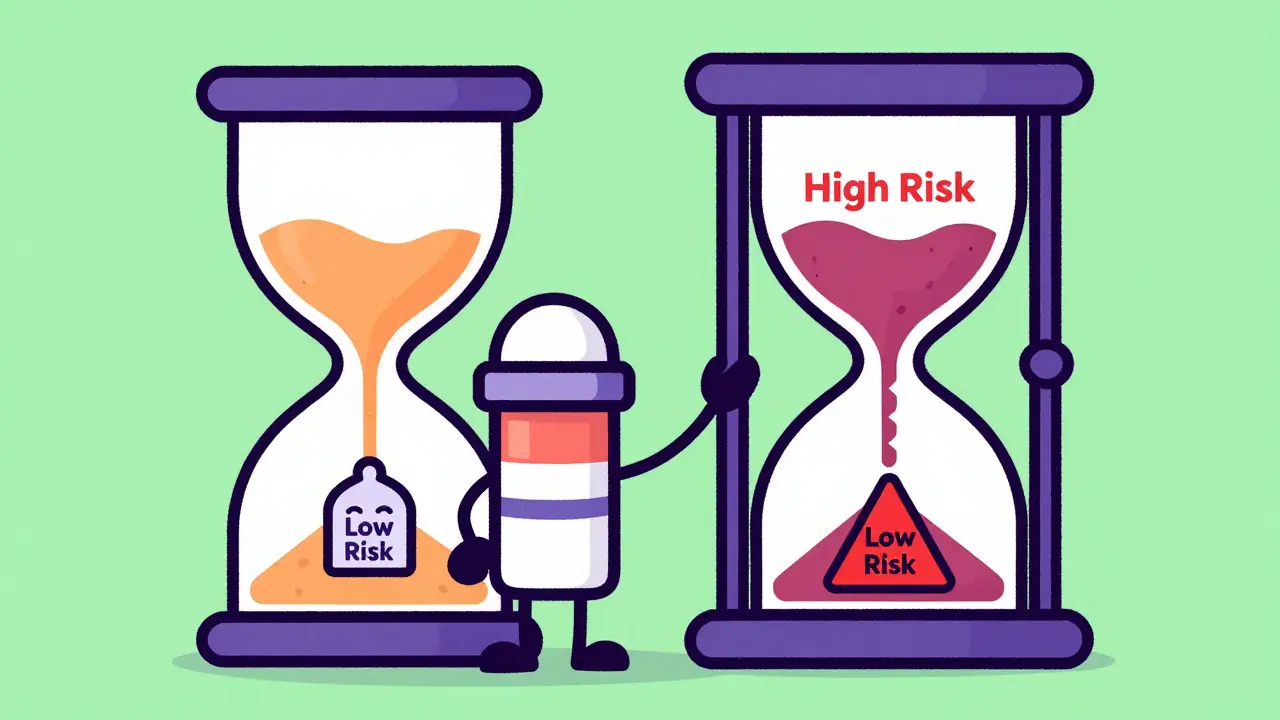
Not all antidepressants leave the body at the same rate. The most critical factor in determining your tapering schedule is the medication's half-life. This is the time it takes for the concentration of the drug in your blood to reduce by half. Medications with long half-lives naturally taper themselves because they linger in your system longer.
| Medication | Half-Life | Withdrawal Risk | Tapering Strategy |
|---|---|---|---|
| Fluoxetine | 2-4 days (active metabolite) | Low | Can often be stopped more abruptly; minimal taper needed. |
| Sertraline | 26 hours | Moderate | Gradual taper recommended; monitor for sensitivity. |
| Paroxetine | 21 hours | High | Slow, careful taper required; high risk of symptoms. |
| Venlafaxine | 13 hours | Very High | Ultra-slow taper essential; small dose reductions. |
As shown above, Venlafaxine and Paroxetine have short half-lives and clear the system quickly, leading to sharper drops in serotonin reuptake inhibition. This makes them notorious for causing severe withdrawal symptoms. Conversely, Fluoxetine has an active metabolite that stays in the body for days, providing a natural buffer against withdrawal. Always check your specific medication’s profile before deciding on a timeline.
Evidence-Based Tapering Schedules
While there is no universal rule, clinical guidelines generally recommend reducing the dosage by 10-25% every 1-4 weeks. However, recent research suggests that linear reductions (cutting the same amount each time) are less effective than hyperbolic reductions (smaller cuts as you get lower). Dr. David Healy, a leading expert in psychiatric drugs, notes that "the last 10% of dose reduction often causes 50% of withdrawal symptoms." This non-linear relationship means you must slow down significantly as you approach zero.
- Initial Phase (100% to 50%): Reduce by 25% of the current dose every 2-4 weeks. Monitor for mild symptoms. If none appear, you may proceed slightly faster, but do not rush.
- Middle Phase (50% to 25%): Reduce by 10-15% of the current dose every 2-4 weeks. Symptoms may begin to emerge here. Pause at any step if discomfort arises.
- Final Phase (25% to 0%): This is the most critical stage. Reduce by 5-10% of the current dose every 2-4 weeks. For example, if you are on 25mg, do not jump to 12.5mg immediately. Consider splitting pills or using liquid formulations to make micro-reductions of 1-2mg.
A study from Harvard Medical School involving over 400 patients found that those who tapered over two or more weeks had a 19% relapse rate within six months, compared to 32% for those who stopped rapidly. This represents a significant reduction in risk. However, extending the taper beyond 12 weeks shows diminishing returns, so aim for a balanced pace that respects your body’s adaptation signals.
Micro-Tapering and Liquid Formulations
For many patients, standard tablet sizes make precise tapering difficult. Cutting a 20mg pill in half gives you 10mg, but cutting that again yields 5mg, which might still be too large a jump for sensitive individuals. This is where micro-tapering becomes valuable. Recent guidelines, such as the 2022 TRED guideline, recommend 5-10% dose reductions during the final quarter of the process.
Liquid formulations of antidepressants allow for milligram-level precision. Research from King's College London (2023) demonstrated that using liquid forms to achieve 1mg reductions reduced severe withdrawal symptoms by 62% compared to standard tablet tapering. If you find yourself struggling with the final steps of your taper, ask your doctor about switching to a liquid version temporarily. Even if your brand doesn’t come in liquid, compounding pharmacies can often create custom doses. This approach is particularly useful for medications like sertraline or venlafaxine, where small absolute changes matter greatly.
Switching Medications: Cross-Tapering Strategies
Sometimes, tapering is part of switching from one antidepressant to another. The method depends heavily on the drugs involved. There are four main strategies:
- Direct Switch: Stopping one drug and starting another immediately. Only safe for long-half-life drugs like fluoxetine.
- Taper & Switch Immediately: Gradually reducing the old drug while starting the new one at a low dose. Suitable for most SSRIs.
- Cross-Tapering: Simultaneously reducing the old medication and increasing the new one over 1-2 weeks. Requires careful monitoring to avoid serotonin syndrome.
- Washout Period: Required when switching to or from MAO inhibitors. You must wait 14-21 days after stopping certain drugs before starting an MAOI to prevent dangerous interactions.
When cross-tapering, precision is key. For instance, when switching from venlafaxine to sertraline, guidelines suggest reducing venlafaxine by 37.5mg every 3-7 days while increasing sertraline by 25mg every 3-7 days. Never attempt complex switches without direct supervision from a healthcare provider, as the risk of adverse reactions increases significantly.

Monitoring and Managing Symptoms
Even with a perfect schedule, some symptoms may occur. The goal is management, not necessarily total elimination. Keep a daily log of your mood and physical sensations. Note any dizziness, insomnia, or irritability. If symptoms become unmanageable, pause the taper. Stay at your current dose until you stabilize, then resume with smaller reductions. Do not increase your dose back up unless advised by a doctor, as this can reinforce dependence anxiety.
Non-pharmacological support plays a vital role during this period. Regular exercise, consistent sleep hygiene, and mindfulness practices can help regulate neurotransmitter levels naturally. Hydration is also important, as dehydration can exacerbate dizziness and fatigue. Remember, withdrawal is temporary. Your brain is recalibrating its receptor sensitivity. Patience is your most powerful tool.
Long-Term Users and Special Considerations
If you have been taking antidepressants for five years or more, your brain has adapted significantly to their presence. Long-term users often experience more severe and prolonged withdrawal symptoms. Only 29% of current clinical guidelines adequately address this group. For these patients, an ultra-slow taper over several months may be necessary. Do not compare your journey to someone who took medication for six months. Your nervous system requires more time to readjust.
Pharmacogenetic testing is emerging as a helpful tool in this space. Early studies indicate that variations in genes like CYP2D6 and CYP2C19 predict how quickly you metabolize drugs and how severe your withdrawal might be. While not yet standard practice, discussing genetic factors with your psychiatrist could provide personalized insights into your tapering potential.
How long should I taper off antidepressants?
There is no fixed timeline, but most experts recommend a minimum of 4 weeks. For short-half-life drugs like venlafaxine or paroxetine, a taper lasting 2-3 months or longer is often safer. The duration depends on your dose, how long you’ve been taking the medication, and your personal sensitivity to withdrawal symptoms. Always prioritize comfort over speed.
What are the most common withdrawal symptoms?
Common symptoms include dizziness, nausea, headache, fatigue, insomnia, and sensory disturbances known as "brain zaps." Emotional symptoms like irritability and anxiety are also frequent. These typically start within 1-3 days of a dose reduction and resolve within 1-3 weeks, though they can persist longer in sensitive individuals.
Can I cut my antidepressant pills in half?
Only if they are scored tablets and not extended-release formulations. Extended-release pills are designed to release medication slowly over time; cutting them can cause a sudden dump of the drug, leading to toxicity or erratic absorption. Always consult your pharmacist before splitting pills.
Why does the last bit of the taper feel harder?
This is due to the non-linear nature of serotonin receptor occupancy. As you reduce the dose, the percentage change in brain chemistry becomes more significant relative to the remaining amount. The final 10-25% of the dose often accounts for the majority of withdrawal symptoms because your brain is adjusting to functioning without any external assistance.
Should I switch to fluoxetine to make tapering easier?
Some doctors use a strategy called "fluoxetine bridge," where patients switch to fluoxetine due to its long half-life, which allows for a smoother taper. However, this is not suitable for everyone and requires careful cross-tapering to avoid serotonin syndrome. Discuss this option with your psychiatrist if you are struggling with withdrawal from shorter-acting drugs.