Skin Lightener Alternatives: Safe, Effective Options for Even Skin Tone
When you want to fade dark spots, sun damage, or uneven tone, many turn to skin lightener alternatives, products or routines that reduce pigmentation without relying on harsh chemicals like hydroquinone. Also known as skin brightening treatments, these options work by gently slowing melanin production, soothing inflammation, or accelerating cell turnover—without damaging your skin barrier. The truth is, most traditional skin lighteners contain ingredients that can cause irritation, redness, or even long-term damage if used wrong. You don’t need them to get results.
Many people don’t realize that hydroquinone alternatives, like niacinamide, vitamin C, azelaic acid, and tranexamic acid. Also known as brightening agents, these are now the go-to choices in dermatology clinics worldwide. They’re backed by studies showing they reduce melasma and post-acne marks just as well as older options—but with far fewer side effects. Niacinamide, for example, is in everything from drugstore serums to high-end creams because it calms redness while blocking pigment transfer. Vitamin C doesn’t just brighten—it protects against UV damage, which is the main reason dark spots get worse. And azelaic acid? It’s been used for years to treat rosacea and acne, but its ability to even out skin tone is just as powerful.
Then there’s the role of natural skin lightening, using plant extracts, oils, and gentle exfoliants to improve appearance without synthetic chemicals. Also known as herbal brightening, this approach includes ingredients like licorice root, mulberry extract, and kojic acid from fungi. These aren’t magic fixes, but when used consistently with sunscreen, they make a real difference. Exfoliation matters too—regular gentle removal of dead skin cells helps fade discoloration faster. That’s why routines combining chemical exfoliants like lactic acid with daily SPF are so effective. You’re not just covering up tone issues; you’re fixing the root cause.
What most guides skip is how lifestyle and habits affect results. Sunscreen isn’t optional—it’s the foundation. Even a little sun exposure can undo weeks of progress. Stress and sleep also play a role: high cortisol boosts melanin. And if you’re dealing with stubborn patches, it’s often not just about what you put on your skin—it’s about what’s happening inside. Hormonal changes, inflammation from diet, or even certain medications can trigger darkening. That’s why some of the best outcomes come from combining topical care with simple changes: more hydration, less sugar, and consistent protection.
The collection below gives you real comparisons: what works, what doesn’t, and what’s safe to use long-term. You’ll find guides on switching from harsh creams to gentler actives, how to layer brightening products without irritation, and why some natural remedies actually deliver. Whether you’re dealing with post-acne marks, melasma, or just want a more even glow, there’s a path here that fits your skin and your life—no bleach, no risks, just results.
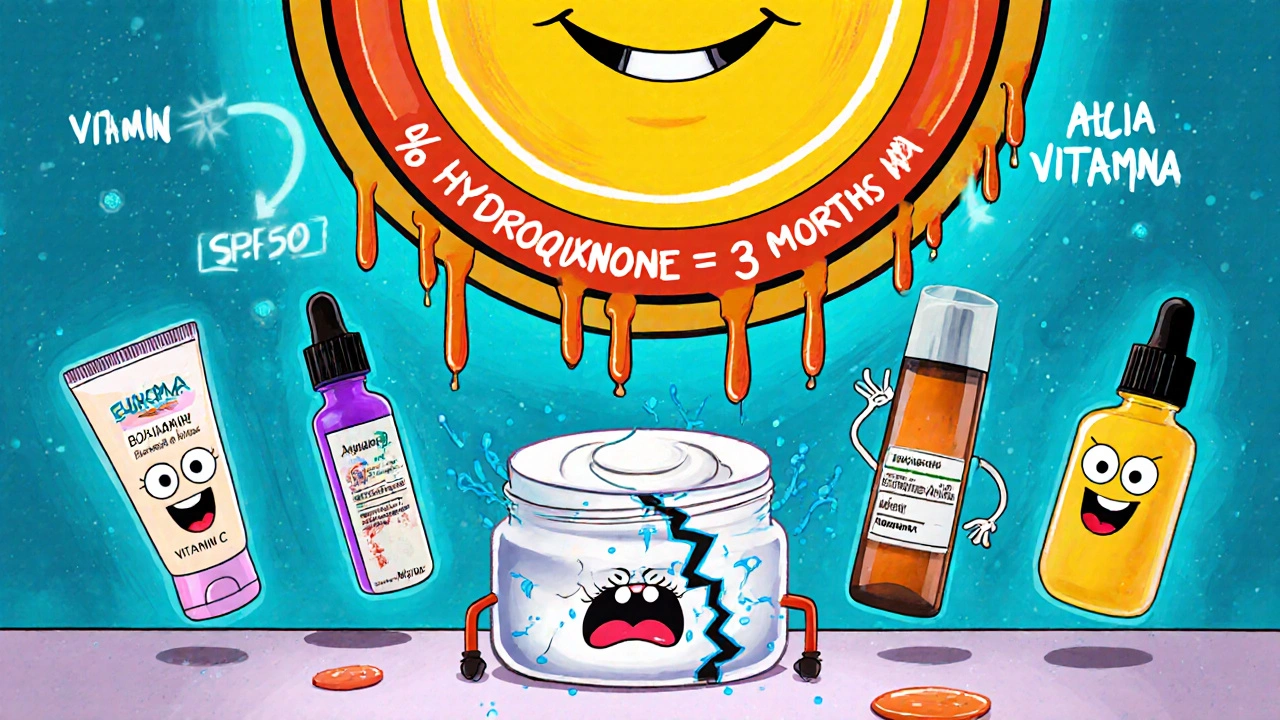
Eukroma Cream vs Alternatives: Hydroquinone Skin Lighteners Compared
Compare Eukroma Cream with safer, effective alternatives for treating hyperpigmentation and melasma. Learn how tranexamic acid, azelaic acid, niacinamide, and vitamin C can fade dark spots without hydroquinone's risks.