Skin Cancer Detection: How to Spot It Early and What Works
When it comes to skin cancer detection, the process of identifying abnormal skin growths before they spread. Also known as early melanoma screening, it’s not just about checking moles—it’s about knowing what changes to watch for and acting fast. Skin cancer is the most common type of cancer in the U.S., and over 90% of cases are linked to UV exposure from the sun or tanning beds. The good news? When caught early, most types—especially melanoma, basal cell, and squamous cell carcinoma—are highly treatable. You don’t need a doctor to spot the first warning signs. You just need to know what to look for.
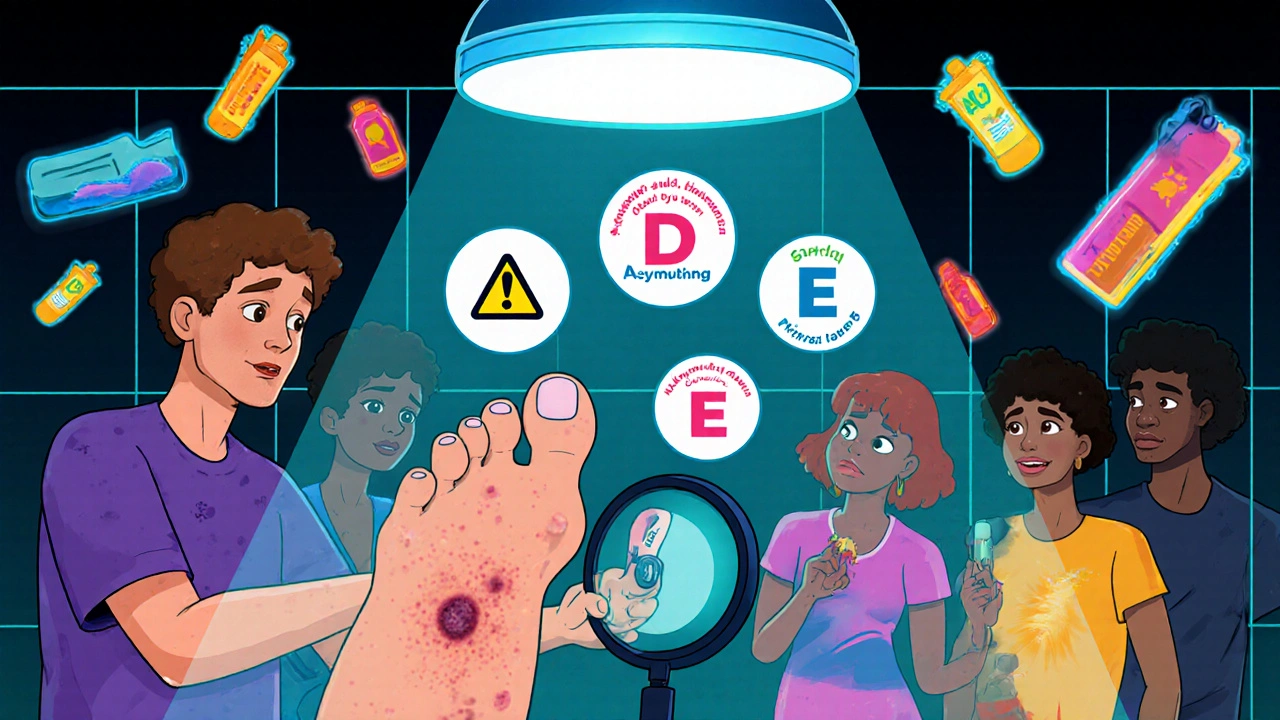
Melanoma, the deadliest form of skin cancer that starts in pigment-producing cells, often shows up as a new dark spot or a mole that changes shape, color, or size. Use the ABCDE rule: Asymmetry, irregular Borders, Color variation, Diameter larger than a pencil eraser, and Evolving over time. Skin lesion, any abnormal area on the skin, including bumps, sores, or patches that won’t heal, bleeds easily, or looks different from the rest of your skin should never be ignored. These aren’t just cosmetic issues—they’re red flags. And while sunburns are the most obvious risk, daily UV exposure—even on cloudy days—adds up. People with fair skin, a history of sunburns, or a family history of skin cancer are at higher risk, but anyone can get it.
Regular self-checks are your first line of defense. Get to know your skin. Look in the mirror after showers. Check your back, scalp, between toes, and under nails. Take photos of new or changing spots to track them over weeks. If something feels off, don’t wait. A dermatologist, a doctor trained to diagnose and treat skin conditions can use a dermatoscope—a handheld magnifying tool—to see layers of skin you can’t see with the naked eye. In some cases, a simple biopsy confirms whether it’s cancer. Early detection cuts treatment time, reduces scarring, and avoids aggressive therapies.
You’ll find real-world guides here on how to examine your own skin, what tools doctors actually use, how to tell the difference between a harmless mole and something dangerous, and what to do if you’ve been told to monitor a spot. Some posts break down how UV exposure leads to DNA damage in skin cells. Others compare at-home apps with professional screenings. There’s advice for people with lots of moles, for parents checking kids’ skin, and for those who’ve had skin cancer before. No fluff. Just clear, practical steps you can use today to protect your health.
Melanoma: How to Prevent, Detect, and Treat Skin Cancer Early
Melanoma is the deadliest skin cancer, but early detection can lead to a 99% survival rate. Learn how to prevent it with UV protection, spot warning signs using the ABCDE rule, and understand modern treatments that are saving lives.