ICH Guidelines: What They Are and Why They Matter for Medications You Take
When you pick up a prescription, the safety and effectiveness of that drug didn’t just happen by accident. It followed a set of international rules called ICH guidelines, international standards developed by regulatory agencies and pharmaceutical experts to harmonize drug development and approval processes. Also known as International Council for Harmonisation guidelines, these rules ensure that medicines tested in Japan, the U.S., or Europe meet the same high bar for quality, safety, and efficacy. Without them, a drug approved in one country might fail in another—not because it’s unsafe, but because the rules didn’t match up.
These guidelines cover everything from how clinical trials are designed to how data is reported and how manufacturing processes are controlled. For example, clinical trial standards, the rules that dictate how patient studies are conducted to prove a drug works are standardized under ICH E6. That means if you’re in a trial for a new diabetes drug in Germany, the same ethical and scientific rules apply as if you were in Texas or Tokyo. And when it comes to pharmaceutical regulations, the legal and technical requirements for producing safe, consistent medications, ICH Q7 tells manufacturers exactly how to handle active ingredients so every pill, capsule, or injection is identical—no matter where it’s made.
These aren’t just paperwork. They directly impact how fast new treatments reach you, how much they cost, and how safe they are. When regulators in the U.S., EU, and Japan all follow the same ICH guidelines, companies don’t have to run five different sets of trials. That cuts development time, lowers costs, and gets life-saving drugs to patients faster. It also means you can trust that a generic version of your medication, made in India or Brazil, meets the same standards as the brand-name version you’ve been using.
What you’ll find in the posts below are real-world examples of how these guidelines touch your daily health. From how drug interactions are studied to why certain medications get approved faster, every article connects back to the system that keeps your prescriptions reliable. You’ll see how ICH influences everything from the timing of your antibiotics to the safety of your painkiller—because behind every label, there’s a global framework you never see, but always depend on.
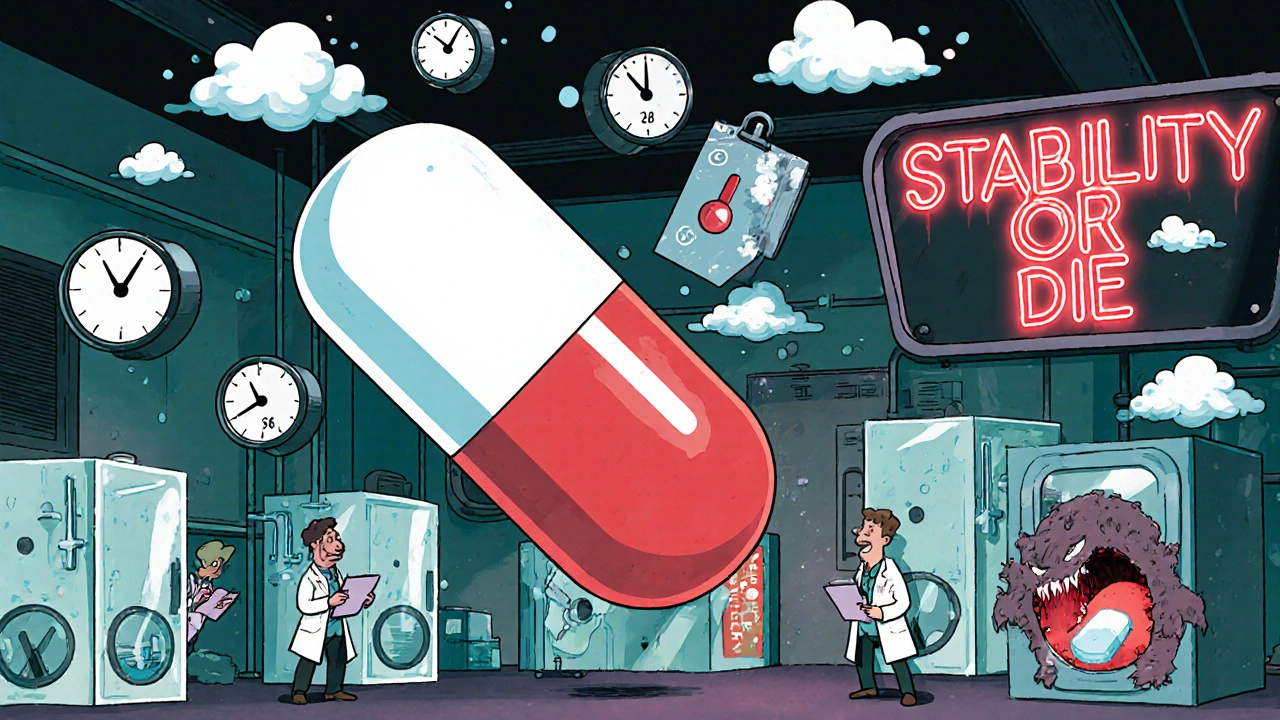
Stability Testing: Long-Term Quality Monitoring Post-Manufacture in Pharmaceuticals
Stability testing ensures pharmaceuticals remain safe and effective over time. It's a rigorous, regulated process that determines shelf life, prevents recalls, and protects patients - backed by ICH guidelines and real-world data.