Heart Rate Monitoring on Meds: What You Need to Know
When you're taking heart rate monitoring, the practice of tracking your pulse to detect changes that may signal drug effects or health risks. Also known as pulse tracking, it's not just for athletes or people with heart conditions—it's a simple tool anyone on certain medications should use. Many common drugs, from beta blockers, medications that slow heart rate by blocking adrenaline to antidepressants, drugs that can alter heart rhythm through serotonin effects, directly influence how fast or irregular your heart beats. If you’ve noticed your pulse feels off—too slow, too fast, or skipping beats—it might not be stress. It could be your medicine.
Take cardiovascular drugs, medications designed to treat high blood pressure, arrhythmias, or heart failure. These aren’t just for older adults. People in their 30s and 40s are on them too, often for inherited conditions or early signs of heart strain. If you’re on a beta blocker, medications that slow heart rate by blocking adrenaline like metoprolol or atenolol, your resting heart rate might drop to 50 or even 45. That’s normal—if you feel fine. But if you get dizzy, tired, or short of breath, your dose might be too high. On the flip side, some antidepressants, drugs that can alter heart rhythm through serotonin effects like SSRIs or tricyclics can cause your heart to race or flutter. It’s not always obvious. You might think it’s anxiety, but your heart is reacting to the chemistry.
Then there’s the silent risk: arrhythmia, an irregular heartbeat that can be harmless or life-threatening. Some medications—like certain antibiotics, antifungals, or even over-the-counter cold pills—can trigger it in people who didn’t know they had a hidden heart issue. That’s why monitoring your heart rate isn’t about being paranoid. It’s about catching problems early. A smartwatch or a basic finger pulse monitor can give you daily data. Write it down. Look for patterns. Did your pulse spike after you started a new pill? Did it drop after you skipped a dose? That info is gold when you talk to your doctor.
You don’t need to be a medical expert to use heart rate monitoring on meds. You just need to pay attention. If you’re on more than one drug, especially for heart, mood, or thyroid issues, your body is balancing a lot. A small change in one pill can ripple through your whole system. The posts below cover real stories—people who noticed their pulse was off, what they found out, and how they fixed it. Some switched meds. Some adjusted timing. Some just needed to know it was normal. No fluff. No jargon. Just what works.
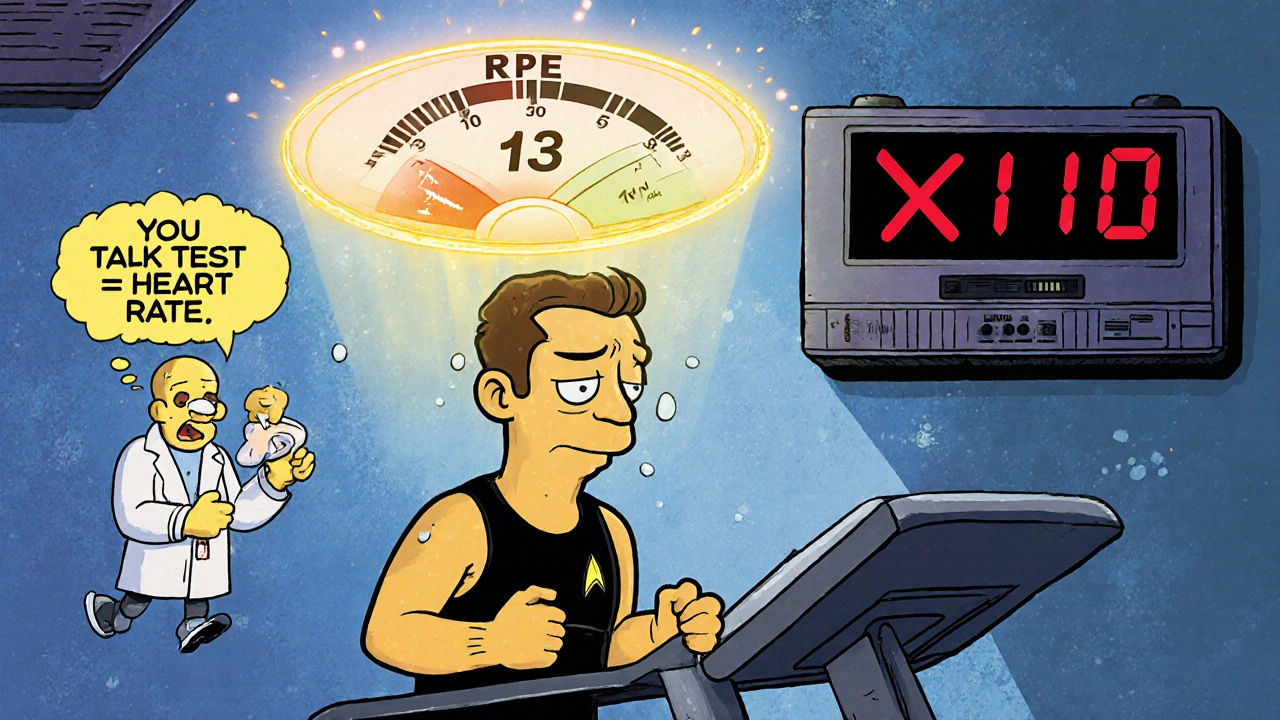
Exercise Modifications for Fatigue on Beta-Blockers and Other Drugs
Learn how to exercise safely when taking beta-blockers. Discover why heart rate monitors don't work, how to use perceived effort instead, and practical tips to beat fatigue without stopping your routine.