Doxycycline and Antacids: What You Need to Know About This Common Drug Interaction
When you take doxycycline, a broad-spectrum antibiotic used for infections like acne, Lyme disease, and respiratory illnesses. Also known as a tetracycline-class antibiotic, it works by stopping bacteria from making proteins they need to survive. But if you also take antacids, over-the-counter medicines like Tums, Rolaids, or Maalox that neutralize stomach acid, your antibiotic might not work at all. That’s not a myth—it’s a well-documented chemical clash. The calcium, magnesium, aluminum, or iron in antacids bind to doxycycline in your gut, forming a compound your body can’t absorb. You end up swallowing a pill that just passes through you, useless.
This isn’t just about stomach upset. It’s about treatment failure. If you’re on doxycycline for a serious infection like pneumonia or a tick-borne illness, skipping this rule could mean your infection doesn’t clear. And if you’re taking it for acne, you might wonder why nothing’s changing after weeks. The answer might be in your medicine cabinet. Even calcium supplements, iron pills, or bismuth subsalicylate (like Pepto-Bismol) can cause the same problem. You don’t need to stop your antacid entirely—you just need to space it out. The rule is simple: take doxycycline at least two hours before or four hours after any antacid or mineral supplement. That gap gives your body time to absorb the antibiotic before the minerals show up to block it.
Some people think they can just crush the pill or take it with milk to avoid stomach irritation. Don’t. Dairy has calcium. Same problem. Water is your best friend here. And if you’re on multiple meds, check every label. Many pain relievers and stomach meds sneak in antacids or minerals without calling themselves "antacids." That’s why reading the medication guide, the printed sheet that comes with your prescription that lists warnings and interactions matters. It’s not fluff—it’s your safety net. You wouldn’t ignore a warning on a ladder or a power tool. Don’t ignore it on your pill bottle.
What’s surprising is how often this interaction slips through the cracks. Pharmacists catch it during counseling. Doctors assume patients know. Patients assume all pills play nice. But in reality, this is one of the top 10 drug interactions reported in clinics. And it’s completely avoidable. You don’t need to be a scientist to fix it. Just learn the timing. Write it down. Set a phone alarm. Use a pill organizer with time slots. These small steps make the difference between a treatment that works and one that doesn’t.
Below, you’ll find real-world advice from people who’ve been there—how to manage doxycycline with other meds, what to do if you accidentally mix it with antacids, and how to spot hidden sources of calcium or iron in your daily routine. These aren’t theory articles. They’re practical fixes from patients and pharmacists who’ve seen what happens when timing goes wrong—and how to get it right.
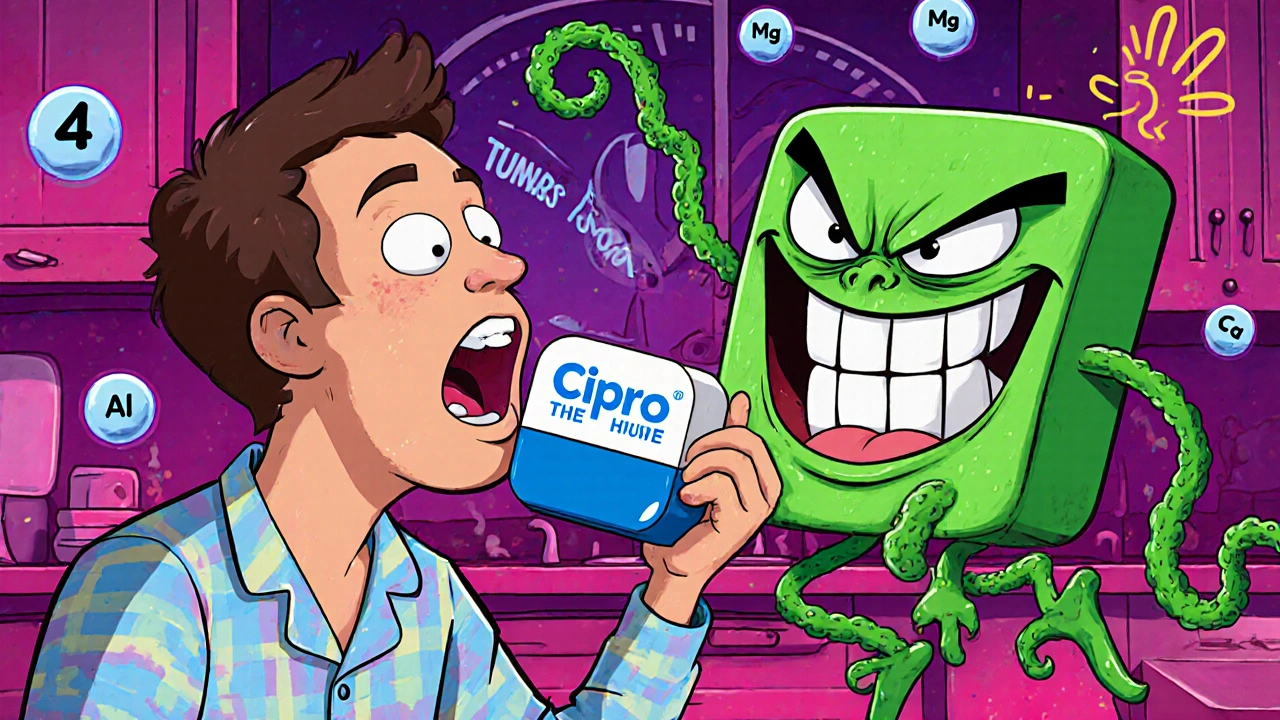
Antacids and Antibiotics: How to Time Your Doses to Avoid Dangerous Interactions
Taking antacids with antibiotics like ciprofloxacin or doxycycline can reduce their effectiveness by up to 90%. Learn the exact timing rules to avoid treatment failure and antibiotic resistance.