Ciprofloxacin and Tums: What You Need to Know About This Common Medication Interaction
When you take ciprofloxacin, a broad-spectrum antibiotic used to treat bacterial infections like urinary tract infections, pneumonia, and skin infections. It's known for its strong action against gram-negative bacteria, it needs to be absorbed properly to work. But if you’re also taking Tums, a common antacid containing calcium carbonate used to relieve heartburn and indigestion, you might be accidentally blocking its effectiveness. This isn’t a myth—it’s a well-documented interaction that can turn a simple treatment into a failed one.
The problem is simple: calcium in Tums binds to ciprofloxacin in your gut, forming a compound your body can’t absorb. That means the antibiotic never reaches the infection site in enough strength. It’s like taking a key to your front door, then wrapping it in duct tape before inserting it—no matter how hard you turn, it won’t open. The same thing happens with other antacids, iron supplements, and even some multivitamins. You don’t need to stop Tums entirely, but timing matters. Take ciprofloxacin at least 2 hours before or 6 hours after any calcium-containing product. If you take Tums for daily heartburn, switch to something like famotidine or omeprazole, which don’t interfere with antibiotics. And if you’re on long-term ciprofloxacin, talk to your pharmacist about alternatives that won’t clash with your routine.
This isn’t just about ciprofloxacin and Tums—it’s about how everyday remedies can quietly sabotage your prescriptions. Many people don’t realize that something as harmless as an antacid can turn a 10-day course of antibiotics into a waste of time and money. The same issue pops up with other fluoroquinolones like levofloxacin, and even with thyroid meds, osteoporosis drugs, and some antidepressants. It’s not about avoiding antacids—it’s about learning how to use them without breaking your other treatments. The posts below give you real, no-fluff advice on how to avoid these hidden conflicts, whether you’re managing antibiotics, dealing with stomach issues, or trying to make sense of your medication list. You’ll find practical tips on timing, safer substitutes, and how to check for interactions without relying on apps that miss the basics. This is the kind of info that keeps you out of the ER and on track with your treatment.
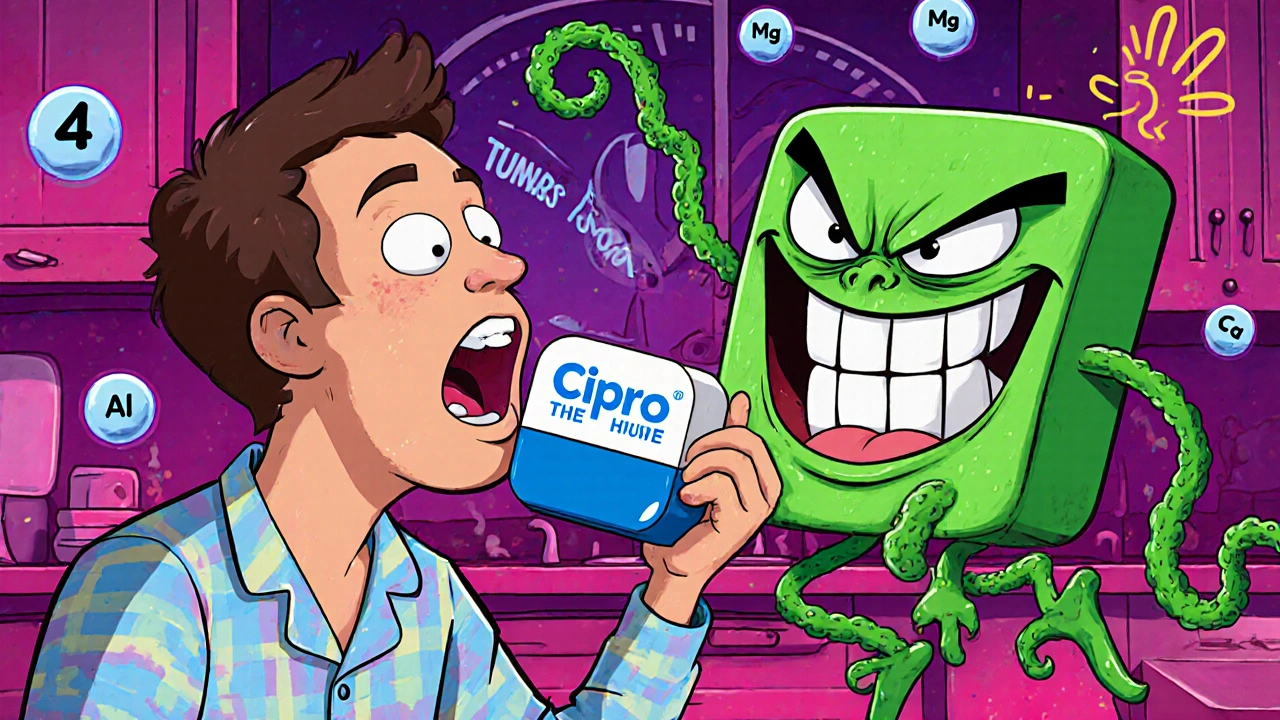
Antacids and Antibiotics: How to Time Your Doses to Avoid Dangerous Interactions
Taking antacids with antibiotics like ciprofloxacin or doxycycline can reduce their effectiveness by up to 90%. Learn the exact timing rules to avoid treatment failure and antibiotic resistance.