Cat Eye Infection: Causes, Signs, and What to Do
When your cat squints, rubs their eye, or has cloudy, goopy discharge, it’s likely a cat eye infection, an inflammation or infection of the eye or surrounding tissues in cats, often caused by viruses, bacteria, or irritants. Also known as feline conjunctivitis, it’s one of the most common reasons pet owners rush to the vet. Unlike humans, cats can’t tell you their eye hurts — so you have to spot the clues. A little crust in the corner? Redness around the eyelid? Squinting even in dim light? These aren’t just quirks. They’re red flags.
Feline conjunctivitis, the most frequent type of cat eye infection, involves swelling of the thin membrane lining the eyelids and covering the white part of the eye — and it often comes with discharge. That gunk can be clear and watery (common with allergies or viruses) or thick and yellow-green (a sign of bacterial infection). Cats with upper respiratory infections, like feline herpesvirus, are especially prone. Even a scratch from a bush or dust in the air can trigger it. And yes, it can spread between cats in the same home — so if one’s affected, watch the others.
Some owners try home remedies: wiping with tea bags, using human eye drops, or waiting it out. But many of these make things worse. Human drops can contain steroids or preservatives that damage a cat’s delicate eye. Delaying care can lead to ulcers, scarring, or even vision loss. The right treatment depends on the cause — antiviral ointments for herpes, antibiotics for bacteria, or anti-inflammatories for irritation. Your vet might swab the eye or run a simple test to find out what’s going on.
What you’ll find below are real, practical guides written by people who’ve been there — from how to safely clean your cat’s eye at home to when to skip the waitlist and head straight to the emergency clinic. You’ll see comparisons of common treatments, stories from other cat owners, and tips on preventing flare-ups. No fluff. Just what works.
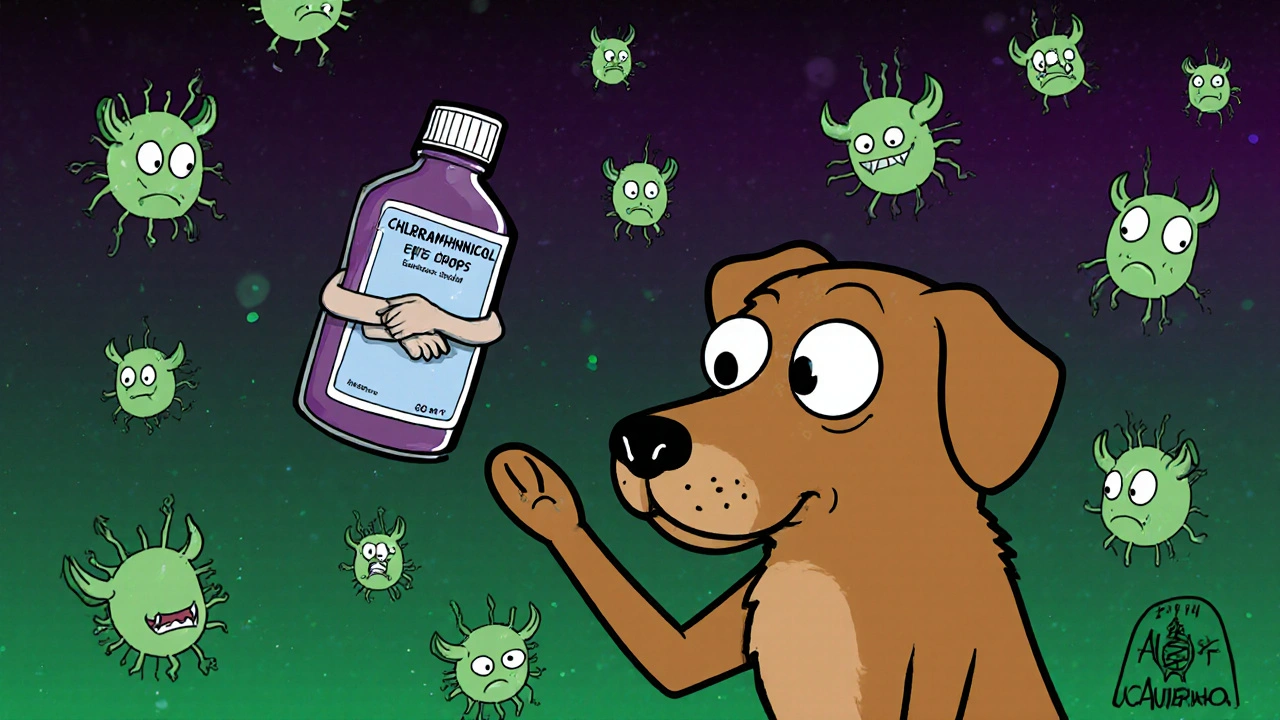
Chloramphenicol for Pet Eye Infections: What Pet Owners Need to Know
Chloramphenicol is a common antibiotic used to treat bacterial eye infections in dogs and cats. Learn how it works, when it's safe to use, potential risks, and what alternatives exist - all based on current veterinary practice.