Antacids and Antibiotics: What You Need to Know About Taking Them Together
When you take antacids and antibiotics, antacids neutralize stomach acid to relieve heartburn, while antibiotics kill or slow down bacteria causing infections. Also known as heartburn meds and infection fighters, these two types of drugs often end up in the same medicine cabinet—but mixing them without care can make one or both less effective. It’s not just about timing. Some antibiotics, like tetracycline and ciprofloxacin, bind to the minerals in antacids—calcium, magnesium, aluminum—forming a compound your body can’t absorb. That means the antibiotic never reaches your bloodstream where it’s needed, and your infection keeps growing.
That’s why stomach acid, the natural acid in your stomach that helps break down food and activate certain drugs. Also known as gastric acid, it plays a key role in how well your body absorbs medications matters more than you think. Antibiotics like amoxicillin and doxycycline need a certain acid level to dissolve properly. Antacids raise your stomach’s pH, making it too alkaline, and that changes how the drug behaves. Even if you wait a few hours, some antacids linger in your system and keep working. The result? You might think you’re following the rules, but your treatment isn’t working like it should.
It’s not just about avoiding antacids. Other common items—like iron pills, calcium supplements, or even dairy—can cause the same problem. If you’re on a course of antibiotics and you’ve been popping antacids for indigestion, you’re not alone. But you’re also at risk of prolonging your illness or needing stronger meds later. The fix isn’t always stopping antacids entirely. It’s about spacing them out. Most experts recommend taking antacids at least two hours before or four hours after your antibiotic. That gives the antibiotic time to get absorbed before the antacid shows up to interfere.
And it’s not just about the drug itself. Your body’s reaction matters too. If you’re on antibiotics and suddenly feel worse—not better—that could be because the drug didn’t get absorbed. You might think it’s a side effect, but it could be a silent interaction. Always check your medication guide. If it mentions avoiding antacids or dairy, don’t ignore it. Pharmacists see this mistake all the time, and it’s one of the easiest to fix—with the right info.
Below, you’ll find real-world advice from people who’ve been there: how to time your doses, which antacids are safer with certain antibiotics, what to do if you accidentally mix them, and how to talk to your pharmacist about your full medication list. These aren’t theory pages. They’re practical guides written for people managing real health routines, not textbook scenarios. You don’t need to memorize chemistry. You just need to know what to do next.
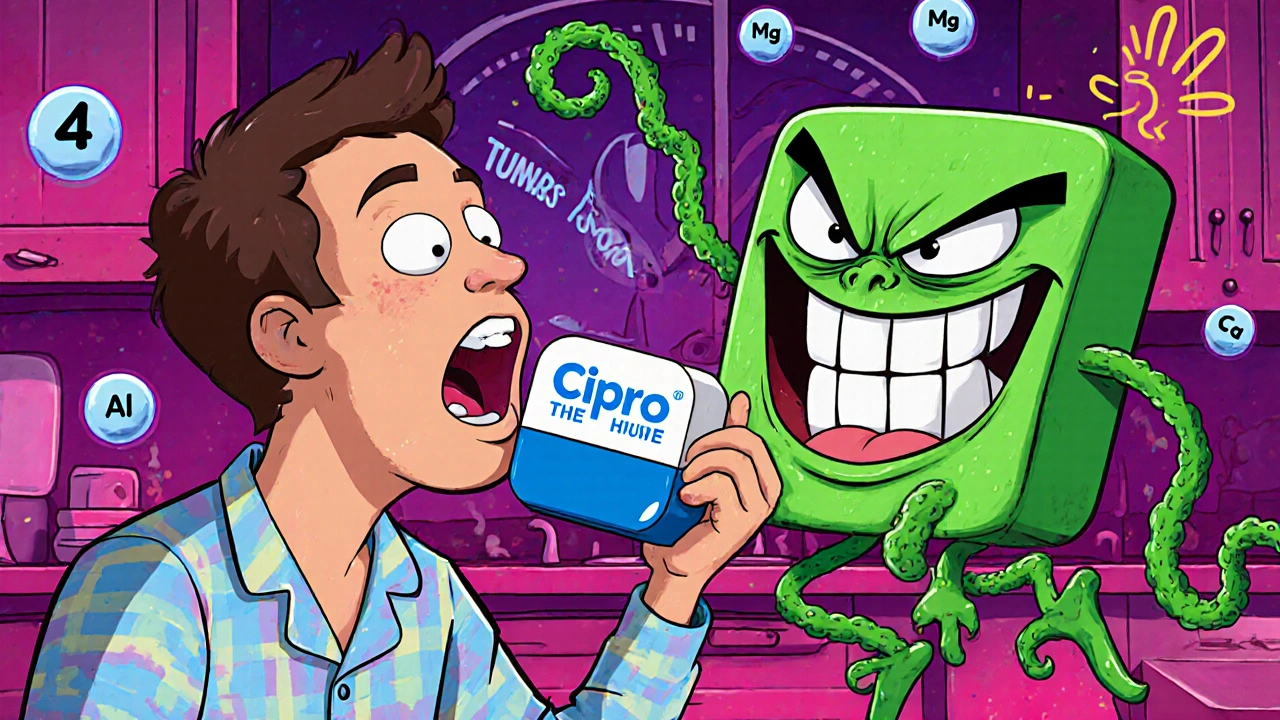
Antacids and Antibiotics: How to Time Your Doses to Avoid Dangerous Interactions
Taking antacids with antibiotics like ciprofloxacin or doxycycline can reduce their effectiveness by up to 90%. Learn the exact timing rules to avoid treatment failure and antibiotic resistance.