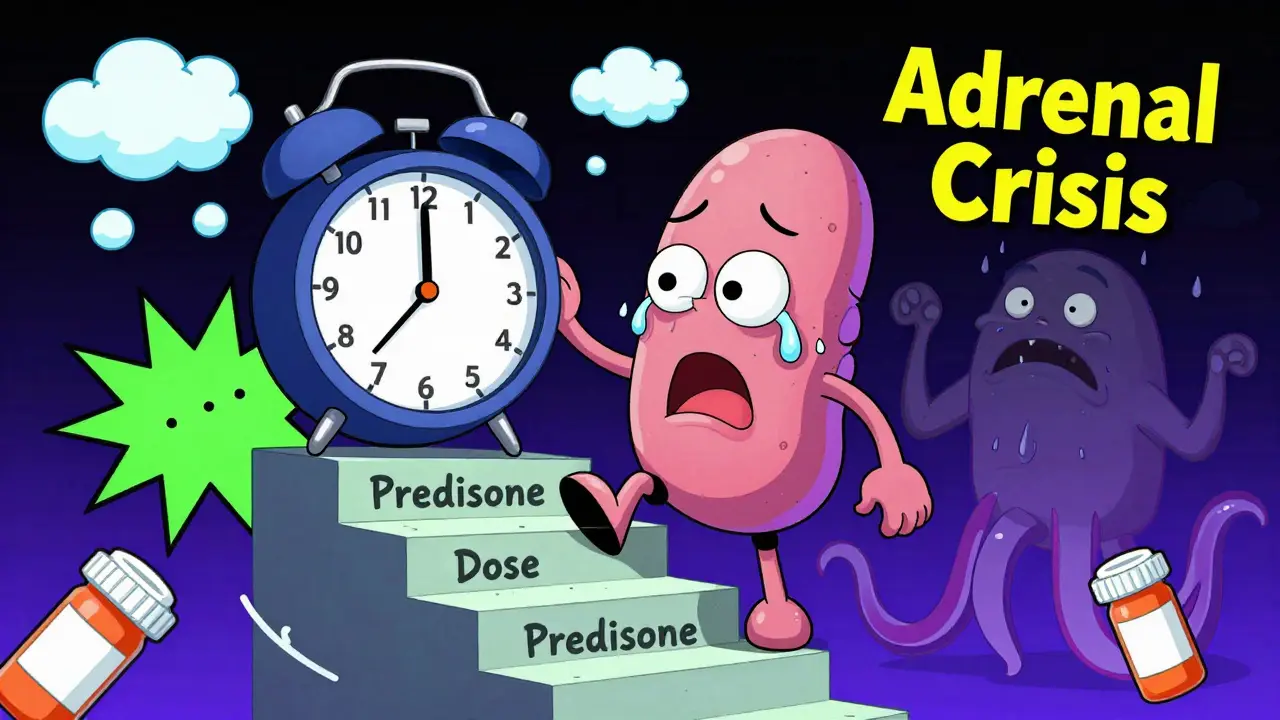
Stopping steroids suddenly can be dangerous-especially if you’ve been taking them for more than a few weeks. Your body stops making its own cortisol because the medication tells it to shut down. If you cut the dose too fast, you risk steroid tapering failure: adrenal crisis, intense fatigue, joint pain, or your autoimmune disease coming back worse than before. This isn’t just a theory. Real patients end up in emergency rooms because no one explained how to come off steroids safely.
Why Tapering Isn’t Optional
When you take prednisone or another glucocorticoid for more than three to four weeks, your adrenal glands stop working like they should. They’re not broken-they’re just waiting. Your brain tells them, “We’ve got plenty of cortisol from the pill, no need to make more.” That’s fine while you’re on the medication. But when you stop, your body doesn’t snap back immediately. It takes time. And if you stop too soon, your body has no backup. That’s when you get adrenal insufficiency. Symptoms show up fast: crushing fatigue, dizziness when standing, nausea, low blood pressure, muscle aches. In severe cases, it’s an adrenal crisis-low blood sugar, shock, even death. And that’s just the physical side. Your autoimmune condition-rheumatoid arthritis, lupus, IBD, vasculitis-can flare hard. You might end up back on higher doses than you started with, trapped in a cycle you didn’t have to be in.The Three-Phase Tapering Strategy
There’s no one-size-fits-all plan, but most experts follow a three-phase approach based on how much you’re taking and how long you’ve been on it.- Phase 1: Rapid Taper (Above 20 mg/day) - If you’re on 40 mg of prednisone, you might drop by 5-10 mg every week until you hit 20 mg. This phase is faster because your body still has some cortisol-making capacity left. Cutting too slow here just stretches out discomfort for no reason.
- Phase 2: Gradual Taper (10-20 mg/day) - Once you’re below 20 mg, you slow down. Drop by 2.5-5 mg every two weeks. This is where most people start feeling withdrawal symptoms: joint pain, trouble sleeping, mood swings. Don’t panic. These are signs your body is waking up, not failing. But if symptoms hit hard, pause the taper for 1-2 weeks. Your dose stays the same. Then try again.
- Phase 3: Slow Taper (Below 10 mg/day) - At this point, you’re near your body’s natural production level. Drops get smaller: 2.5 mg every two weeks, then 1.25 mg every two to four weeks. Some doctors switch to hydrocortisone here because it’s closer to natural cortisol. But studies show most people do fine staying on prednisone. Don’t switch unless your doctor says so.
How Long Does It Take?
It’s not a race. If you were on high-dose steroids for just a few weeks, you might finish tapering in two to four weeks. But if you’ve been on them for six months or more? Plan for three to six months. Some people need up to a year. The goal isn’t speed-it’s safety. One patient from Manchester, on prednisone for 14 months for polymyalgia rheumatica, dropped from 40 mg to 0 mg over 14 weeks. She reduced by 10% every two weeks and kept a symptom journal. No flare-ups. No withdrawal. She didn’t get lucky. She followed a plan.What If You Feel Bad During Tapering?
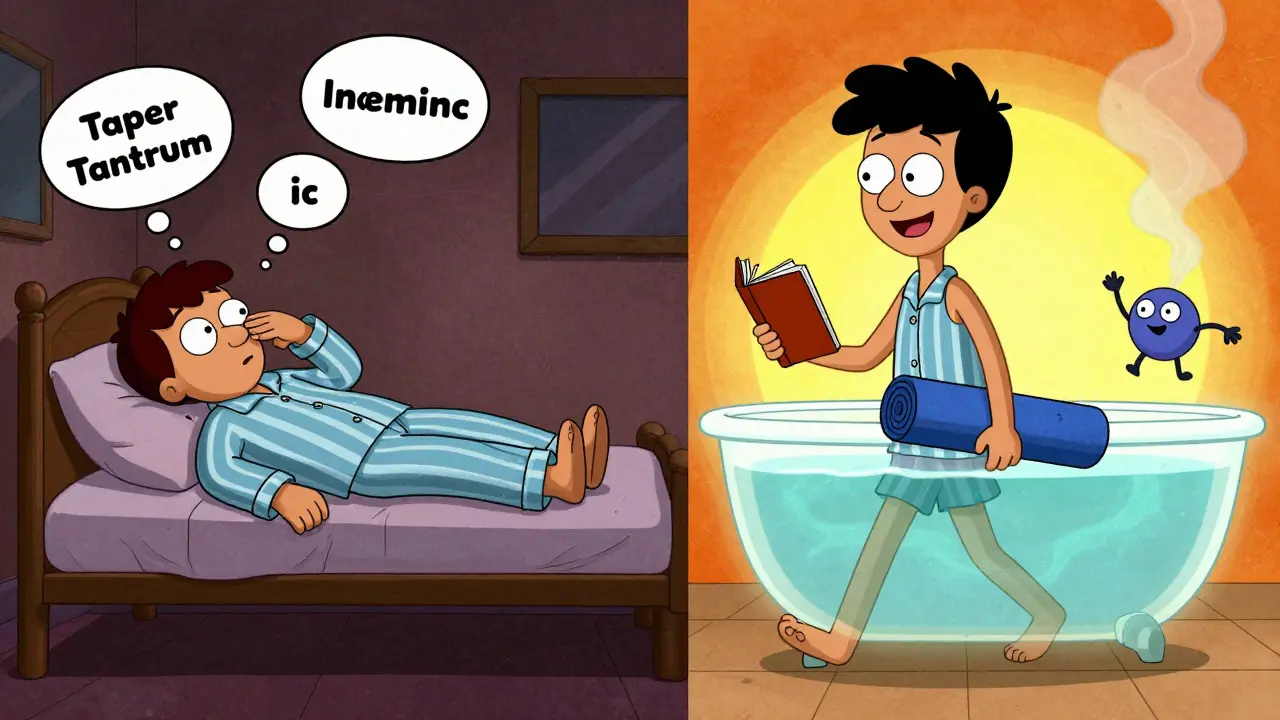
Sixty-eight percent of patients report mild withdrawal symptoms when tapering, according to WebMD’s 2023 patient survey. The most common? Fatigue (42%), joint pain (37%), and sleep issues (29%). Here’s what actually helps:- Movement, not rest - Bed rest makes stiffness worse. Ten-minute walks twice a day reduce joint pain by 57% compared to staying still.
- Warm water - Swimming or soaking in a warm bath eases muscle and joint pain. The heat relaxes muscles and improves circulation.
- Meditation - Just 10 minutes a day cuts anxiety and symptom severity by 43%. Apps like Insight Timer or even YouTube guided sessions work.
- Don’t skip meals - Low blood sugar makes fatigue worse. Eat small, balanced meals every 3-4 hours. Include protein and complex carbs.
What You Must Never Do
There are three big mistakes patients make:- Stopping cold turkey - Even if you feel fine. Your body doesn’t know it’s supposed to wake up.
- Skipping doses randomly - If you miss a pill, don’t double up the next day. That causes spikes and crashes. Call your doctor. They’ll tell you what to do.
- Ignoring illness - If you get sick-flu, infection, even a bad cold-you need to temporarily increase your steroid dose. Your body needs extra cortisol to fight stress. Not doing this is why 18% of emergency visits after tapering happen. Always have a “sick day plan” written down.
Tools That Actually Help
Most people don’t know how to track their taper. They rely on memory. That’s risky.- Written schedule - Your doctor should give you a clear, daily dose chart. If they don’t, ask. Forty-one percent of withdrawal complications come from confusion over dosing.
- Steroid alert card - Carry one at all times for at least 12 months after stopping. It says you’ve been on steroids. Emergency staff need to know. If you’re in an accident or get seriously ill, they’ll give you steroids right away.
- Digital apps - The Prednisone Taper Assistant app (launched 2023) lets you log symptoms and adjusts your taper schedule based on how you’re feeling. Pilot studies showed 82% better adherence.
When Testing Might Help
Some doctors check your morning cortisol level once you’re down to 5 mg or less. If it’s too low, they slow the taper. But here’s the catch: routine testing isn’t recommended for everyone. The Australian Prescriber says there’s not enough evidence to make it standard. It’s only useful if you’re having clear symptoms of withdrawal and your doctor suspects your adrenal glands aren’t recovering. New tools like CRH stimulation tests can predict whether you can stop steroids safely-with 89% accuracy. But these are only available in specialist centers. For now, your symptoms and response to dose changes are the best guides.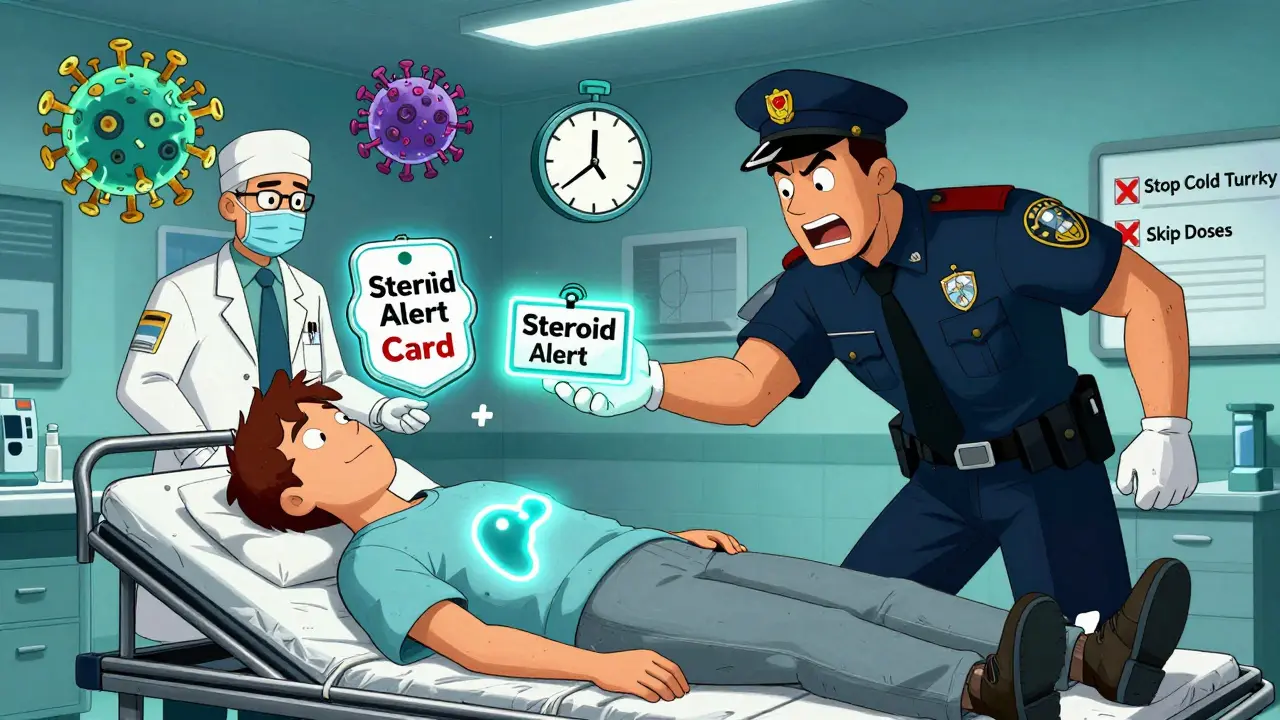
The Bigger Picture
Steroids are powerful. They’re often the only thing that stops a flare fast. But they’re not a long-term fix. That’s why newer treatments-biologics, JAK inhibitors-are replacing them for some conditions. But they don’t work for everyone. And even when they do, steroids are still needed during flares. The American College of Rheumatology now says: taper based on disease activity, not just time. If your joint swelling is gone and blood tests are normal, you can go faster. If inflammation markers are still up? Slow down. This personalized approach is becoming the new standard.Final Advice
Steroid tapering isn’t about following a rigid calendar. It’s about listening to your body while staying guided by your doctor. If you feel worse, pause. If you feel okay, keep going. Keep a journal. Eat well. Move gently. Carry your alert card. And never, ever stop without a plan.There’s no shame in needing steroids. There’s only risk in stopping them the wrong way.
Can I stop prednisone if I feel fine?
No. Feeling fine doesn’t mean your adrenal glands are ready. Steroids suppress your body’s natural cortisol production. Even if you feel great, stopping suddenly can trigger adrenal insufficiency or a disease flare. Always follow a medically supervised tapering schedule.
How long do withdrawal symptoms last?
Withdrawal symptoms usually last a few days to weeks after each dose reduction, especially between 10 mg and 5 mg. Most people notice improvement within 1-2 weeks of holding a dose. Full adrenal recovery can take months-even up to 18 months after long-term use. Symptoms fade as your body restarts cortisol production.
Is hydrocortisone better than prednisone for tapering?
Some doctors switch to hydrocortisone near the end because it’s closer to natural cortisol and has a shorter half-life. But studies show most patients successfully taper off prednisone without switching. There’s no strong evidence that hydrocortisone improves outcomes. Only switch if your doctor recommends it based on your individual case.
What should I do if I get sick during tapering?
Increase your steroid dose immediately. Illness, infection, or stress requires more cortisol. For minor illness, double your current dose for 2-3 days. For fever, vomiting, or hospitalization, triple it and call your doctor. Never skip doses during illness. This is the most common cause of adrenal crisis after tapering.
Do I need to carry a steroid alert card forever?
Carry it for at least 12 months after stopping. For people on long-term steroids (6+ months), experts recommend carrying it for up to two years. Recovery of the adrenal glands can take 12-18 months. Emergency staff need to know you’ve been on steroids-otherwise, they won’t give you the right treatment if you’re in crisis.
Can I use supplements to help with tapering?
No supplement replaces medical tapering. Some people report feeling better with vitamin D, magnesium, or adaptogens like ashwagandha, but there’s no strong evidence they reduce withdrawal symptoms. Don’t rely on them. Focus on sleep, movement, stress management, and following your doctor’s plan. Supplements can interact with steroids-always check with your doctor first.
What if my doctor won’t let me taper?
Ask why. If your disease is in remission, you should be able to taper. If your doctor says you need to stay on steroids indefinitely, ask about alternatives like biologics or DMARDs. You have the right to a second opinion. Many rheumatologists now support tapering when safe. Don’t accept staying on steroids longer than necessary without a clear reason.

Sonal Guha
January 12, 2026 AT 15:35Stop steroids cold and you’re asking for an adrenal crash. No debate. Seen it in ERs. Your body doesn’t reboot like a phone.
TiM Vince
January 14, 2026 AT 13:43I’m from Texas and my rheumatologist gave me a 6-month taper plan after 18 months on prednisone. I followed it to the letter. Walked every day. Ate every 3 hours. Used Insight Timer. No flare. No crisis. Just quiet recovery.
gary ysturiz
January 14, 2026 AT 15:57Guys please listen. Tapering is not optional. It’s science. Your adrenals are sleeping, not broken. If you skip a dose or quit early, you’re not being brave-you’re risking your life. I got my alert card printed on laminated cardstock. I carry it in my wallet. Always. Even now, two years out. Better safe than sorry.
Jessica Bnouzalim
January 14, 2026 AT 22:34OMG YES!!! I was on 40mg for 10 months… and I tried to cut too fast… I thought I was fine… then I collapsed at the grocery store… like, literally… I had to be rushed to the hospital… they gave me IV steroids and said I was ONE DAY away from cardiac arrest… I’m now on a 14-month taper… and I journal EVERYTHING… and I cry sometimes… but I’m alive… and I’m grateful… 🙏
laura manning
January 16, 2026 AT 00:33While the general framework presented is clinically sound, the assertion that hydrocortisone offers no demonstrable advantage over prednisone in the final tapering phase is not fully substantiated by current endocrinological literature. The pharmacokinetic profile of hydrocortisone, particularly its shorter half-life and more physiologic circadian mimicry, may confer benefits in hypothalamic-pituitary-adrenal axis recovery, especially in patients with prolonged glucocorticoid exposure. Further, the cited Australian Prescriber guidelines do not preclude individualized clinical judgment in select populations.
beth cordell
January 17, 2026 AT 01:50Just wanted to say I’ve been off prednisone for 8 months now and I still carry my alert card. Also, I use the Prednisone Taper Assistant app-so helpful. And yes, warm baths are magic. 🛁💙
Lauren Warner
January 18, 2026 AT 16:30People who say "just taper slower" haven't lived through this. I was told to drop 5mg every two weeks. I did. I got sick. I asked to pause. I was told "you're weak." Guess what? I ended up in the ER. Now I have PTSD from the whole thing. Doctors need to stop treating this like a math problem.
Craig Wright
January 18, 2026 AT 17:31As a British GP with 22 years’ experience, I must emphasize that the three-phase tapering strategy described is aligned with NICE guidelines. However, I have observed a troubling trend: patients in the United States often self-manage tapering without adequate monitoring. This is dangerous. The NHS mandates monthly review during tapering. If your doctor does not schedule follow-ups, seek a second opinion. This is not optional care-it is standard of care.
Lelia Battle
January 19, 2026 AT 07:20There’s something profound about how the body remembers what it’s been trained to forget. Steroids don’t just suppress inflammation-they suppress the body’s own wisdom. Tapering isn’t just about chemistry. It’s about relearning how to be human again. Slowly. Gently. With patience. I think we’ve forgotten that healing isn’t a sprint. It’s a quiet return to self.
Rinky Tandon
January 20, 2026 AT 06:42Let me be blunt: if you're tapering without tracking CRP, ESR, and morning cortisol levels, you're gambling with your life. And no, meditation won't fix adrenal insufficiency. You need biomarkers. You need labs. You need a rheumatologist who knows what they're doing-not some blog post with "10-minute walks" as a cure. This isn't wellness influencer content. This is endocrinology. Get serious.