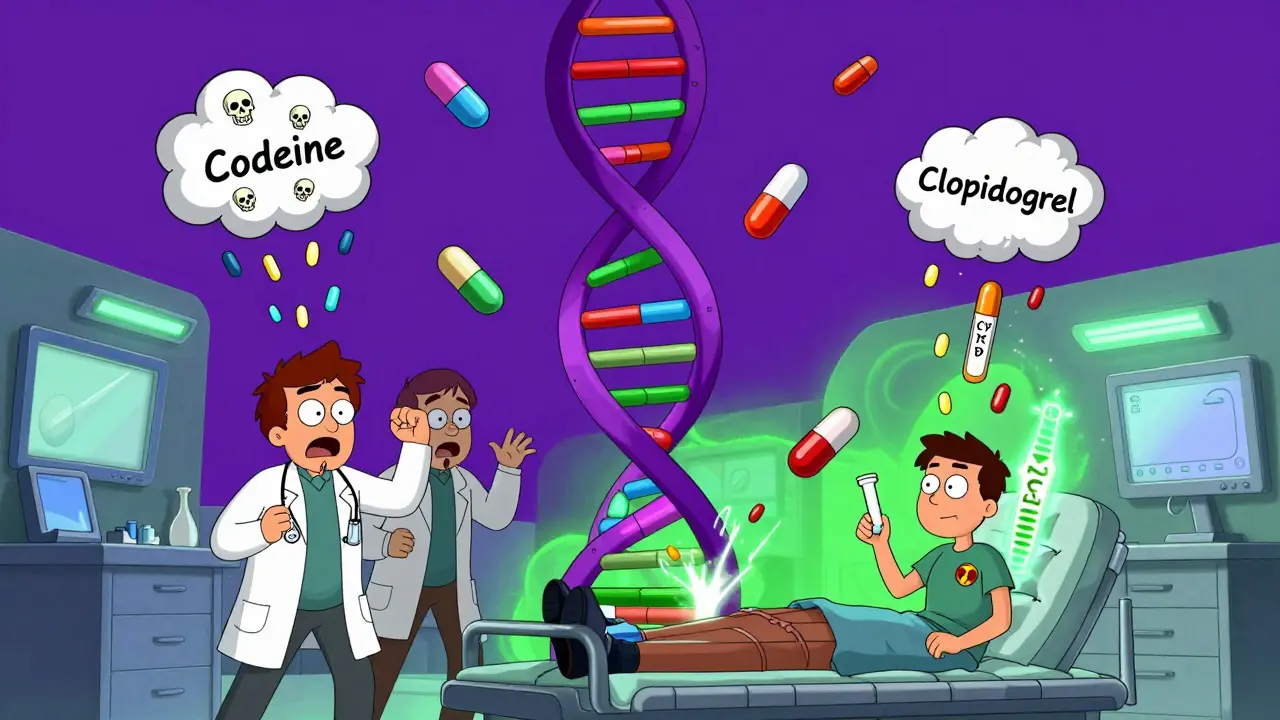
Every year, hundreds of thousands of people end up in hospitals not because they got sick from an infection or injury, but because a medication they were prescribed made them worse. These are called adverse drug reactions (ADRs). In the UK alone, ADRs are responsible for about 7% of all hospital admissions - that’s over half a million people annually. Many of these reactions aren’t random. They’re predictable. And they’re often tied to your genes.
Why Your Genes Matter When Taking Medication
Not everyone reacts to drugs the same way. Two people taking the same pill, at the same dose, can have completely different outcomes. One might feel better. The other might end up in the ICU. The difference? Their DNA. Pharmacogenetic testing looks at specific genes that control how your body processes medications. These genes determine whether you’re a fast, slow, or normal metabolizer of a drug. If you’re a slow metabolizer of a common painkiller like codeine, for example, it builds up in your system and can cause dangerous breathing problems. If you’re a fast metabolizer of antidepressants like SSRIs, the drug might not work at all because your body clears it too quickly. The science isn’t new. Back in 2008, researchers found that people with a specific gene variant - HLA-B*1502 - had a nearly 100% risk of developing a deadly skin reaction if they took the epilepsy drug carbamazepine. This wasn’t a rare case. In parts of Asia, up to 15% of the population carries this variant. Since then, the FDA has recommended genetic testing before prescribing carbamazepine to people of Asian descent. That’s one drug. Now, we know of more than 300 gene-drug pairs with clear clinical guidelines.The PREPARE Study: A Game-Changer in Real-World Practice
The biggest proof that this works came from the PREPARE study, published in The Lancet in 2023. Researchers followed nearly 7,000 patients across seven European countries. Before prescribing any medication, they tested patients using a 12-gene panel that covered key drug metabolism pathways. Genes like CYP2C19, CYP2D6, TPMT, and SLCO1B1 were checked - all of which affect how common drugs like clopidogrel, statins, antidepressants, and chemotherapy agents are processed. The results? A 30% drop in serious adverse drug reactions. That’s not a small number. That’s 3 in every 10 patients who avoided hospitalization, emergency visits, or life-threatening side effects. What made this study different? It wasn’t done in a lab. It was done in real hospitals, with real doctors, using real electronic health records. The test results popped up as alerts when a doctor tried to prescribe a drug that could be dangerous for that patient’s genetic profile. This isn’t just theory. In cancer clinics, preemptive testing has prevented over 100 serious reactions per 1,000 patients treated with drugs like 5-FU and irinotecan. In psychiatry, patients on genotype-guided treatment saw a sharp drop in side effects like weight gain, dizziness, and nausea - all within three months.Which Genes Matter Most?
You don’t need to test every gene in your body. The most impactful ones are well-established and linked to commonly prescribed drugs. Here’s what matters:- CYP2C19: Affects clopidogrel (Plavix), used after heart attacks. Poor metabolizers have a 3x higher risk of heart recurrence.
- CYP2D6: Processes over 25% of all prescription drugs - including antidepressants, opioids, and beta-blockers. Variants can turn codeine into dangerous levels of morphine.
- TPMT: Critical before giving azathioprine or 6-MP for autoimmune diseases or leukemia. Low-activity variants can cause fatal bone marrow suppression.
- SLCO1B1: Determines statin (like simvastatin) toxicity. One variant increases muscle damage risk by 4x.
- DPYD: Used before giving 5-FU chemotherapy. Deficiency can lead to 100% mortality if not caught.
- HLA-B*1502: Mandatory test before carbamazepine in high-risk populations.
How It Works in Practice
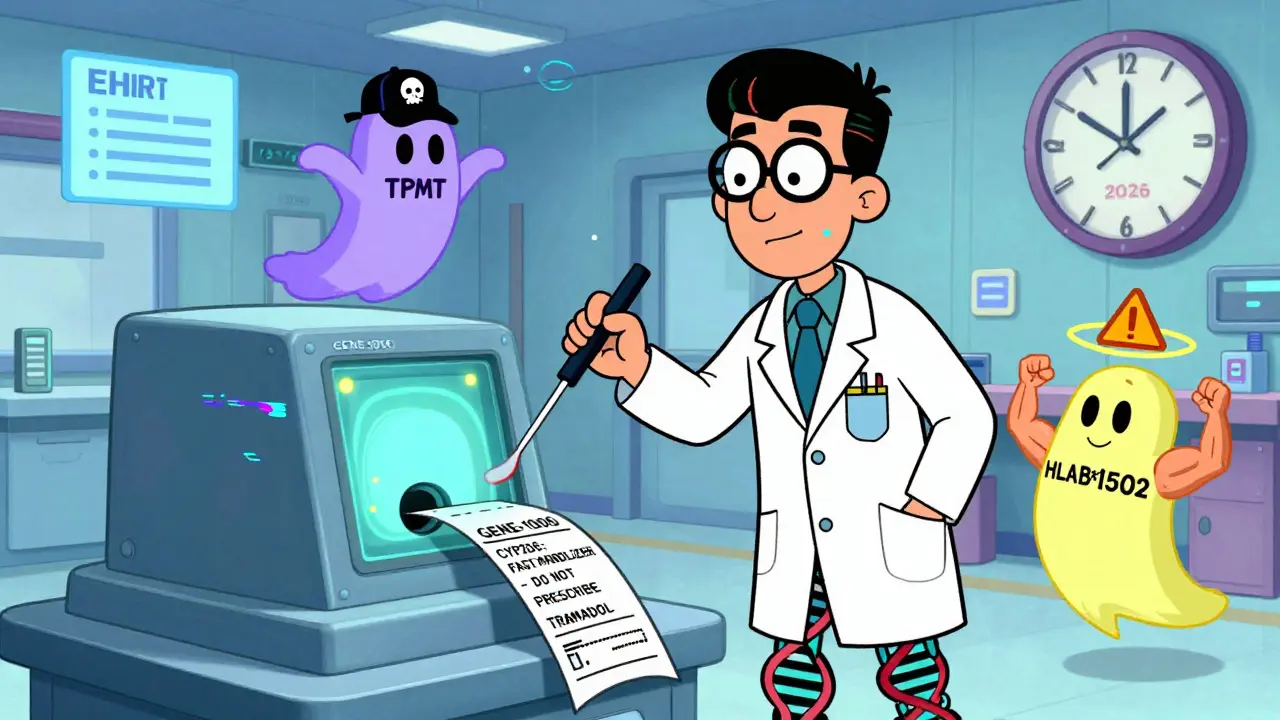
The testing process is simple. A saliva sample or cheek swab is collected - no needles needed. Results come back in 24 to 72 hours. The data is loaded into the patient’s electronic health record. When a doctor opens the prescription screen, an alert pops up: “Patient has CYP2C19 poor metabolizer status. Avoid clopidogrel. Consider prasugrel instead.” This isn’t science fiction. Hospitals in the U.S., like the University of Florida Health system, have been doing this since 2012. They saw a 75% drop in ADR-related emergency visits. The initial cost? $1.2 million. The return? Paid off in 18 months. Why? Because preventing one hospitalization saves an average of £10,000 in the NHS. One ADR avoided = multiple thousands saved. In the UK, the NHS estimates ADRs cost £500 million a year. If just half of those were preventable through testing, that’s £250 million freed up - money that could go toward hiring more nurses, expanding mental health services, or cutting waiting times.What’s Holding It Back?
Despite the evidence, adoption is still patchy. Only 18% of primary care clinics in the UK and U.S. use pharmacogenetic testing routinely. Why? First, doctors aren’t trained for it. A 2022 survey found that only 37% of physicians felt confident interpreting results. A CYP2D6 intermediate metabolizer? What does that mean for a patient on tramadol? Most doctors don’t know. Training programs exist - the Clinical Pharmacogenetics Implementation Consortium (CPIC) offers free, evidence-based guidelines for 34 gene-drug pairs - but they’re not yet standard in medical schools. Second, integration is hard. If test results don’t show up in the EHR as a clear, actionable alert, they’re useless. Many clinics still rely on paper reports that get lost in the mail. Third, cost. While prices have dropped - from $1,000 to $300-$500 per panel - insurance coverage is inconsistent. In the U.S., Medicare covers testing for specific high-risk pairs like TPMT and CYP2C19. In the UK, the NHS doesn’t yet fund preemptive testing outside of oncology. But here’s the thing: the cost of the test is nothing compared to the cost of treating a severe ADR. A single case of Stevens-Johnson syndrome can cost over £50,000 in care.Who Should Get Tested?
You don’t need to be sick to benefit. The PREPARE study found that 93.5% of healthy people had at least one actionable gene variant. That means almost everyone has a genetic reason to avoid a bad reaction to a drug they might take someday. High-risk groups include:- Patients on multiple medications (polypharmacy)
- People with a history of unexplained side effects
- Those starting chemotherapy, antidepressants, or heart drugs
- Patients over 65 - who take an average of 5+ medications
- People of African, Asian, or Indigenous descent - where certain variants are more common

What About Privacy?
Some people worry about genetic data being misused. But pharmacogenetic tests don’t look for disease risk. They don’t scan for Alzheimer’s or cancer genes. They only check how you process drugs. That’s a narrow, clinically focused panel. In the UK, the NHS follows strict data protection rules under GDPR. Your genetic data from testing is stored separately from your main medical record and is only accessible to authorized prescribers. A 2023 survey found that 85% of patients would agree to testing if their doctor recommended it. Only 33% had privacy concerns - and most of those were based on misinformation. The real risk isn’t your data being sold. It’s not being used when it could save your life.The Future Is Here - And It’s Personalized
The global pharmacogenomics market is growing fast. By 2028, it’s expected to hit $22 billion. In the U.S., 87% of major academic hospitals plan to offer preemptive testing by 2026. In Europe, the EU has committed €150 million to roll it out nationally by 2027. New tools are coming. Point-of-care PCR machines are being tested - devices that could give results in under an hour, for under £50. Imagine walking into your GP’s office, getting a swab, and walking out with a prescription that’s already been optimized for your genes. This isn’t about replacing your doctor. It’s about giving them better tools. It’s not about genetic determinism. It’s about reducing guesswork. Medicine has moved from “one-size-fits-all” to “right drug, right dose, right person.” Pharmacogenetic testing is the key.What’s Next?
If you’re a patient: Ask your doctor if pharmacogenetic testing is right for you - especially if you’re on multiple meds, have had side effects before, or are starting a new treatment. If you’re a clinician: Look into CPIC guidelines. Use clinical decision support tools. Advocate for EHR integration. Your patients will thank you. If you’re a policymaker: Fund pilot programs. Cover testing under national health schemes. Build training into medical education. The savings aren’t theoretical - they’re already happening. The data is clear. The technology is ready. The cost is falling. The only thing left is action.What is pharmacogenetic testing?
Pharmacogenetic testing analyzes specific genes that affect how your body processes medications. It helps predict whether you’re likely to have an adverse reaction or not respond to a drug, so your doctor can choose a safer or more effective option.
Which drugs are affected by pharmacogenetic testing?
More than 100 commonly prescribed drugs are influenced by genetic variants. Key examples include clopidogrel (heart), statins (cholesterol), antidepressants (SSRIs), codeine (pain), azathioprine (autoimmune), and 5-FU (cancer). Testing focuses on genes like CYP2C19, CYP2D6, TPMT, and SLCO1B1.
Is pharmacogenetic testing covered by insurance?
In the U.S., Medicare covers testing for specific high-risk pairs like CYP2C19 and TPMT. In the UK, the NHS currently funds testing mainly in oncology and psychiatry. Coverage is expanding, but outside these areas, patients often pay out-of-pocket - typically £200-£400. Costs are expected to drop below £100 by 2026.
How accurate is pharmacogenetic testing?
Modern testing using genotyping arrays is over 99.9% accurate for the variants it’s designed to detect. However, interpretation depends on clinical guidelines. Not all gene variants have clear action steps, and some results (like intermediate metabolizers) require clinical judgment.
Can pharmacogenetic testing prevent all adverse drug reactions?
No - but it prevents many of the most dangerous ones. Studies show it reduces serious ADRs by 30%. It doesn’t catch reactions caused by drug interactions, allergies, or non-genetic factors like liver disease. But for genetically driven reactions - which make up a large portion of hospitalizations - it’s highly effective.
How long does it take to get results?
In most clinical settings, results are available in 24 to 72 hours. Some newer point-of-care tests under development aim to deliver results in under an hour. Once processed, results are stored in your electronic health record for future use.






Milad Jawabra
March 5, 2026 AT 00:35Yo, this is the future of medicine and people are still acting like it’s sci-fi? 🤯 I’ve seen friends get hospitalized because doctors just guessed their meds. One guy got codeine for a toothache and nearly died-turns out he’s a super-metabolizer. This testing should be standard, like getting your blood type. Stop playing roulette with people’s lives. 💥
Darren Torpey
March 5, 2026 AT 14:39This is the kind of innovation that makes me proud to be alive in this era. Imagine a world where your DNA isn’t just a blueprint-it’s your personal medication cheat code. 💪 The PREPARE study? That’s not data, that’s a revolution wrapped in a saliva swab. Let’s get this into every ER, every GP’s office, every pharmacy. The future isn’t coming-it’s already here, and it smells like peppermint and hope.
Lebogang kekana
March 7, 2026 AT 13:50LET ME TELL YOU SOMETHING-this isn’t just science, it’s justice. 🌍 I come from a place where people die because they can’t afford to guess right. In South Africa, we see so many folks on TB meds or antiretrovirals who crash because no one checked their genes. This isn’t a luxury for rich countries-it’s a lifeline for the rest of us. Stop treating genetics like a bonus feature. It’s the foundation.
Megan Nayak
March 9, 2026 AT 10:42Oh please. We’re just swapping one form of reductionism for another. Your genes don’t dictate your biology-they interact with environment, epigenetics, social determinants, and yes, even your stress levels. This ‘precision medicine’ hype ignores the fact that 80% of drug reactions are still caused by polypharmacy and poor prescribing habits. You can’t gene-solve human error.
Divya Mallick
March 11, 2026 AT 00:02India has been doing pharmacogenomics since the 90s with Ayurvedic polypharmacy protocols. You think Western medicine just discovered this? We’ve been mapping metabolic variants in South Indian populations for decades. Your ‘breakthrough’ study? We’ve seen this data since before your grandparents were born. The West just needed a grant and a fancy journal to notice.
Pankaj Gupta
March 11, 2026 AT 06:10While the potential of pharmacogenetic testing is undeniable, it is imperative that implementation be accompanied by rigorous clinical training and standardized interpretation protocols. Without a robust infrastructure for result interpretation, even the most accurate genotyping may lead to misprescribing. The CPIC guidelines are an excellent start, but they must be integrated into undergraduate medical curricula, not treated as optional continuing education.
Alex Brad
March 11, 2026 AT 12:53Test everyone. Now. No excuses.
Renee Jackson
March 11, 2026 AT 20:00Thank you for presenting this information with such clarity and compassion. The data is unequivocal, and the ethical imperative is clear. Pharmacogenetic testing represents not merely a technological advancement, but a moral obligation to reduce preventable harm. I urge healthcare institutions to prioritize this as a standard of care, not an experimental add-on.
RacRac Rachel
March 12, 2026 AT 00:36Just got my results back last month 😍 Turns out I’m a CYP2D6 ultra-rapid metabolizer-so all my past anxiety meds were basically useless. Switched to a different SSRI and now I’m actually sleeping. 🌙✨ This should be a routine part of every physical. I’m telling my whole family to get tested. It’s like a genetic seatbelt for your meds. 💉❤️
Jane Ryan Ryder
March 13, 2026 AT 20:41Callum Duffy
March 14, 2026 AT 13:39While the evidence is compelling, the logistical hurdles remain substantial. Integration into primary care systems requires not only funding but also sustained support for clinical staff. In the UK, where GP consultations average 9.5 minutes, expecting practitioners to interpret complex pharmacogenetic data without dedicated time or training is unrealistic. We must not confuse technological possibility with clinical feasibility.
Chris Beckman
March 15, 2026 AT 09:53Jeff Card
March 16, 2026 AT 03:17I work in a rural ER. Last year, a 72-year-old man came in with rhabdomyolysis after being prescribed simvastatin. His SLCO1B1 variant was never checked. He survived, but lost 30% of his muscle mass. That’s not an outlier-it’s the norm in underserved areas. We don’t need more studies. We need funding to make testing accessible. One test, one life saved. That’s the math.