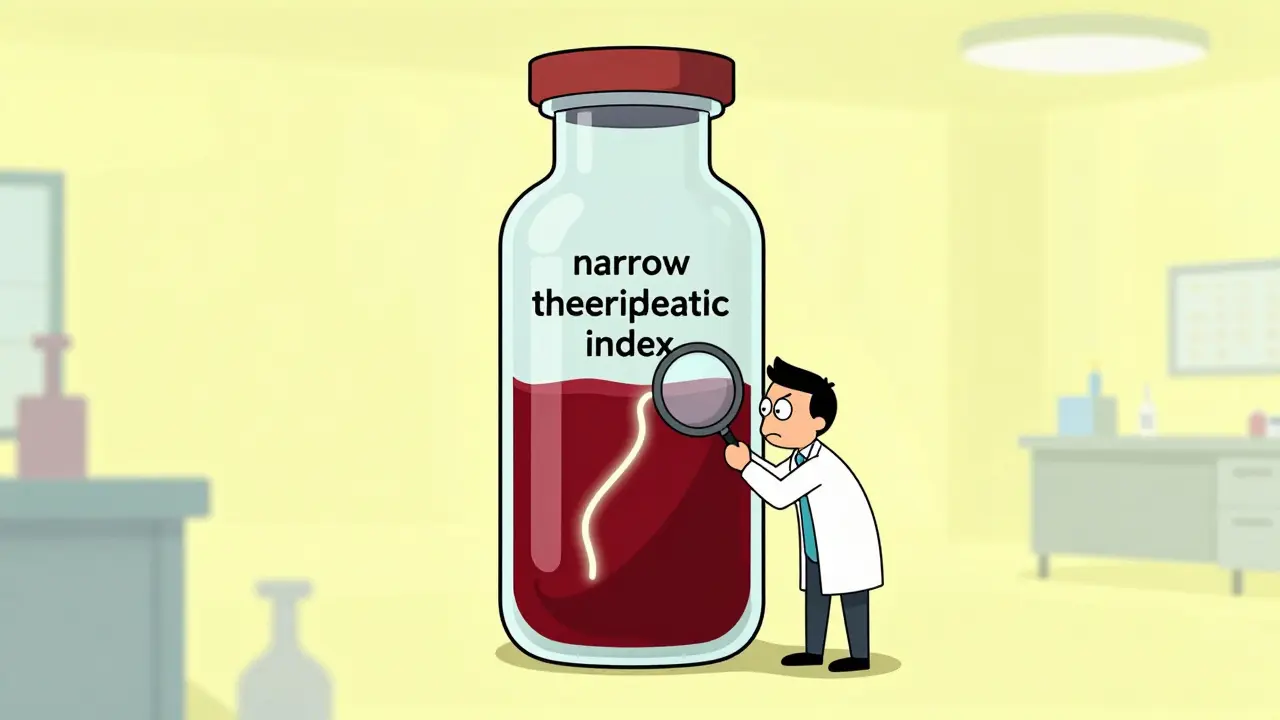
When a doctor prescribes a medication with a narrow therapeutic index, the difference between a dose that heals and a dose that harms can be incredibly slim. This is where therapeutic drug monitoring is the clinical practice of measuring drug levels in the blood to maintain a constant concentration within a target therapeutic range. Also known as TDM, it ensures that patients receiving potent drugs-like certain antibiotics or immunosuppressants-don't suffer from toxicity or treatment failure. But here is the catch: the lab results your doctor uses to adjust your dose are only as good as the verification process the laboratory performed before they ever ran the test.
Why Lab Verification Matters for Your Medication
You might wonder why a lab needs to "verify" a test if the manufacturer already says it works. In the medical world, a test that works in a sterile factory in Germany or the US might behave differently in a busy hospital lab in Manchester. If a lab fails to confirm that a test is accurate for their specific equipment and environment, it can lead to dosing errors. According to Institute of Medicine data, medication errors cause between 7,000 and 9,000 deaths annually in the US alone. Many of these stem from incorrectly interpreted lab results.
To prevent this, laboratories follow strict rules. Under CLIA is the Clinical Laboratory Improvement Amendments, a set of US federal regulatory standards that regulate all clinical laboratory testing , labs must prove a test performs according to specifications. If they don't, they face heavy fines-averaging $7,500 per violation. For the patient, this means the result on your chart actually reflects the amount of medicine in your system, not a glitch in the machine.
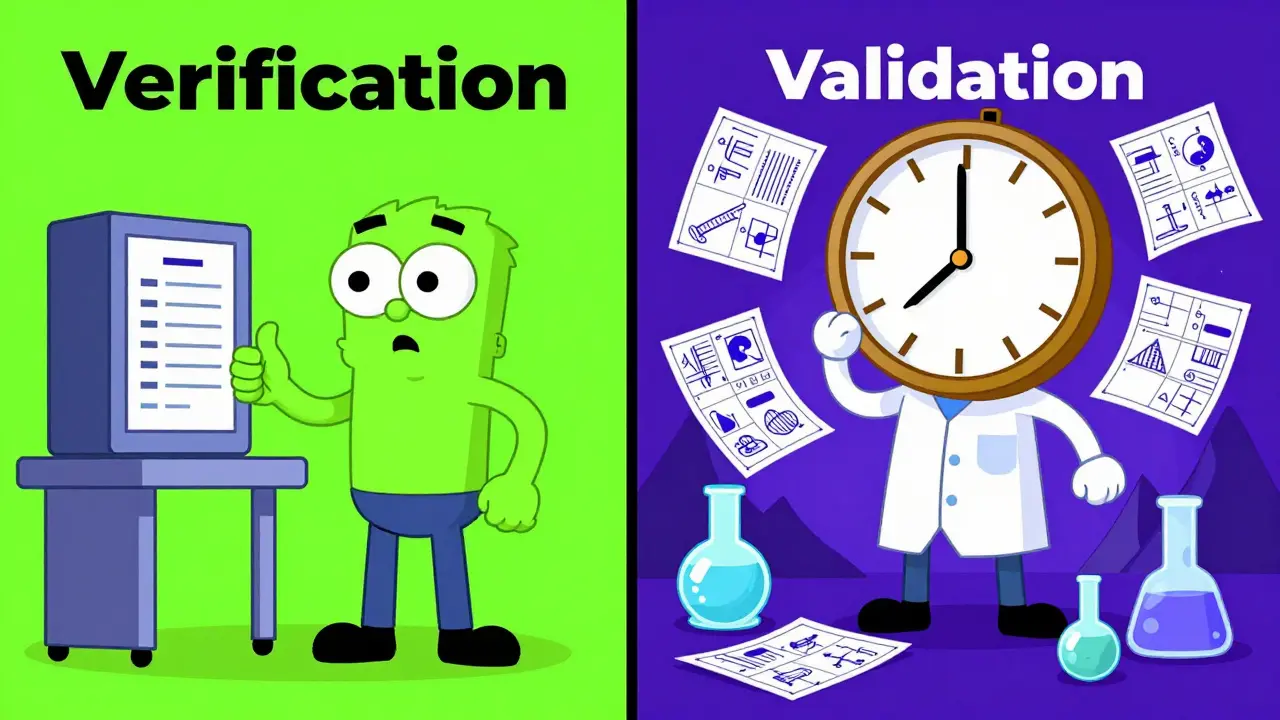
Verification vs. Validation: What’s the Difference?
Not all lab tests are created equal. Depending on whether the test was pre-approved by a government body or designed by the lab itself, the process for confirming its accuracy differs. Most routine medications use a verification process, while rare or complex drugs require full validation.
| Feature | Verification | Validation |
|---|---|---|
| Test Type | FDA-cleared or approved tests | Laboratory-Developed Tests (LDTs) |
| Time Investment | Average 80 hours | Average 120 hours |
| Approx. Cost | $2,500 - $5,000 | $7,500 - $15,000 |
| Typical Use Case | Routine drugs (e.g., Lithium) | Esoteric drugs (e.g., Clozapine metabolites) |
| Implementation | Usually within 30 days | 45-60 days (higher failure rate) |
The Technical Checklist: How Labs Confirm Accuracy
When a lab sets up a monitoring test, they don't just run one sample and call it a day. They follow guidelines, such as the CLSI is the Clinical and Laboratory Standards Institute, a global organization that develops quality-measurement and quality-control standards for clinical laboratories EP15-A3, to check nine critical performance characteristics. If you are wondering if your lab is reliable, these are the benchmarks they should be hitting:
- Precision: The test must give the same result repeatedly. Labs usually run at least 20 replicates over 5 days to ensure consistency.
- Trueness: This measures bias. The lab compares its results against a known reference material to see if the result is "true."
- Analytical Specificity: This is a big one. The lab tests if other substances in your blood (like other meds or metabolites) trick the test into showing a higher or lower level than actually exists. For example, drugs like carbamazepine often suffer from metabolite interference, leading to false results in 5-8% of samples.
- Measuring Range: The test must be accurate across the entire therapeutic range (usually 80-120% of the target range).
- Linearity: If the drug concentration doubles, the lab result should also double. They look for a correlation coefficient (R²) of 0.99 or higher.
For high-risk medications, the standards are even tighter. Vancomycin is a powerful antibiotic used for serious bacterial infections, requiring tight TDM to avoid kidney toxicity monitoring requires a total error of 15% or less, while Digoxin is a medication used to treat heart failure and heart rhythm problems, which has a very narrow therapeutic window requires an even stricter total error of 10% or less.
The Step-by-Step Process of Implementing Monitoring
Bringing a new medication monitoring test online isn't instant. Most high-quality labs use a standardized approach, often based on the APHL toolkit, to ensure nothing is missed. Here is how that workflow actually looks:
- Planning: The lab spends 8-16 hours developing a verification plan based on the drug's specific needs.
- Director Approval: A laboratory director must sign off on the plan before a single sample is run.
- Active Testing: This is the bulk of the work. For verification, it takes about 40-60 hours of running samples to check precision and bias.
- Data Analysis: Scientists spend 16-24 hours crunching the numbers to see if the test meets the required thresholds.
- Re-evaluation: About 30% of tests fail the first time and need to be tweaked or re-run.
- Reporting: A final summary report is created to document that the test is safe for patient use.
- SOP Creation: Standard Operating Procedures (SOPs) are written so every technician performs the test exactly the same way.
- Final Sign-off: The director gives the final green light.
- Implementation: The test goes live for patients.
Common Pitfalls and Patient Risks
Even with these rules, mistakes happen. One of the most common errors is inadequate interference testing. Imagine you're taking an immunosuppressant like tacrolimus after an organ transplant. If the lab doesn't verify cross-reactivity with the drug's metabolites, they might report a level that looks safe but is actually dangerously low. In one case at the Mayo Clinic, rigorous validation identified metabolite interference in 17% of samples, which prevented potential dosing errors that could have led to organ rejection.
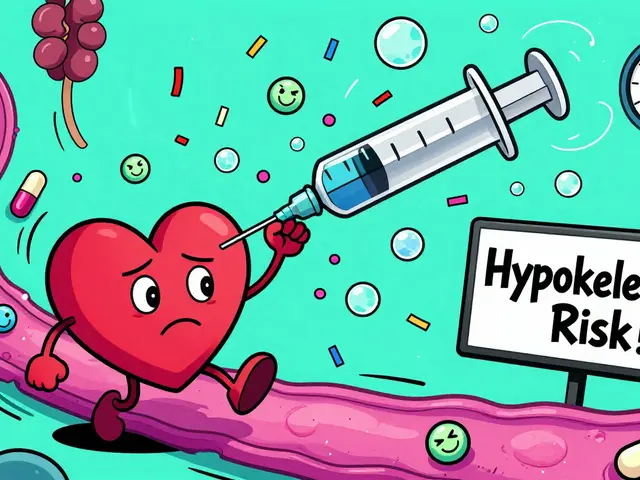
Another risk is the "lower limit of quantitation." Some labs fail to verify the lowest level the machine can accurately detect. For drugs with a narrow therapeutic index, missing a sub-therapeutic level in 12-15% of patients can mean the medication simply isn't working, and the patient remains at risk while the doctor thinks the dose is correct.

How to Ensure Your Follow-Up is Effective
As a patient or provider, you can't personally go into the lab and check their R² values, but you can ask the right questions to ensure the follow-up for medications is handled correctly. Effective monitoring isn't just about the number on the page; it's about the timing and the context.
First, ensure the blood draw happens at the "trough"-the lowest point of the drug concentration, usually right before the next dose. If the lab result is taken too early after a dose, the level will look artificially high, and your doctor might lower your dose too much. Second, if you are switching labs, be aware that different platforms (like those from Roche or Abbott) may have slight variations. If your results suddenly jump or drop without a dose change, ask if the lab method has changed.
Modern healthcare is moving toward integrated systems. Some hospitals now use Epic Systems is a leading electronic health record (EHR) software provider that integrates patient data across various clinical settings modules that automatically flag these sub-therapeutic levels, reducing the chance that a human eye misses a critical dip in medication levels.
What happens if a lab doesn't verify its medication tests?
If a lab skips verification, they risk providing inaccurate results that can lead to medication toxicity or treatment failure. Legally, under CLIA regulations, they can be fined thousands of dollars per violation, and they may lose their accreditation to perform those tests.
Why do some drugs need "validation" instead of just "verification"?
Verification is used for tests already approved by the FDA; the lab just needs to prove the test works in their specific environment. Validation is required for Laboratory-Developed Tests (LDTs)-tests the lab created itself because no FDA-approved version exists. This requires a much deeper dive into the test's performance.
How often should these labs be checked?
While initial verification happens when a test is first implemented, labs perform ongoing quality control daily. Major audits, such as those from the College of American Pathologists (CAP), happen periodically to ensure the lab is still following the rules.
Can metabolites interfere with my drug level results?
Yes. Metabolites are the substances created when your body breaks down a drug. Some lab tests accidentally measure these metabolites instead of the active drug, leading to a "false high" reading. Rigorous verification of cross-reactivity is the only way to prevent this.
What is the "trough level" and why is it important?
The trough level is the concentration of a drug in your blood just before the next dose is administered. This is the most critical time to measure because it shows the lowest point of the drug's presence in your body, helping doctors decide if the dose is high enough to stay effective throughout the day.
Next Steps for Patients and Providers
If you are a patient starting a medication that requires regular blood work, start a simple log. Note the exact time you took your last dose and the exact time your blood was drawn. This helps your provider interpret the results accurately. If you notice a sudden change in how you feel despite "normal" lab results, bring up the possibility of metabolite interference or ask if the lab has recently changed its testing platform.
For providers, the best way to ensure safety is to use labs that are accredited by the College of American Pathologists (CAP) or follow ISO 15189 standards. These facilities have a significantly lower rate of medication-related errors compared to non-accredited labs because they adhere to the rigorous verification protocols discussed here.



Betty Kawira
April 30, 2026 AT 19:20Just to add to the trough level point, make sure you're not drinking a huge glass of water right before the draw if your doctor mentioned hydration affects your specific med. It can sometimes mess with the concentration readings more than people realize, even if the lab is perfectly verified. Also, always ask for a printed copy of the actual lab report, not just the summary in the patient portal, so you can see the reference range they used.
Jarrett Jensen
May 2, 2026 AT 03:45The rudimentary nature of this overview is quite exhausting. One would assume that a discussion on TDM would delve deeper into the pharmacokinetic nuances rather than merely reciting CLIA guidelines like a textbook for undergraduates. It is utterly pedestrian to focus so heavily on the administrative fines associated with violations when the actual biochemical variance is the pertinent issue. Truly, the lack of intellectual rigor here is staggering.
Dale Kensok
May 2, 2026 AT 07:34The systemic failure to address the stochastic nature of metabolite cross-reactivity here is a glaring omission. We are talking about an ontological shift in how we perceive 'accuracy' when the analytical specificity is compromised by endogenous interferents. The correlation coefficient of 0.99 is a convenient fiction for those who prefer linear reductions of complex biological matrices. If the lab isn't utilizing high-performance liquid chromatography with tandem mass spectrometry, these 'verified' results are essentially just educated guesses wrapped in bureaucratic legitimacy. The epistemic gap between a 'verified' result and clinical truth is where the actual danger resides, yet the discourse remains trapped in the banal cycle of regulatory compliance and SOP checklists.
Nigel Gosling
May 4, 2026 AT 06:39Good heavens, the sheer audacity of a medical system that lets thousands of people die just because some technician forgot to run twenty replicates! It's an absolute tragedy of Shakespearean proportions that we are reduced to 'asking the right questions' just to ensure we aren't being poisoned by our own prescriptions! The horror is palpable!
Aubrey Johnson
May 6, 2026 AT 05:42The facts are clear. Accuracy is the only thing that matters.
Steve Grayson
May 6, 2026 AT 23:21This is a really helpful breakdown. I think the table comparing verification and validation makes it much easier to understand why some tests take longer and cost more. Thanks for sharing this.
Trish Perry
May 7, 2026 AT 02:29It's wild how much we rely on these invisible processes. We treat the lab result as an absolute truth, but it's really just a reflection of a process that humans have to design and maintain. It makes you realize that medicine is as much about quality control as it is about biology.
Kali Murray
May 8, 2026 AT 22:43wow this is actually super scary 😱 hope everyone is staying safe with their meds ✨
Kat G
May 9, 2026 AT 12:19The information regarding the trough level is very useful. It is important to be precise with timing.
Abhishek Charan
May 9, 2026 AT 13:36Wait... you guys actually believe the R² value of 0.99 is enough???!! 🙄 In my experience, these standards are way too loose!! 🤡 The whole system is a joke!! 📉
Ryan Wilson
May 9, 2026 AT 18:33Imagine the absolute clown show of a lab that skips a verification step and just hopes the FDA seal of approval covers their incompetence. It's a recipe for a medical massacre, plain and simple. The bureaucratic sludge of CLIA is the only thing keeping some of these cut-rate clinics from playing Russian Roulette with our blood chemistry.
Stephen Johnson
May 10, 2026 AT 23:56It's a lot to take in, but it's good to know there's a logic behind the madness. Just taking a breath and keeping a log like the post suggests seems like the most peaceful way to handle the anxiety of high-risk meds.